Invitation
I would like to express my gratitude to all the archaeologists who have continued to devote their passion to this work for nearly 100 years.
This site is structured in four parts. I recommend starting with Part 1, but if you want to quickly see various photos of the Teotihuacan ruins, please start with Part 4.
You can easily search online for photos of the many artifacts and locations that I was unable to photograph on site. I have avoided including book and paper titles to avoid complication, but you can find them by combining them with foreign language keywords.
Where is Teotihuacan?
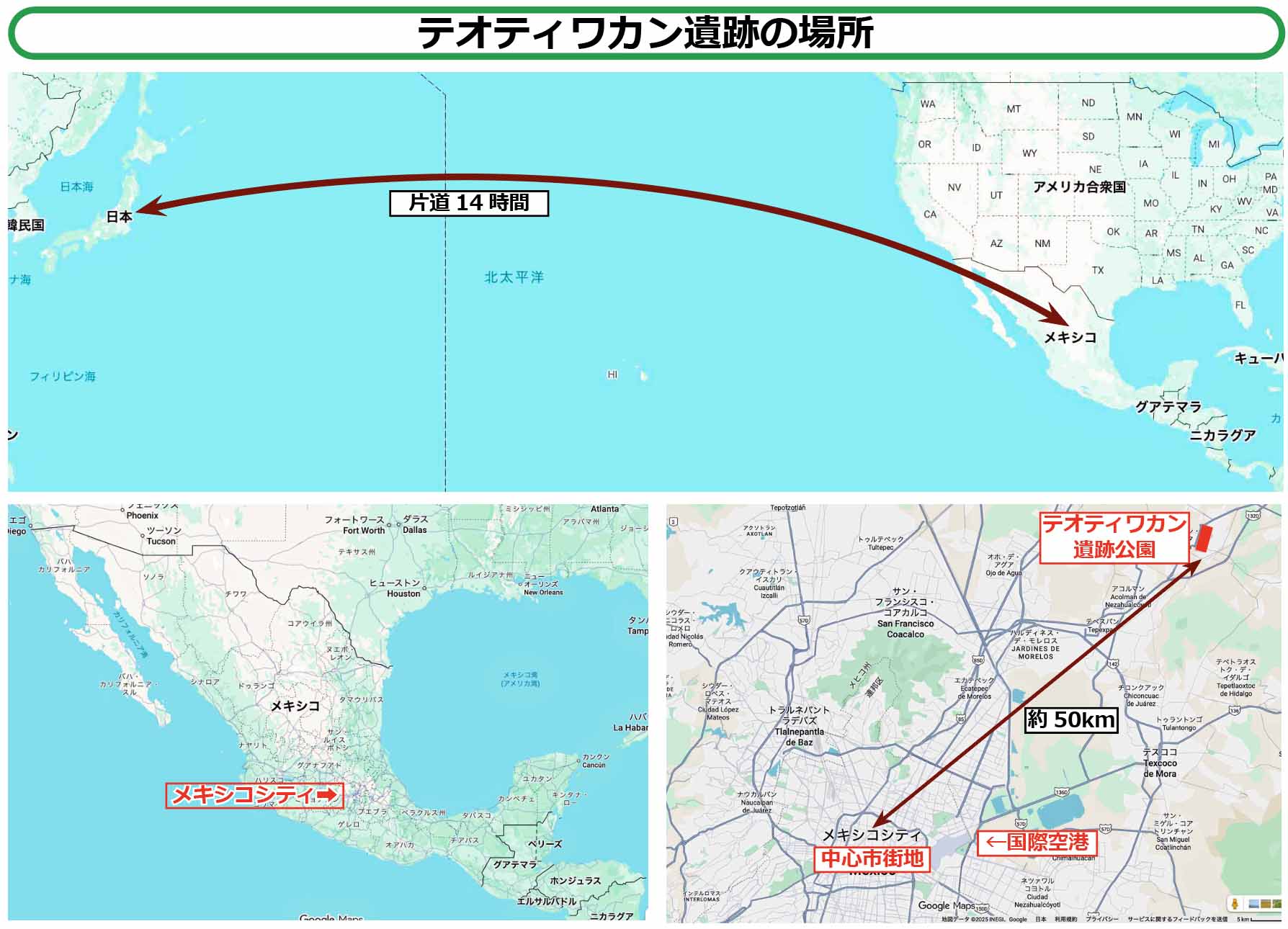
↑on Google Map。
Direct flights take approximately 14 hours. Mexico City International Airport is adjacent to the city center, and Teotihuacan Archaeological Park is just a one-hour drive away.
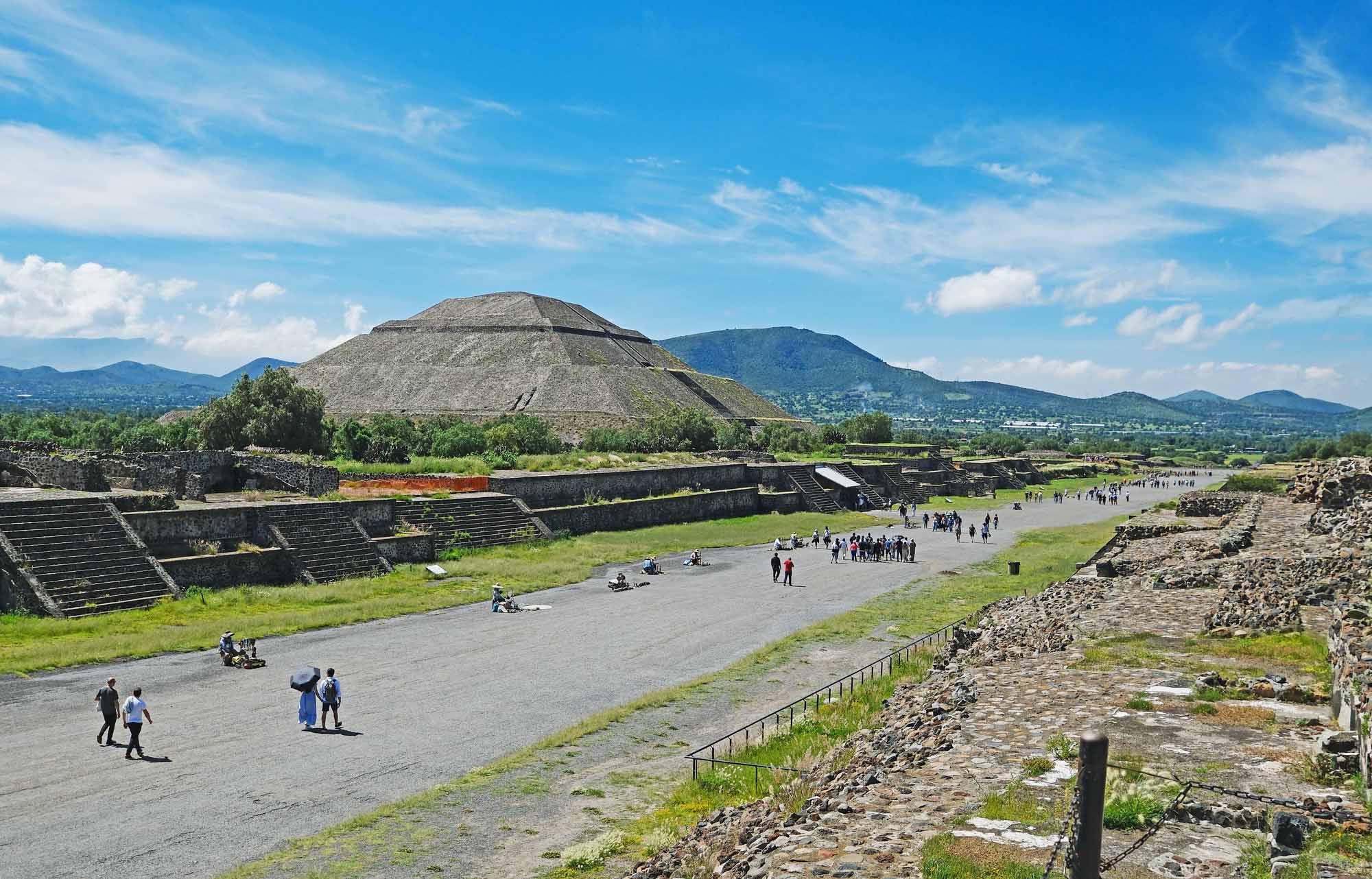
Viewing south from the observation deck of the Plaza of the Moon. The magnificent Pyramid of the Sun towers over the city, and on both sides of the Street of the Dead are the remains of carefully built temples. The upper parts of the buildings have collapsed. At the time, they must have been a powerful and imposing sight.
Looking at the entire city, three huge pyramids and numerous temple/residential complexes line the ground, surrounded by 2,000 neighborhood dwellings averaging 43 meters square. Agricultural areas spread out on the outer periphery, and the city also controlled almost the entire Valley of Mexico. Construction of the city began in 120 AD, and the population plummeted by 550. We'll take a glimpse into what kind of society this city-state of 120,000 people, said to be the largest in the world at the time, was like.