God Tlaloc
He or she is also known as the "God of Rain and Thunder" or the "God of Storms." "Tlaloc" is a Nahuatl word that has been used in Mesoamerica for a long time.
Humans need water to survive. It is rain, springs, and the sea that nurture crops and fish. Jaguars and snakes cannot be treated as the most important gods, putting water aside.
In order for humans as a group to show respect for water, some visible form is needed. The following photographs show the structures that the people of Mesoamerica, including Teotihuacan, created over the years.
First generation design...bulging eyeballs
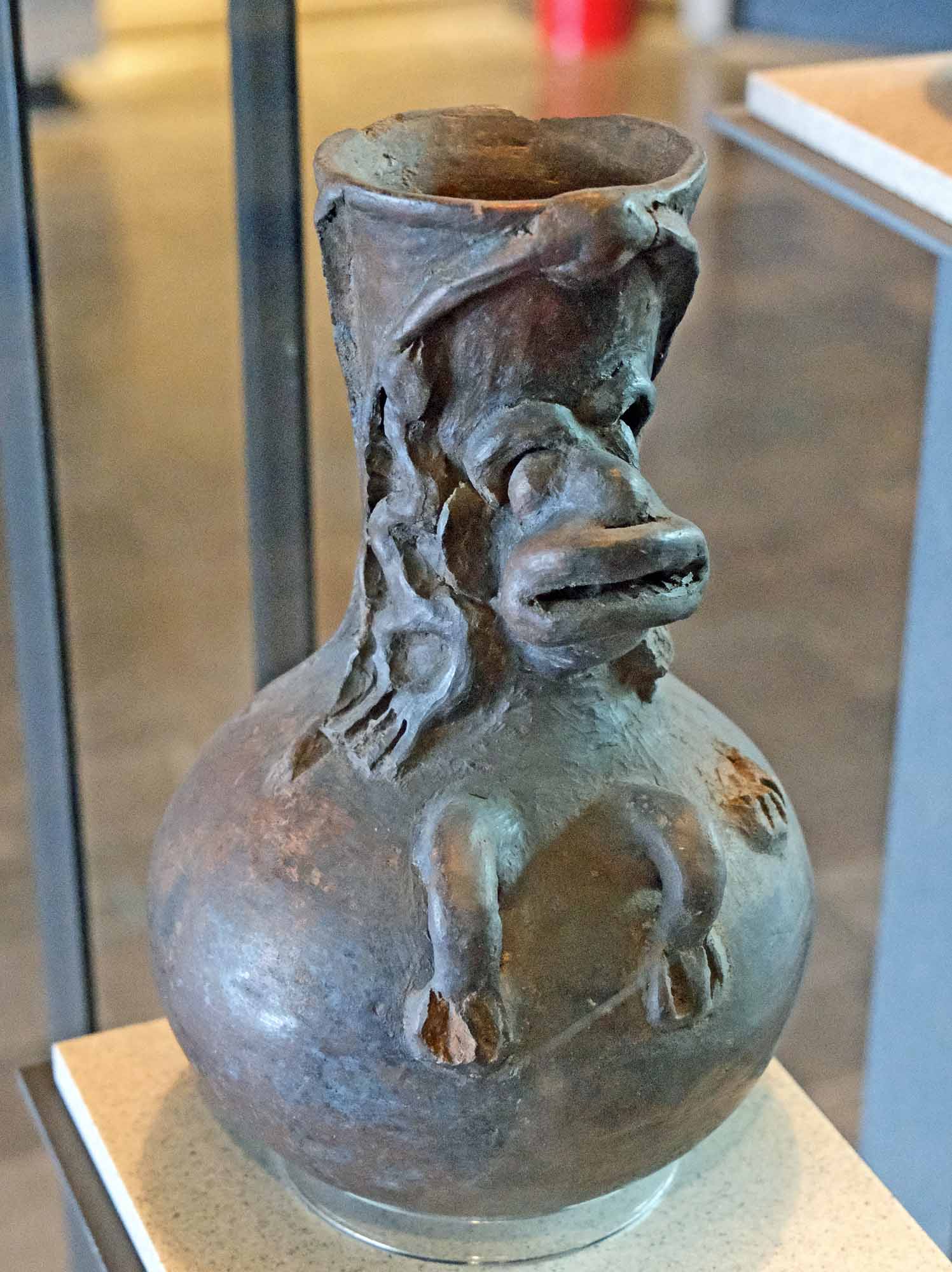
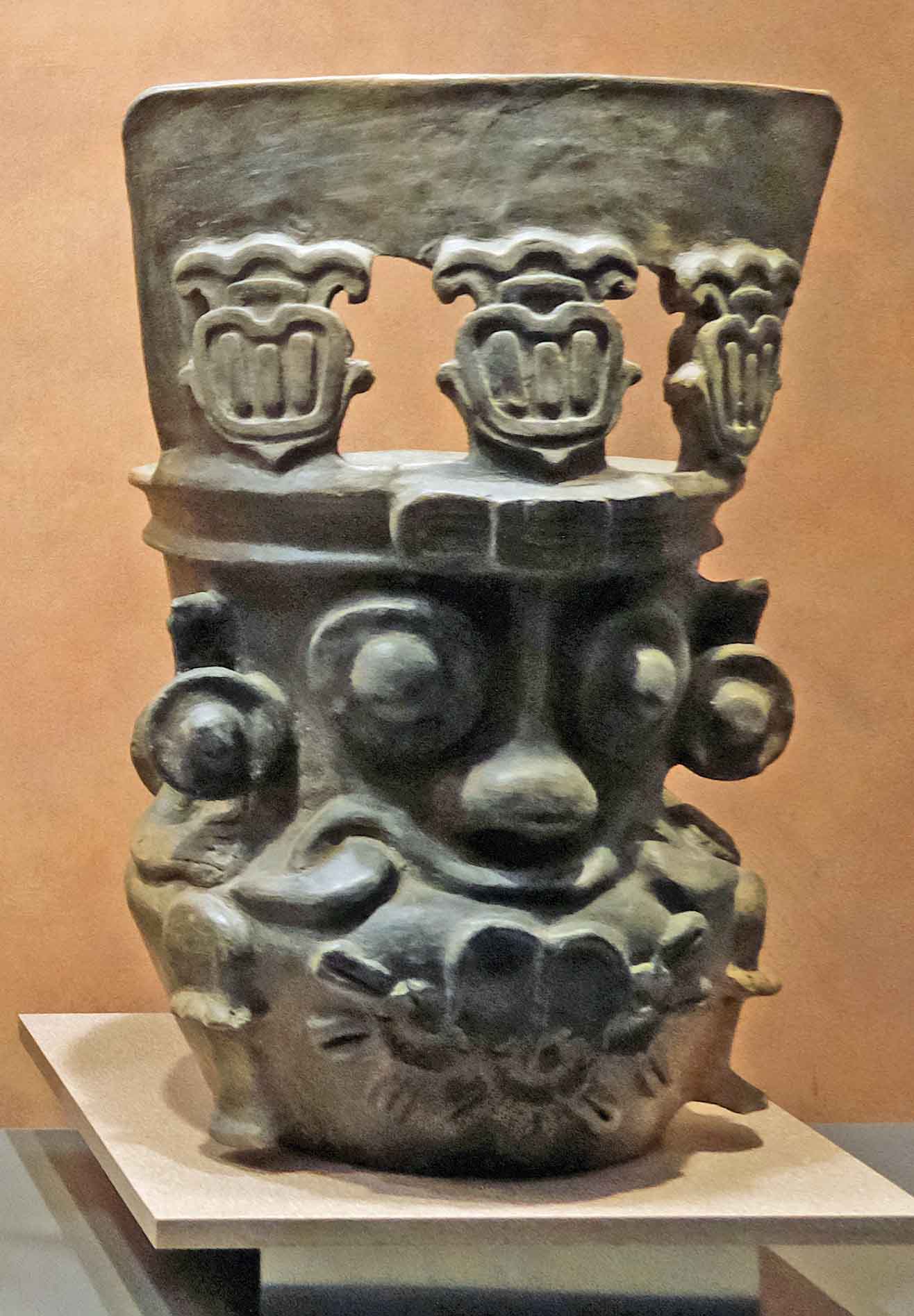
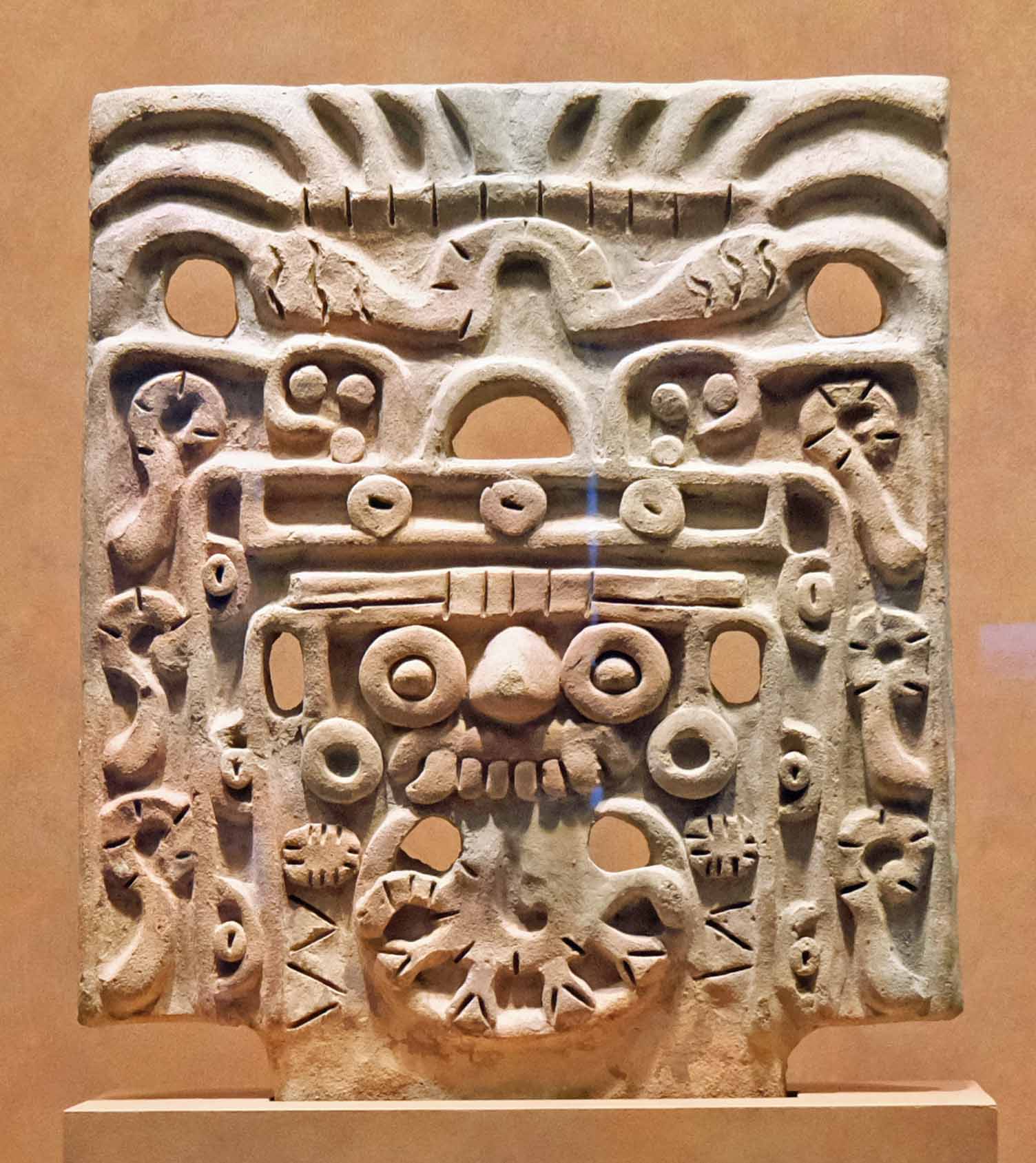
↑On Tlapacoya Ruins (2300 BC - 100 BC) at the Anthropological Museum.
The first generation of Tlaloc gods are depicted throughout the entire image. Around 200 AD, the design was gradually changed to depict the protruding eyes as round, not protruding.
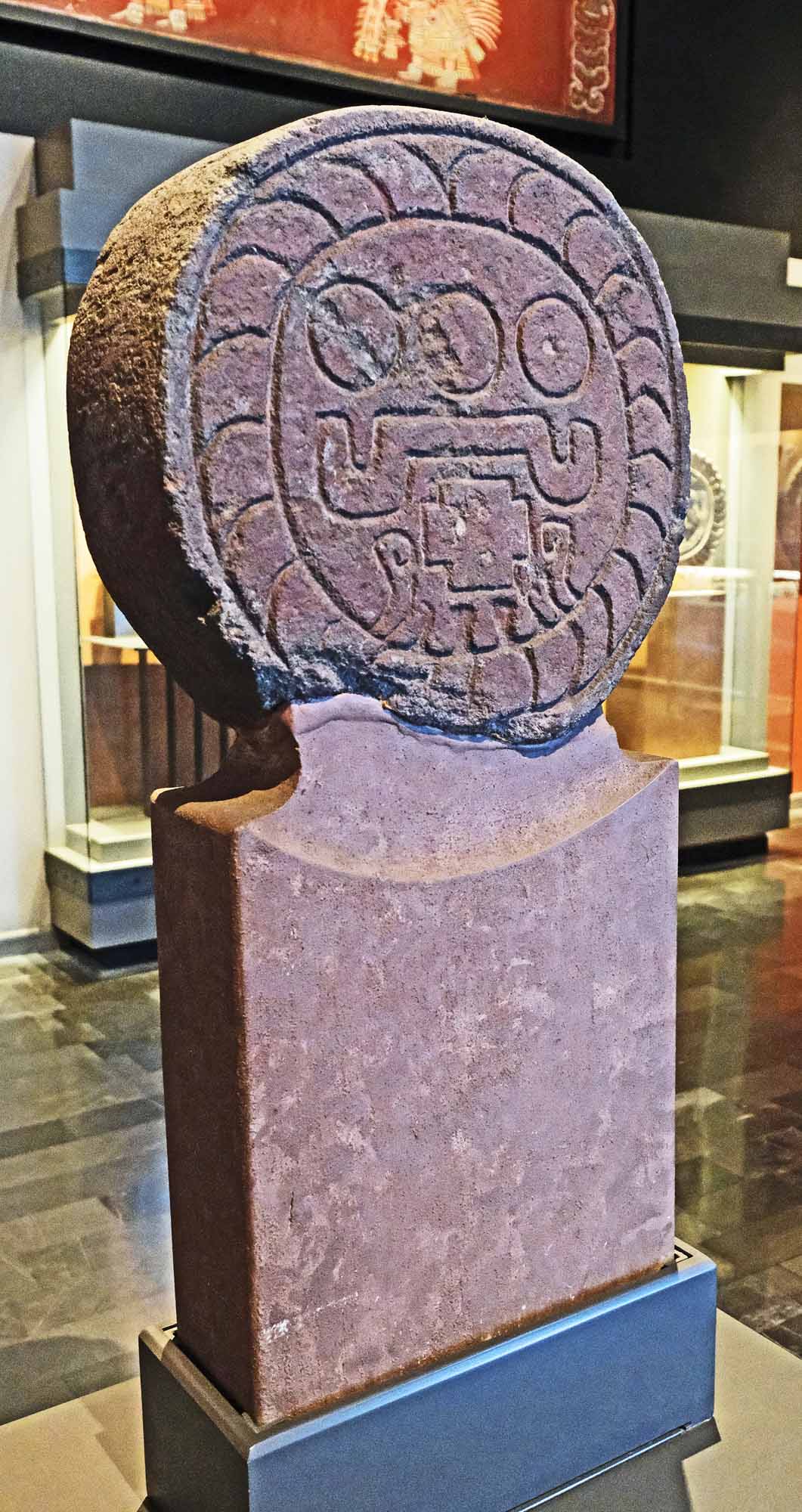
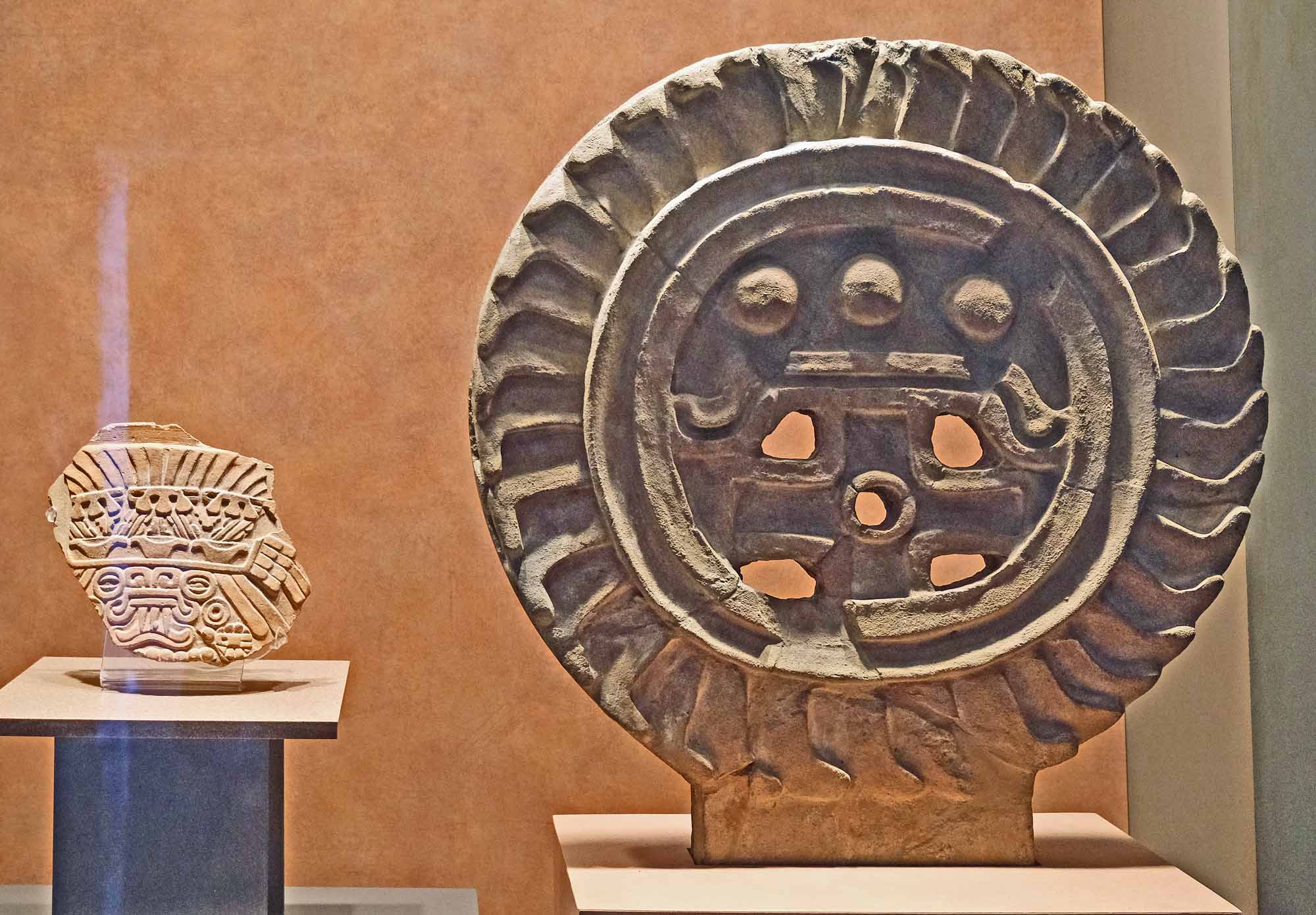
Second generation design.."goggles" and "thick circle"
The next generation's representation is a series of thick circles that look like goggles.
1. The Goggles of Cipactli at the Pyramid of the Feathered Serpent
Cipactli is said to resemble a crocodile. The long ornament above the two tusks on the lower part of his face is a nose ornament, and behind it are his eyes. Above it, between his eyes, are two flat circles. This is the symbol of the second god, Tlaloc.
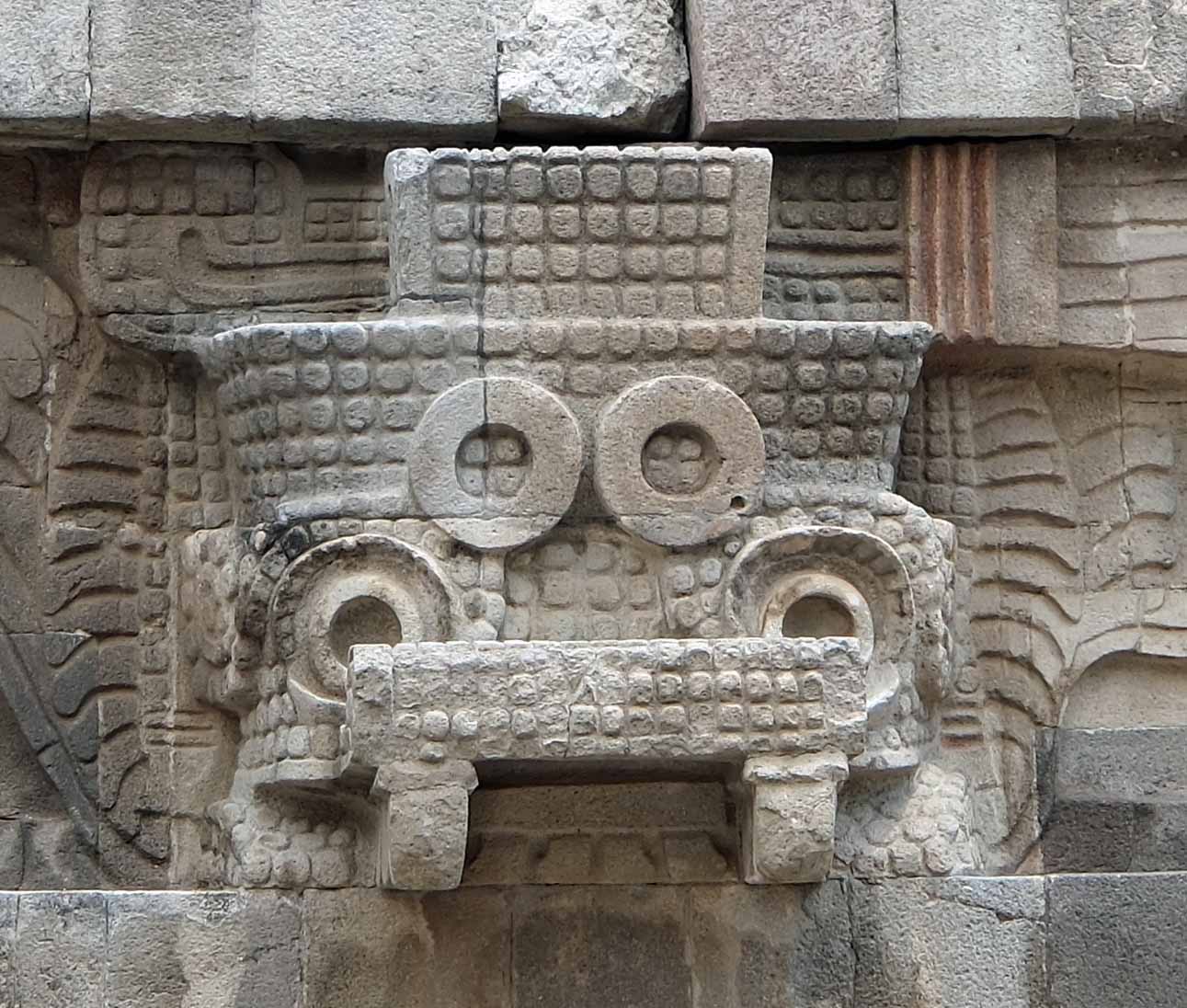
↑ God Tlaloc at the Pyramid of the Feathered Serpent (200-378 AD).
The decoration of the Pyramid of the Feathered Serpent is full of waves, shells and fish, so it seems that they wanted to associate it with water.
2. Warrior's "Goggles"
Human warriors and priests also preferred to bear the divine power of Tlaloc. The similar thick circles to the lower right of the left goggles are earrings. Variations of the thick circle also appear on head ornaments, necklaces, and framing belts.
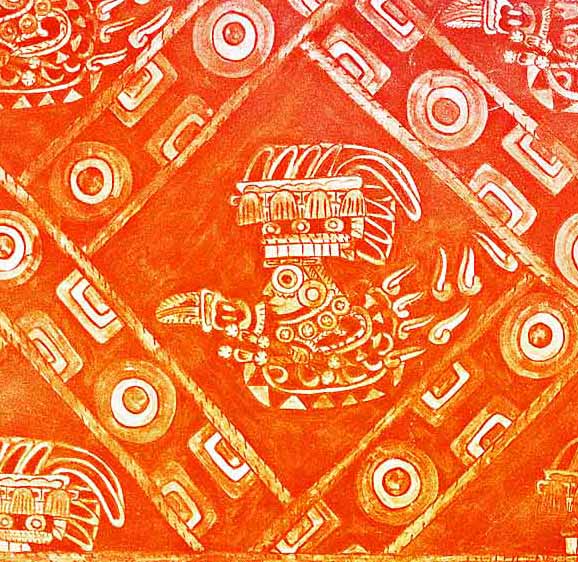
↑ Atheterco Mural (after 350 AD). A warrior is in a boat, holding an obsidian knife.
3. Goggles at Altar Q in the Copan Ruins
The city-state of Copan, located in present-day Honduras, is generally believed to have been founded by Tikal in 426 AD. The Tikal dynasty at the time had a special relationship with Teotihuacan, as will be discussed later.
Altar Q was erected in 776 AD and features the first king, wearing the feather headdress and goggles typical of Teotihuacan.
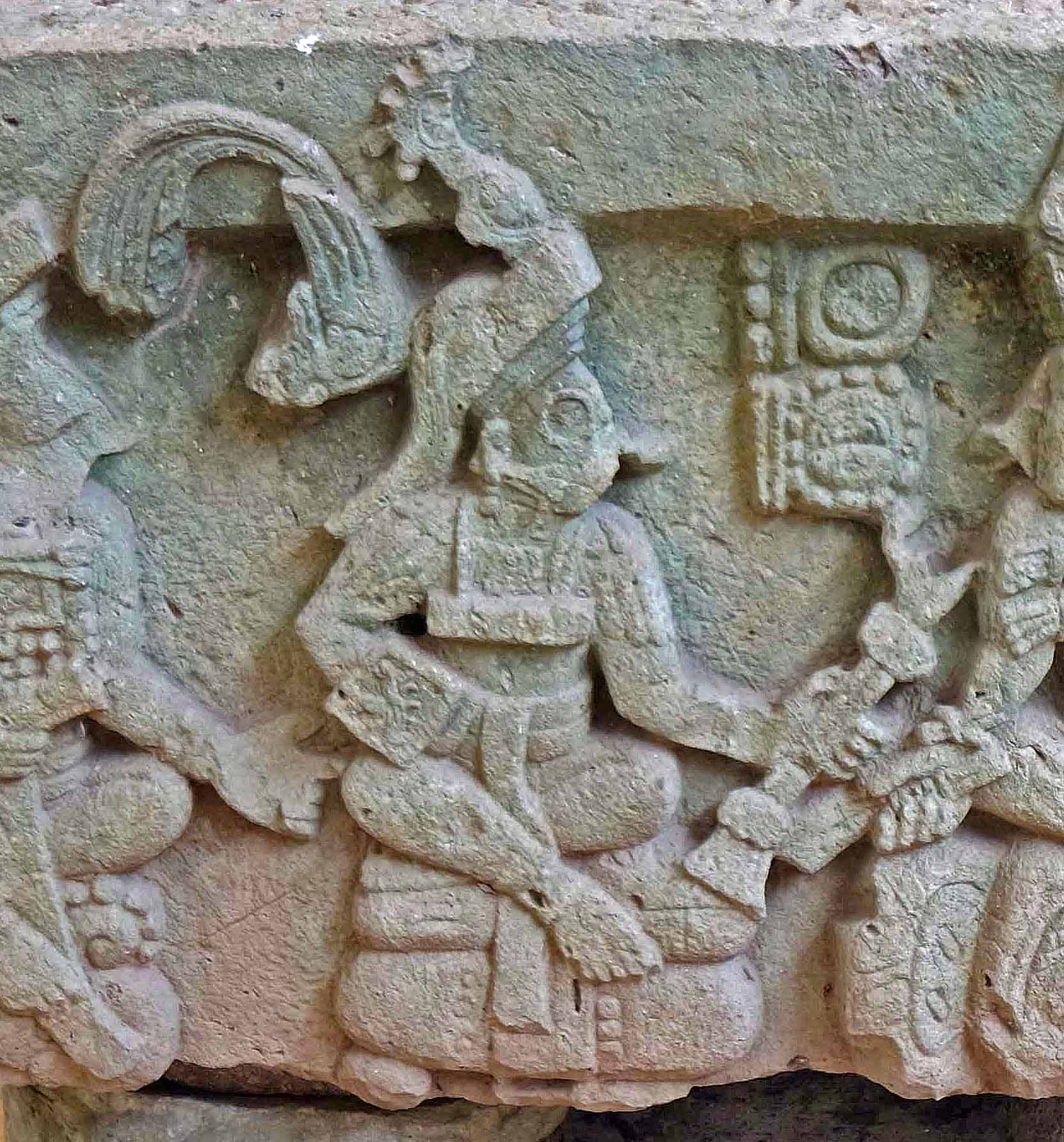
↑The first King of Copan on Altar Q at the Copan Stone Carving Museum.
4. "Thick circle" in a strip-shaped frame
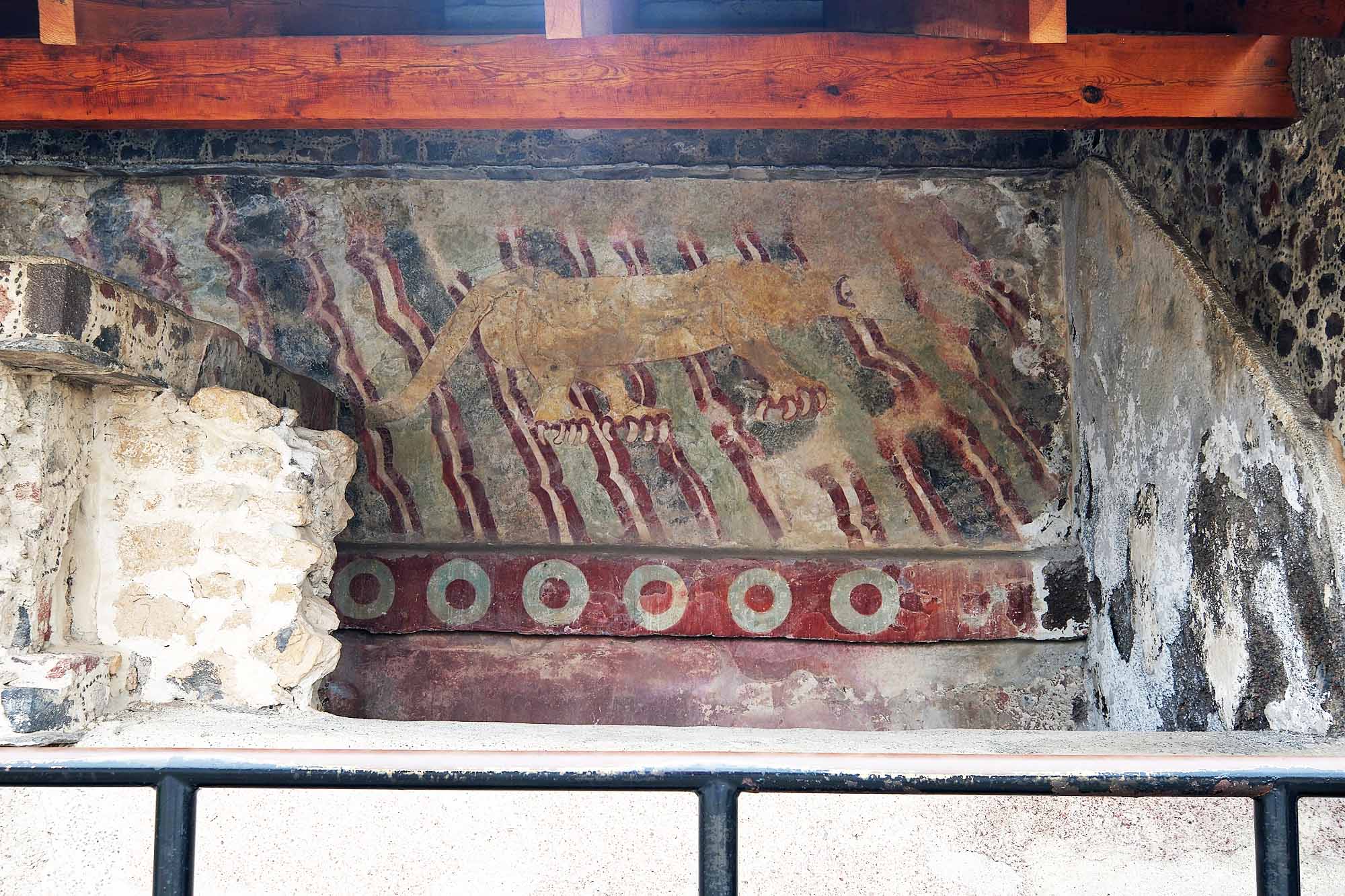
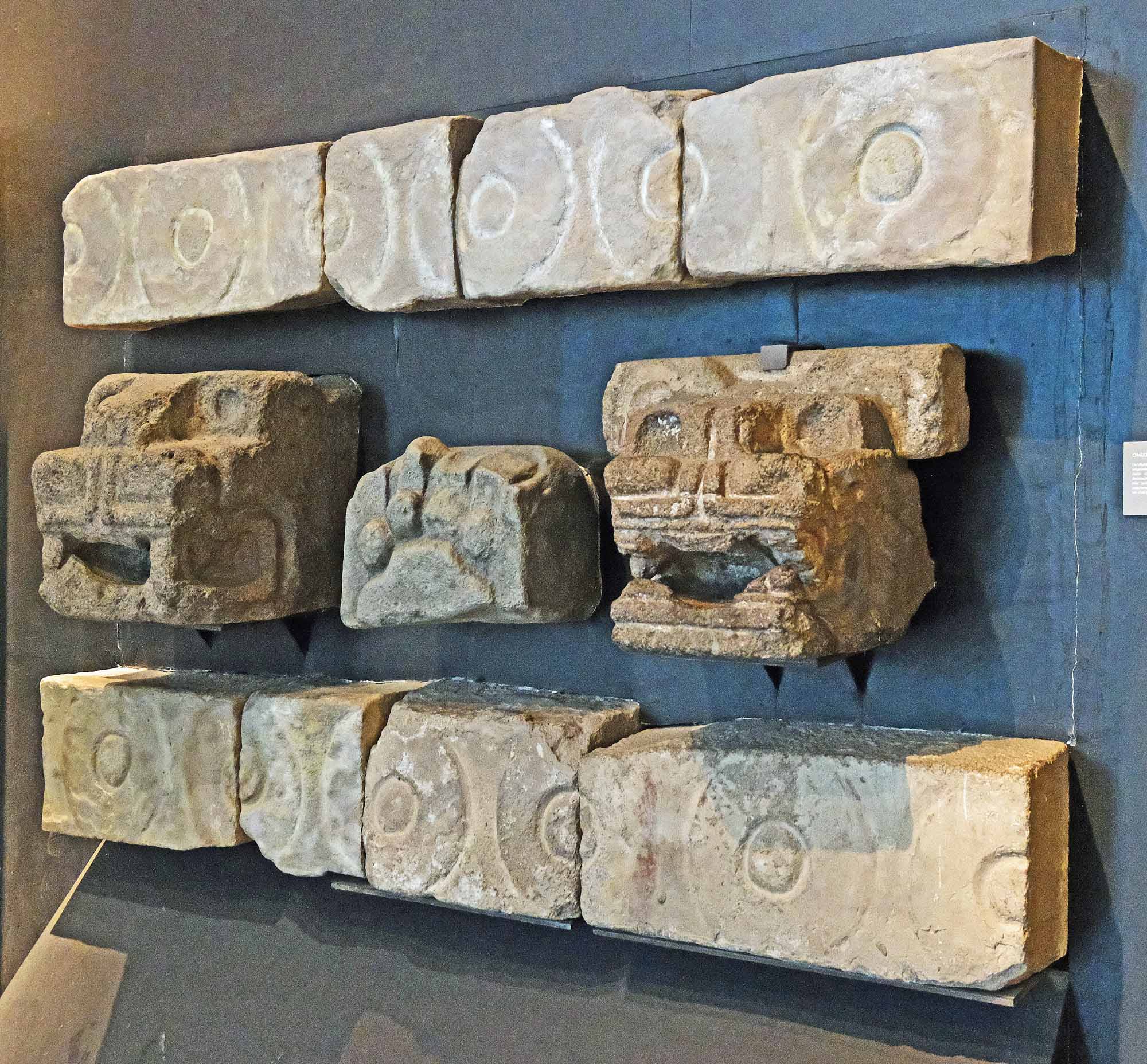
↑ Puma mural. ↑ Exterior wall of the Sun Pyramid .
I was unable to determine the meaning behind the "bold circles" because they were too abstract. They are arranged within the frames of many murals, so they cannot be simply geometric patterns.
At first, I imagined that the inside of the circle was hollow/hole, and if the circumference was green, it would be filled with precious green stone/jade beads. A string made of plant fiber is threaded through the holes, and necklaces are usually made. The appearance of the beads, taken apart one by one and lined up, in turn, represents a symbol of something rare.
As I stood in front of the puma mural, I pointed to a very noticeable thick circle and asked my guide, "Does that symbolize loose beads or something precious?"
The local guide paused for a moment and then said, "Oh, so that's one way of looking at it. It's been interpreted as the god Tlaloc. I once read a children's picture book about Mesoamerican civilization. Why is the circle a symbol of the god Tlaloc? When you drop a drop of water from directly above, circular waves spread across the surface of the water.
I was astonished. There were thousands, even tens of thousands, of these [bold circles] inscribed in this city, in various colors and sizes. Is Teotihuacan really full of "the god Tlaloc?"
Both Tlaloc and the Water Goddess represent water, but the water Tlaloc represents is a torrential rain from the sky, a rippling torrent, while the water the Water Goddess represents is a gently flowing stream.