Tepantitla

The site was used between 225 AD and 650 AD, with all surviving murals dated to 350 AD -550 AD.
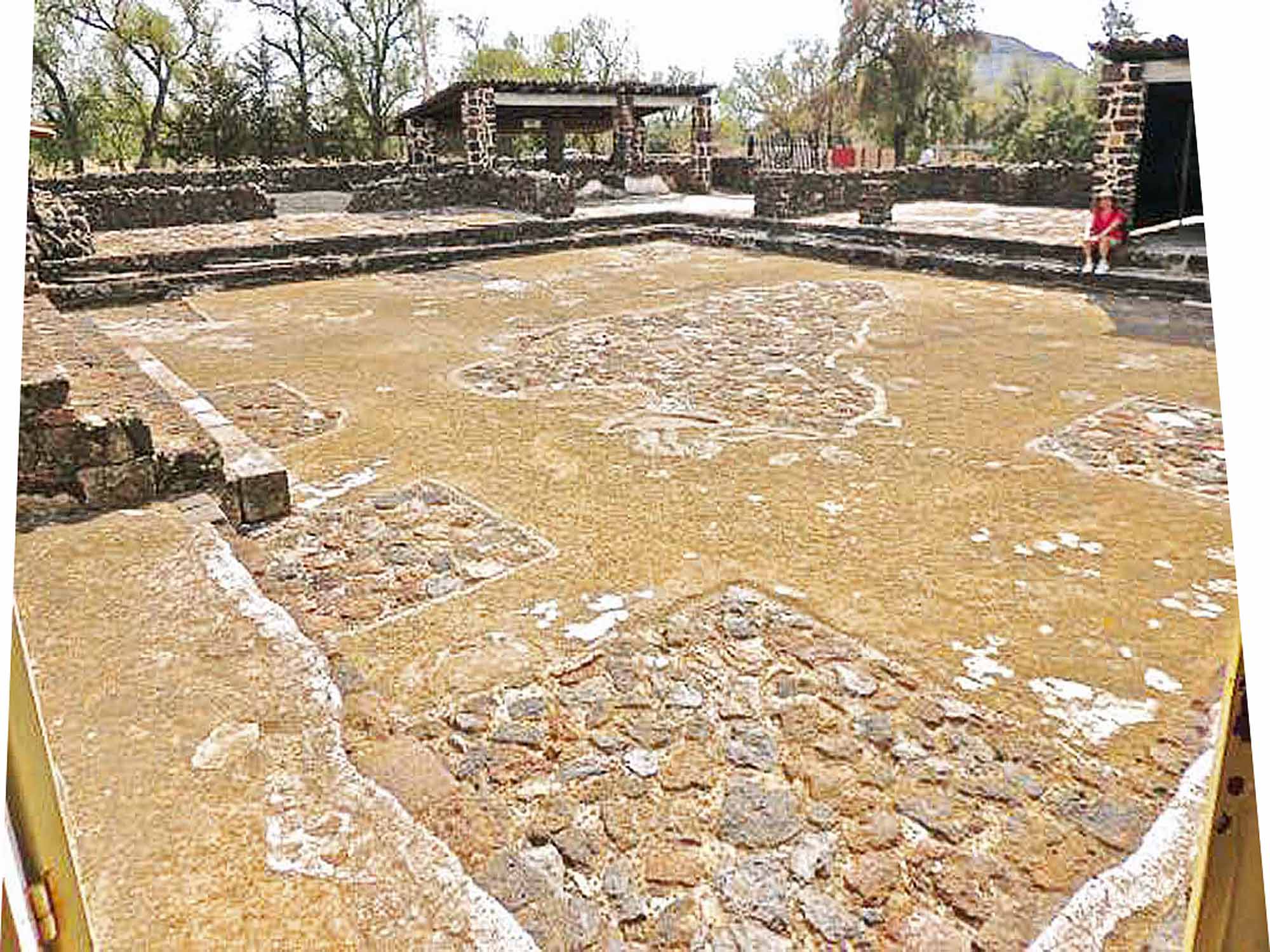
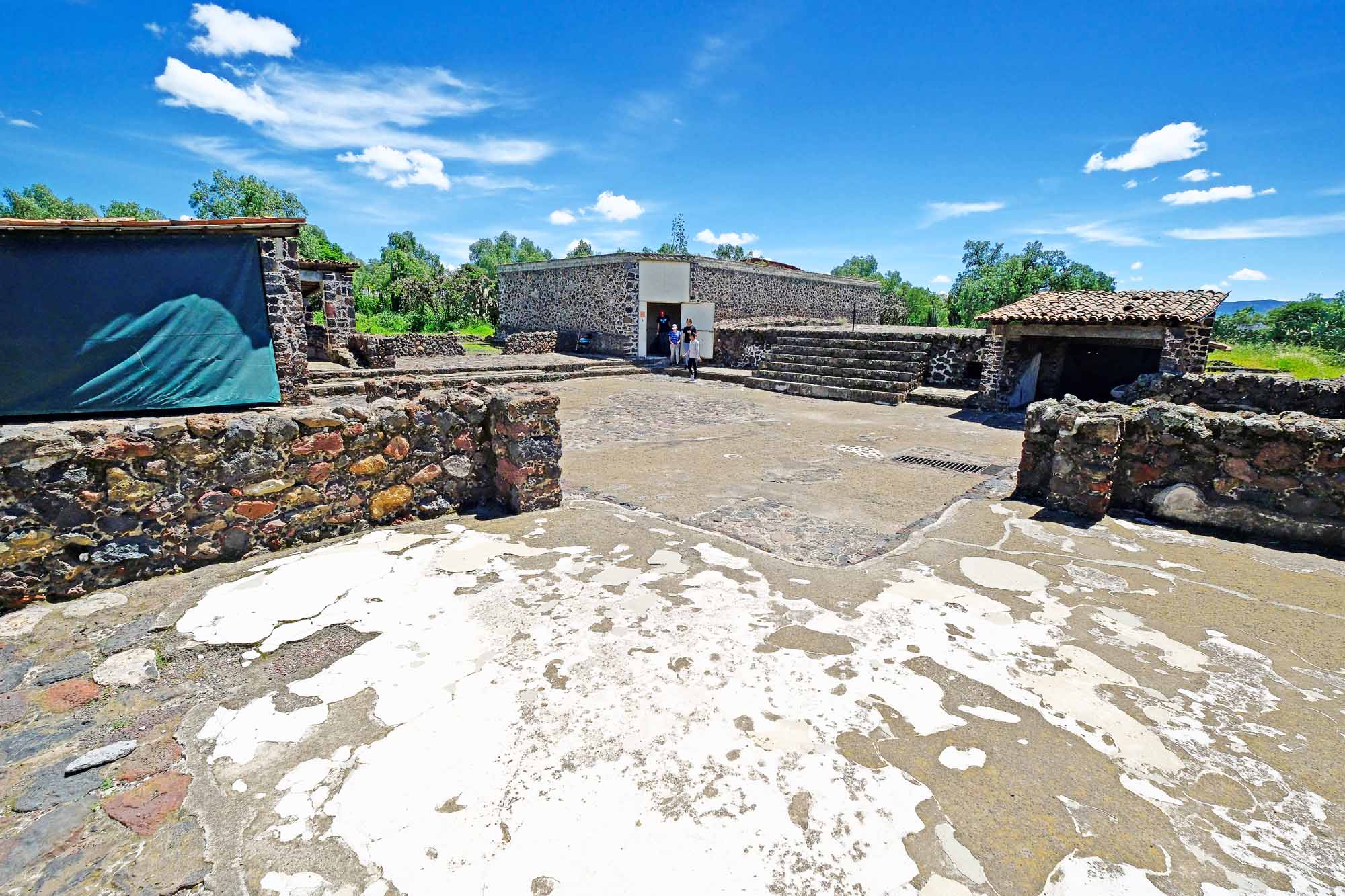
The photo on the left is a view from the northeast corner of Courtyard 1, in the direction of the red arrow.
The photo on the right was taken from the southwest corner of Courtyard 1, in the direction of the green arrow. Platform 1 is at the top of the wide staircase on the left of the center. There should have been a temple there. The open door to the left of that is Passage 2.
Courtyard 9: A series of warrior statues
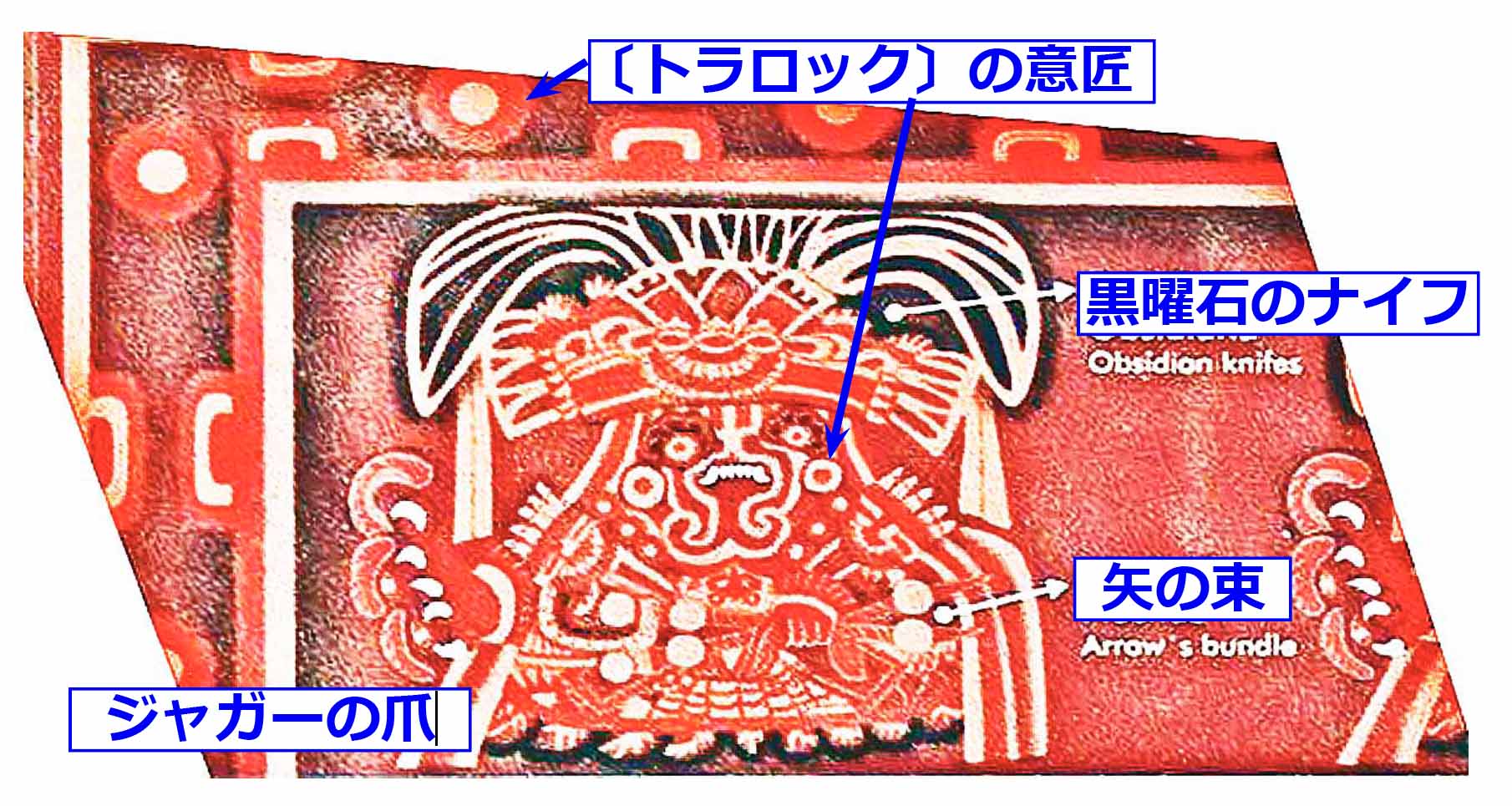
Here are my notes on the tourist sign: He is facing forward, so he is a god. Incidentally, the profile shows a human priest/warrior. He is holding the [Tlaloc design], a jaguar claw, and a bundle of arrows, so he is a warrior god.
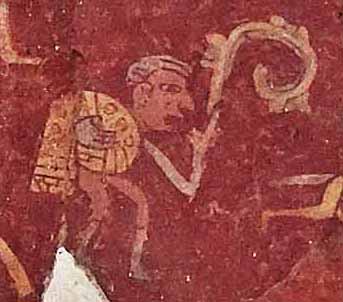
Rooms 7 and 8: Walking Priests
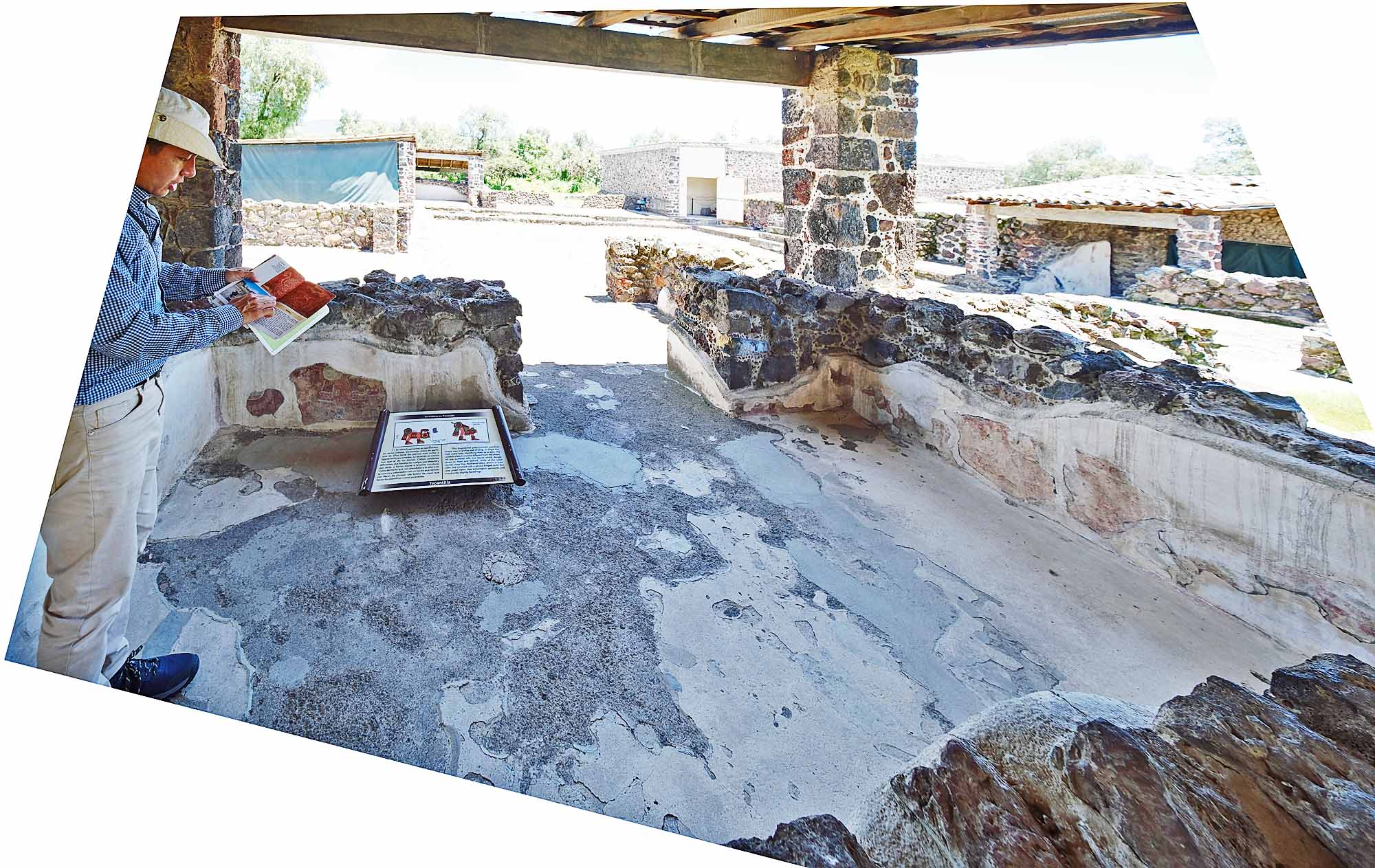
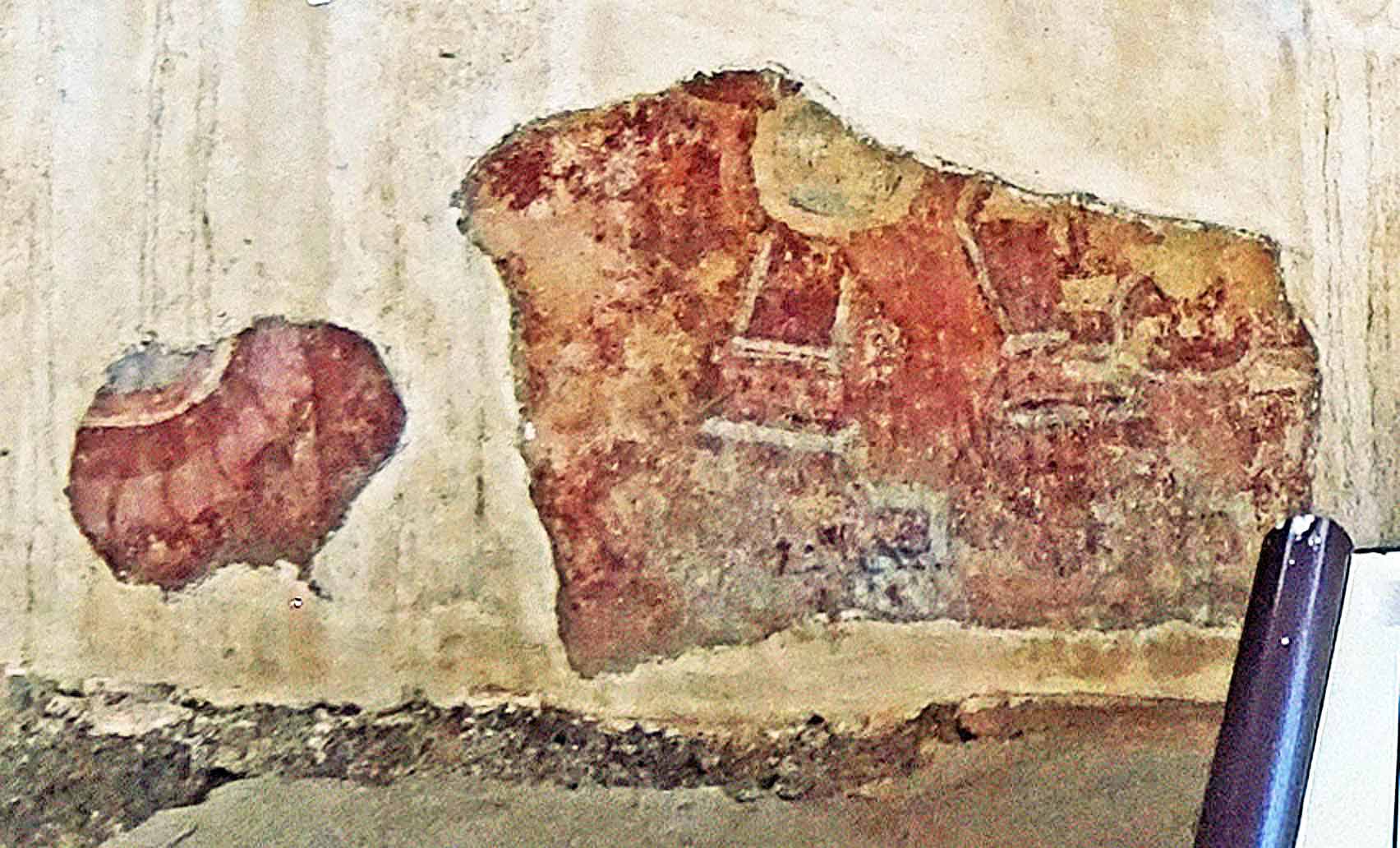
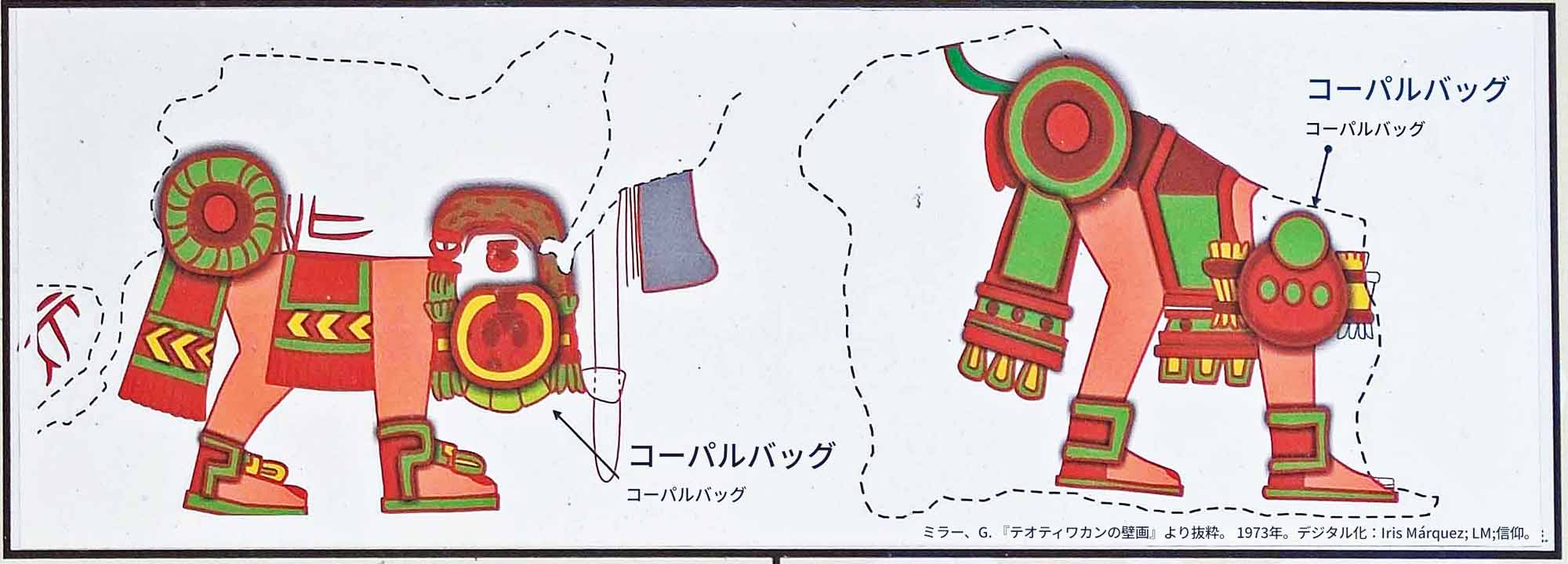
This is a close-up of the mural in the center right. The figure is carrying an incense bag, so he is a priest. He is walking to the right.
Room 3: Warrior's Circular Shields
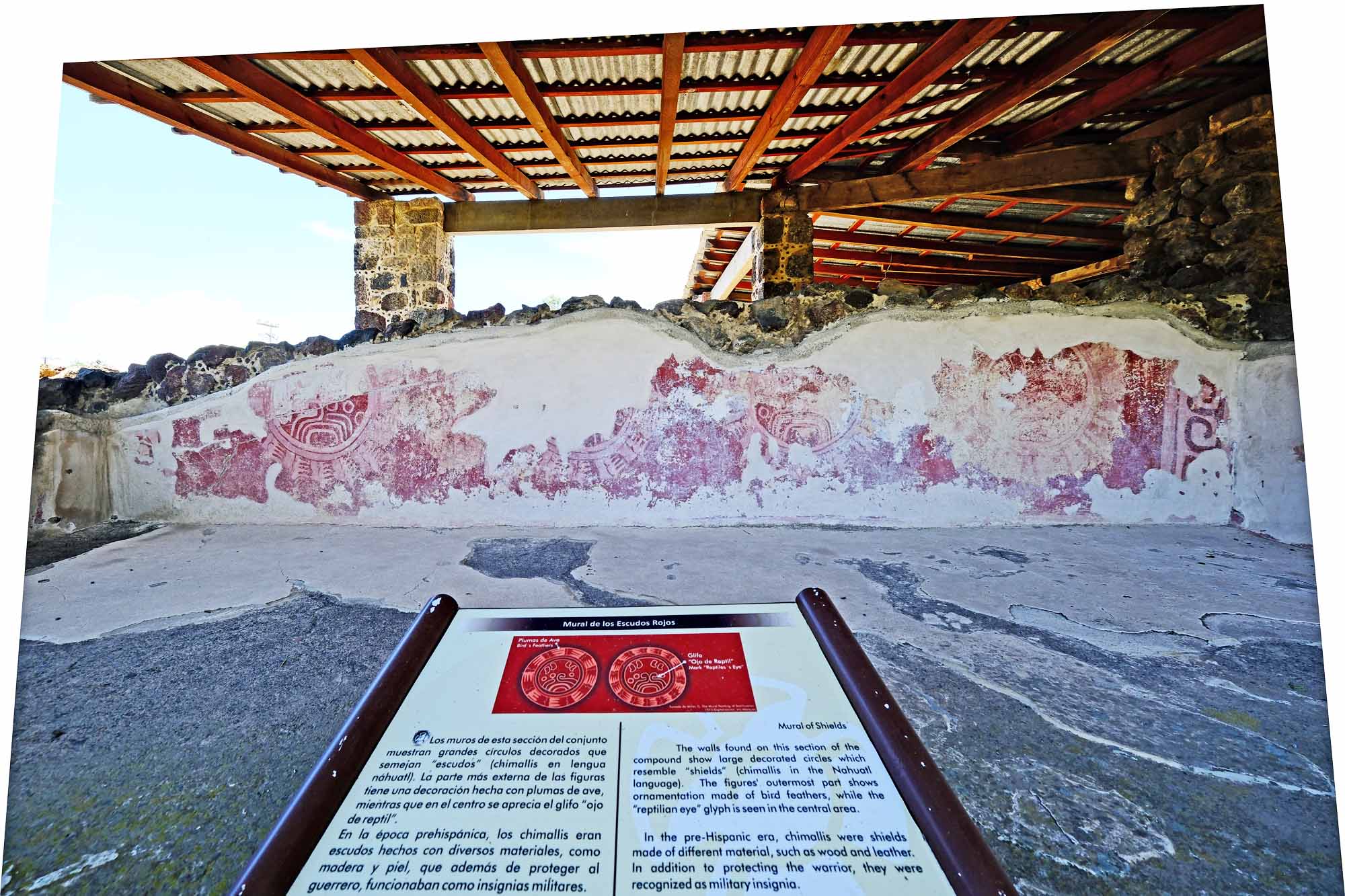
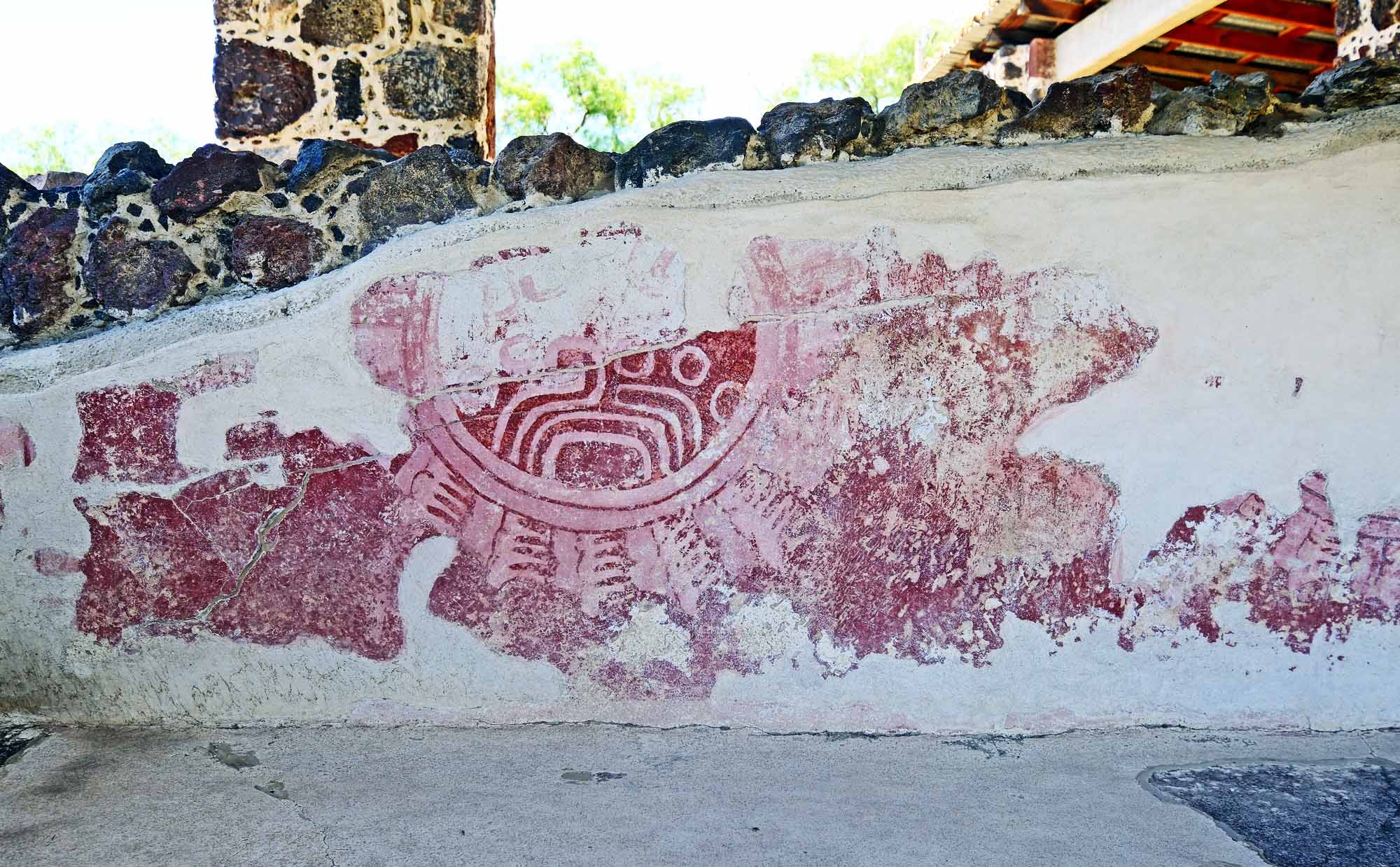
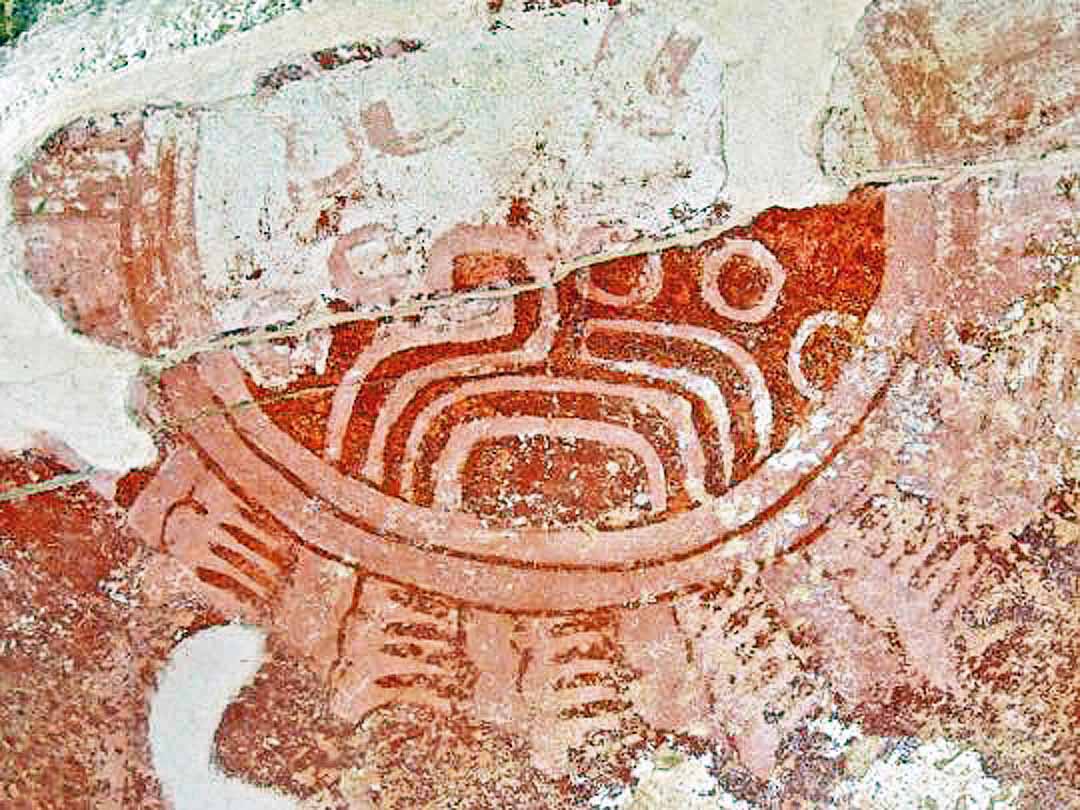
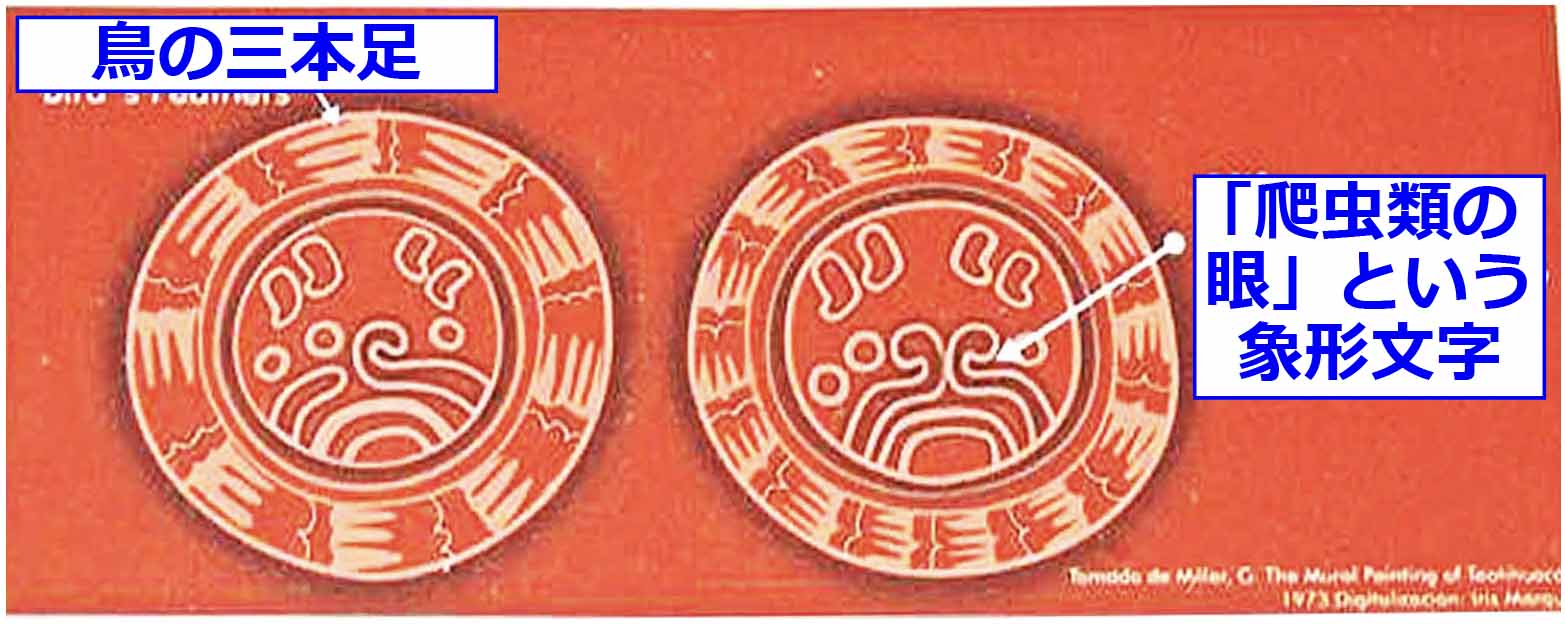
The round shield belongs to a warrior. The explanatory sign says that it is a hieroglyph representing "reptilian eyes." Is the reptile a snake? If so, does it mean "a combination of bird and snake? Also, the direction of the bird's legs and the hieroglyph are different on the left and right.
Courtyard 2: "Tree of Tlaloc" and "Paradise of Tlaloc"
We enter from Courtyard 1 to Passage 2.
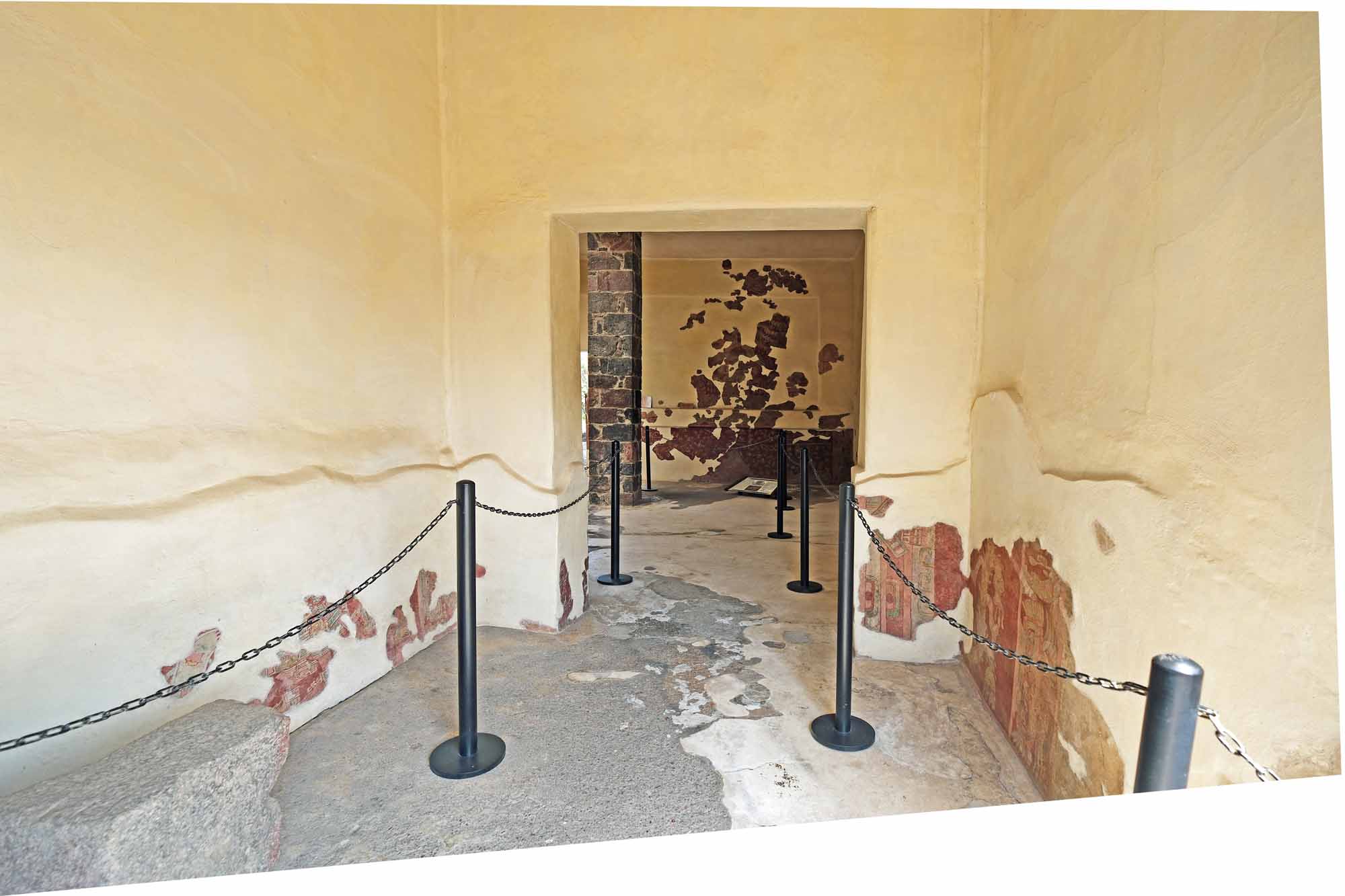
Most of the murals have peeled off and been painted cream, but the remaining parts appear to be similar to those in Courtyard 2. On the wall beyond the entrance, you can see parts of the murals "Tree of Tlaloc" and "Paradise of Tlaloc."
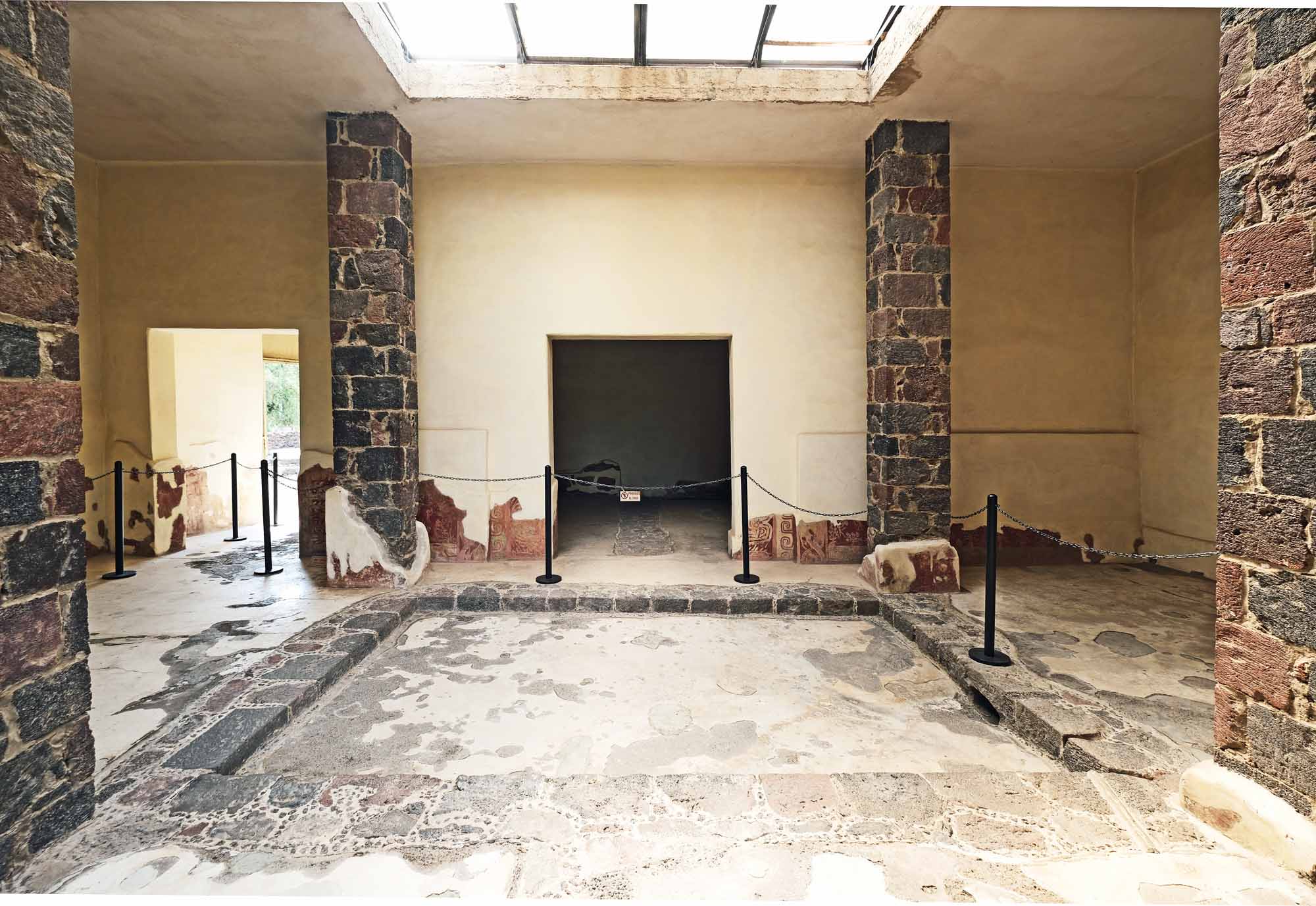
This is clearly the center of the Tepantitla neighborhood apartment complex. There is a skylight cut into it and a recessed square water tank. Drainage hole had also been recreated on the edge. There is probably a drainage ditch underground.
On the back of a camera man, the other side of the courtyard wall has murals of "The Tree of Tlaloc" and "The Paradise of Tlaloc." In fact, parts of them remain near the floor in the photo above, and also in the photo above that in Passage 2. It is likely that the entire wall of Passage 2 and Courtyard 2 was covered with a continuous series of murals.
If you look at the corner in the photo on the right below, you can see that the lower part of the wall slopes upward. Just above that, there is a long, horizontal protrusion. This is an element of the Talú-Tablero architectural style.
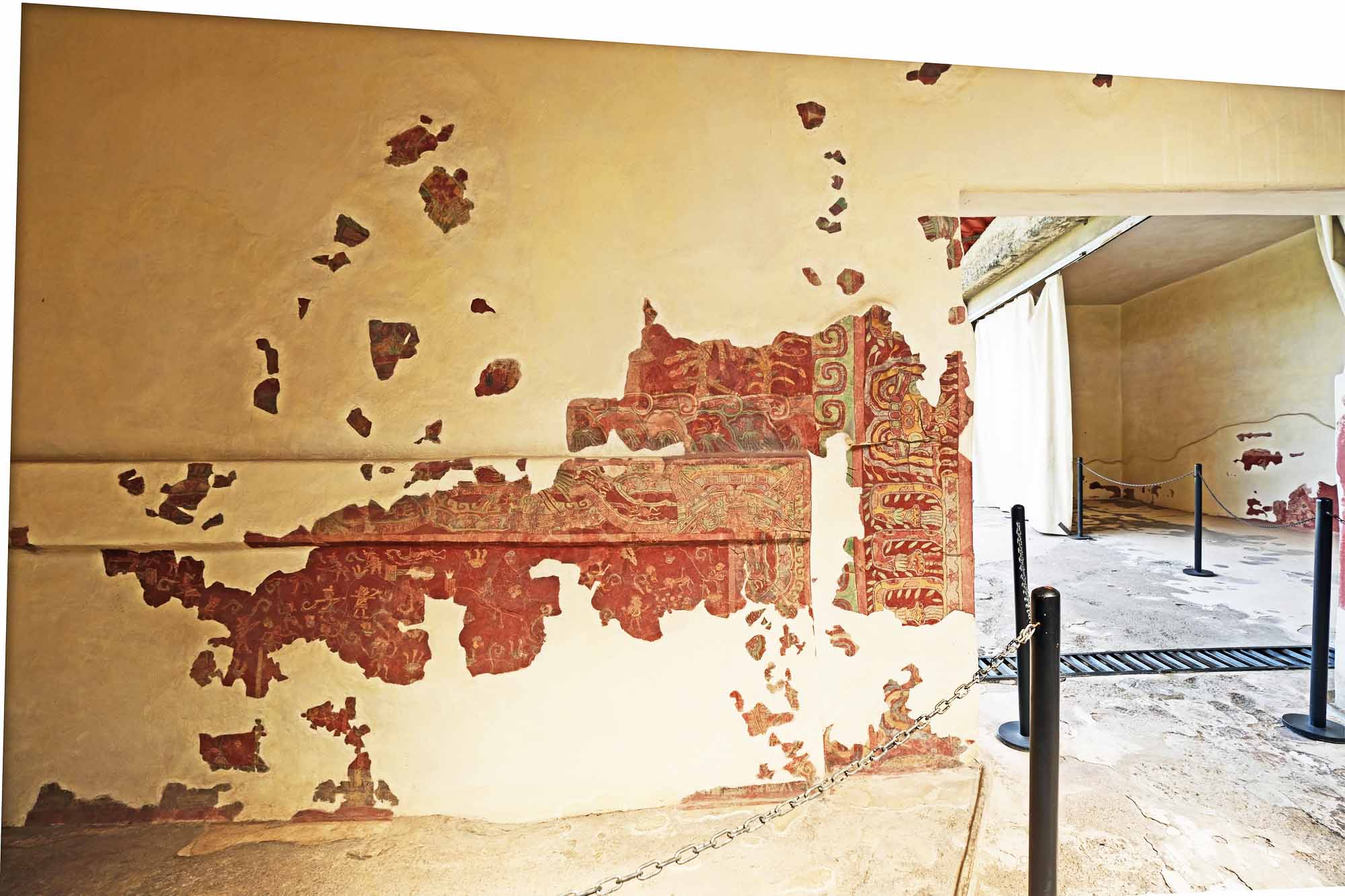
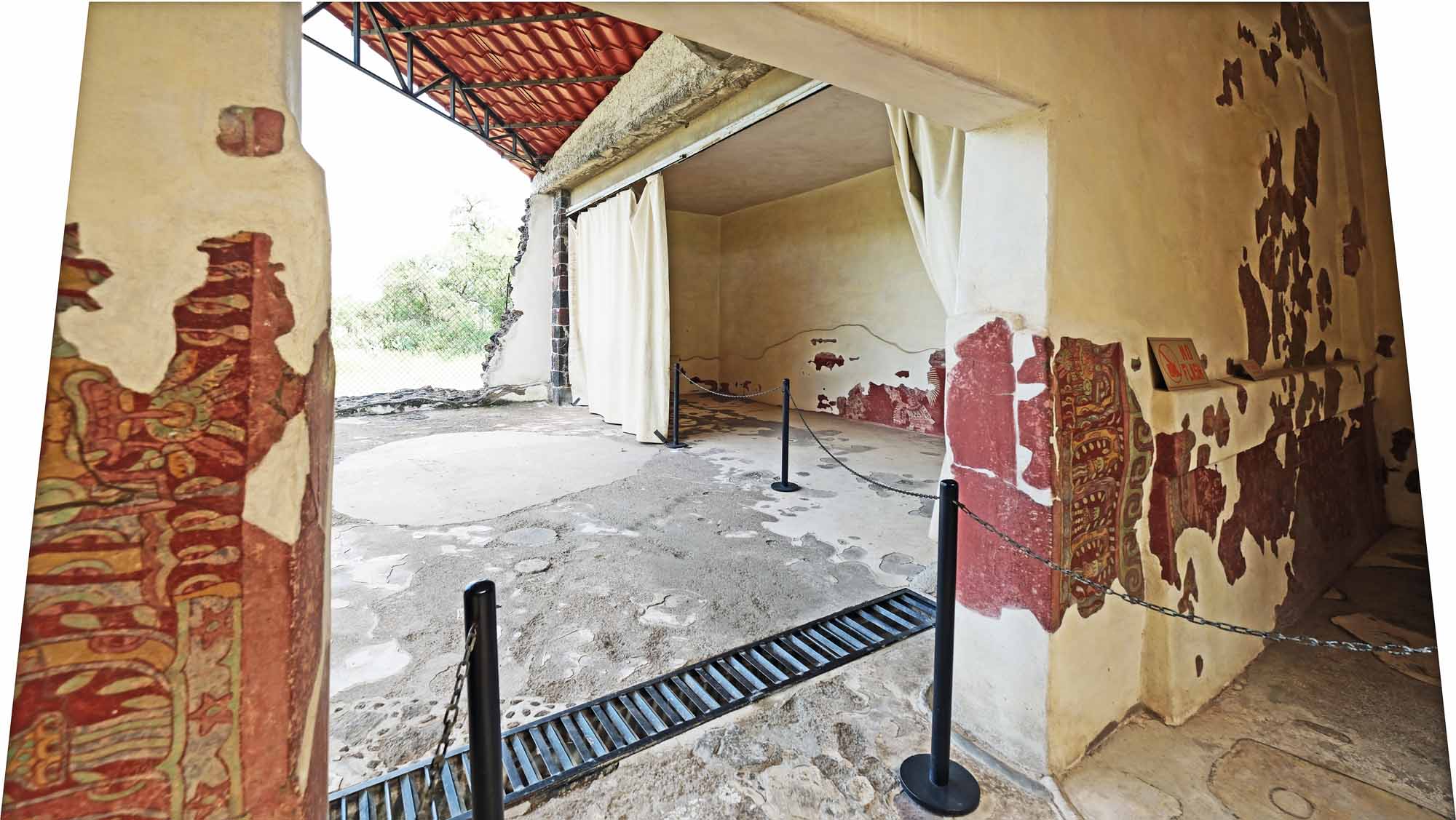
The whole picture is unclear, so let's take a look at the reconstruction at the Anthropological Museum. It's gorgeous, detailed, and bold. But how can we imagine the mural fragments and put them together? It's like completing a puzzle with so many missing pieces.
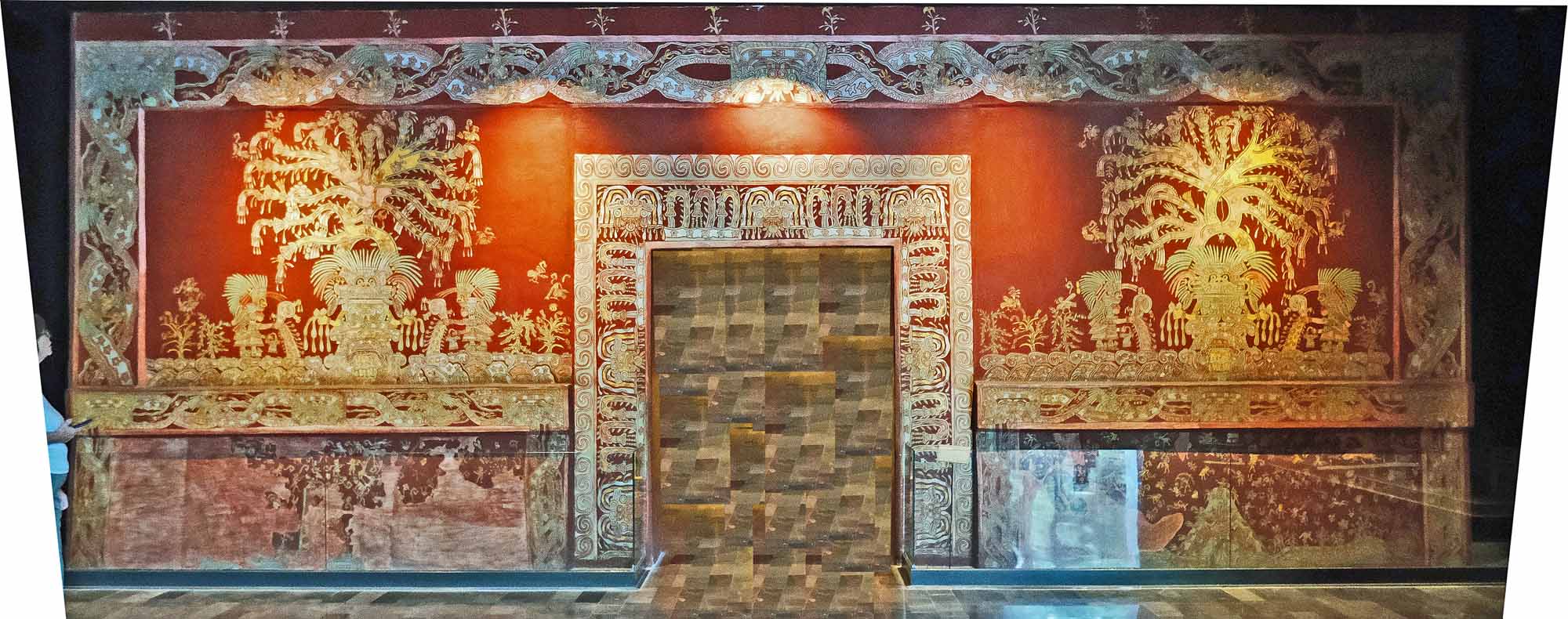
↑at Museum of Anthropology. Reconfiguration.
A group of young archaeologists were whispering together in a corner of Courtyard 2. One of them, who had been pushed out, spoke to the professor.
--Um, the fragments that you put back on the wall were originally peeled off and piled on the floor, right?
--That's right. I discovered this during World War II. With perseverance, it can be reconstructed. You guys should learn that too.
--You know, for example, see the butterfly flying here, and the civilians playing ball over there. It's not impossible that the original parts were a few centimeters or even a bit of ten more centimeters away.
--You also need the artistic talent to put it all together.
--Ah, well, we think archaeology is a science, not a humanities discipline. I think it's similar to astronomy. So, you know, the past is something to be discovered, not invented.
--So your opinion is that we should just look at what remains, and that reconstruction is outrageous.
--...
Below we will look at a mixture of the restored wall on site in 2024, the Museum of Anthropology, and the reconstruction drawings for the Ancient Mexico exhibition in Tokyo in 2023. First, the frame.
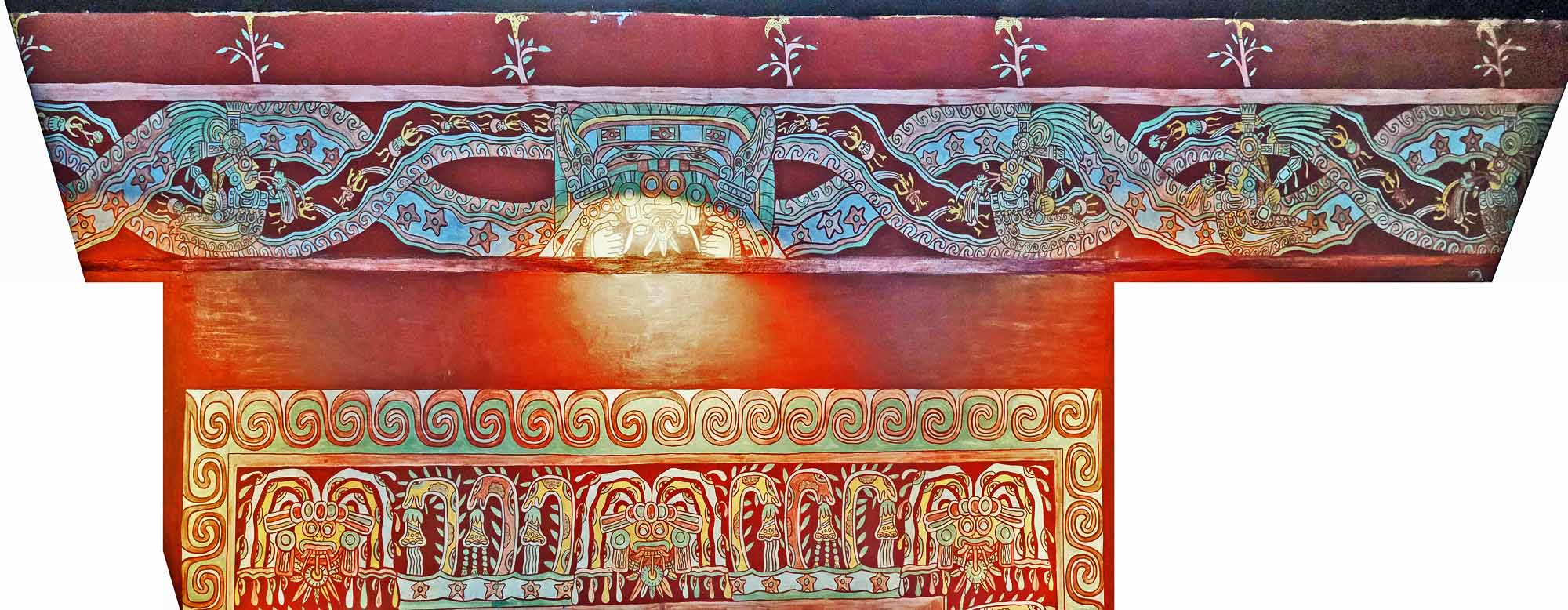
↑at Museum of Anthropology. Reconfiguration.
At the top where it connects to the ceiling, there are sparsely painted flowering trees, each one a different shape.
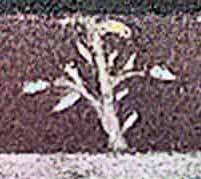
The god Tlaloc is in the center, and two waterways intertwine behind him. Riding the currents are likely humans and Venus.
Below, framed by waves on the water surface, the god Tlaloc is positioned at a key point, and plants rise from Venus's waterway, with water flowing back into the waterway from the petals of what appear to be Datura flowers.
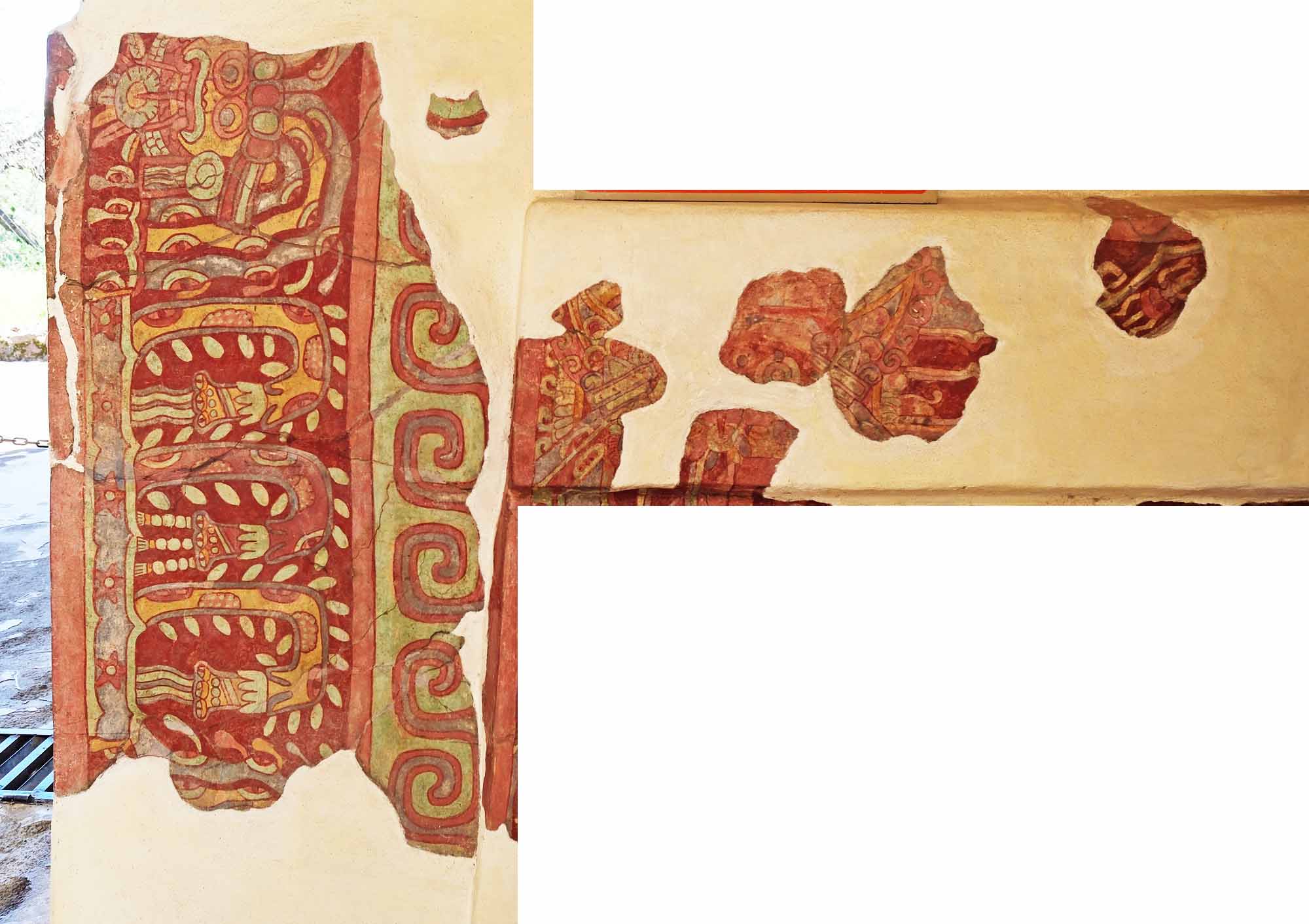
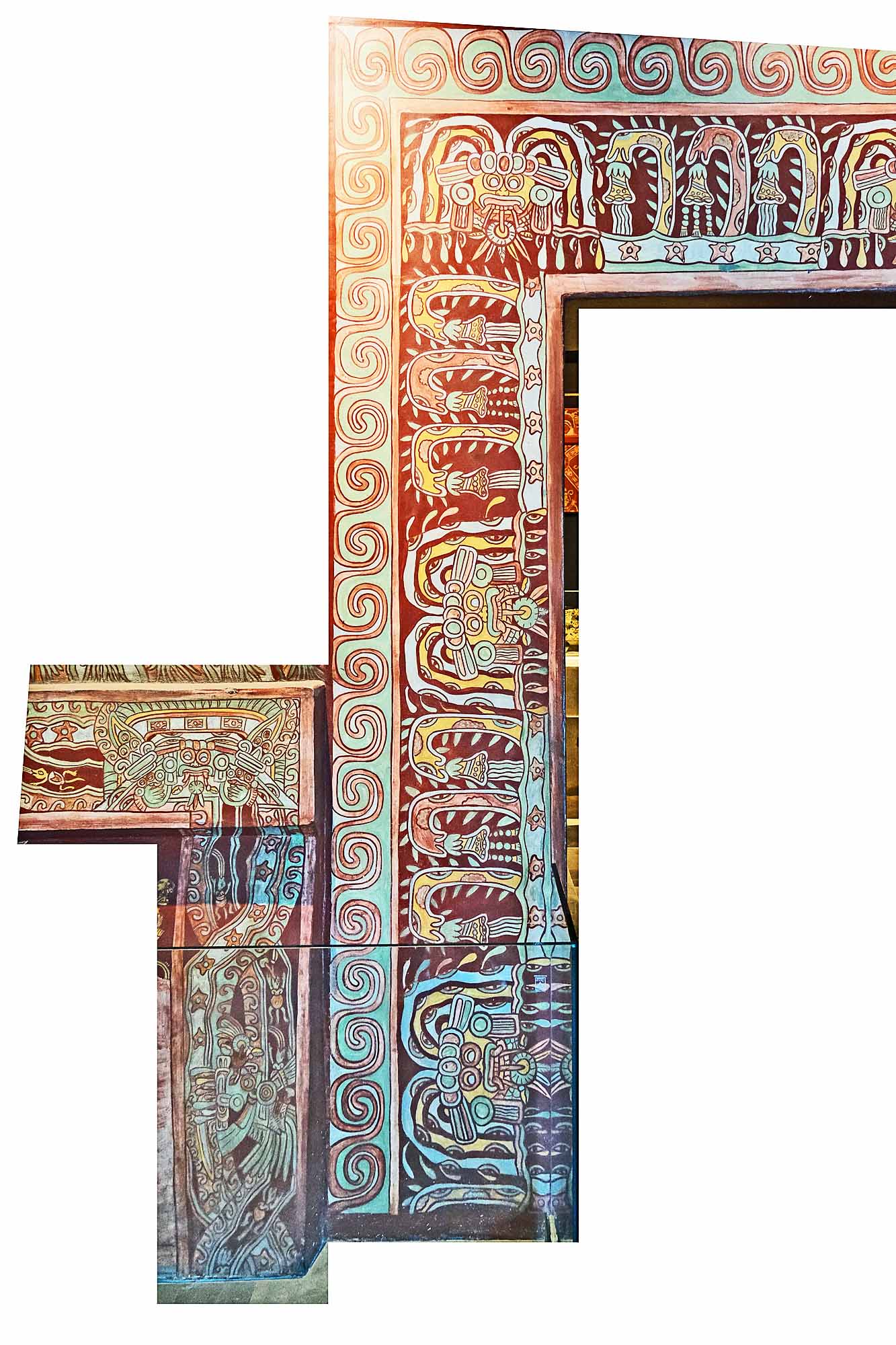
↑Ruins. ↑at Museum of Anthropology. Reconfiguration.
Top half of wall..."Tree of Tlaloc"
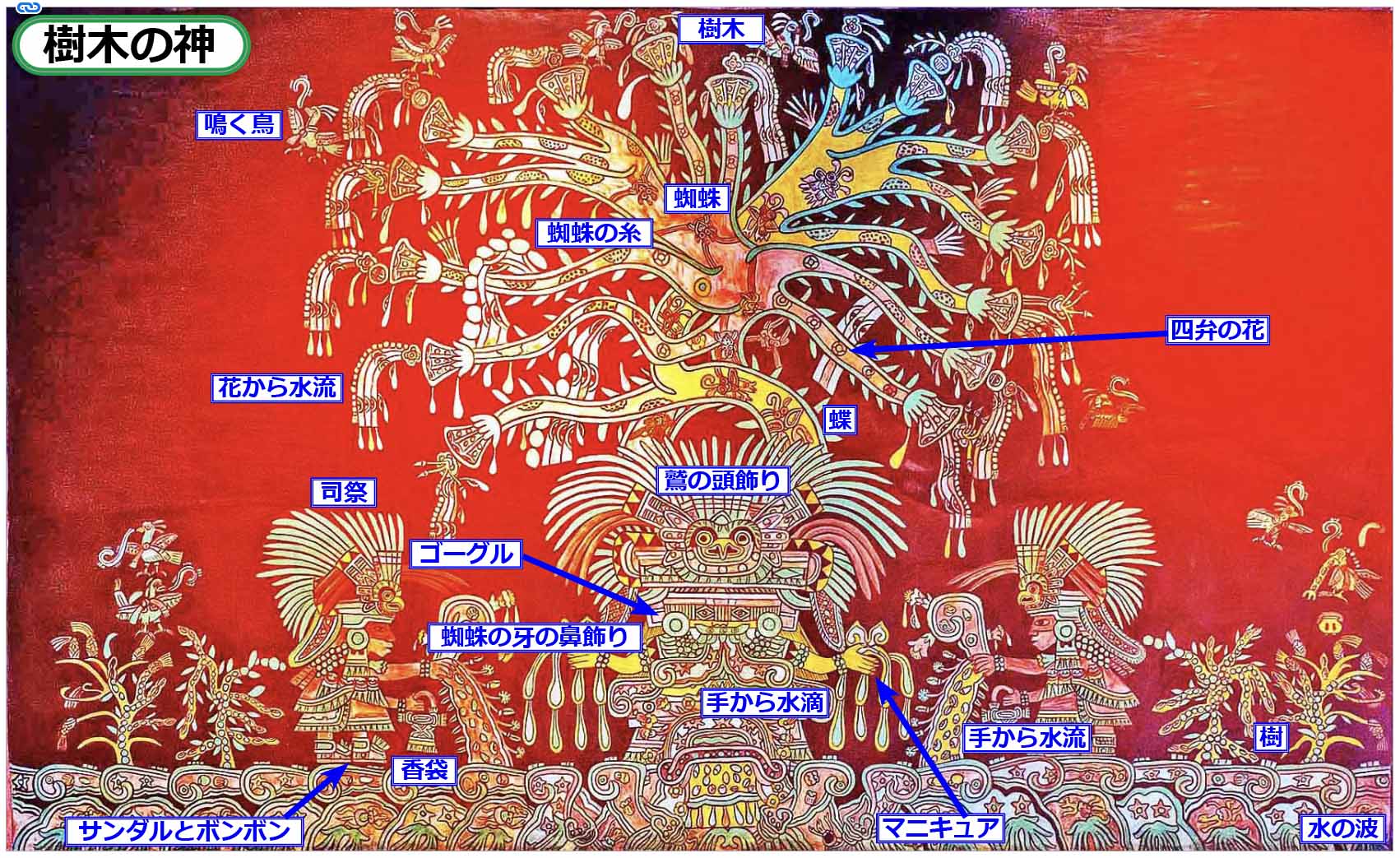
↑at Museum of Anthropology. Reconfiguration.
Various small animals gather here. The pompoms on the sandals worn by the priests are Mayan in style.
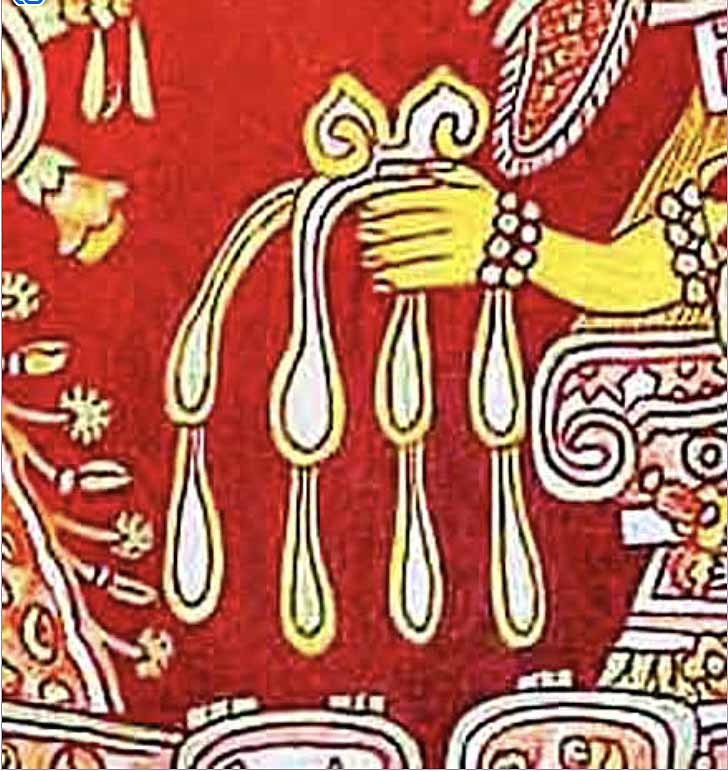
Water and blood are represented by the same type of drop. Humans offer their lifeblood to the gods, and the gods bring life-giving water to humans. The idea of self-sacrifice has existed in Mesoamerica since ancient times, and Teotihuacan seems to have been no exception.
Bottom half of wall..."Paradise of Tlaloc"
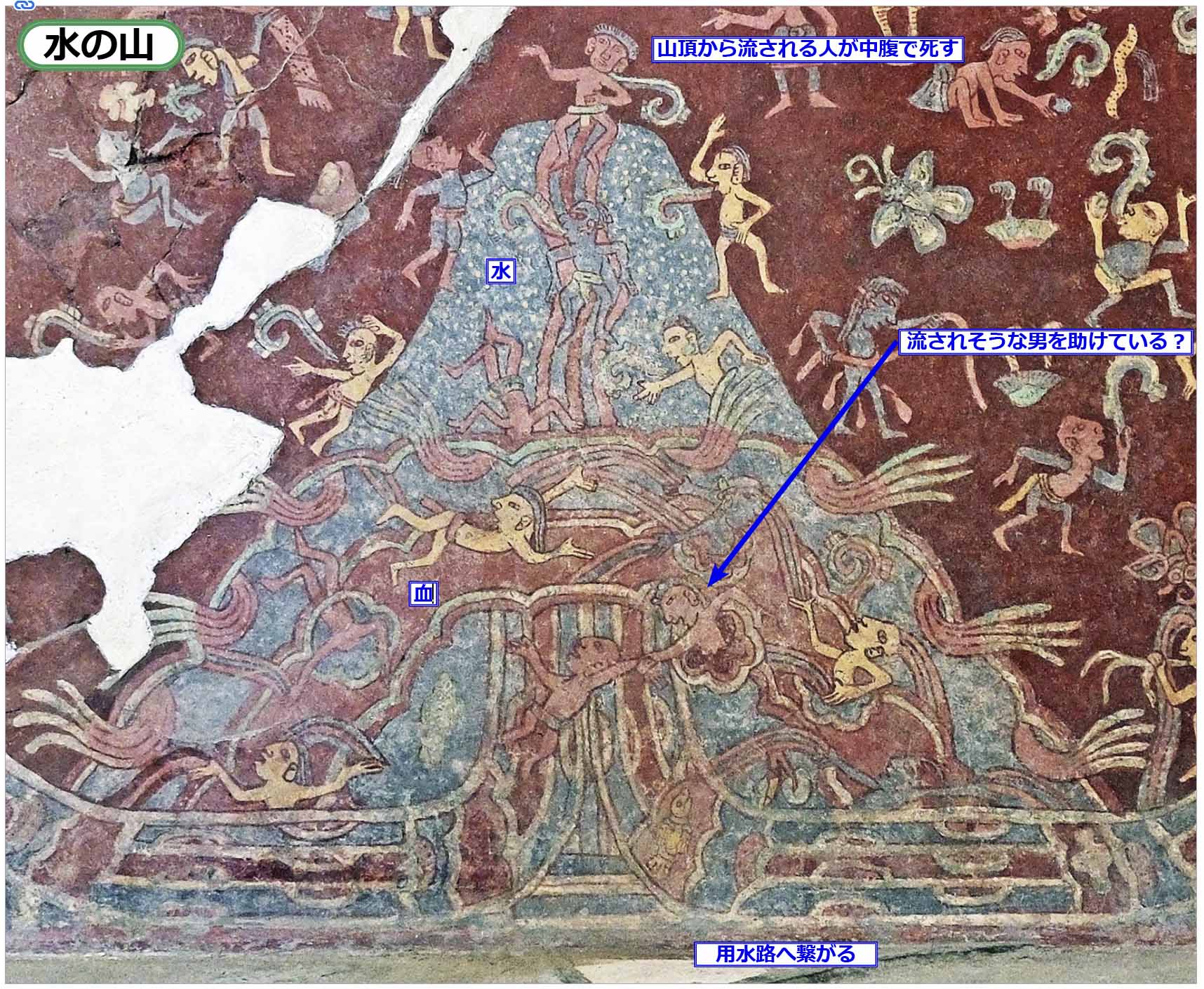
↑Ruins.
Now let's take a look at the designs scattered throughout Tlaloc's Paradise.
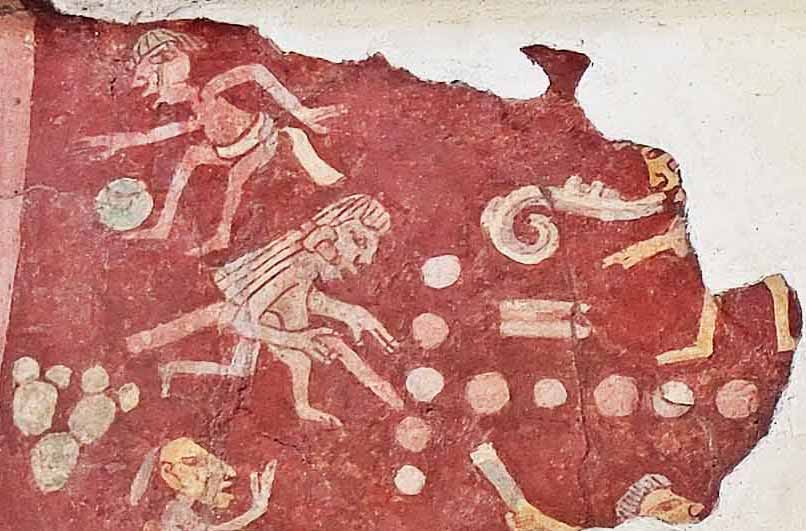
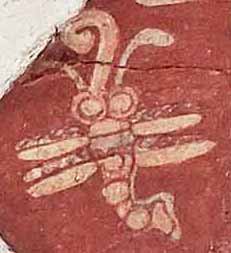
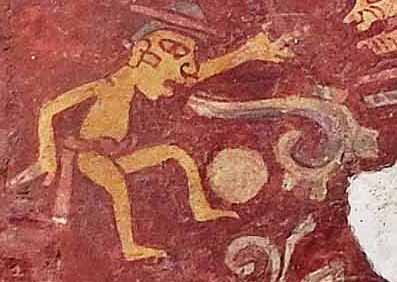
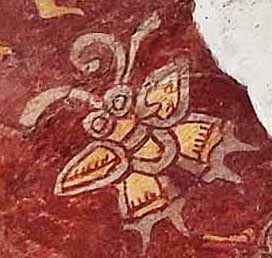
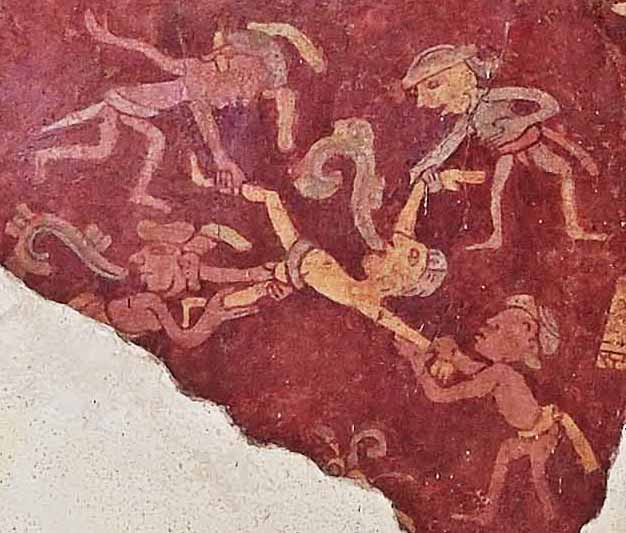
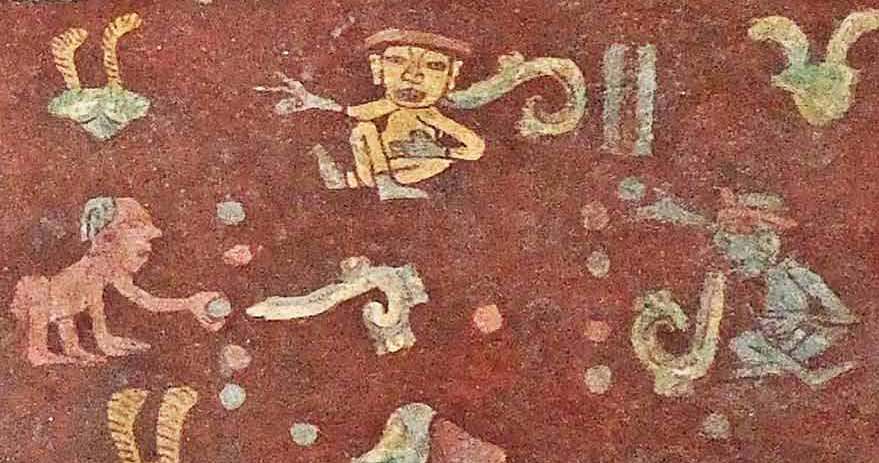
Scene 1...Kicking large ball and small balls for bowling.
Scene 2...A dragonfly with Tlaloc eyes.
Scene 3...Kicking a large ball while making sounds.
Scene 4...A butterfly with Tlaloc eyes.
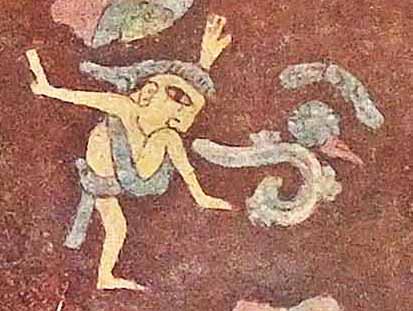
Scene 5...A person lying down with his arms and legs held by four people, making sounds.
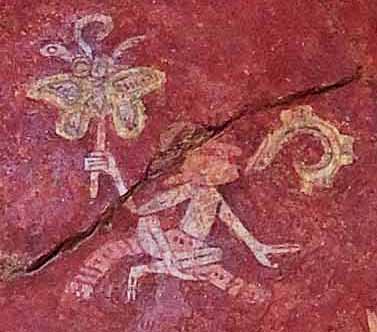
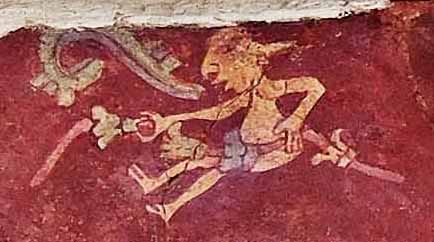
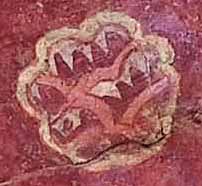
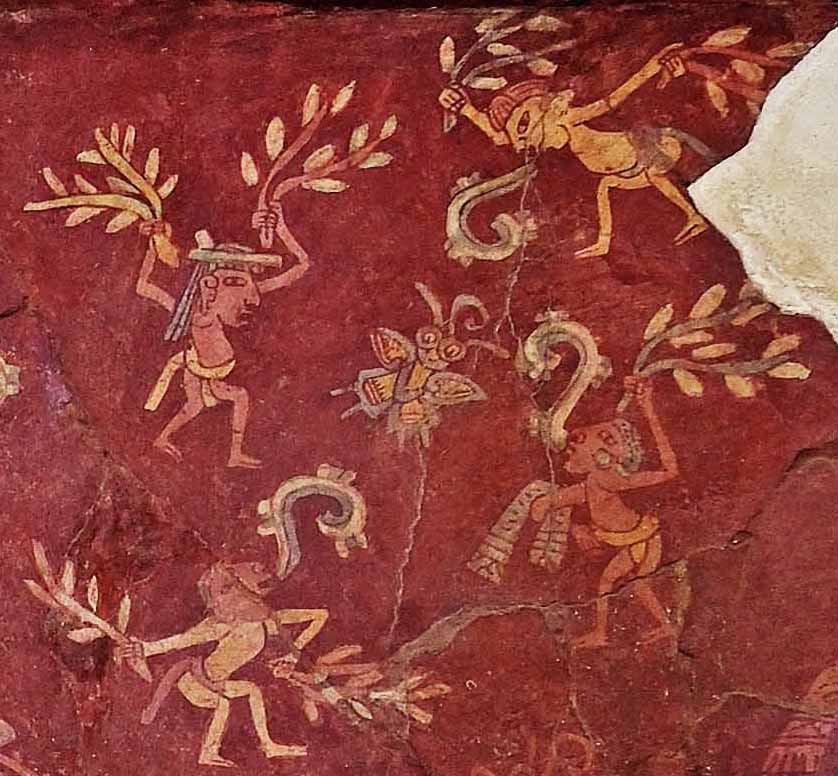
Scene 6...A person impaling a butterfly and making a sound.
Scene 7...Unknown.
Scene 8...Unknown.
Scene 9...Four people hunting butterflies on branches.
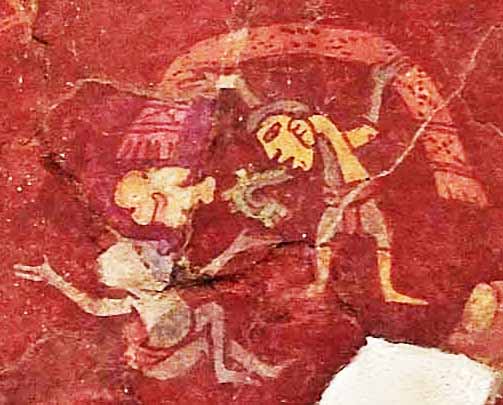
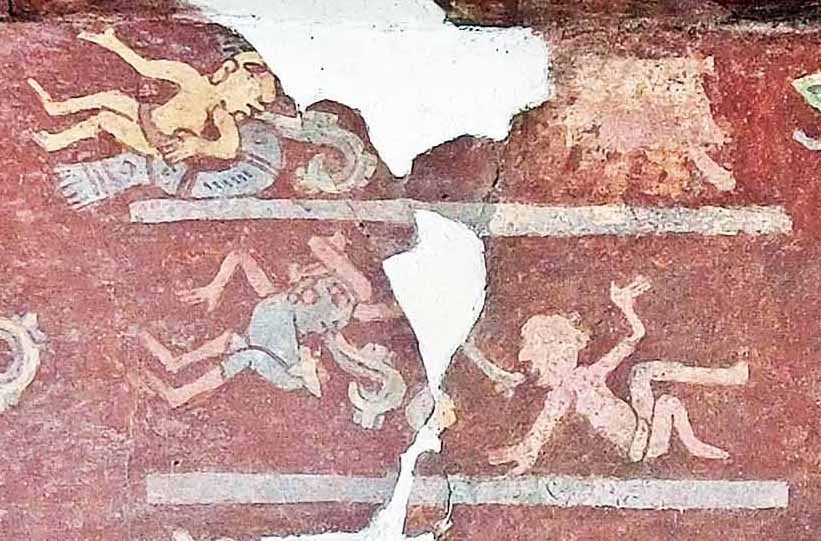

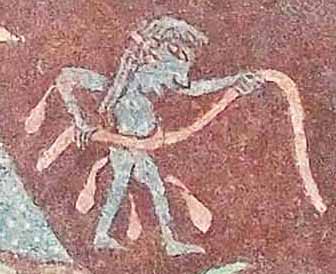
Scene 10...A person speaking with a cloth draped over their shoulders.
Scene 11...A person trying to drape a cloth over a person who has crouched.
Scene 12...Unknown.
Scene 13...A spider.
Scene 14...Re-tying a loincloth.
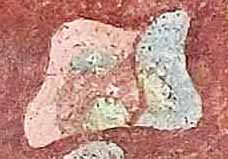
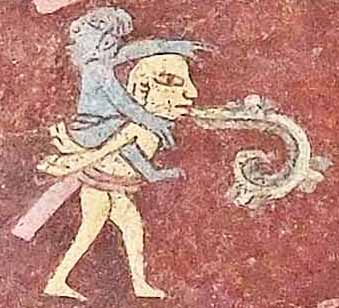
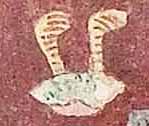
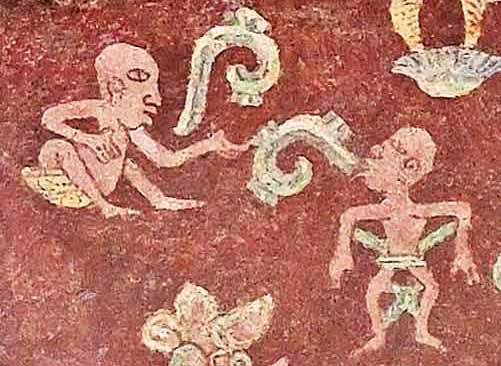
Scene 15...Unknown.
Scene 16...A person carrying someone on their back while making a sound.
Scene 17...Unknown.
Scene 18...Two people talking to each other.
Scene 19...Unknown.
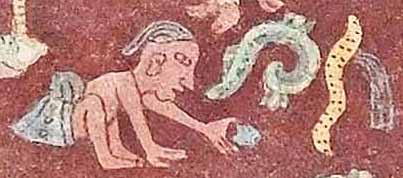
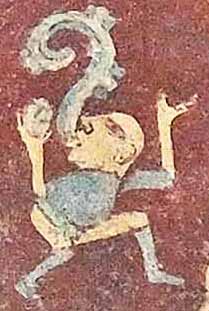
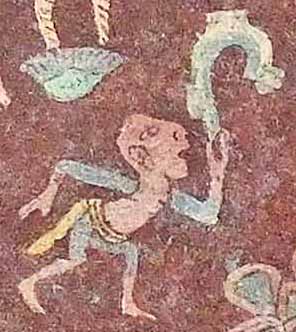
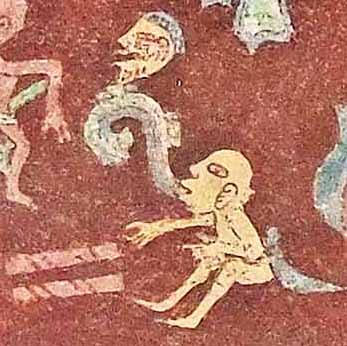
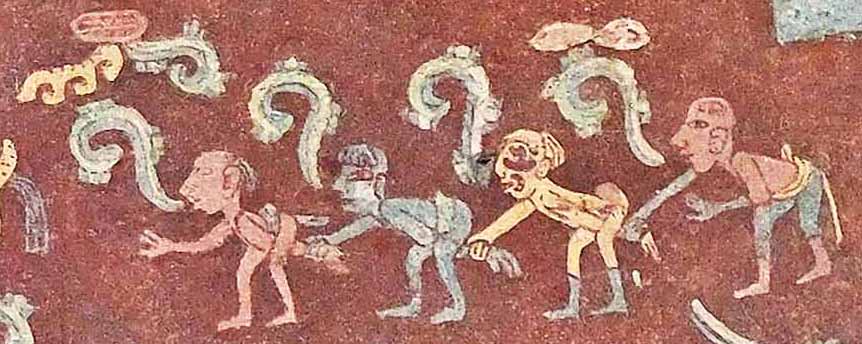
Scene 20...A person crouching down and rolling a ball.
Scene 21...A person making a sound up above.
Scene 22...A person making a sound with their hands.
Scene 23...A person lining up two sticks and making a sound about someone else.
Scene 24...A four-person vocal group.
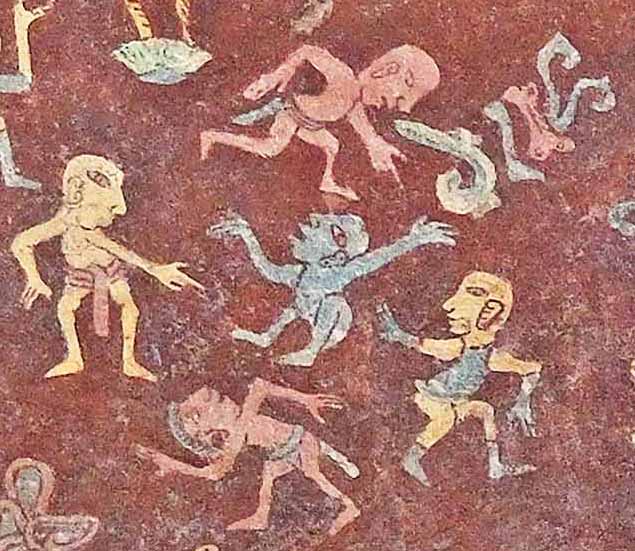
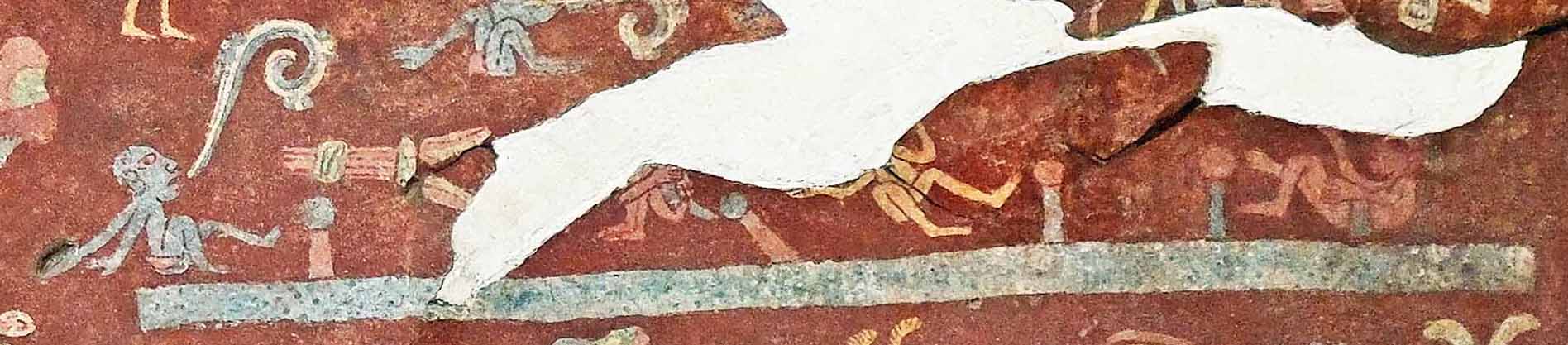
Scene 25...Four people surround one crouching person.
Scene 26...A ball is placed on a stick placed on a thin base? The objects on the left and above the ball are unknown.
Scene 27...Unknown.
Scene 28...Two people bowling. Is the face in front of them that of an umpire?
Scene 29...He pours water over his head while yelling.
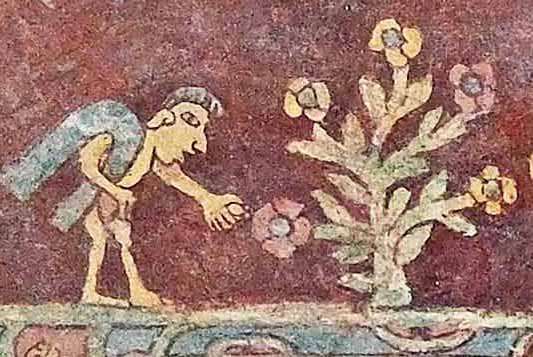
Scene 30...He picks a four-petal flower.
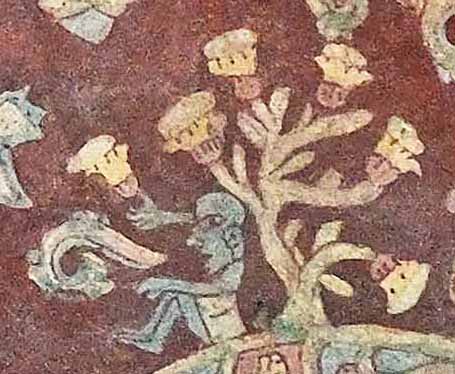
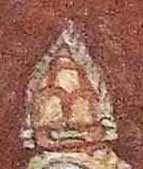
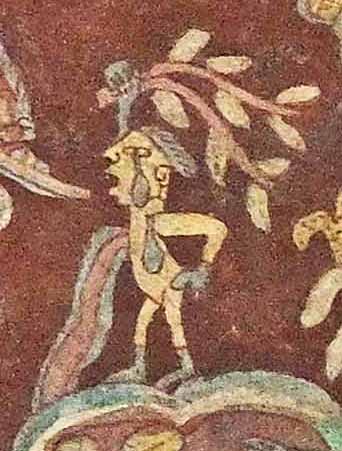
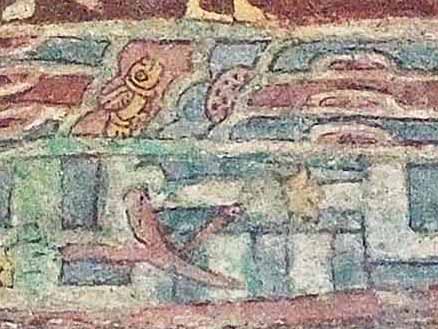
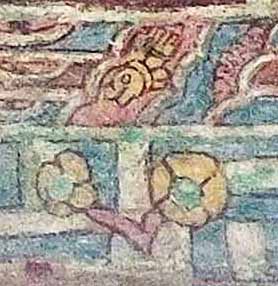
Scene 31...Sitting under a flowering tree, making a sound.
Scene 32...Unknown.
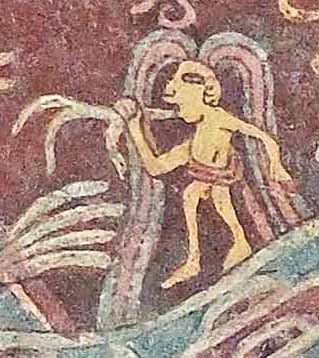
Scene 33...At the edge of a reservoir, raising a branch and making a sound. Water flows from his chest.
Scene 34...Flowing water above, irrigated farmland below. Fish and Datura stramonium.
Scene 35...Fish diving into the flowing water and a four-petal flower on the footpath.
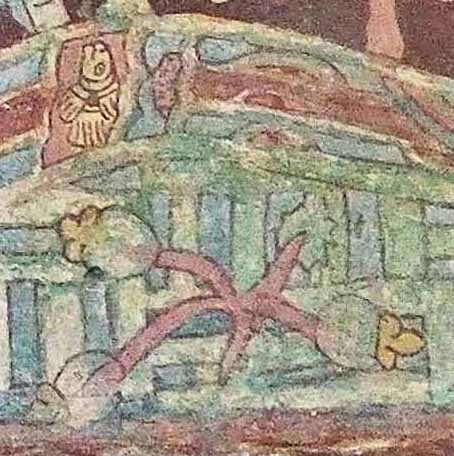
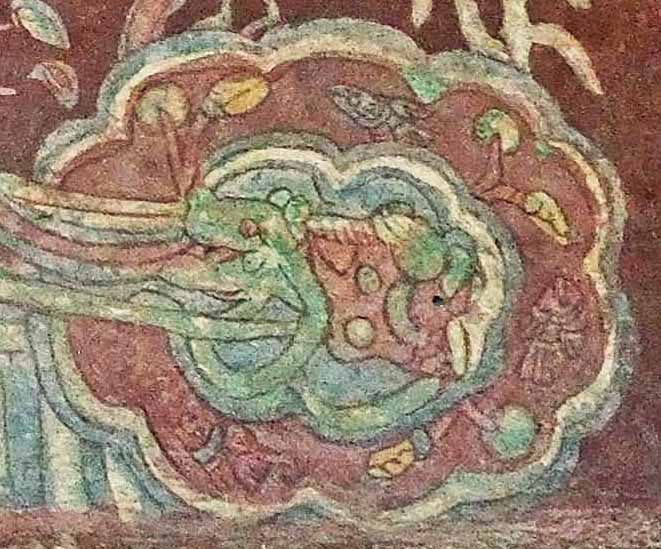
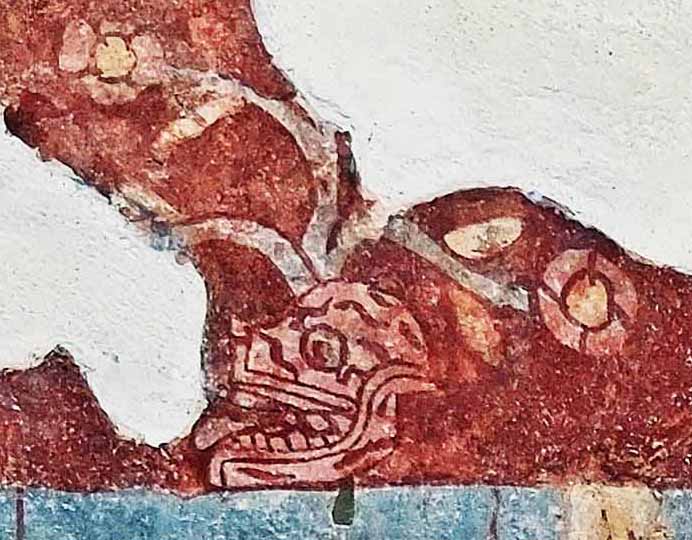
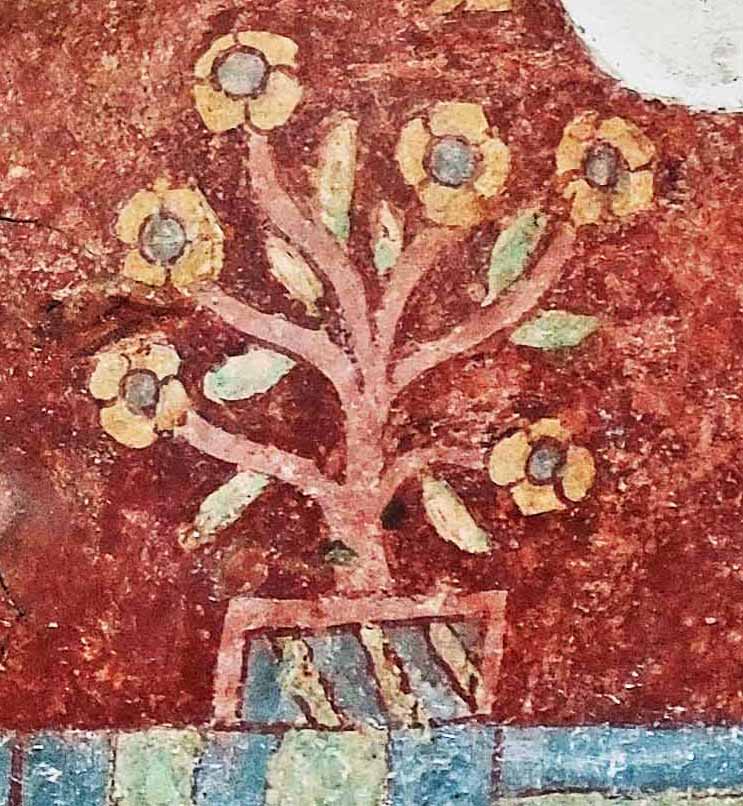
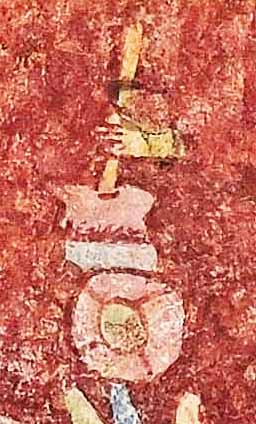
Scene 36...Rising fish and flowers.
Scene 37...A frog in a reservoir at the end of the canal.
Scene 38...A four-petal flower on a skeleton above the canal.
Scene 39...Between the canal and the trees is mounded soil for chinampa farming.
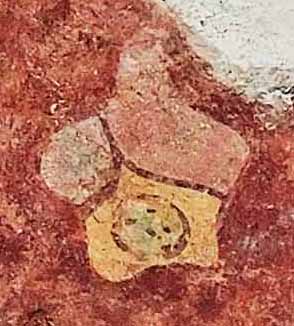
Scene 40...It seems possible that something above the four-petal flower is a place name.
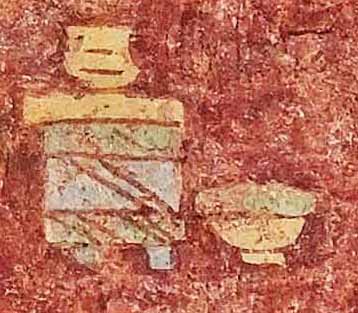
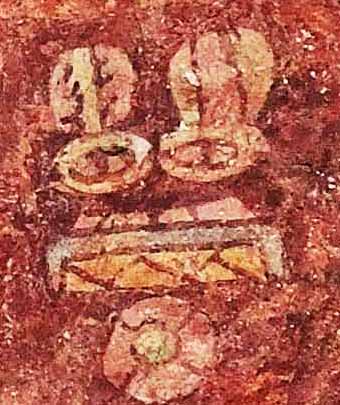
Scene 41... A tiered box and bowl?
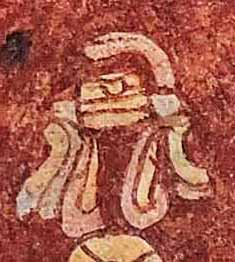
Scene 42... A lion dance?
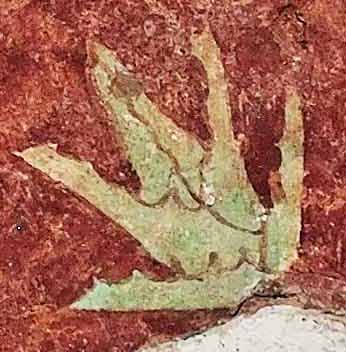
Scene 43... An agave.
Scene 44... Unknown.
Scene 45... Is the name of a place above the four-petaled flower? A crocodile or the god Tlaloc?
The above are ruins, and the following are reconstructions from the Anthropological Museum.
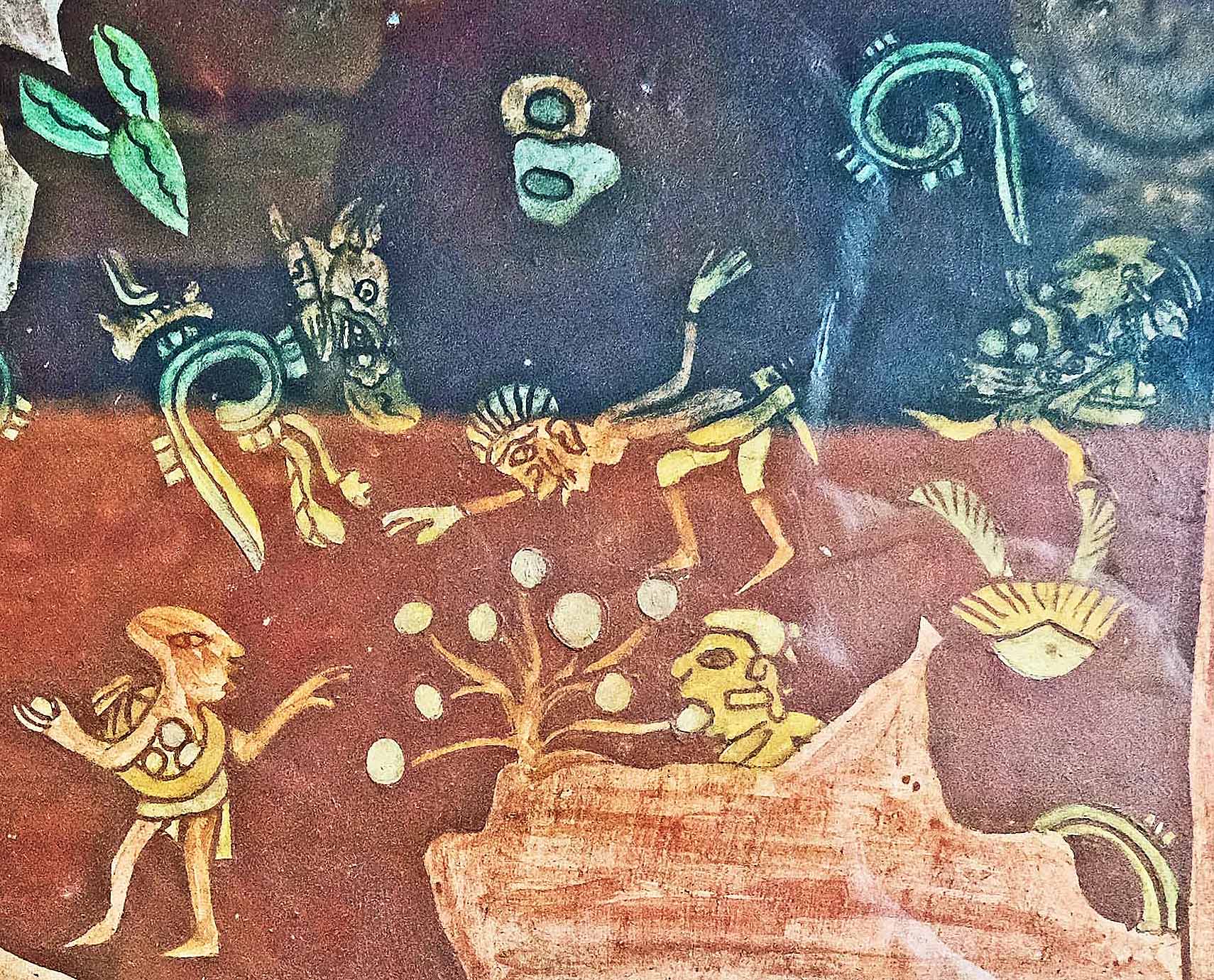
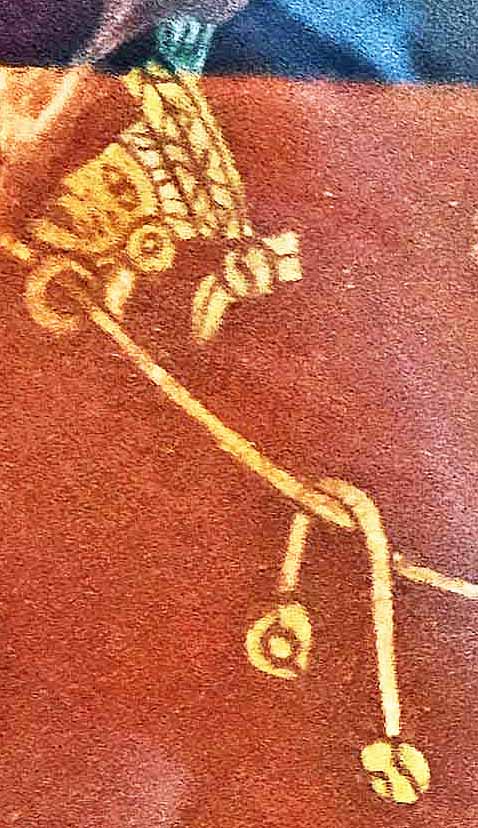
Scene 46...Four people eat the round white fruit of the tree. The dog in the upper left also eats some.
Scene 47...Only the head is tangled around the stem.
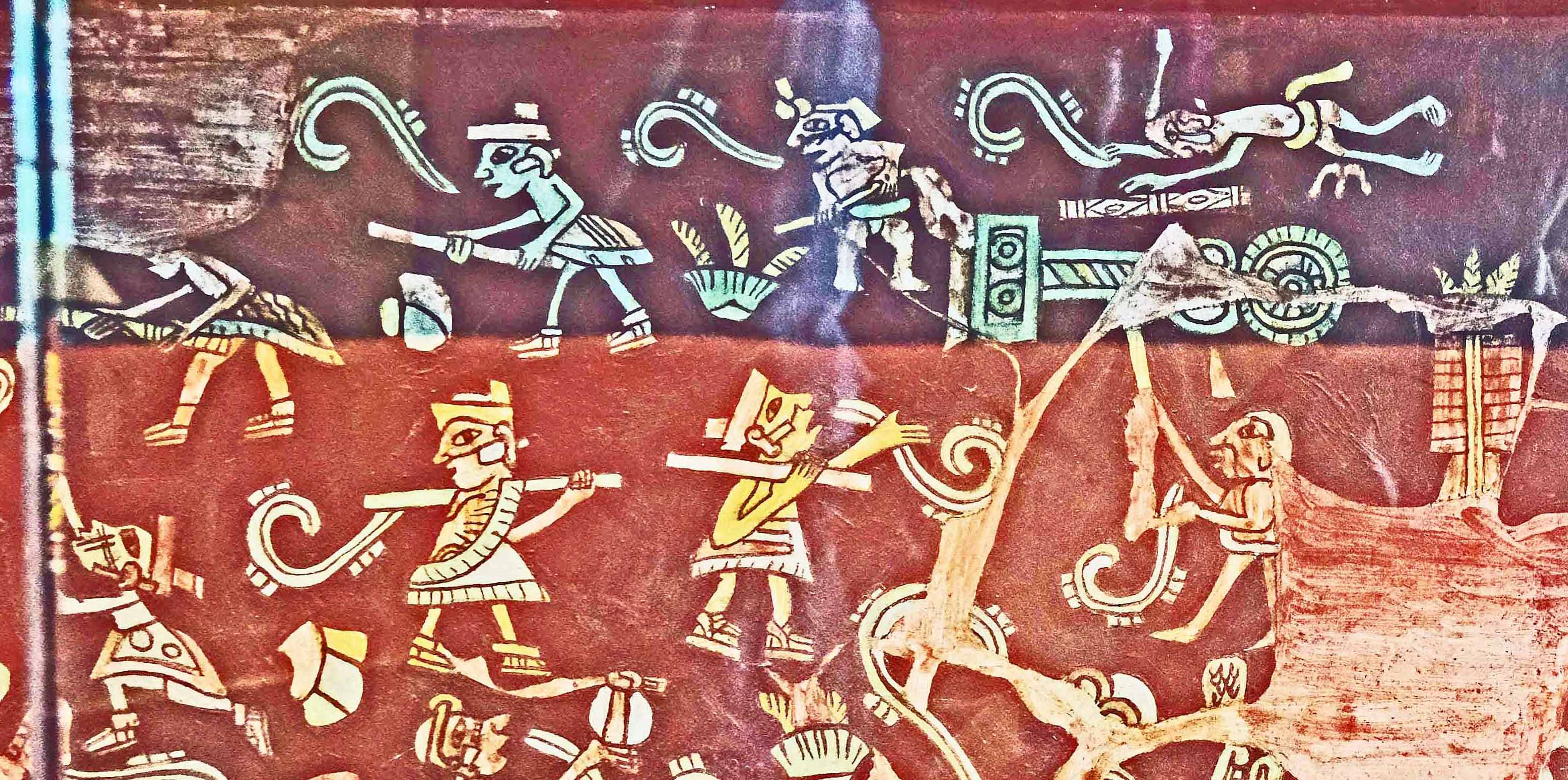
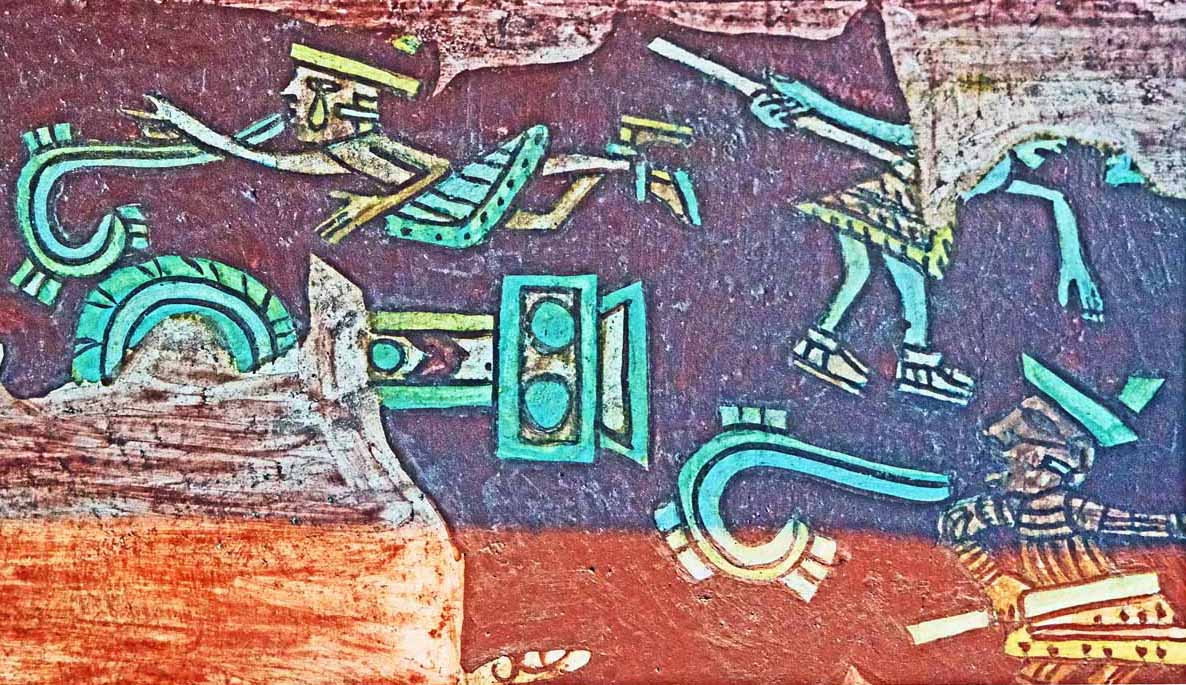
Scene 48...Eight people holding sticks. They are dressed in fine clothing. The second person from the left in the top row is rolling a ball? Above them, a person wearing only a loincloth lies with his ankle bent unnaturally, crying, his hand reaching out for the fallen stick.
Scene 49...The fallen "ball marker" and three people dressed like ball players.
The recumbent objects in scenes 48 and 49 are very similar to those excavated in the La Ventilla neighbourhood apartment complex.
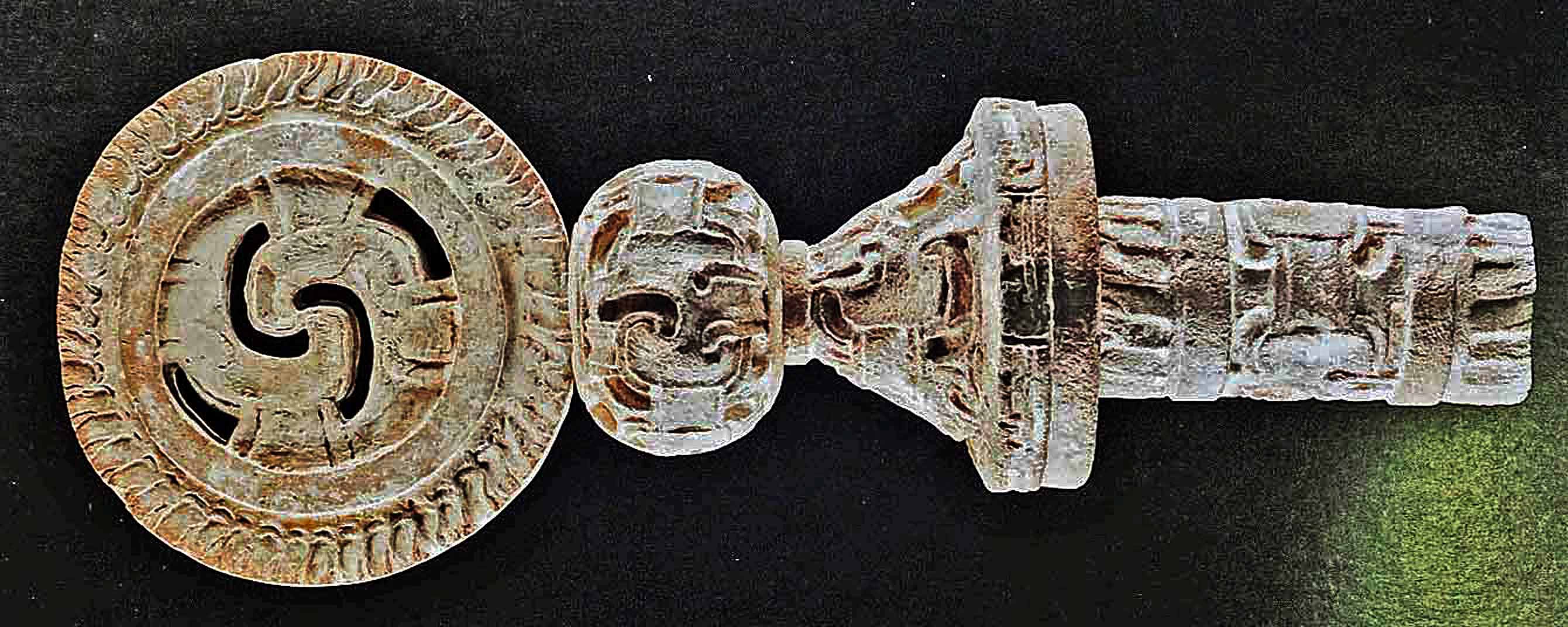
↑At the Anthropology Museum. A "ball marker" given in La Ventilla.
As we will discuss later, a dedicated ball court is reported to have been located at Pre Cuidadela in 100 AD. No new construction has taken place at Teotihuacan since 120 AD. The Tepantitla murals were painted after 350 AD, so although there is no dedicated ball court, it is possible to infer that ball-game was hold somewhere.
Traces in the lower part of the walls suggest that all four sides of Courtyard 2 were covered with the tree of Tlaloc and the Paradise of Tlaloc.
Now, let's move to Room 2 on the east side.
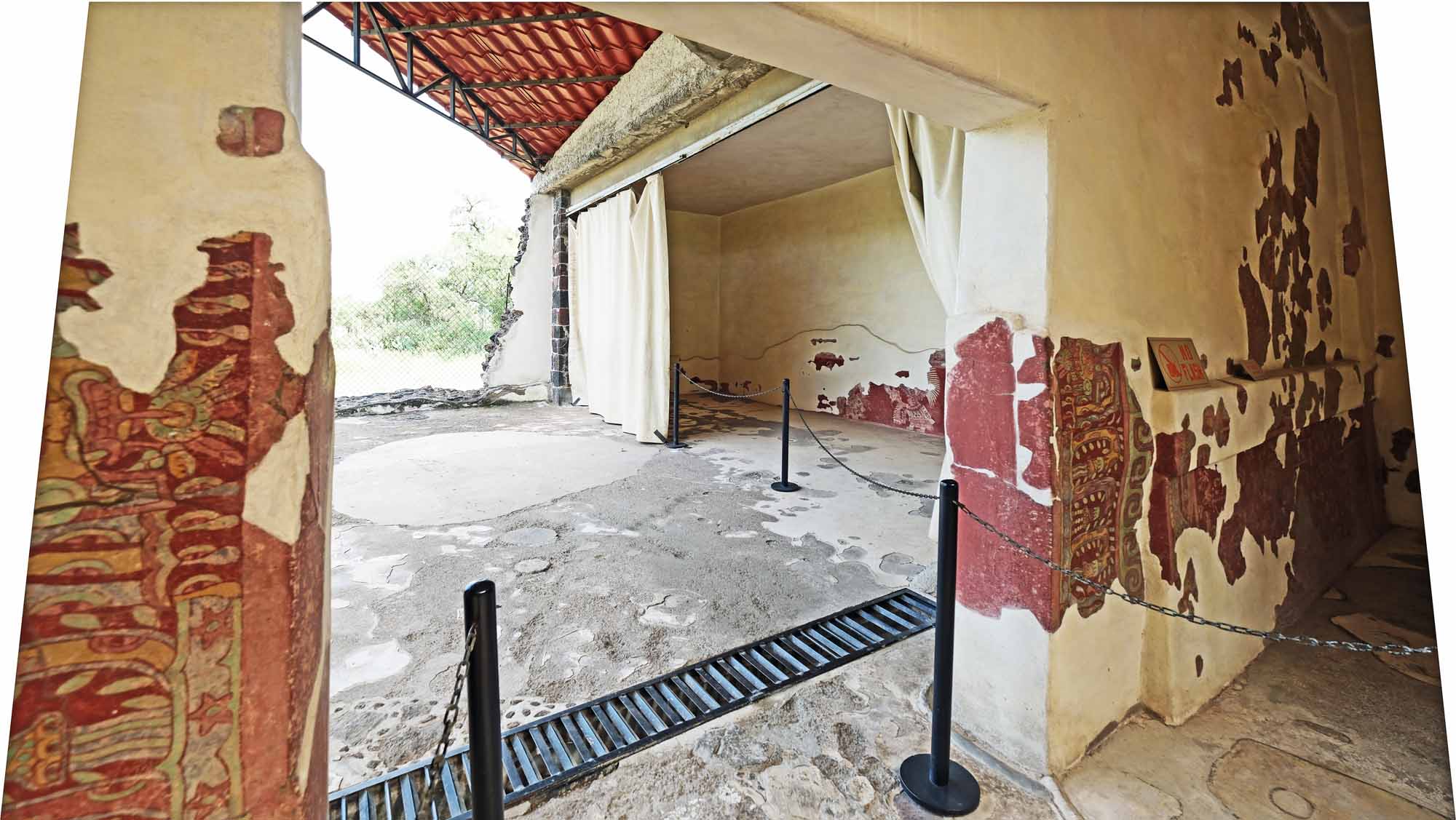
Room 2: The Retinue of Sower Priests

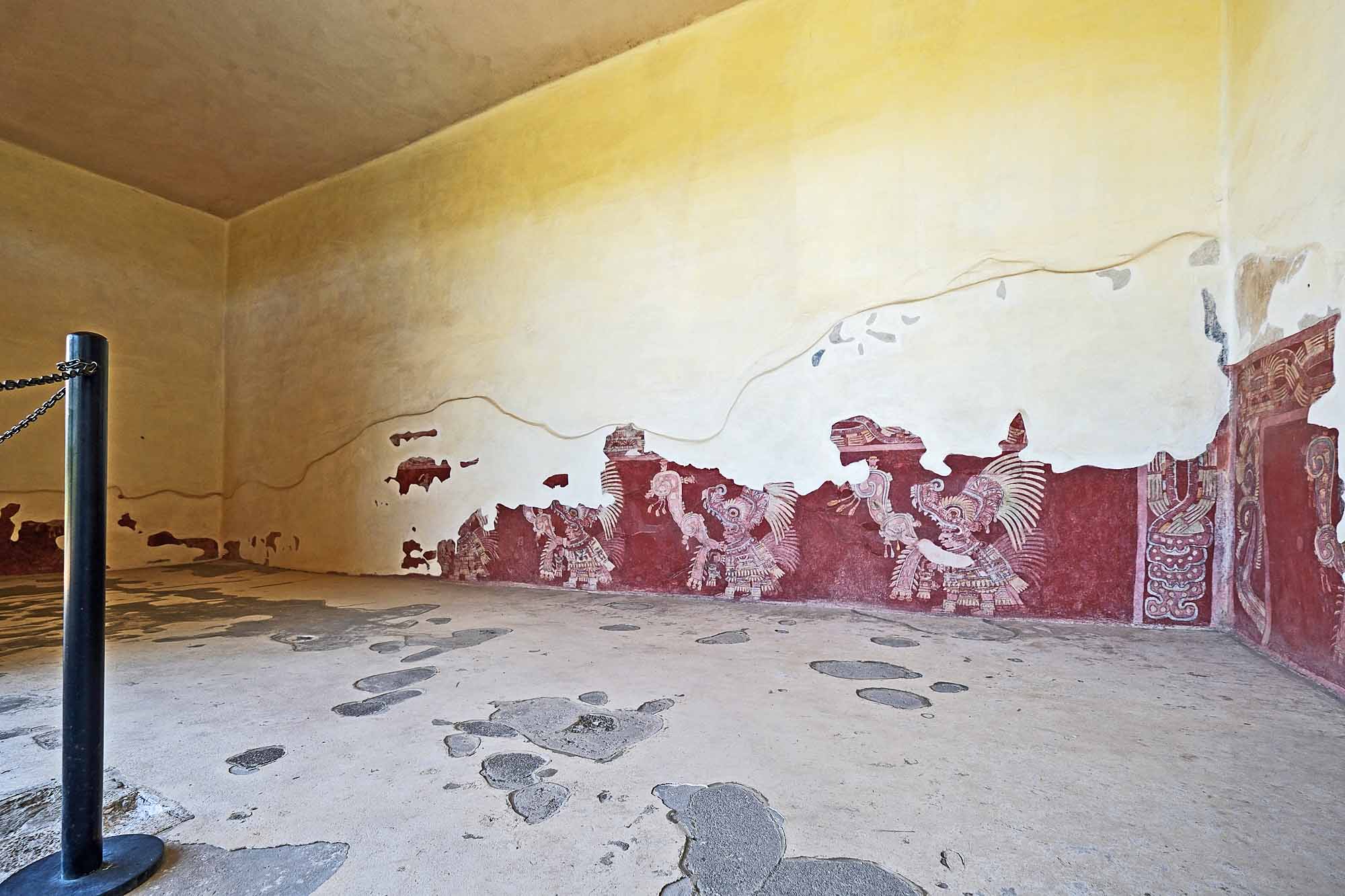
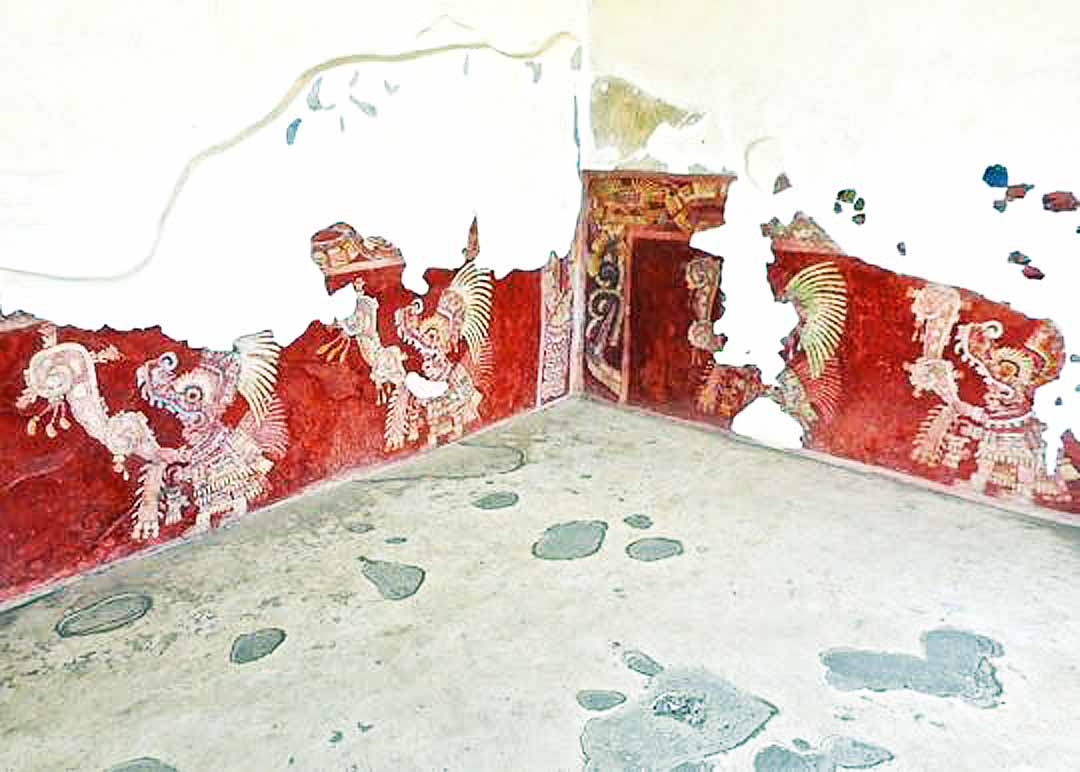
↑Reconstruction at Museum of Anthropology. ↑↑Ruins.
Although all the paintings are almost identical in composition, there are differences between each of them. For example, the plants hanging from the tops of the bubbles coming from the hands of the priest in the center and the priest on the right are depicted differently. If all the paintings in Room 2 had remained intact, the differences would have been obvious.
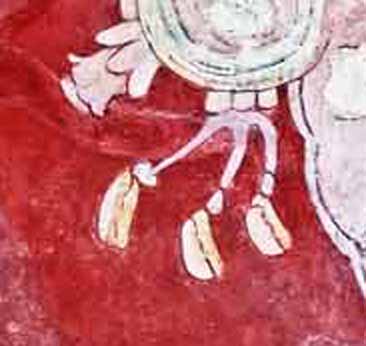
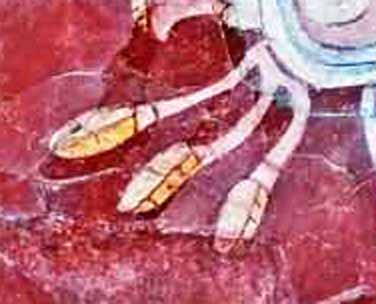
Some archaeologists have suggested that this difference could mean that it is actually a personal name, or that it could be a place name. However, no matter how to read the name or what place it is, there are too few other samples to go any further.
By the way, looking at the floor plan I gave you at the beginning, or at the satellite photo, it's hard to see the edges of this building. A typical construction/extension of a neighborhood apartment building is a rectangle, averaging 43m square, surrounded by high exterior walls, with a narrow corridor in between, and arranged like square tiles.
Below is a hypothetical diagram. The red square is Tepantitla, which can be visited, and the yellow is an imaginary residential building. Since the red has religious functions, it is possible that one of the yellow buildings was a workshop or a residence.
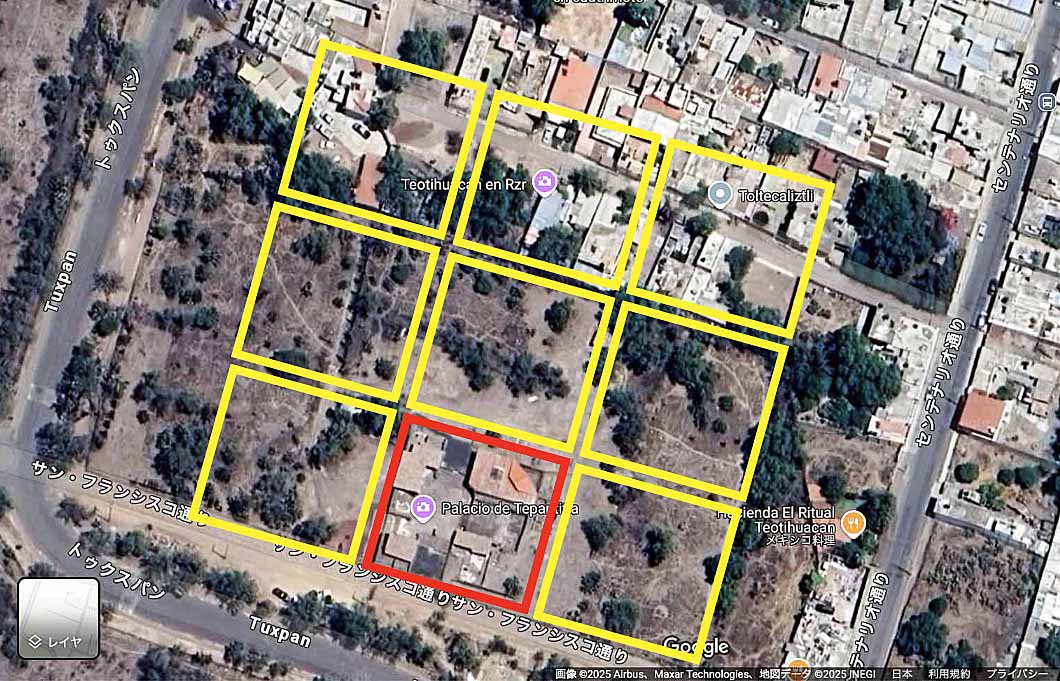
↑at Google Map。
The Tepantitla murals appear to have two themes: military and agriculture from a religious perspective.