Zacuala
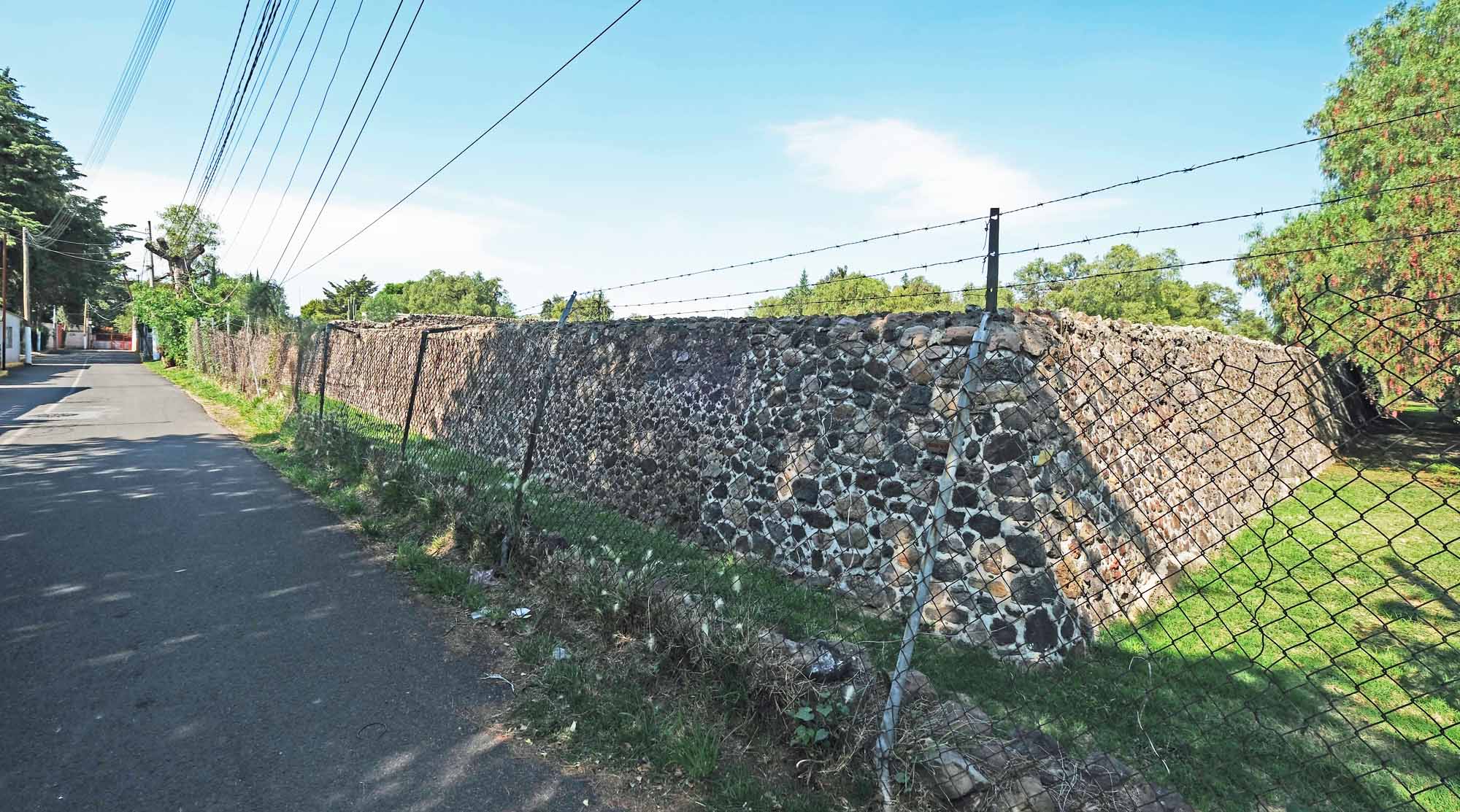
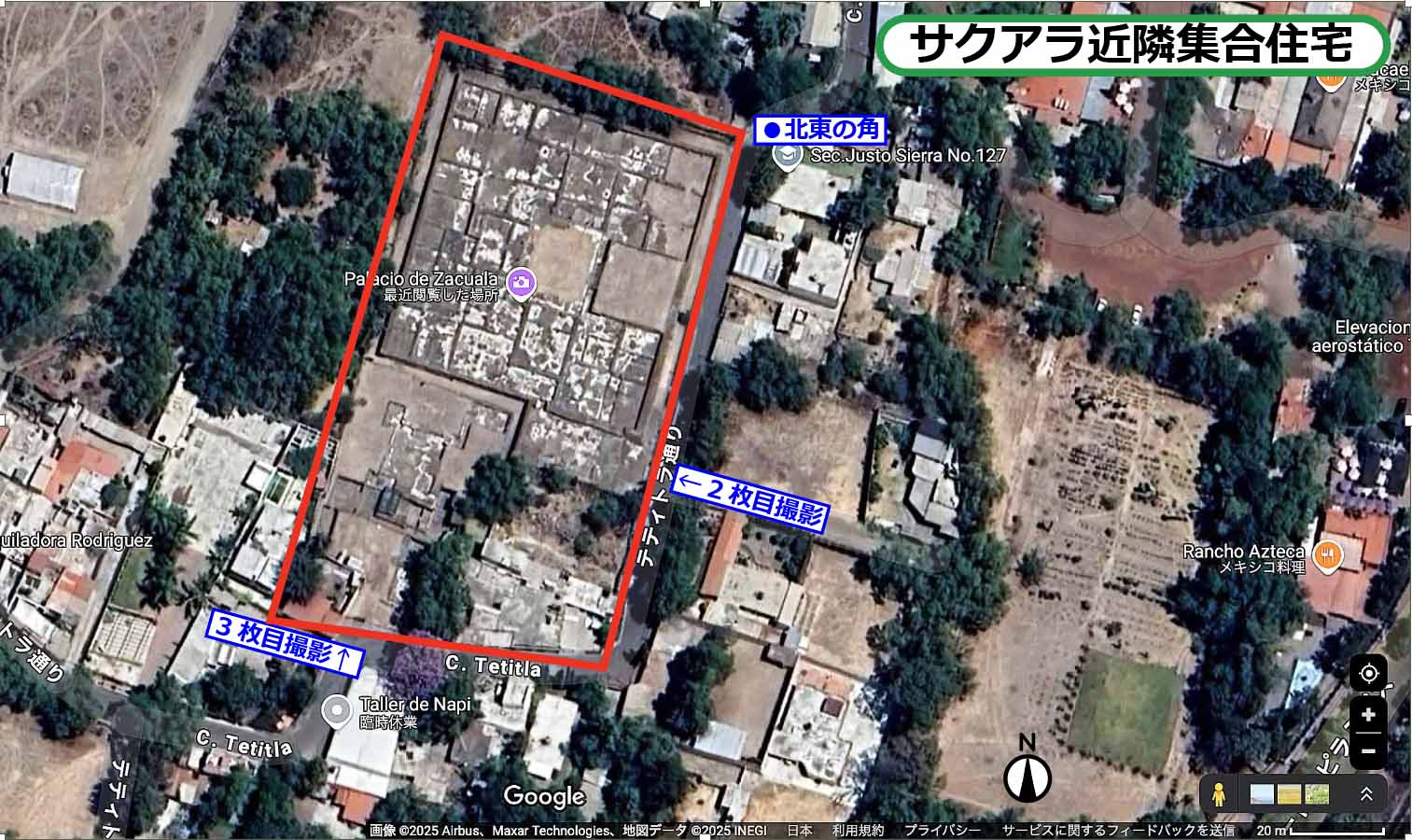
↑Northeast corner.
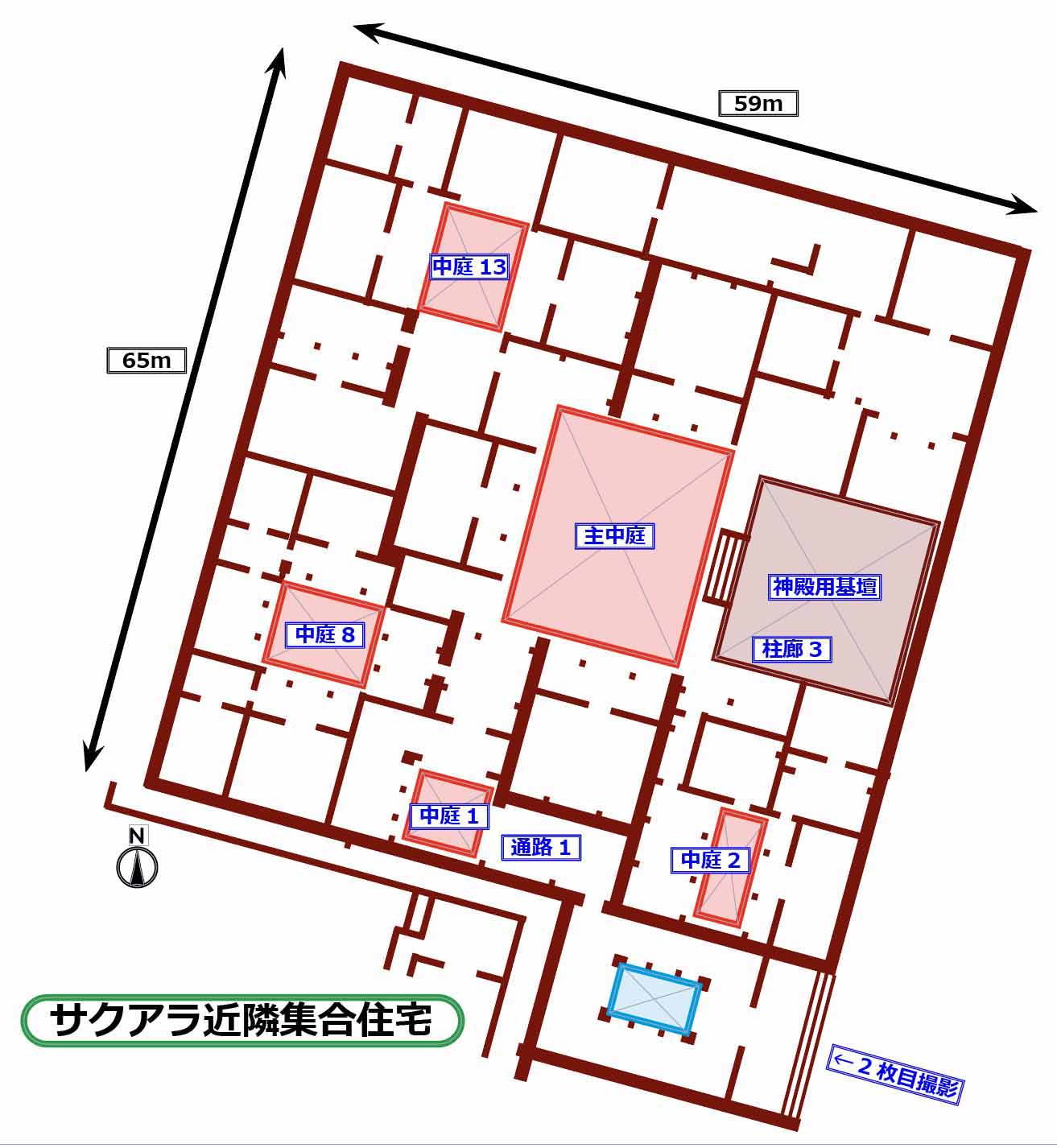
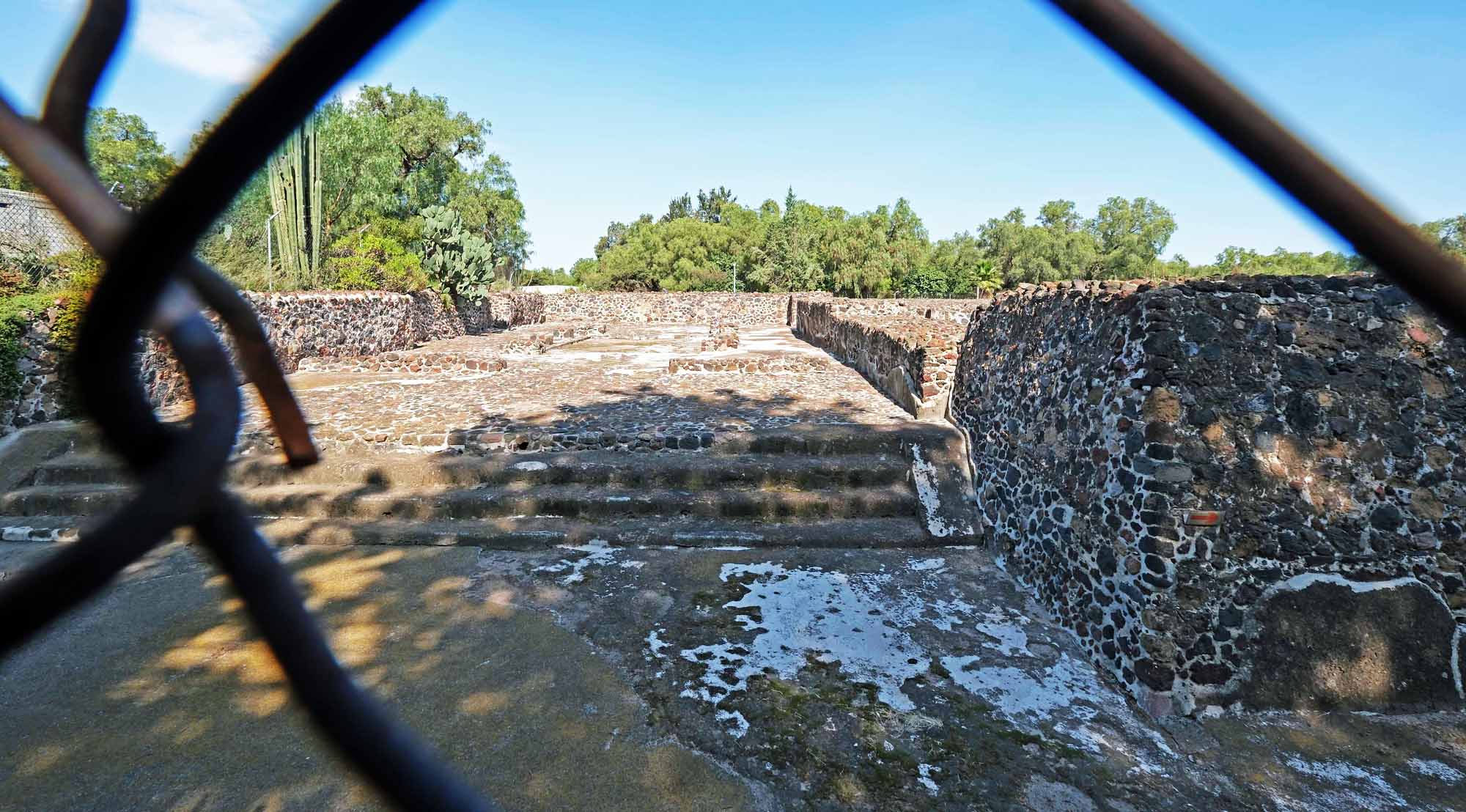
↑From the east side.
In the second photo, there is a staircase in the foreground, and behind that is the foundation of a partition wall, and behind that is a shallow water tank.
Most of the murals were illegally removed and sold, but some were salvaged, starting with "Priest Bringing Corn."
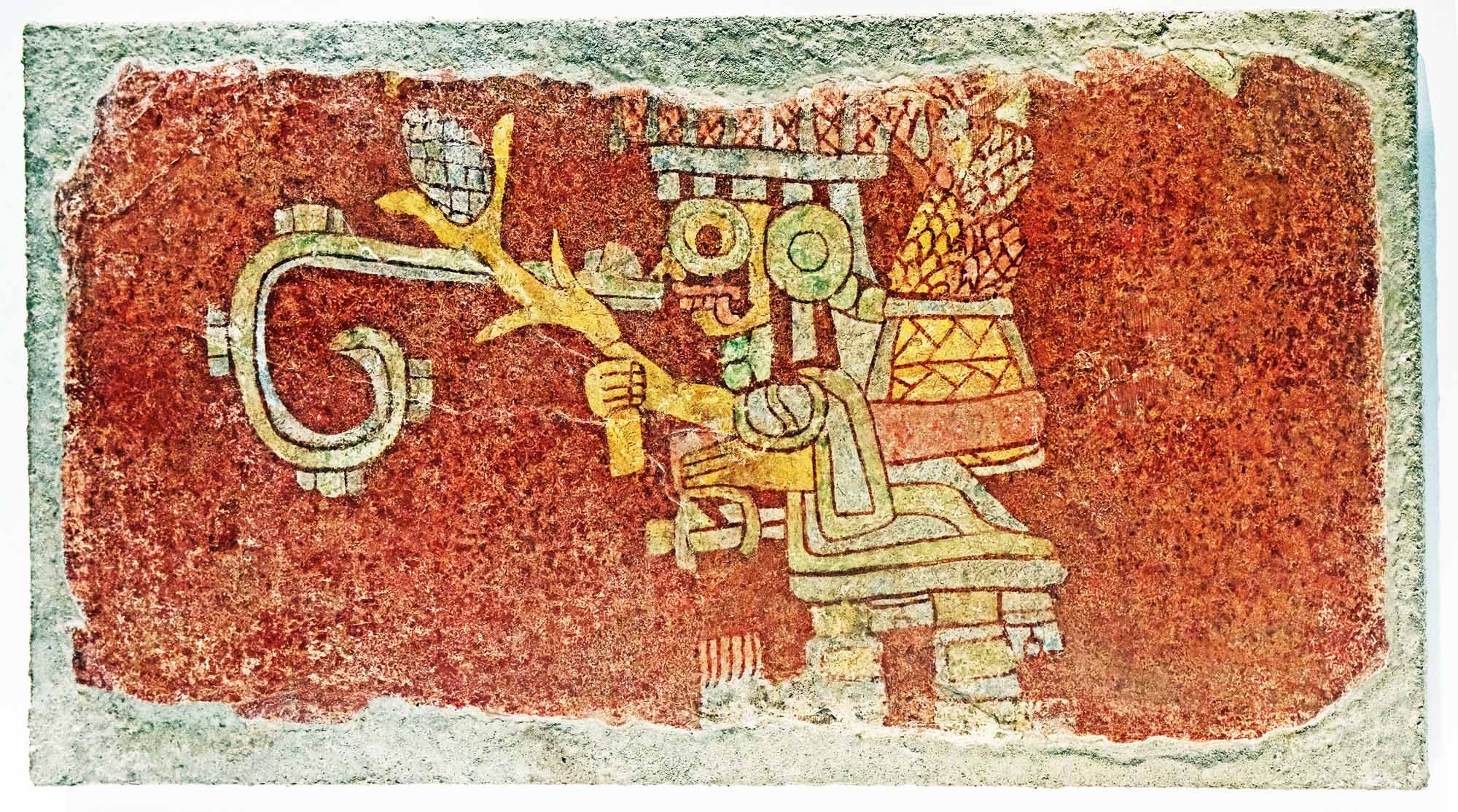
↑at Museum of Anthropology. Portico 3.
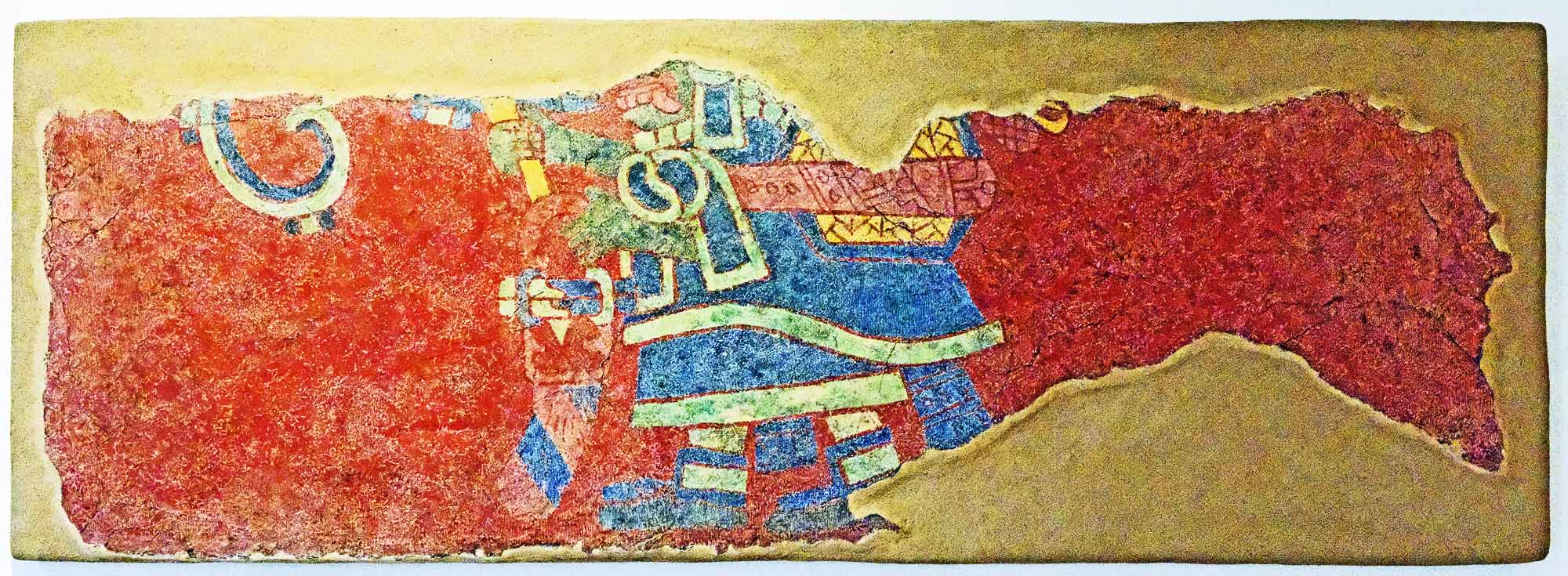
↑At the Mural Museum. Mural 3 in the portico 3.
350 AD-550 AD. Although they are exhibited in different museums, both were excavated from Portico 3. Portico 3 is adjacent to the temple platform, so it is thought to have been a special place.
It is known that he is a human disguised as the god Tlaloc, and that he was depicted in a series of almost identical figures. He holds a basket of corn on his back, an ear of corn in his right hand, and a bag in his left hand. He is making a sound.
In my opinion, this painting depicts the role and responsibility that the elite were aware of: "The priests, united with the god Tlaloc, bring food from outside into the city of Teotihuacan and offer it to the inhabitants."
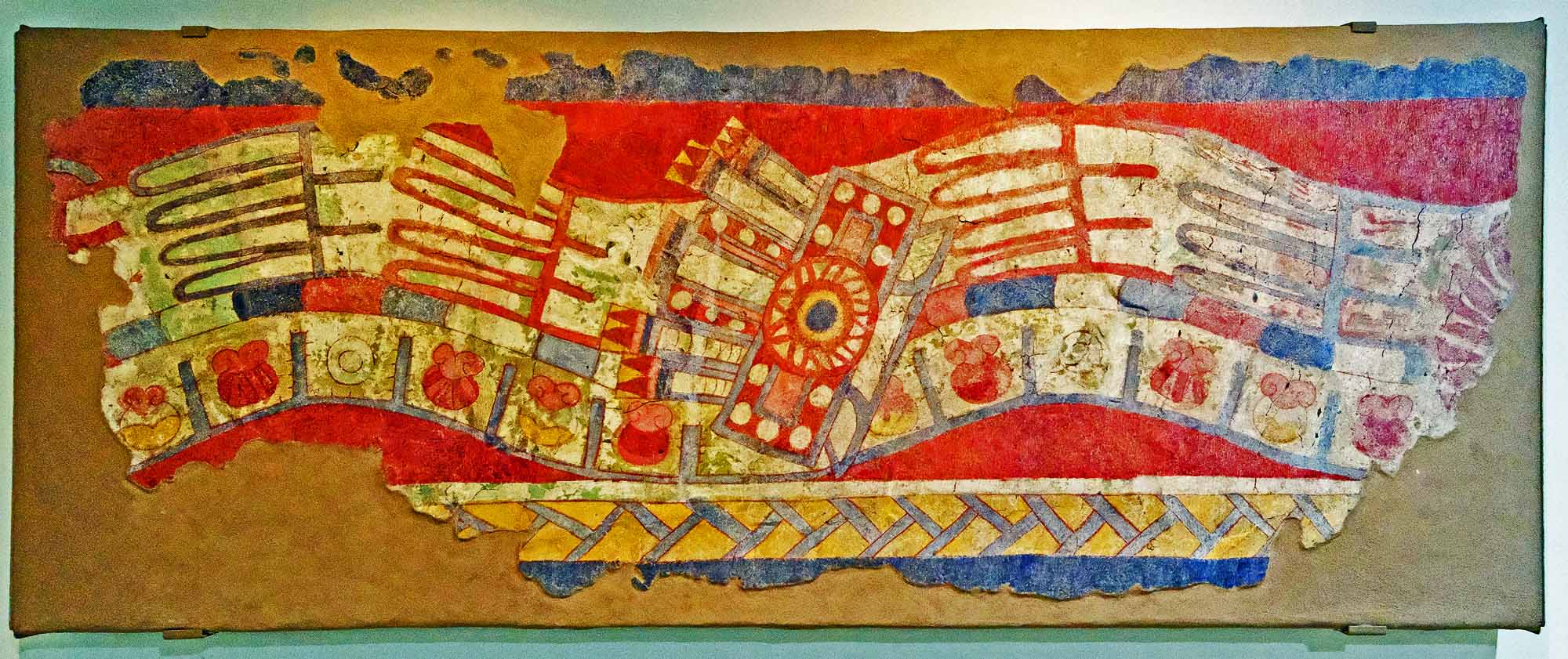
↑at the Mural Museum.
The location of the excavation is unknown. Red and, formerly, green feathers are depicted on the wavy bands. The circle in the center may be a shield, or a place or family name. The yellow and blue geometric pattern at the bottom may be a waterway. Zoom in on the center left of the photo.
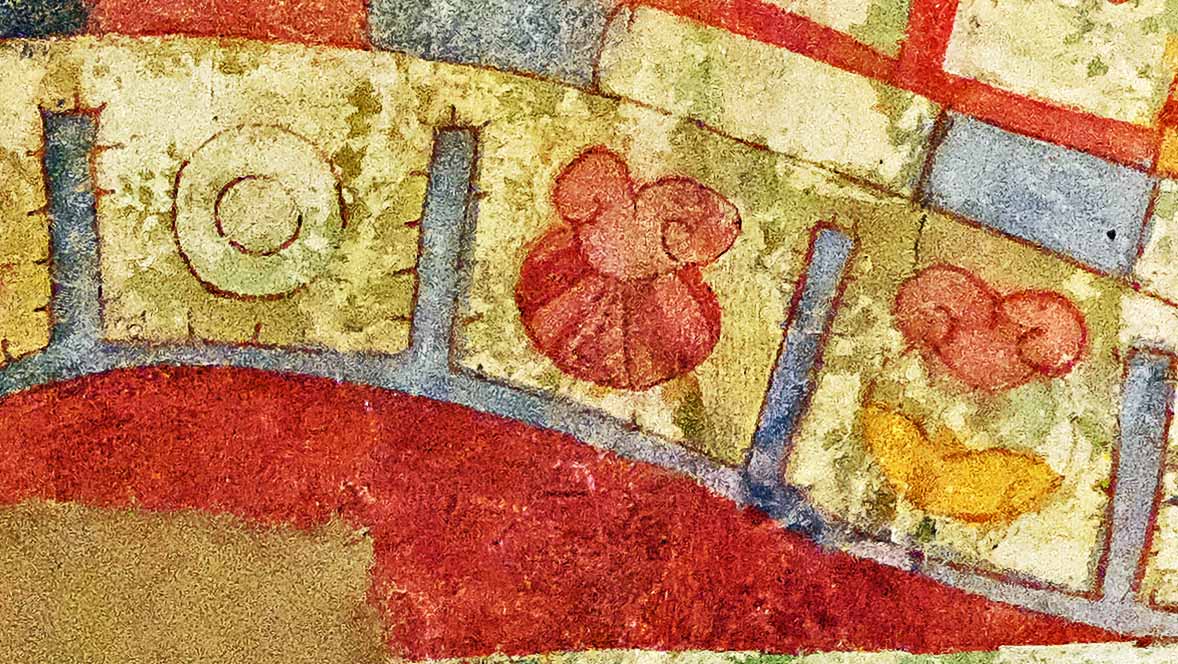
From the left, it looks like a thick circle, the symbol of the god Tlaloc, a heart, and a heart with something yellow.
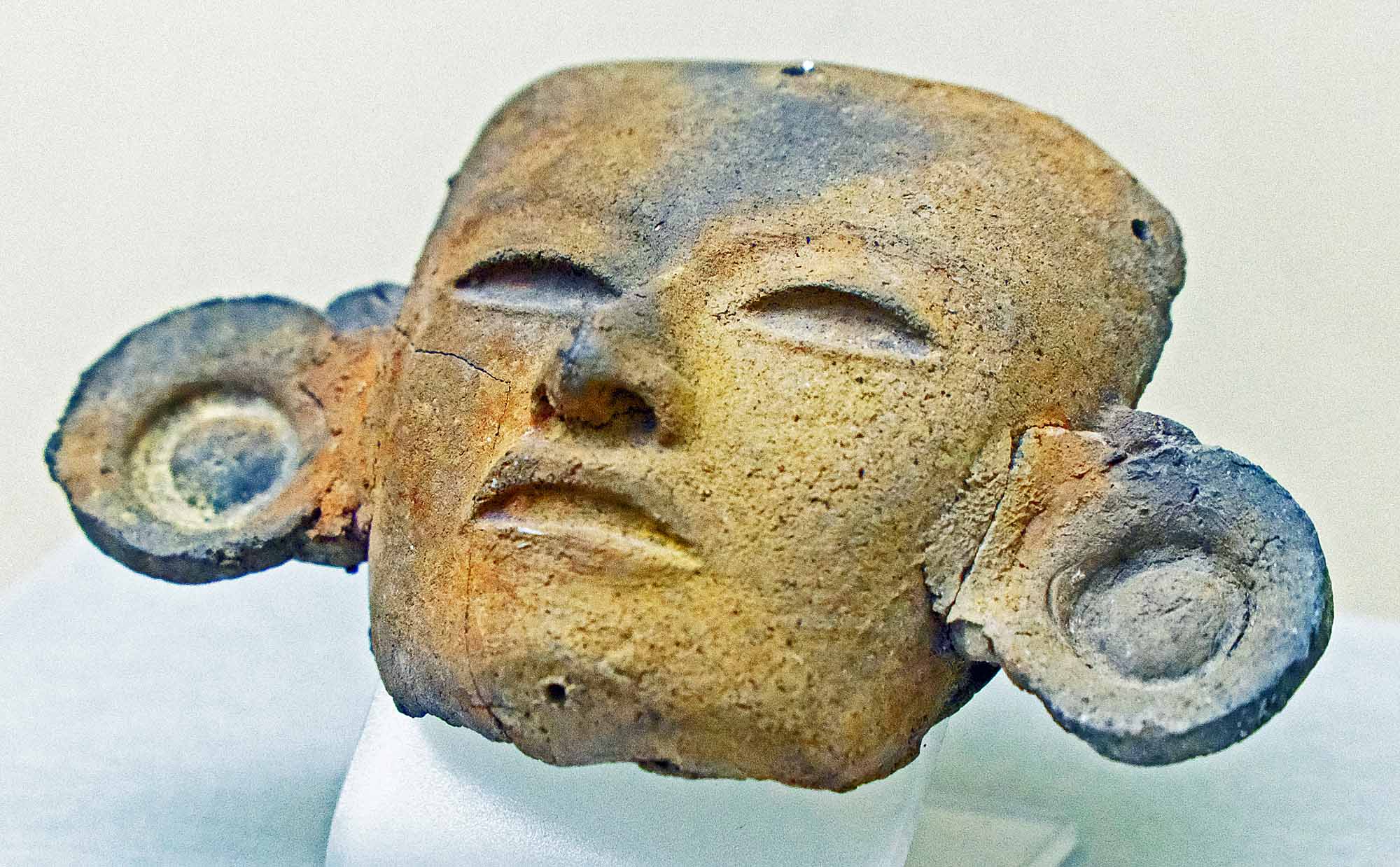
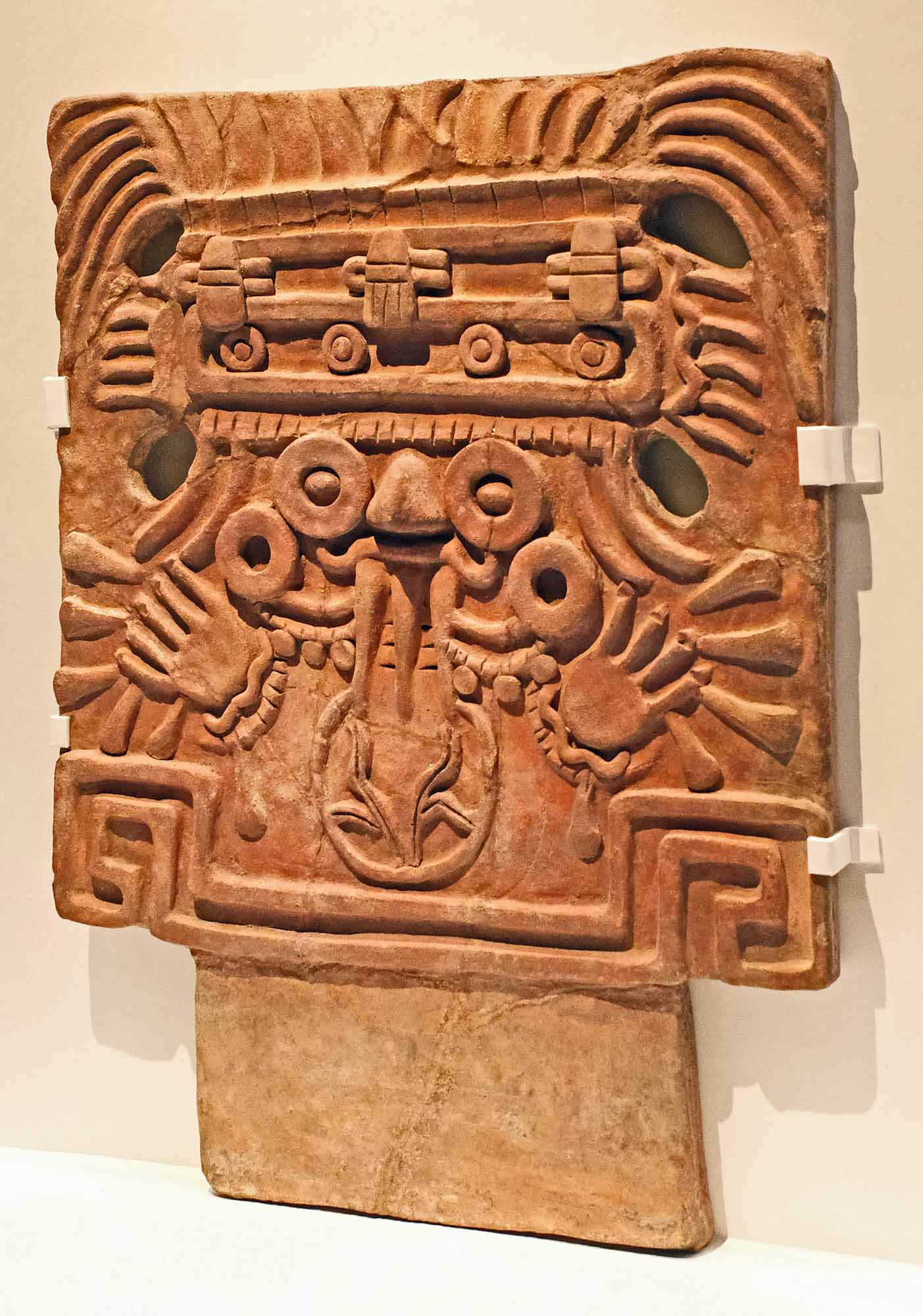
↑↑at the Mural Museum.
Above left is a mask from Burial 24. It is speculated that the size of the earrings represents the position and scale of ability to listen to the voices of more people. Above right is an almena (roof decoration) dating from 250 AD-550 AD. The design is of the god Tlaloc.
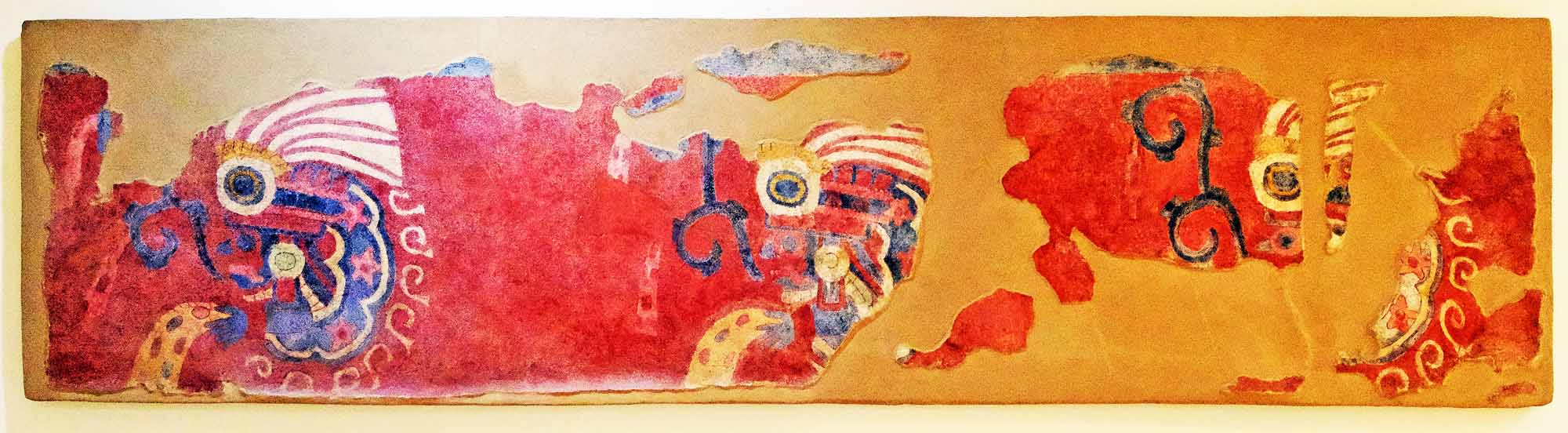
↑at the Mural Museum.
The above was recovered from colonnades 8 and 9, facing courtyard 8. It shows goggles and a stream of water. It may be related to Tlaloc. The profile shows a human figure impersonating Tlaloc.
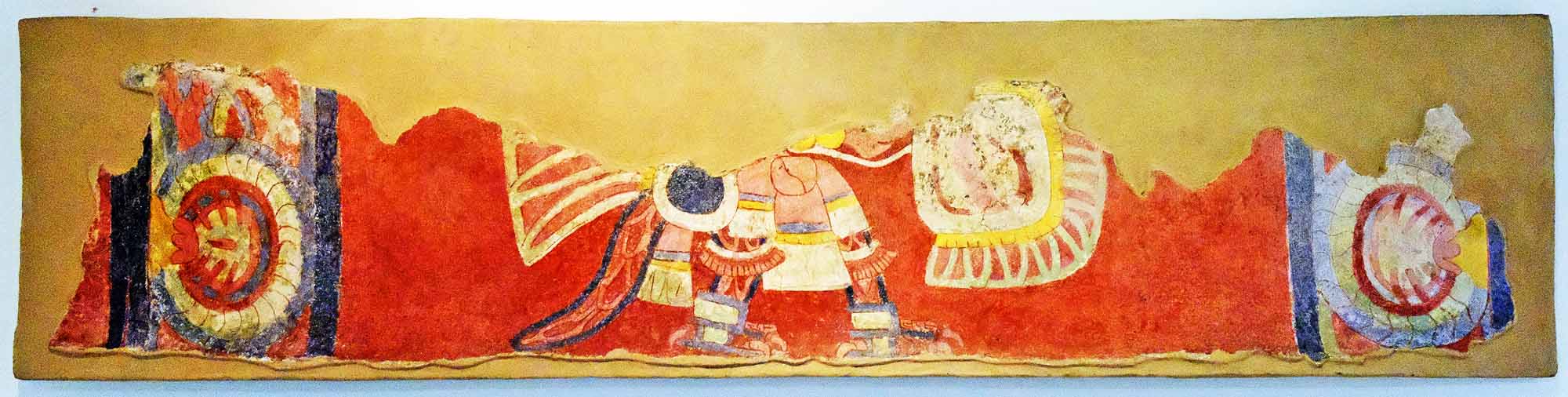
↑at the Mural Museum.
It was excavated in Courtyard 1. The figure is holding a square shield in its left hand. There is a depiction of what appears to be a tail behind it, so it may be dressed like a jaguar or coyote. The circles on either end may be place names or family names.

↑at the Mural Museum.
Courtyard 13. The blue legs and tail remain. It appears to be holding a shield in the shape of a four-petaled flower. There are several in a row.
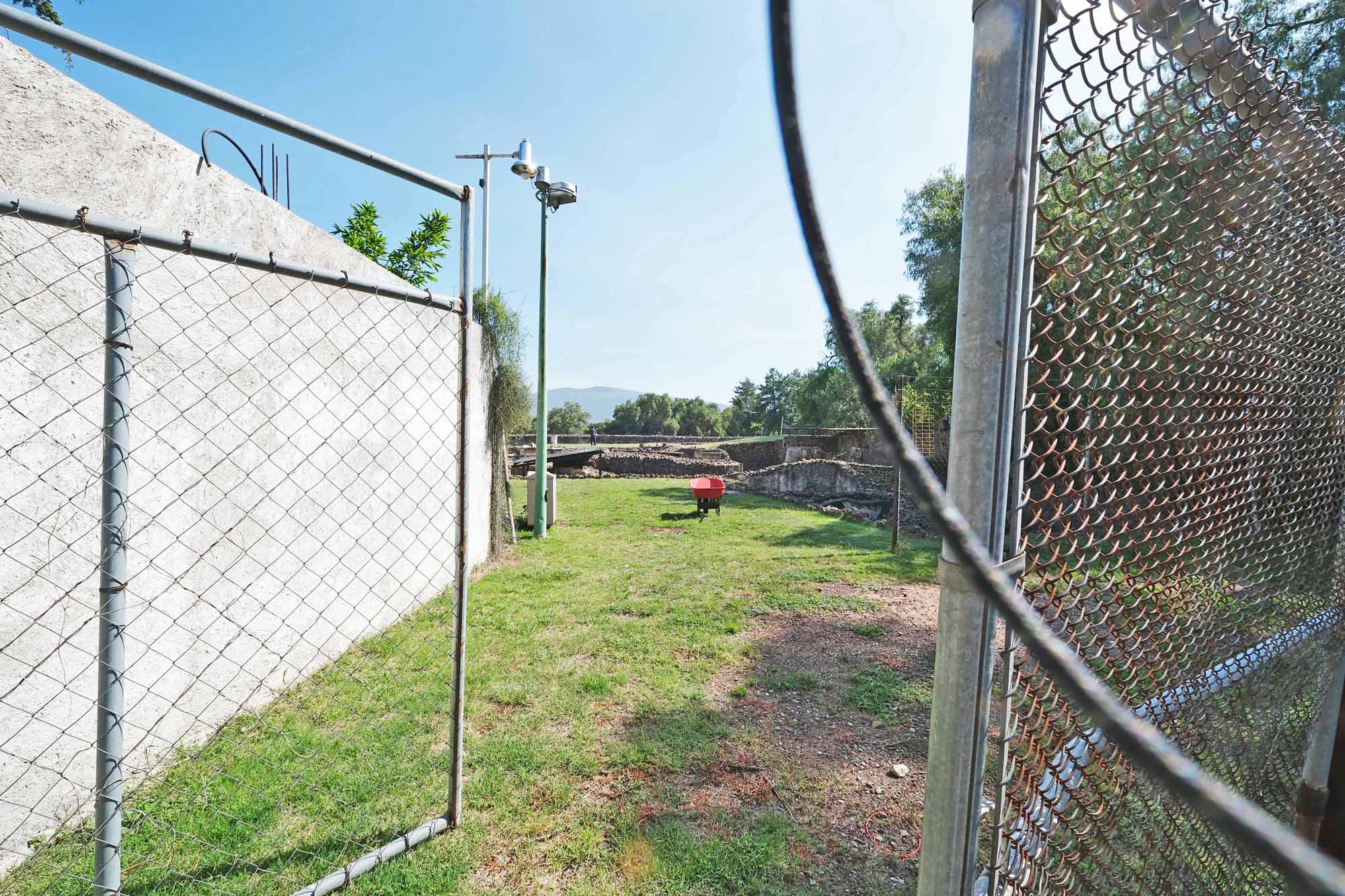
↑From the south side.