Atetelco
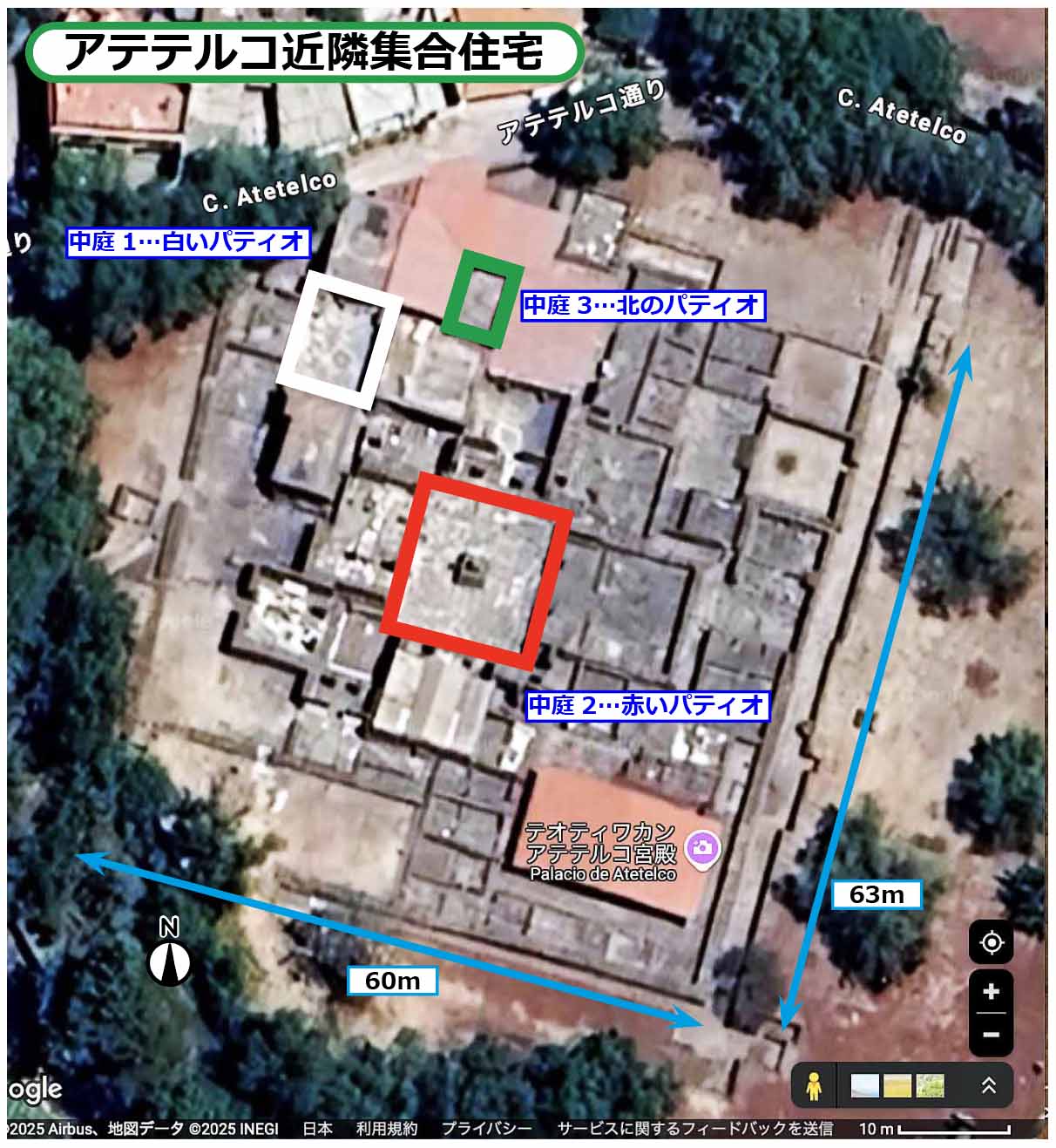
Red Courtyard(=Courtyard 2)...225 AD-400 AD
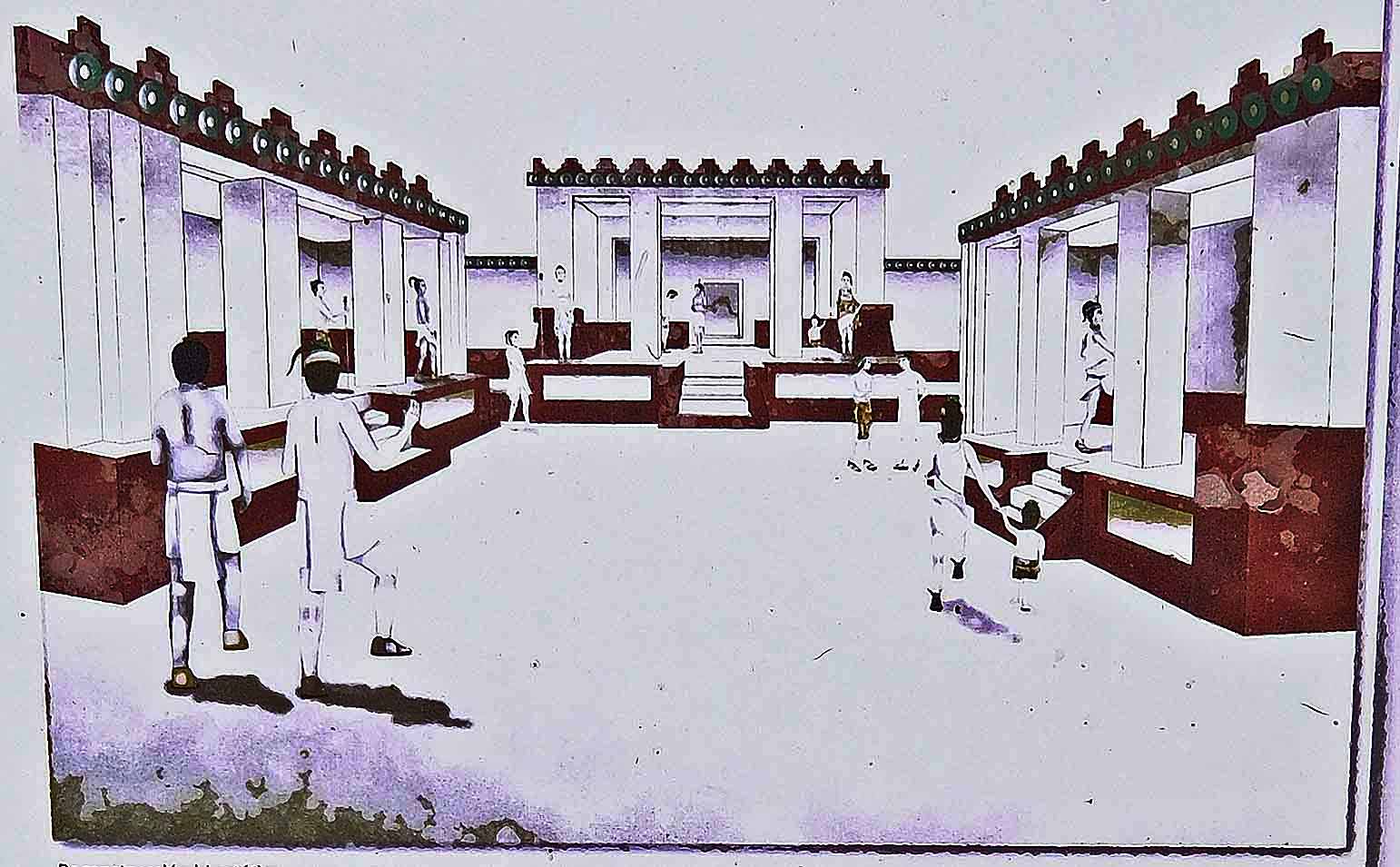
The courtyard has a four-temple structure, with the west side facing the main entrance. The central altar retains some of its color and design. Other elements are unknown.。
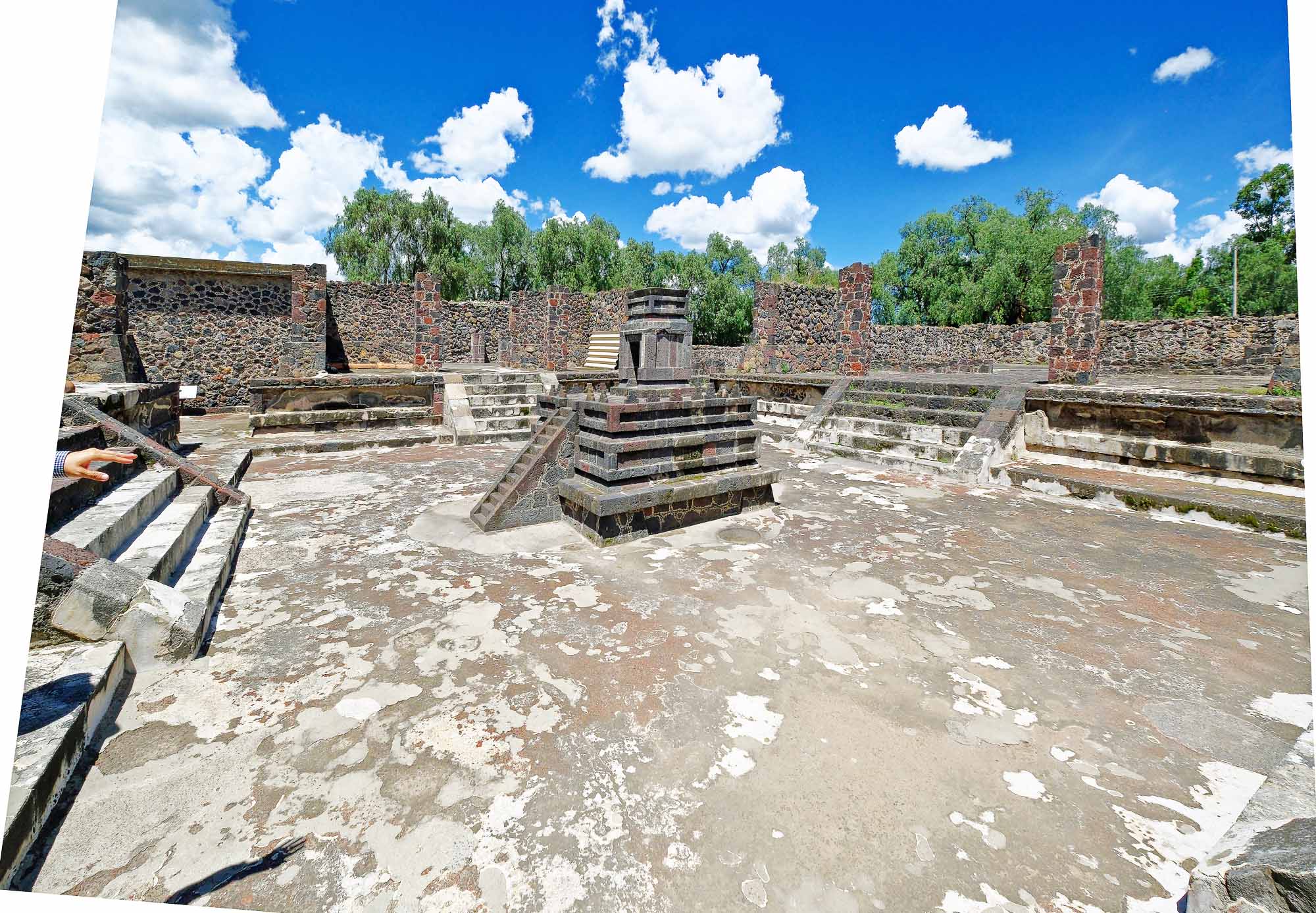
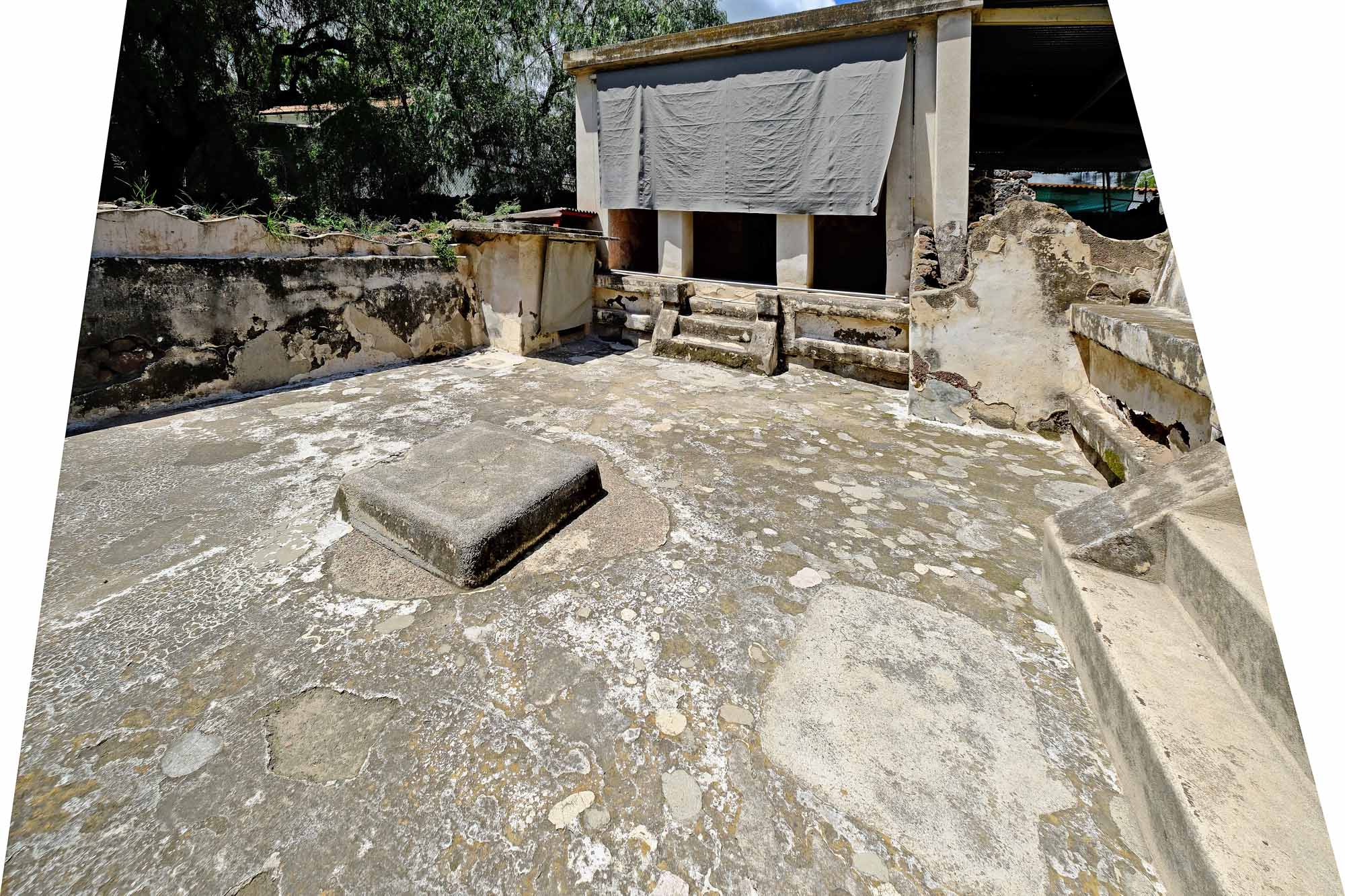
White Courtyard (=Courtyard 1)... Built in 300 AD - Unused in 400 AD
You enter the courtyard from the west side, which does not have a temple.
Portico 1 (South)... Coyote... Military theme
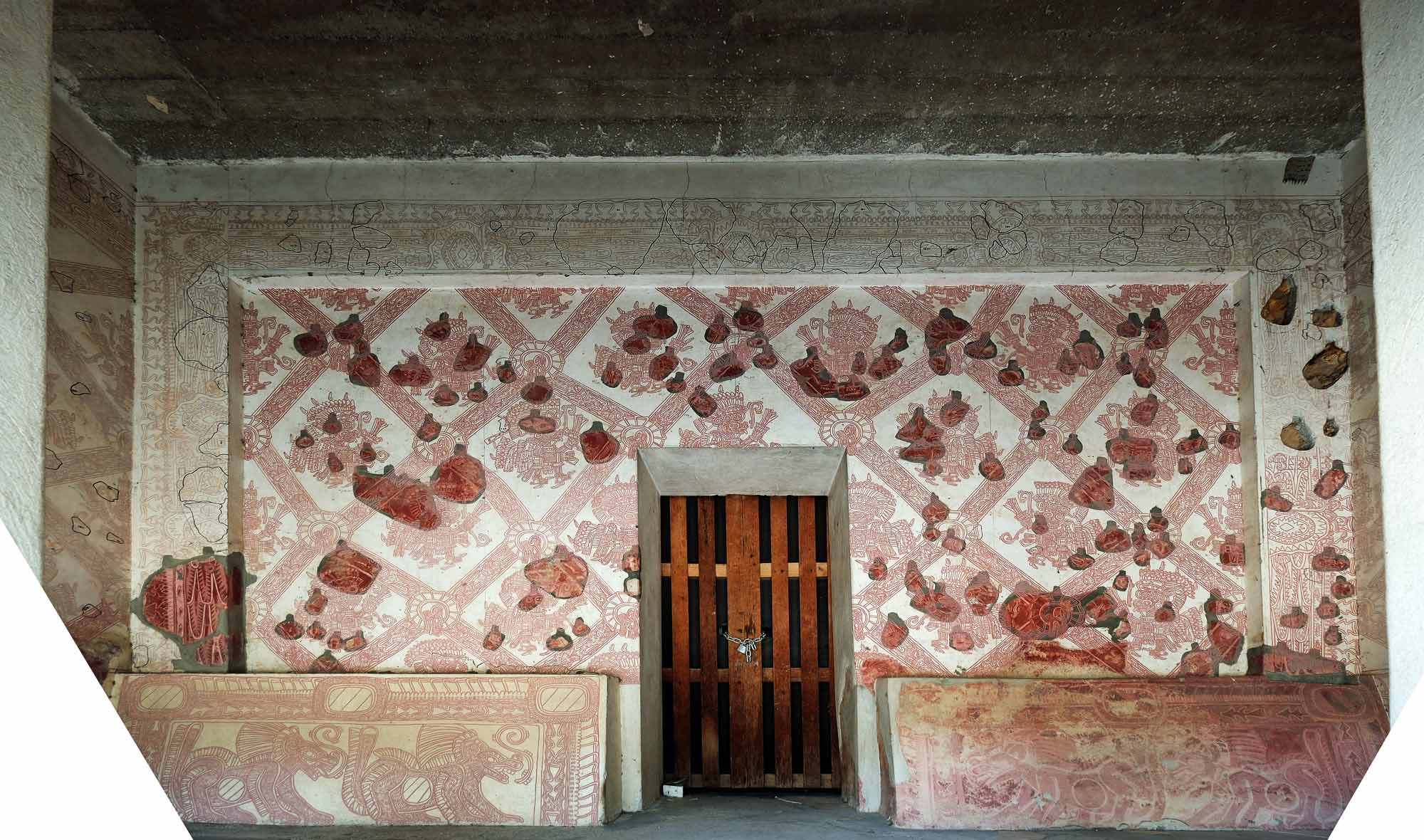
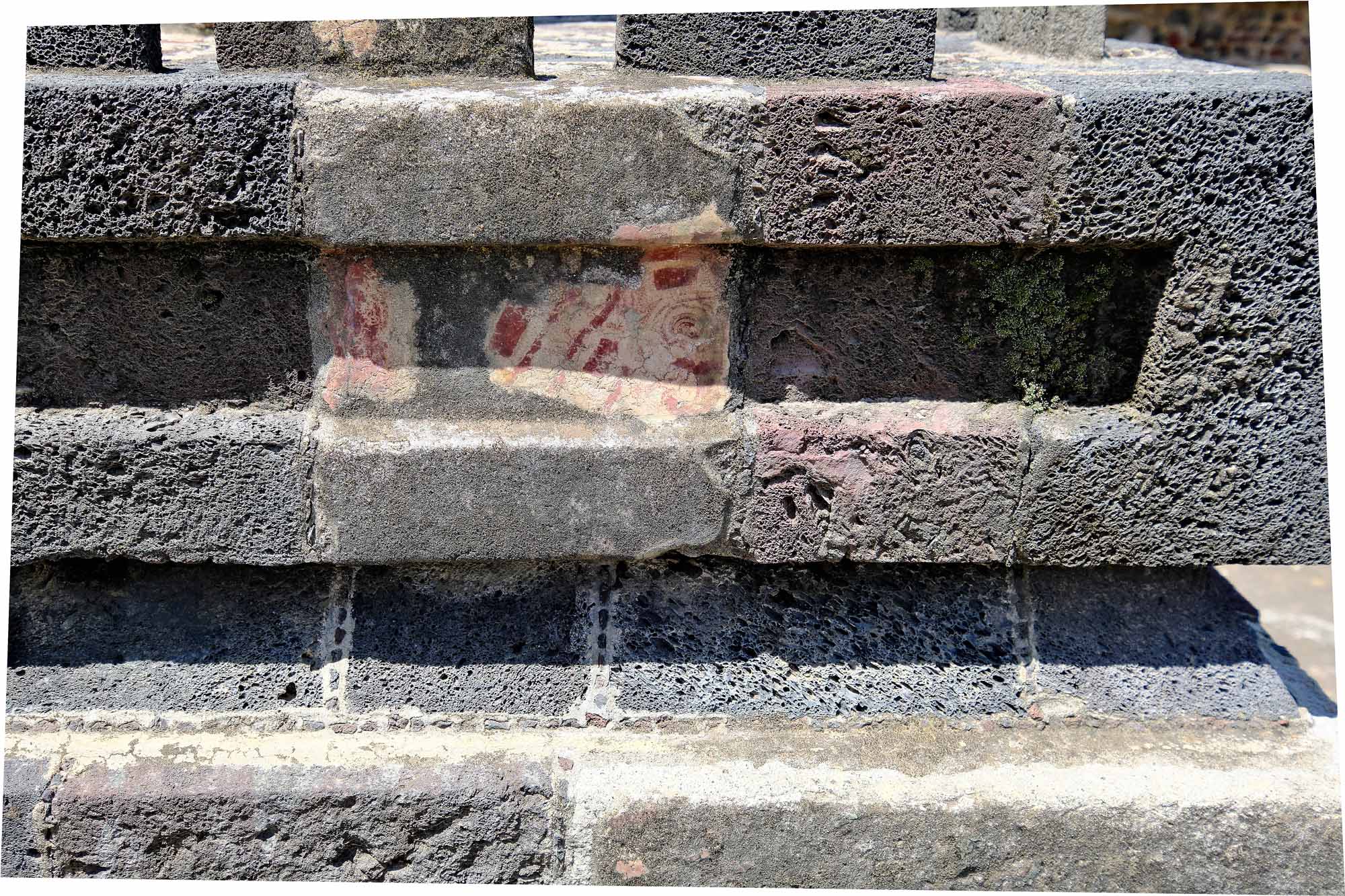
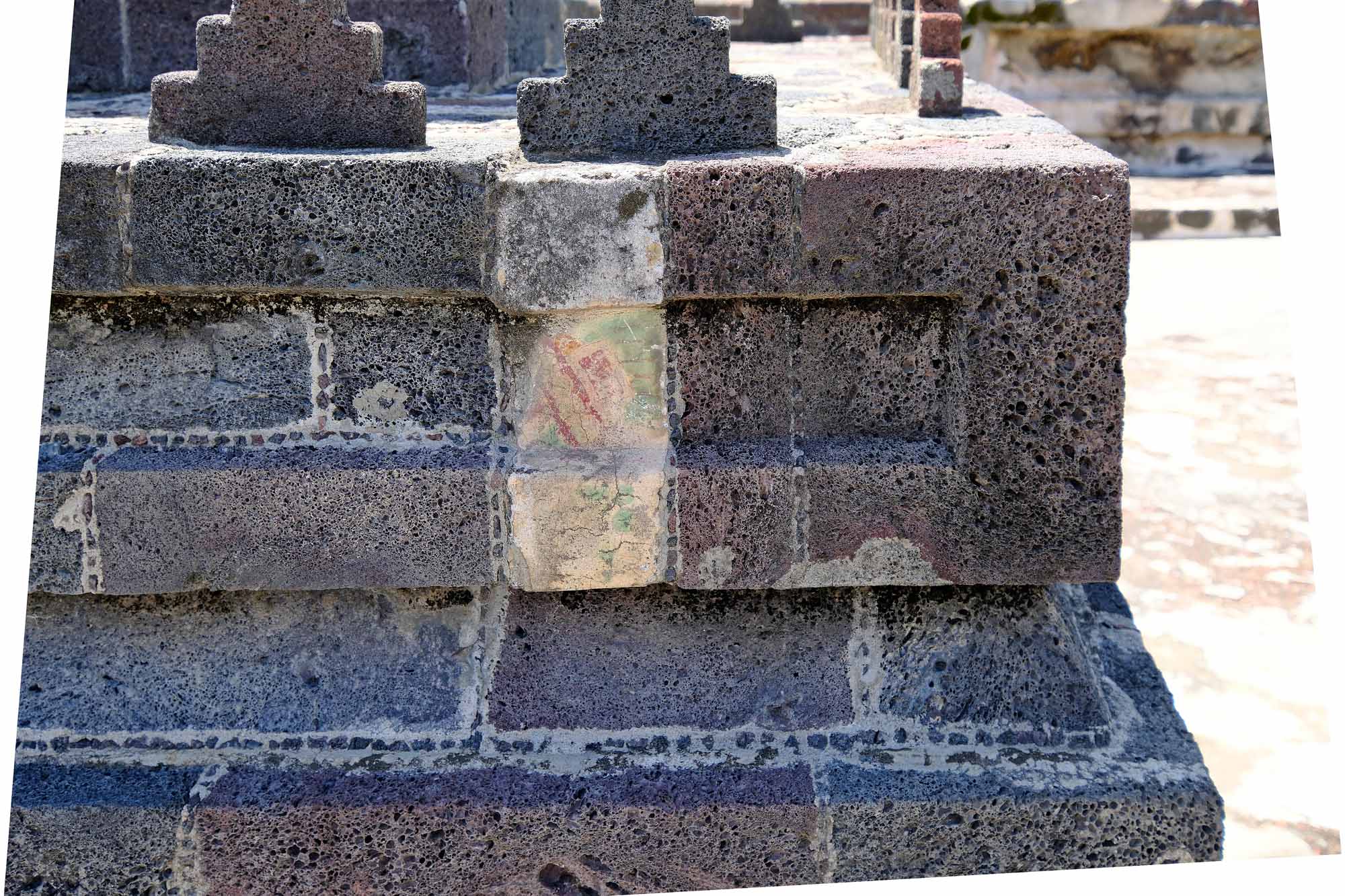
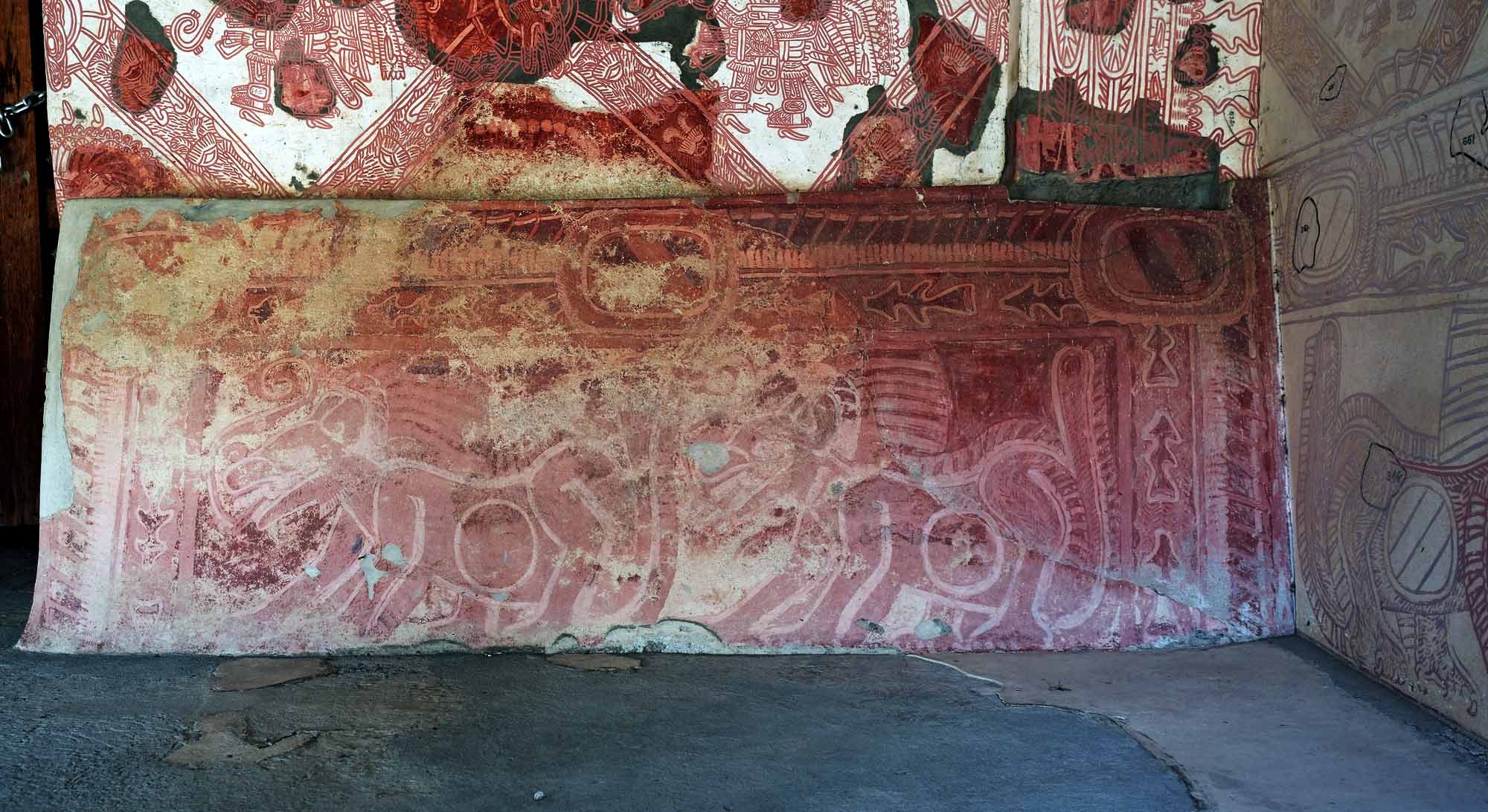
The dark red stains are thought to be parts of the mural that remained on the wall, or that had peeled off without breaking into pieces. The light pink is likely a reconstruction made by archaeologists from traces of the mural that had faintly adhered to the wall. The same can be seen on the left and right walls.
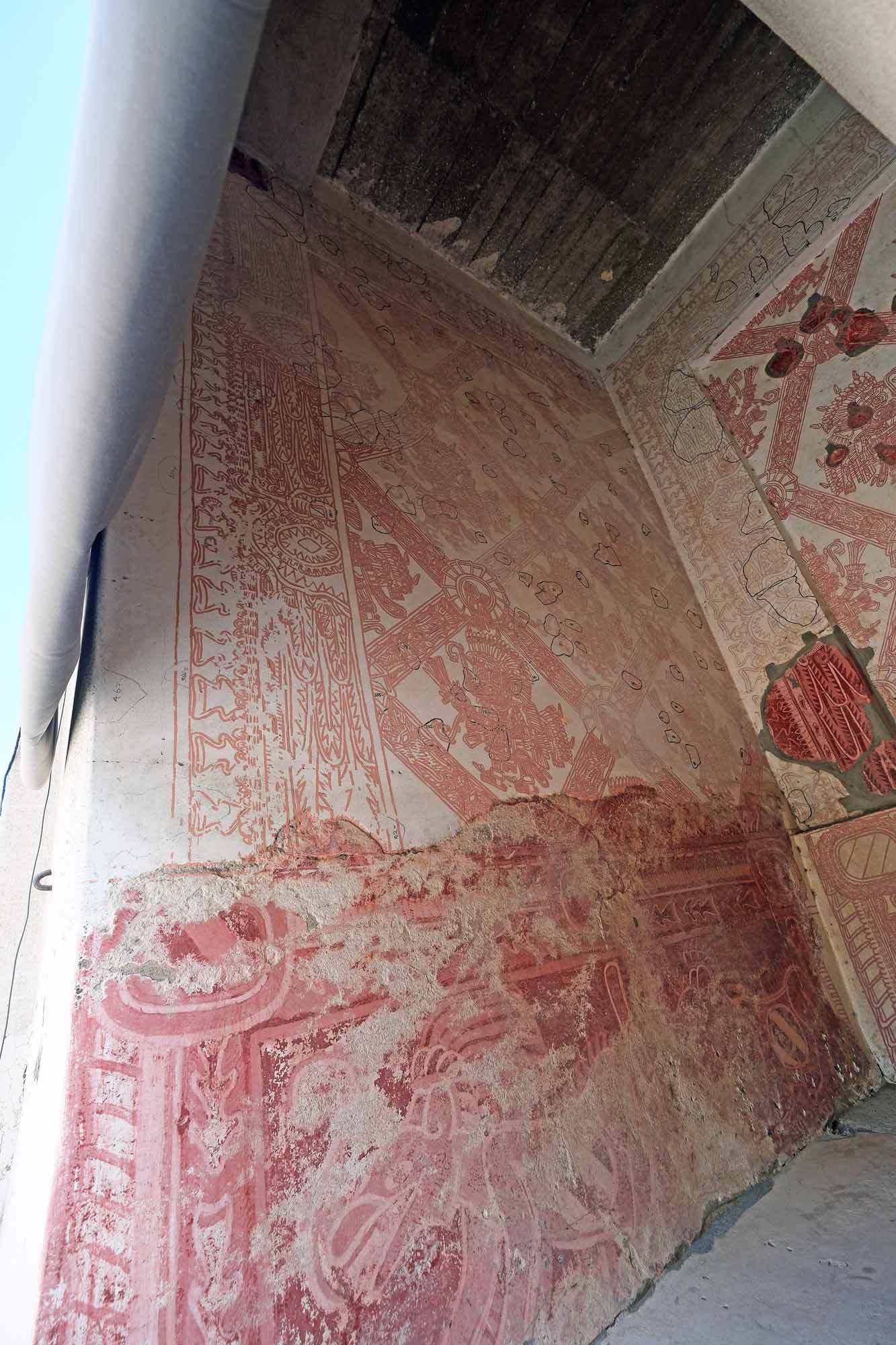
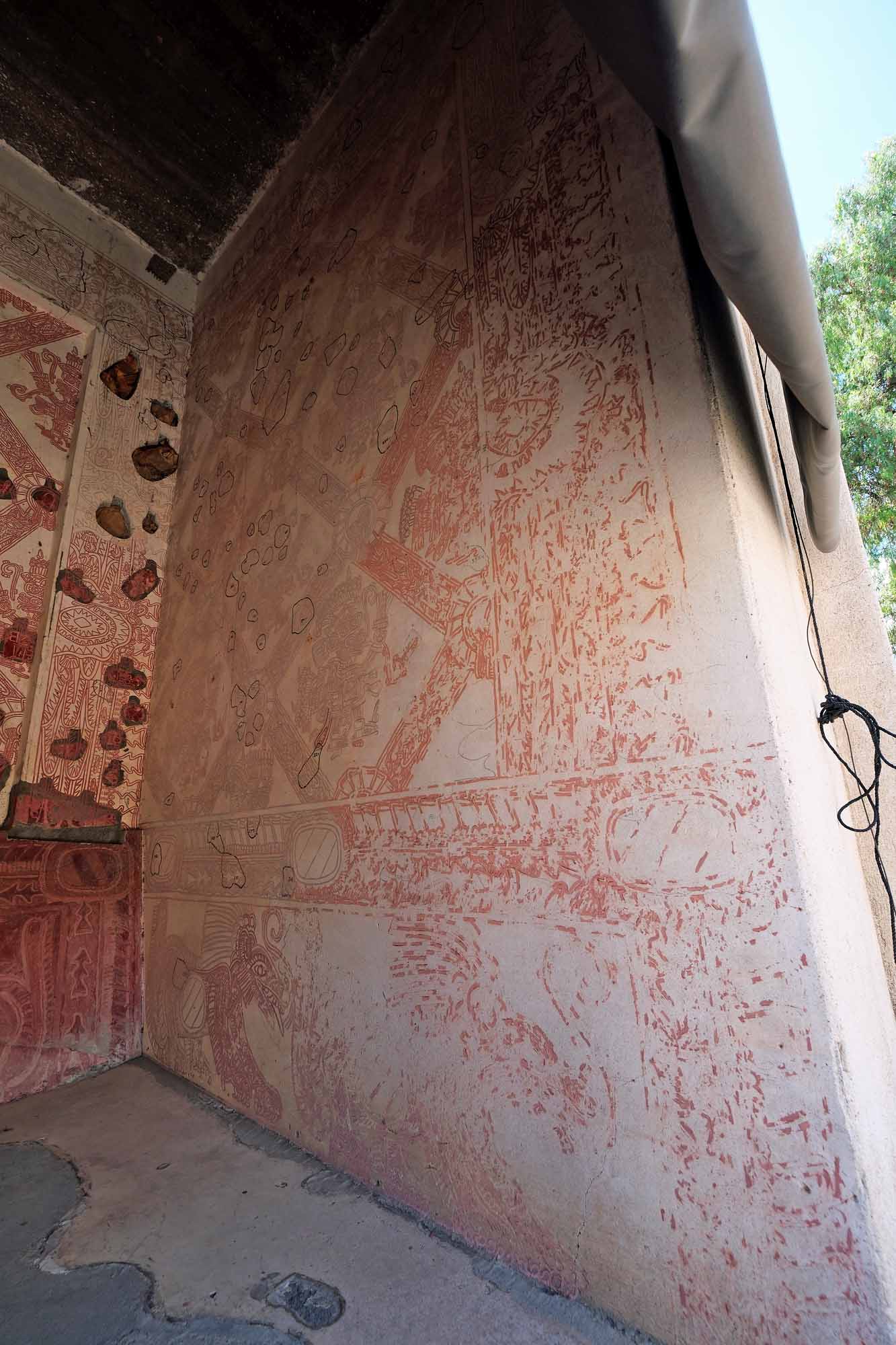
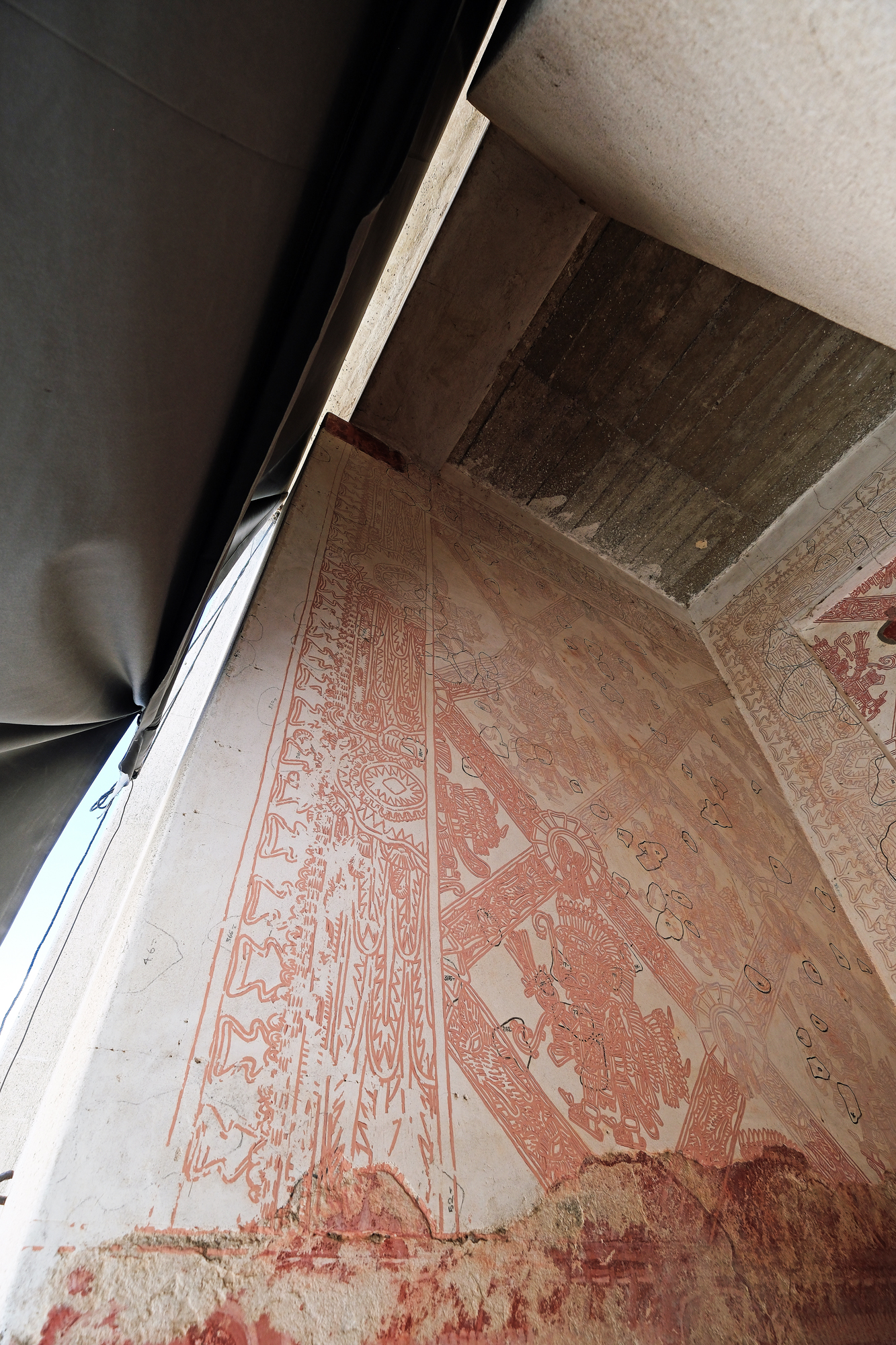
See the complete reconstruction at the Anthropological Museum below.
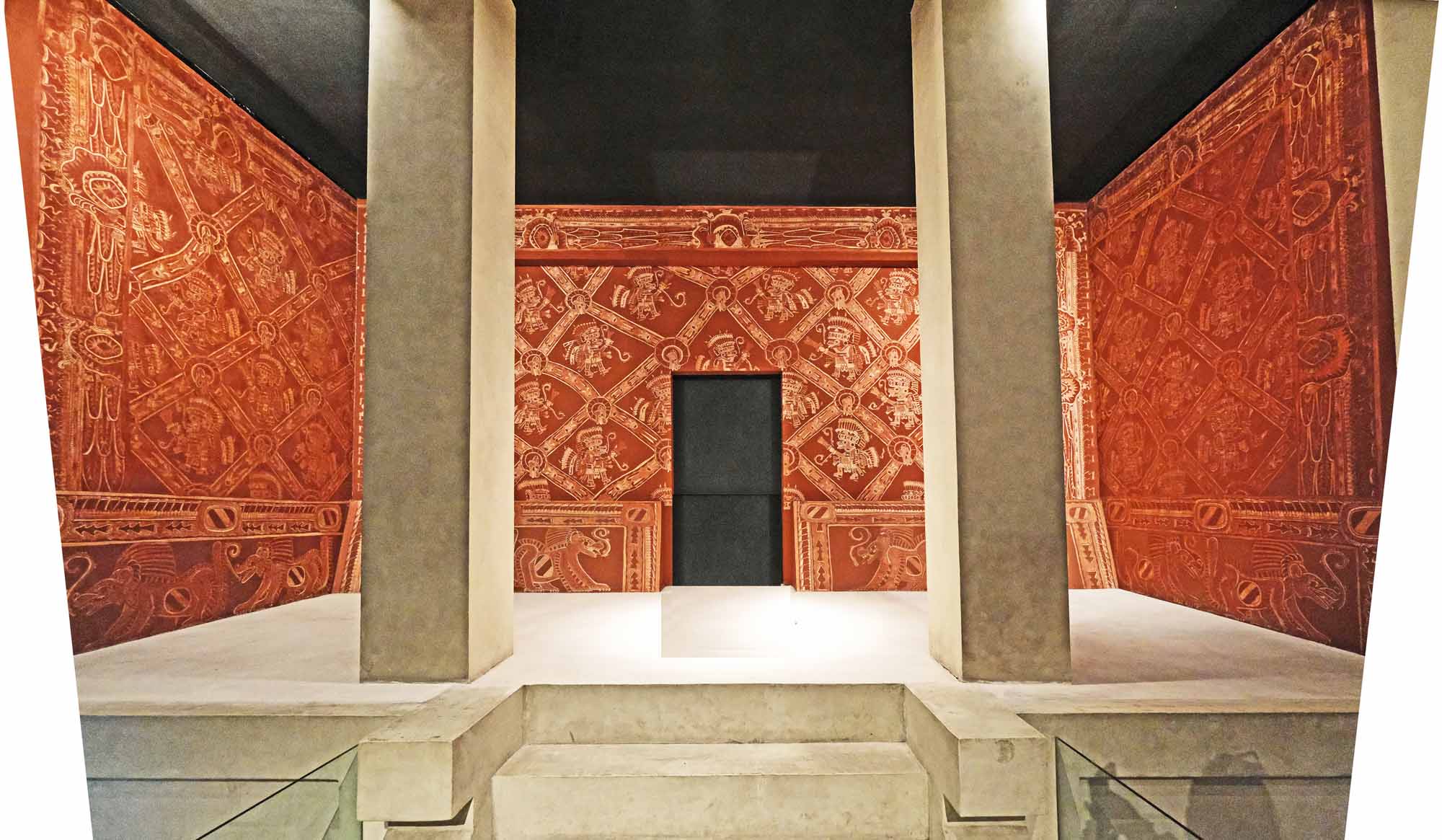
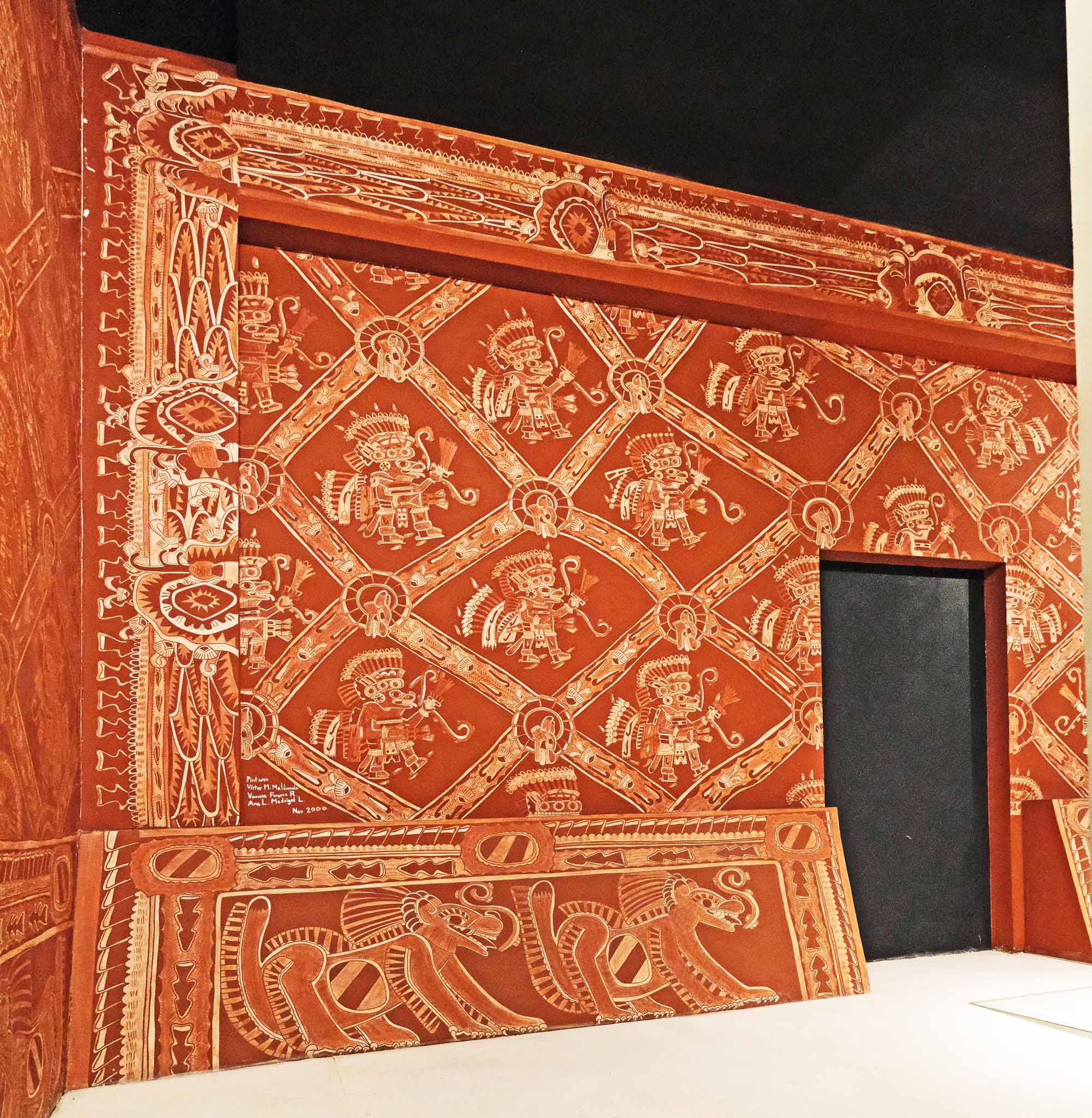
↑↑at Museum of Anthropology. Reconfiguration.
The overall architectural style is clearly Talud-Tablero. Let's take a look at the details of murals.
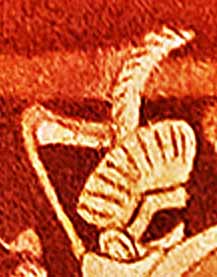
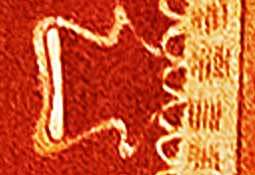
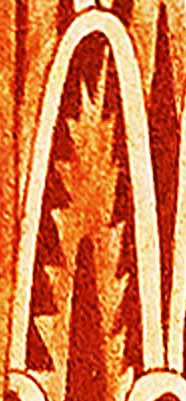
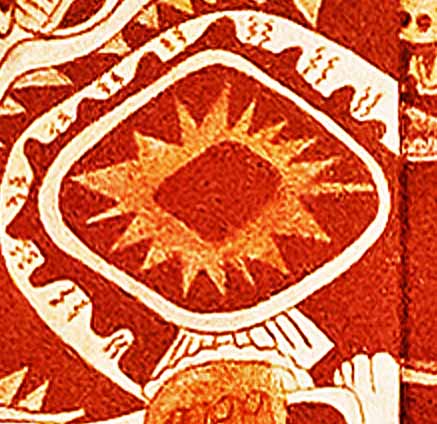
↑Unknown. Two buds from a flower? Also depicted in [Tepantitla]. ↑↑Obsidian knife. ↑Unknown. Coat of arms of [Athetelko] or the family that manages Courtyard 1?
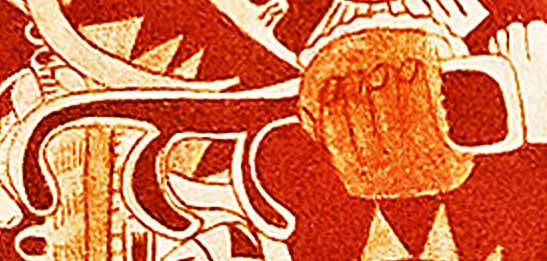
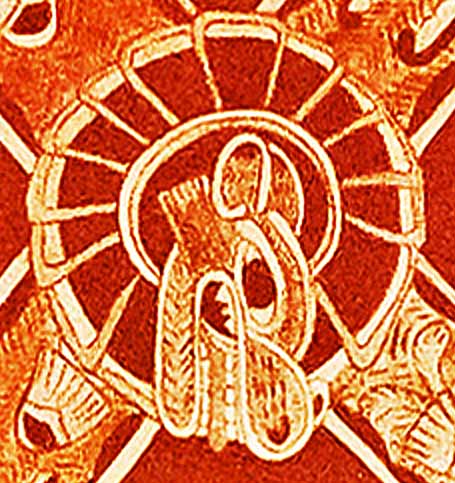
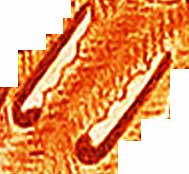
↑A hand holding an obsidian knife. ↑A coyote. ↑An obsidian knife?
Next, let's take a closer look at the seven full-body coyote figures depicted in the reconstruction on the left half of the front wall. Each one has slightly different headdresses and arrowheads. The differences are too small to justify the difference in rank, if any. Could these be the highest-ranking figures of the seven generations of Atetelco who transformed into coyotes?
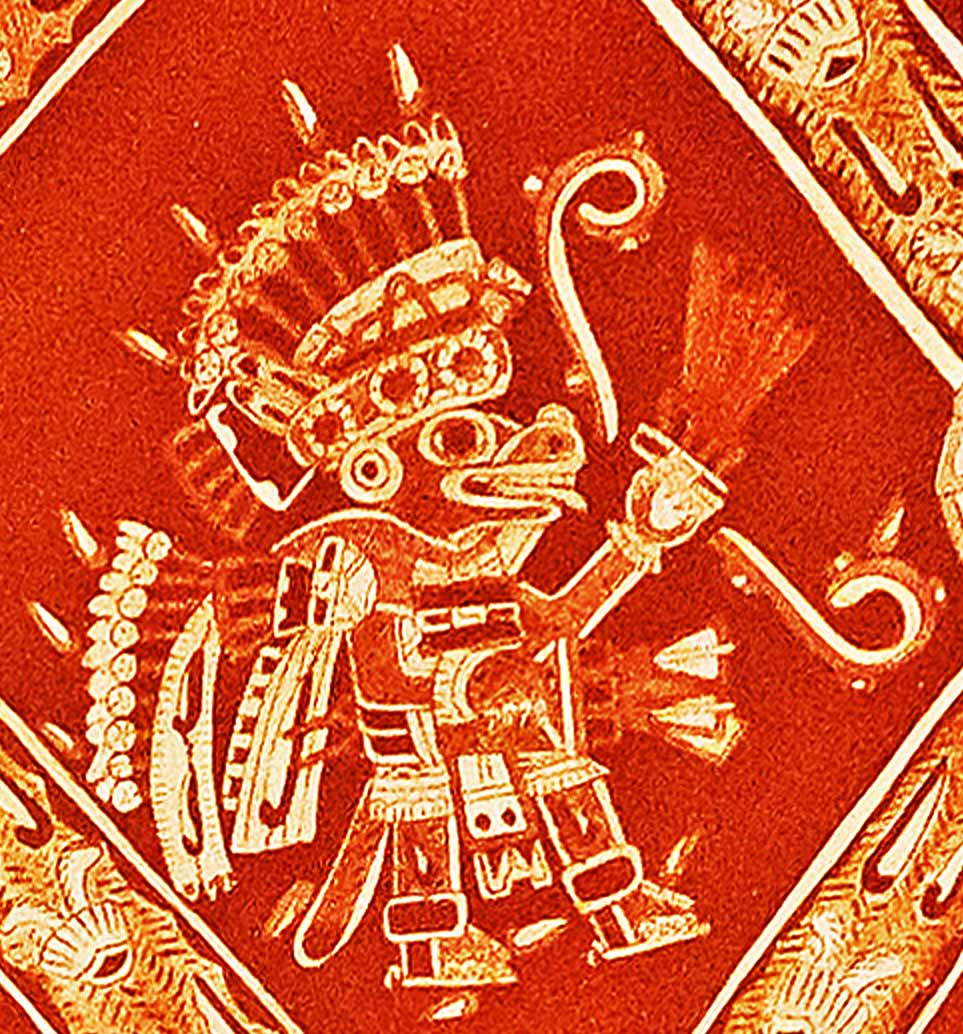
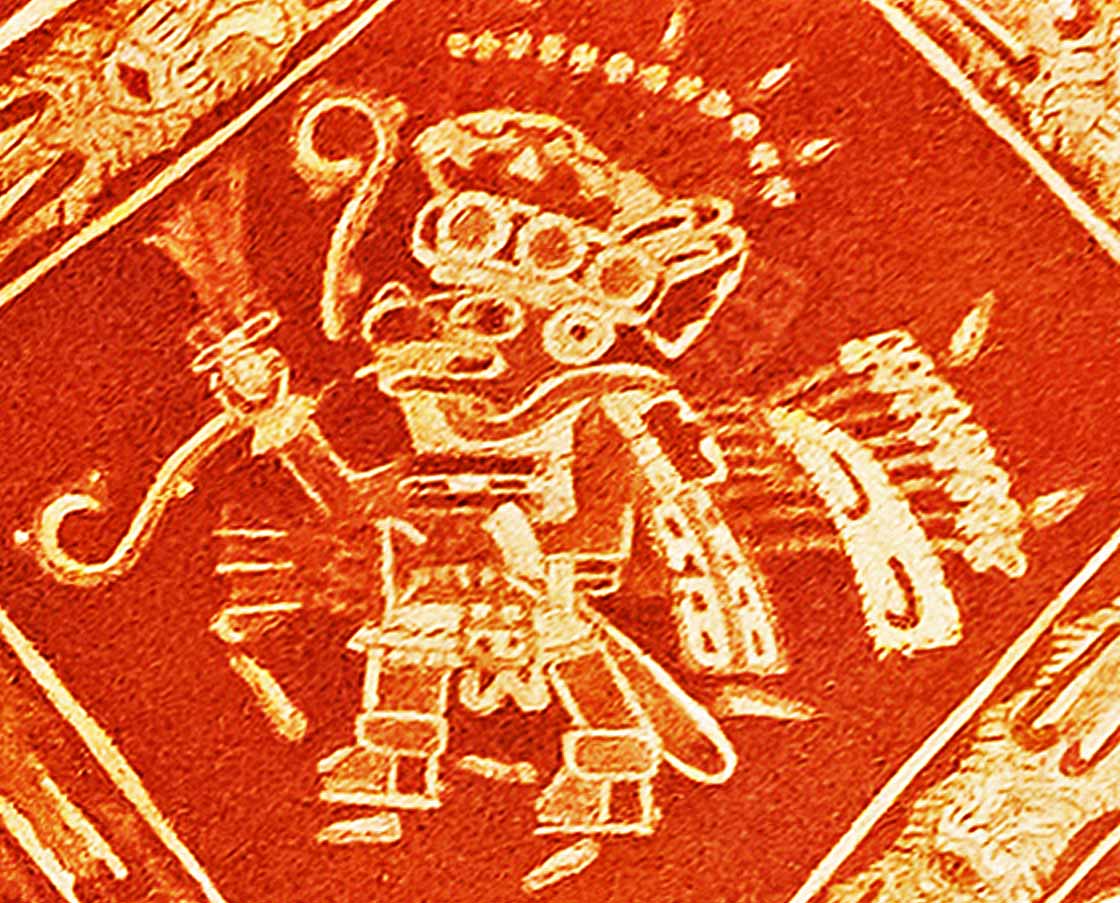
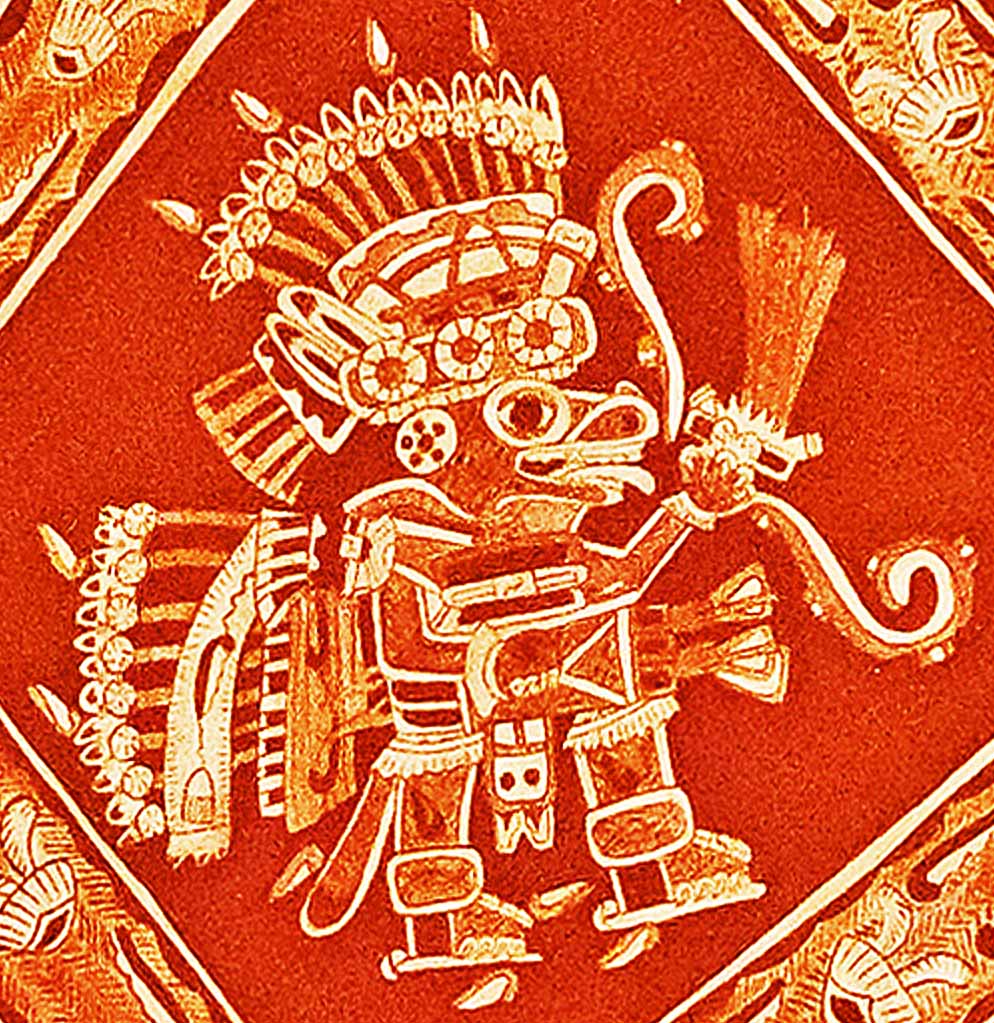
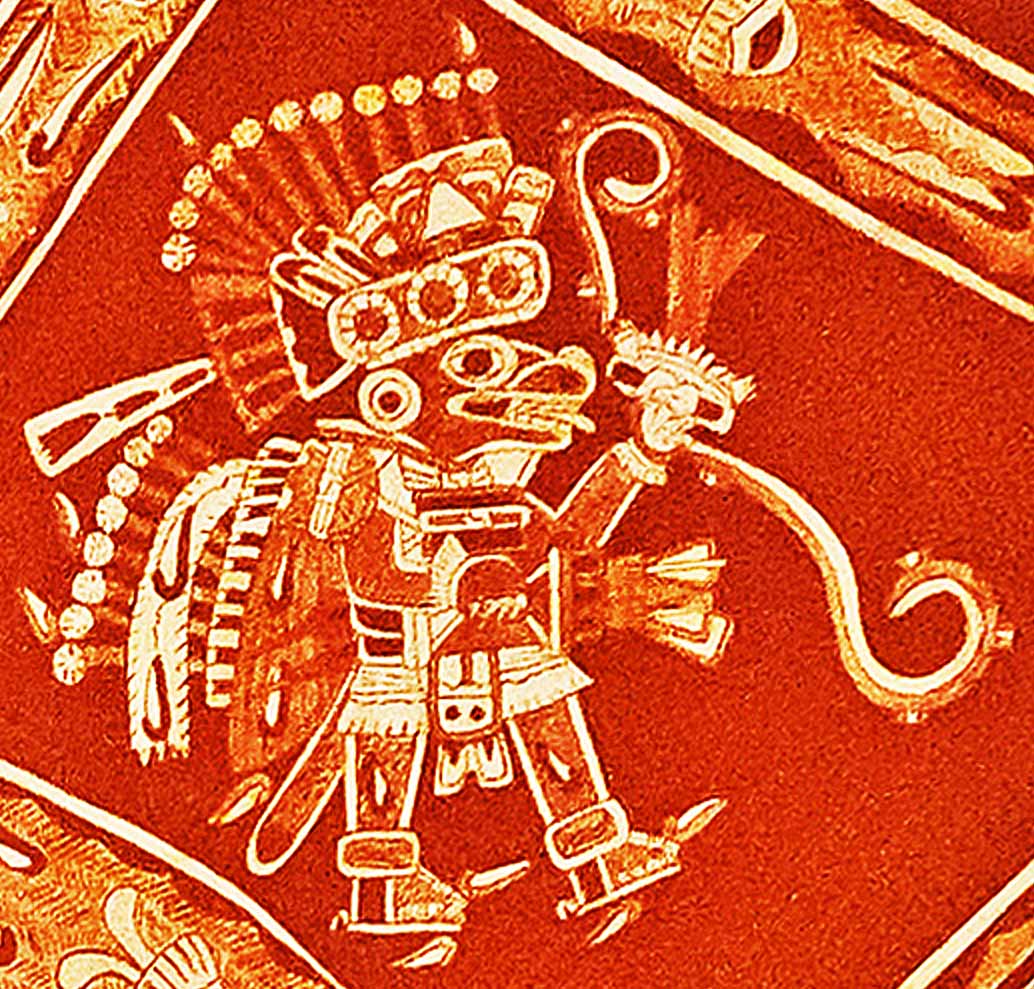
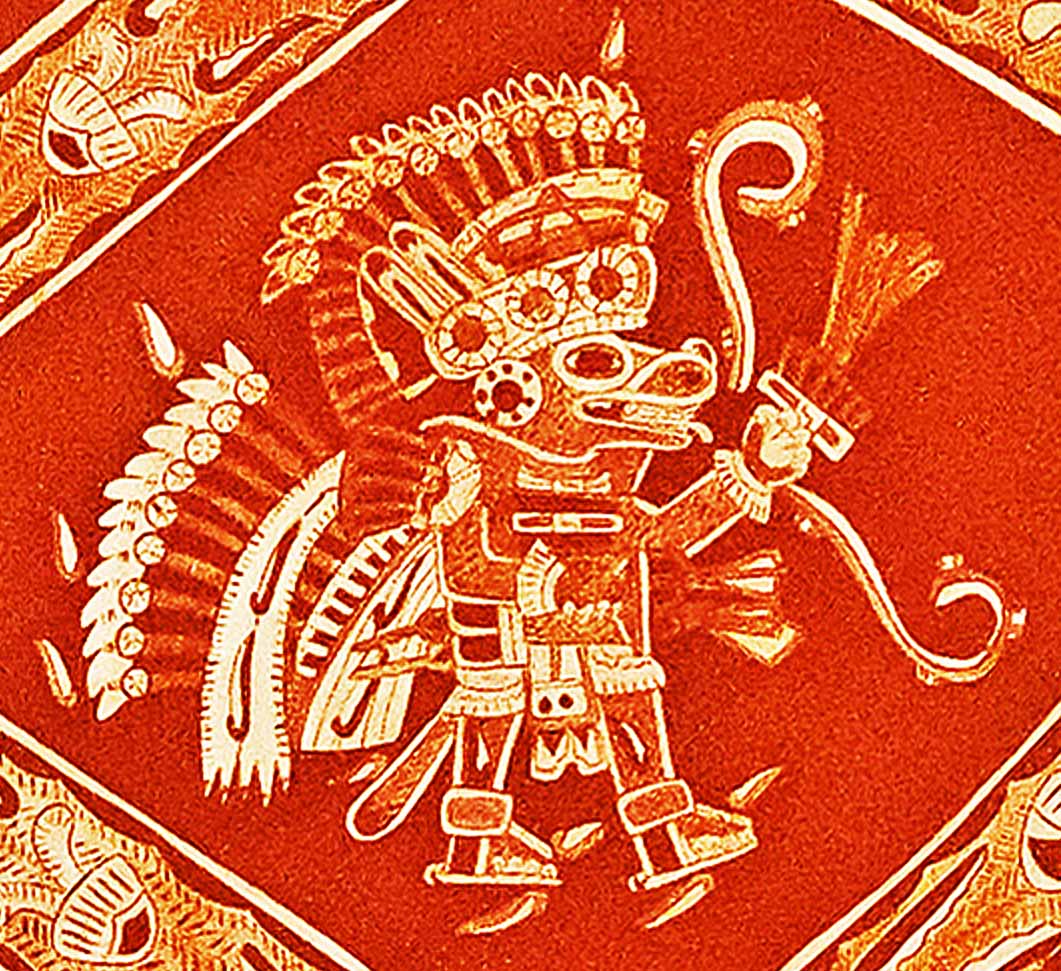
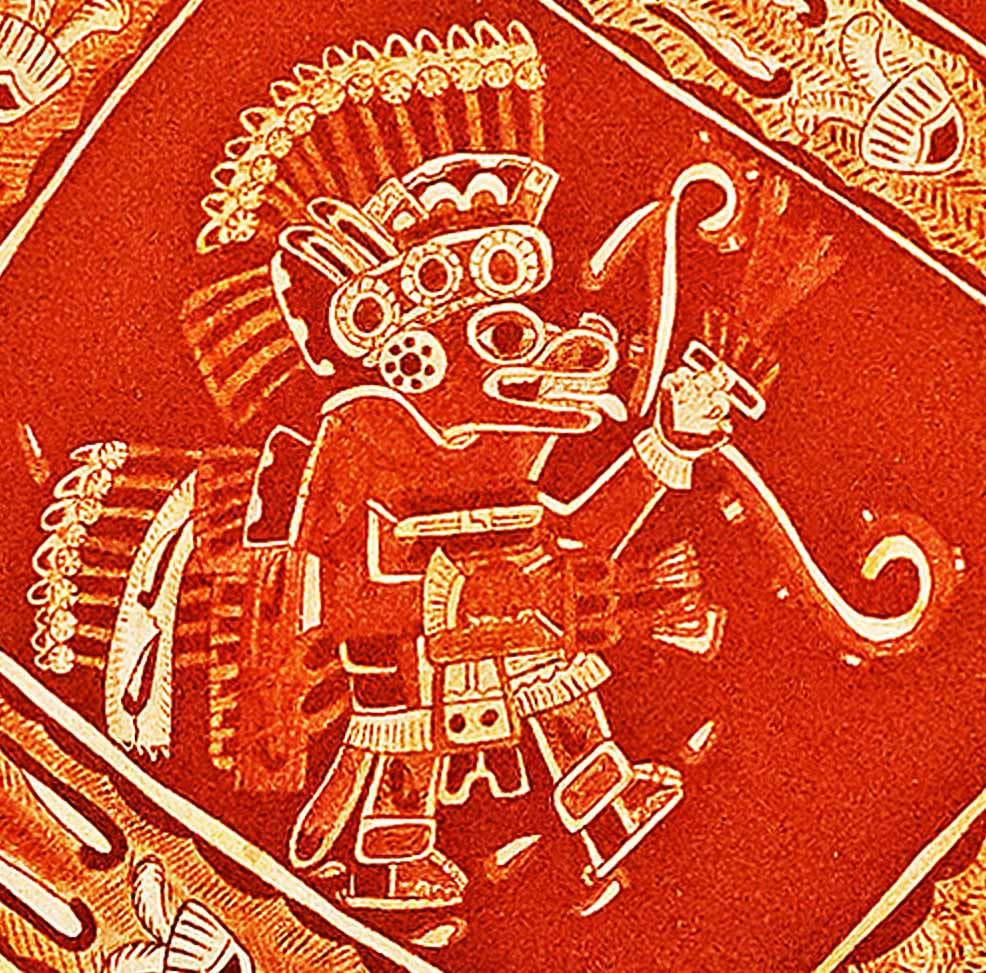
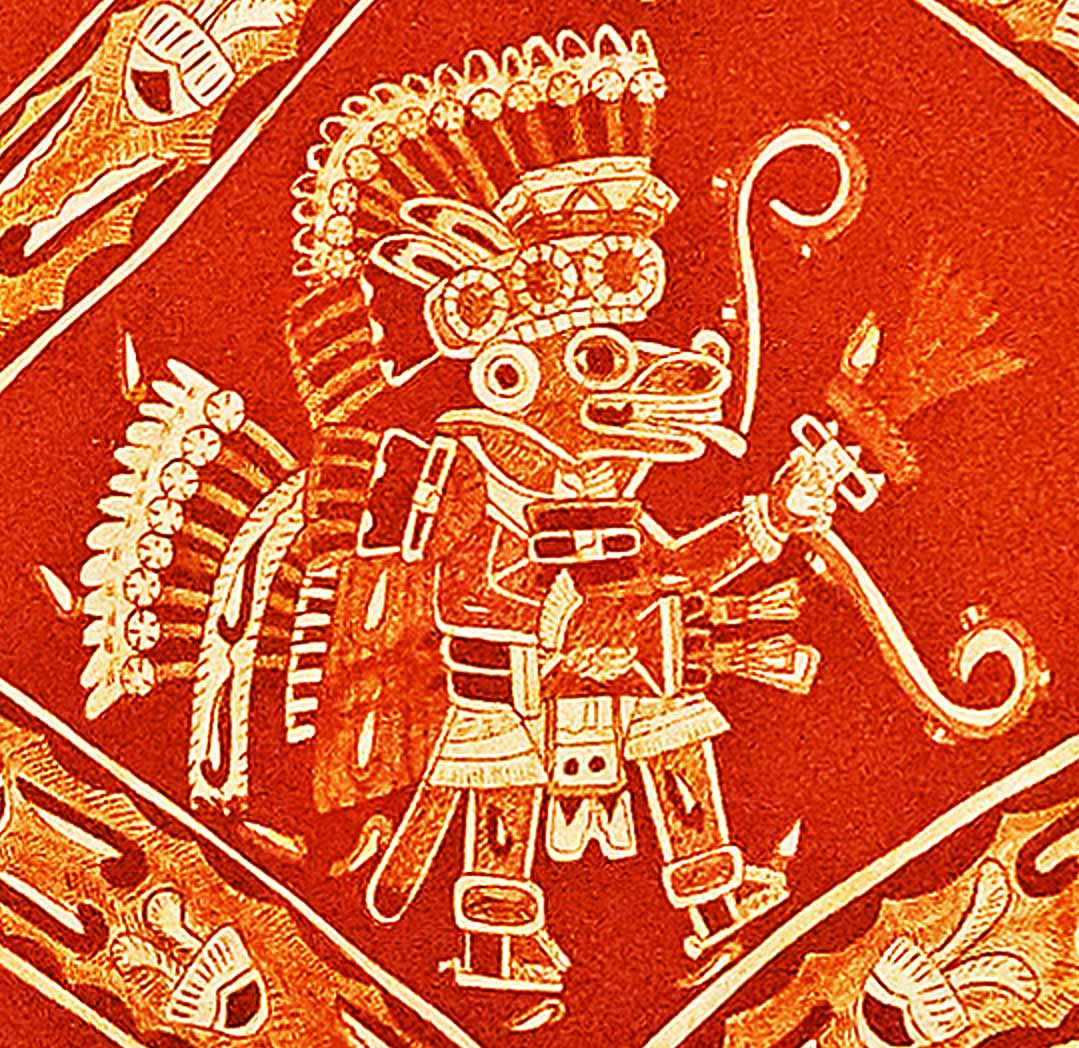
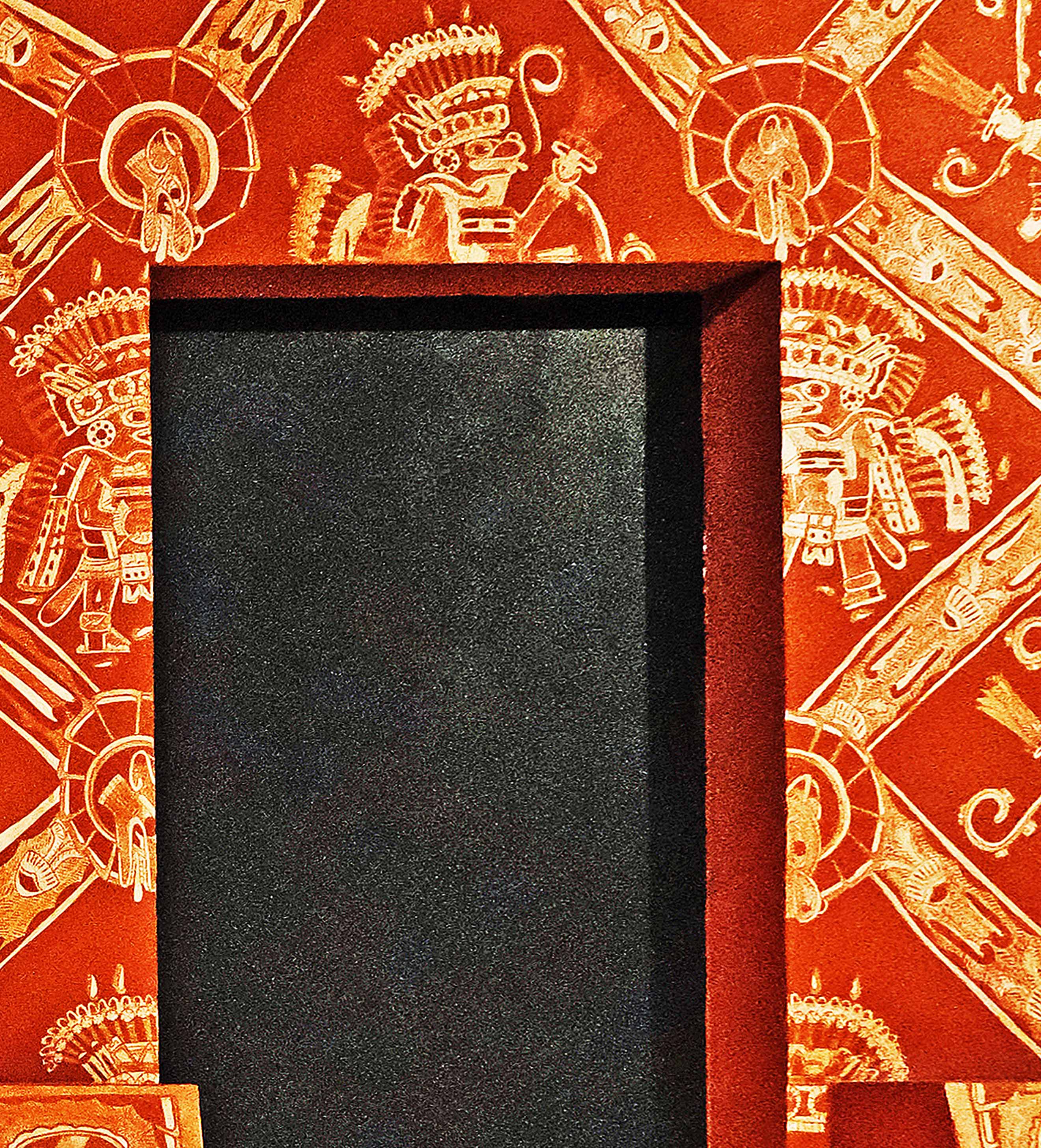
However, the Coyote Man statue has been partially cut off by a doorway. Isn't this disrespectful to the Supreme Leader? I don't really understand.
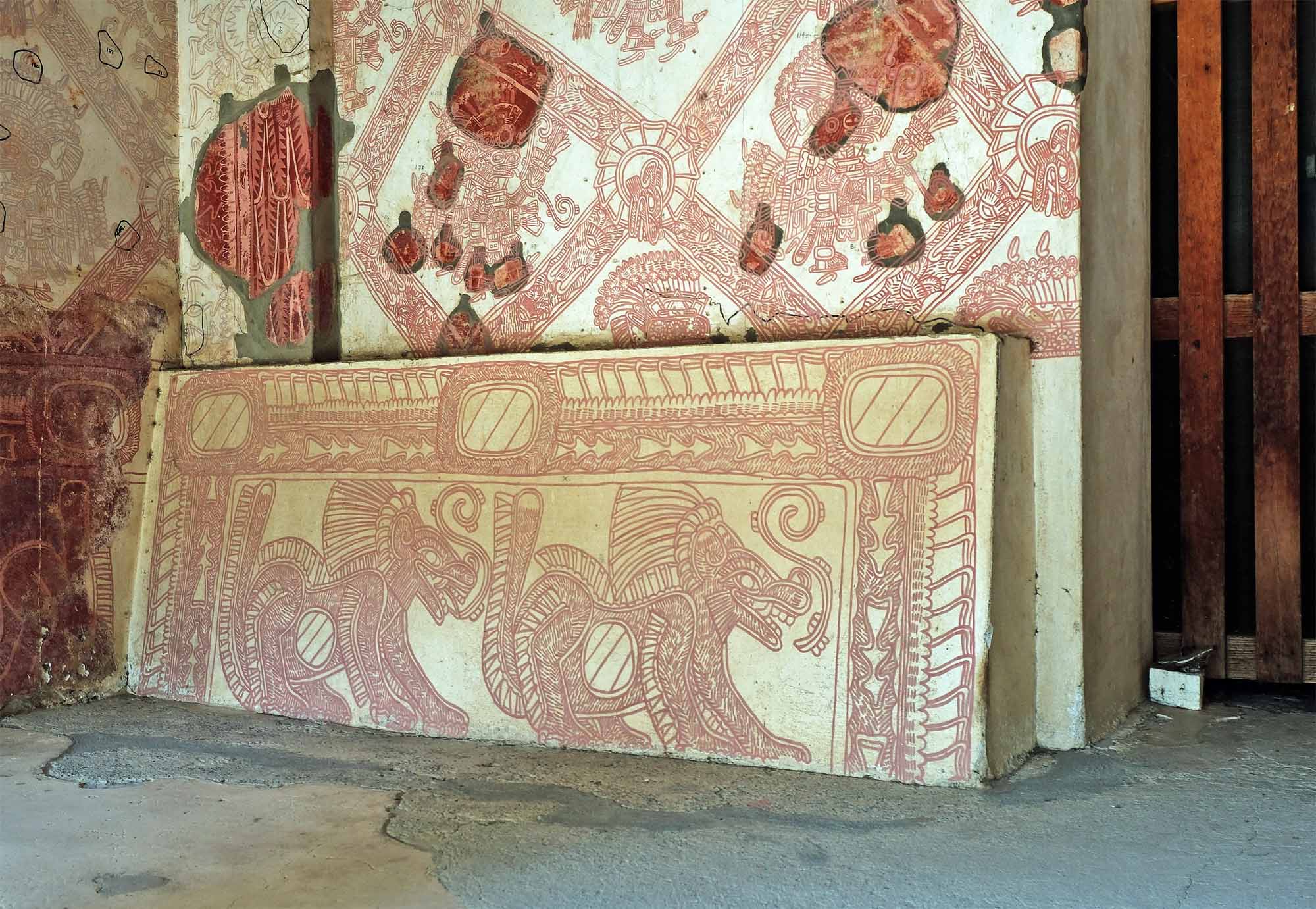
Next, look at the bottom of the wall.
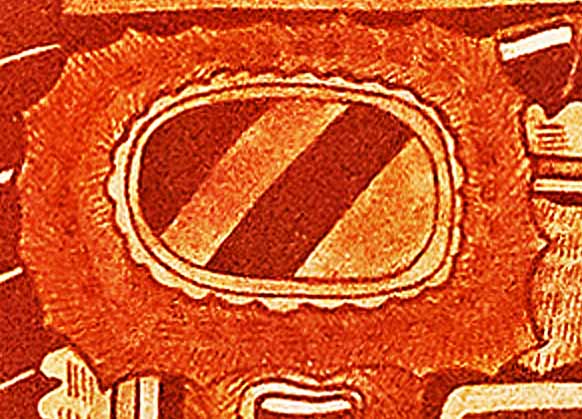
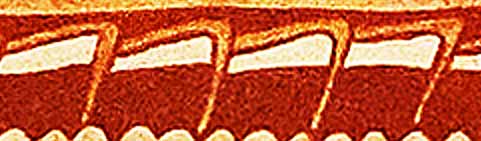
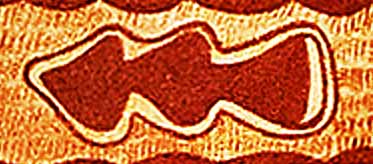
↑The Atetelco crest? ↑Spine. ↑Obsidian knife.

A coyote is howling. It has the same markings on its torso as those on the mural's border.
Portico 2 (east)
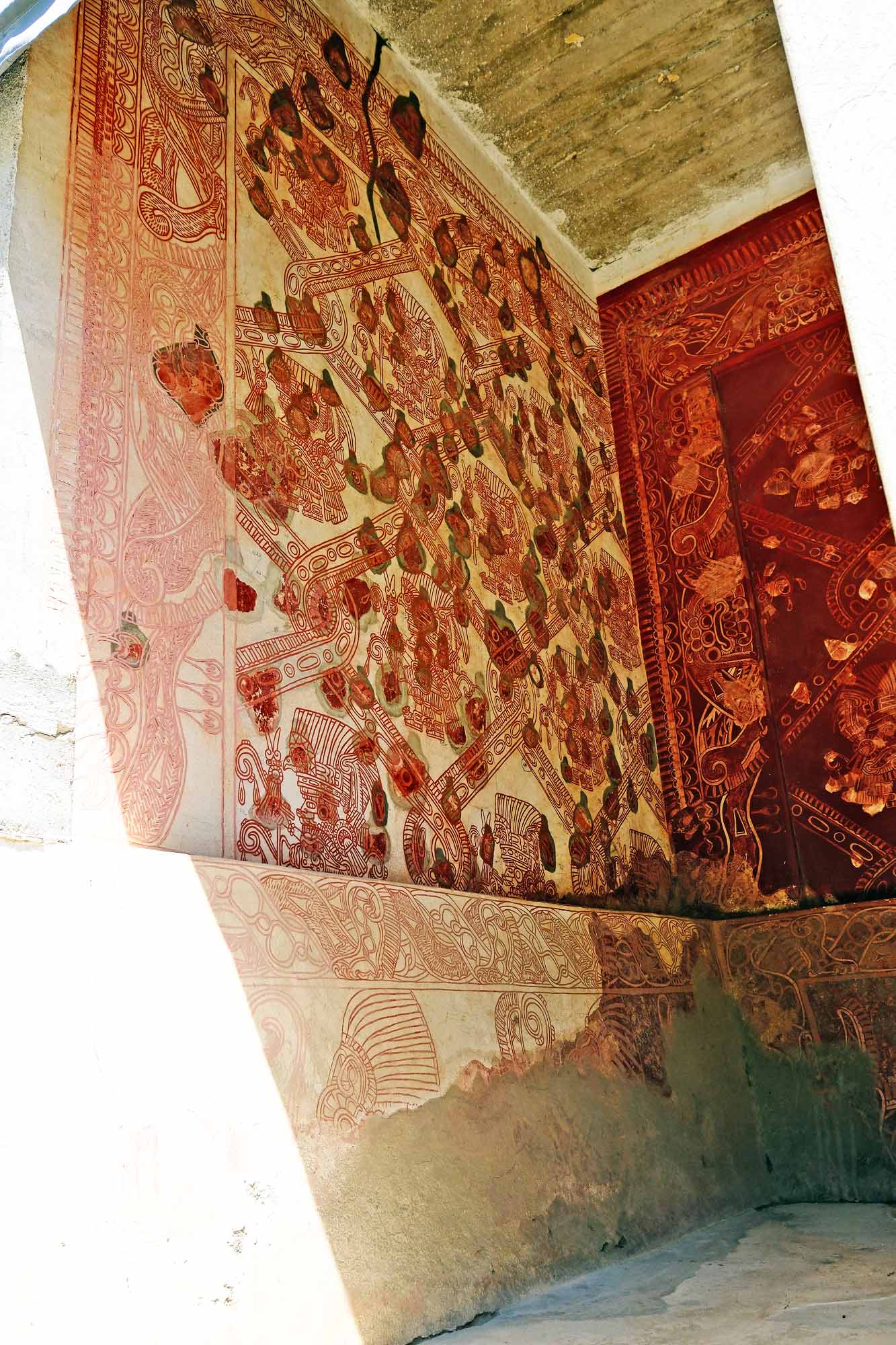

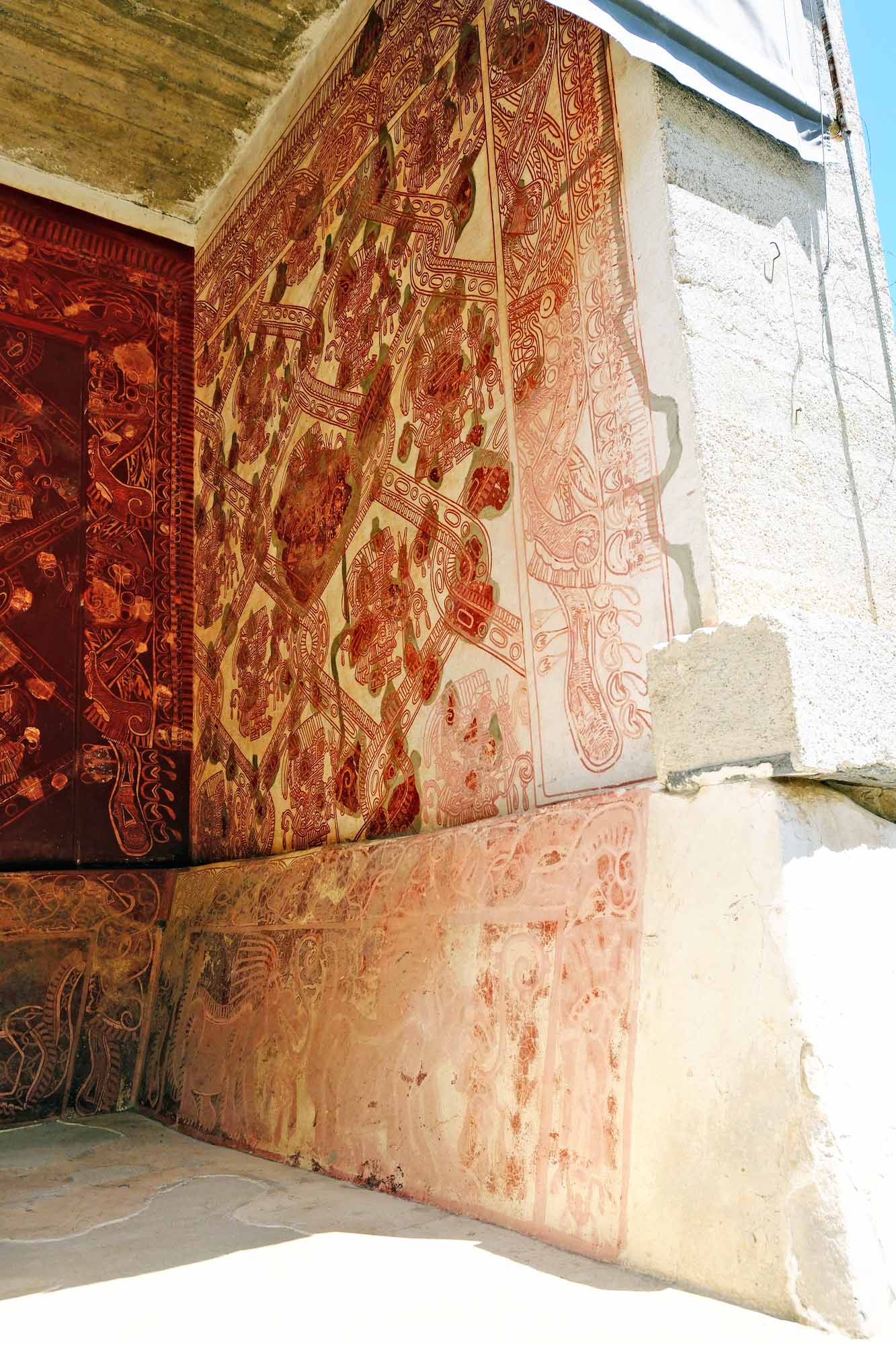
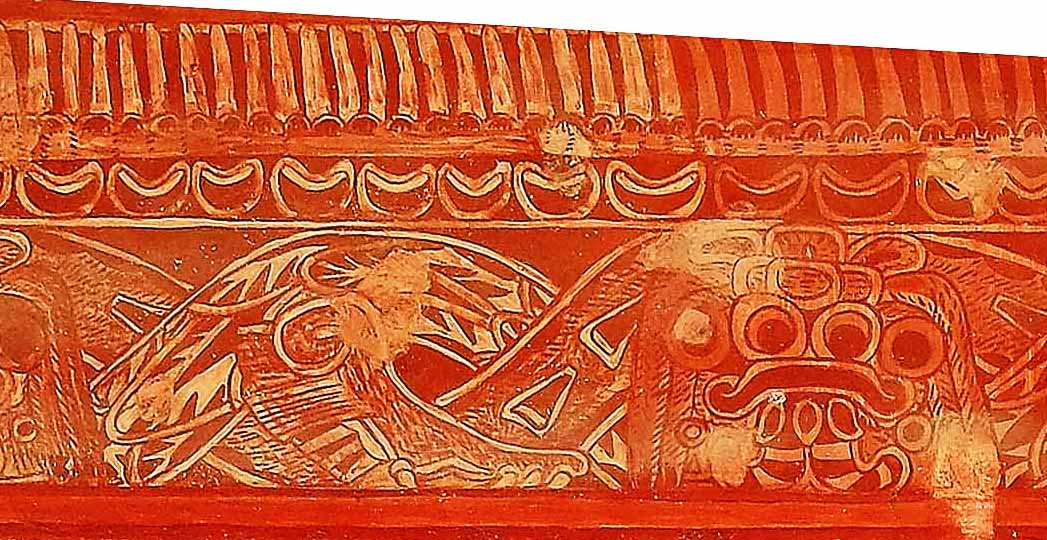
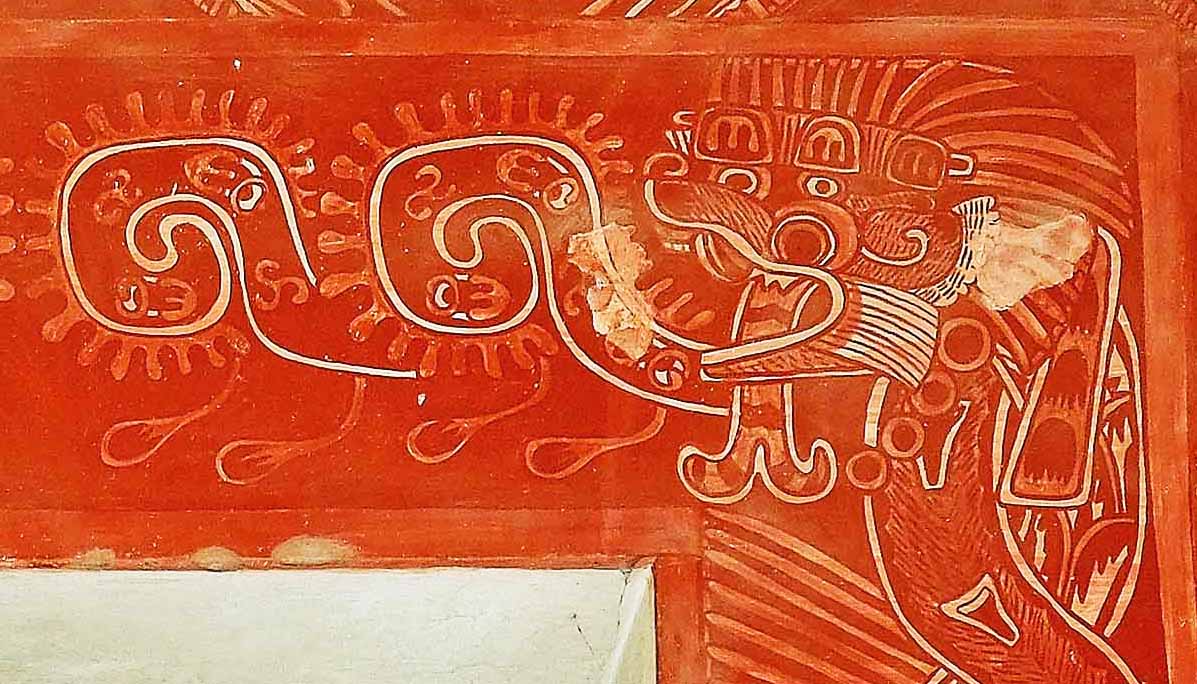
The outer frame features intertwining snake bodies with obsidian arrowheads. The face is of the god Tlaloc. A snake-bodied coyote howls twice at the doorway.
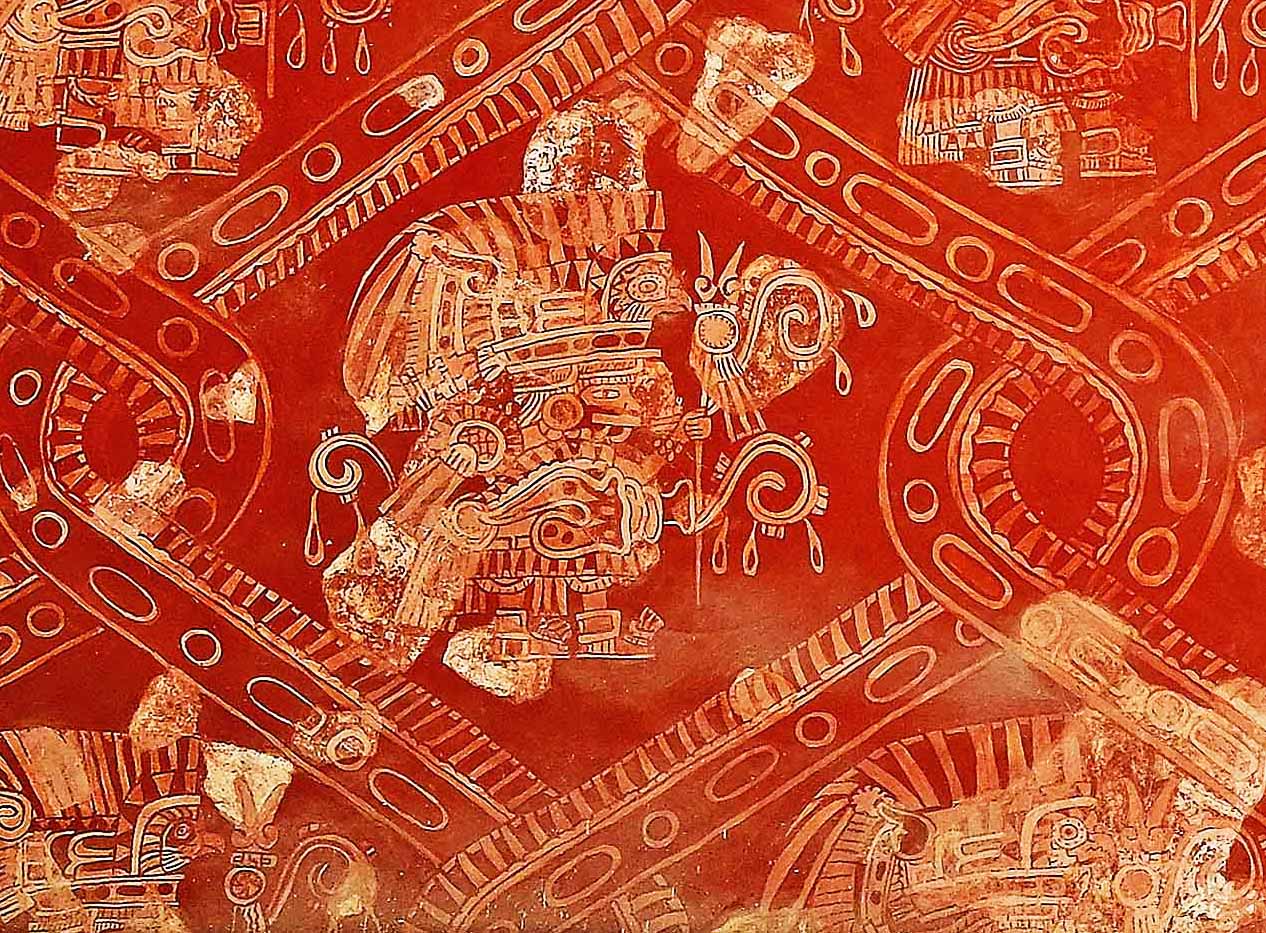
Unusually, they are human. they are probably priests. Each head ornament is a bird. The conch shell he is holding on his right hip is roaring twice.
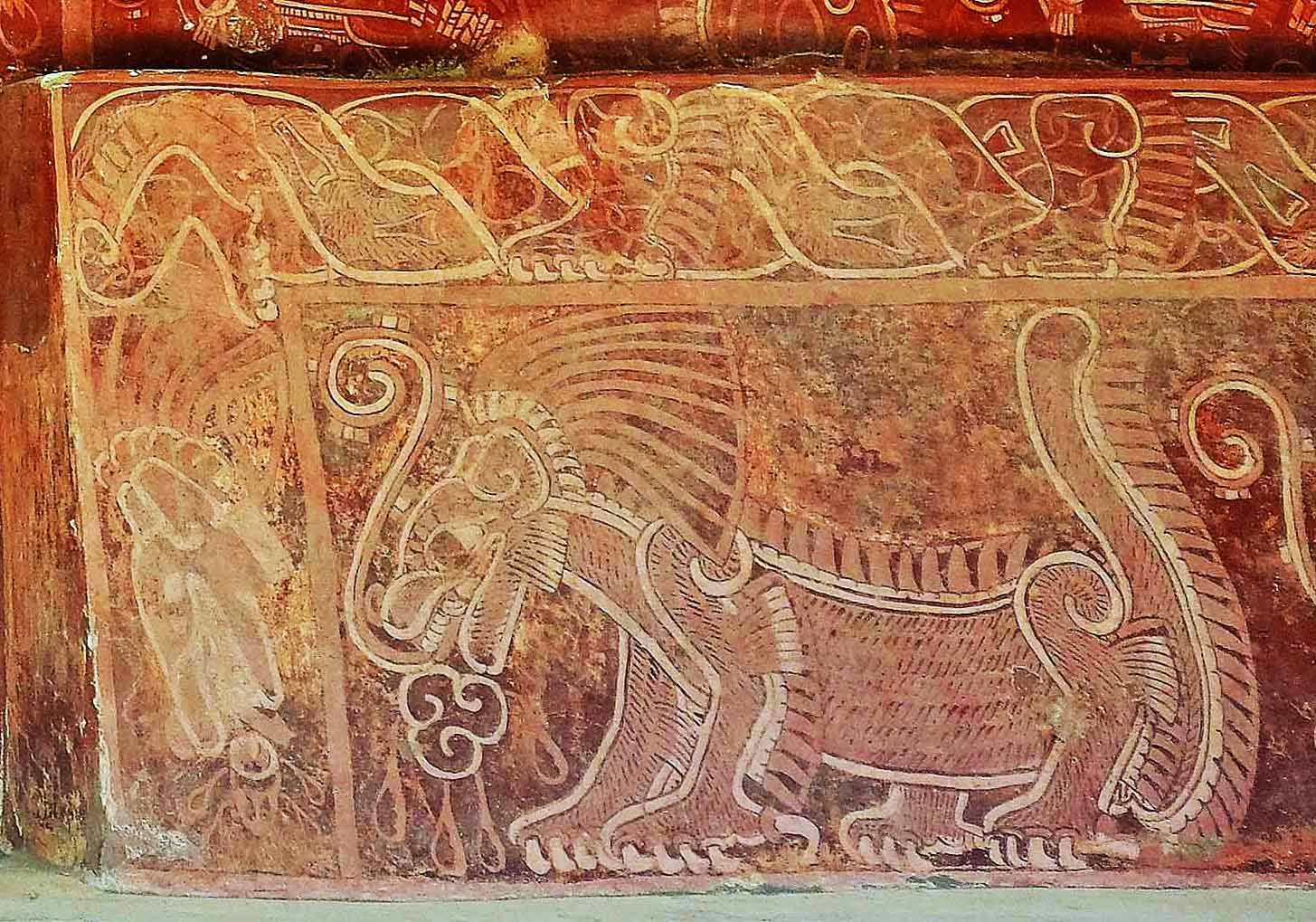
At the bottom of the wall, surrounded by tangled snakes, a coyote gnaws at a bleeding heart and howls.
Portico 3 (north)
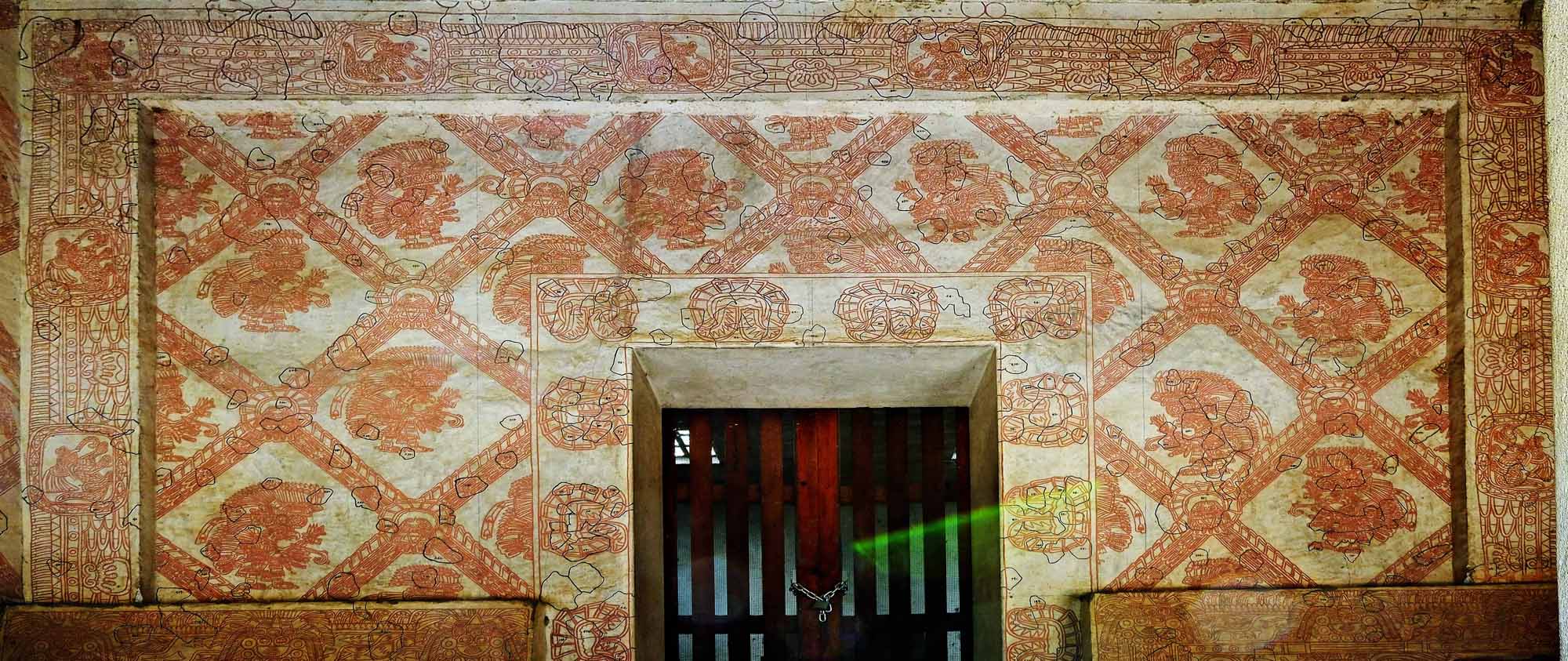
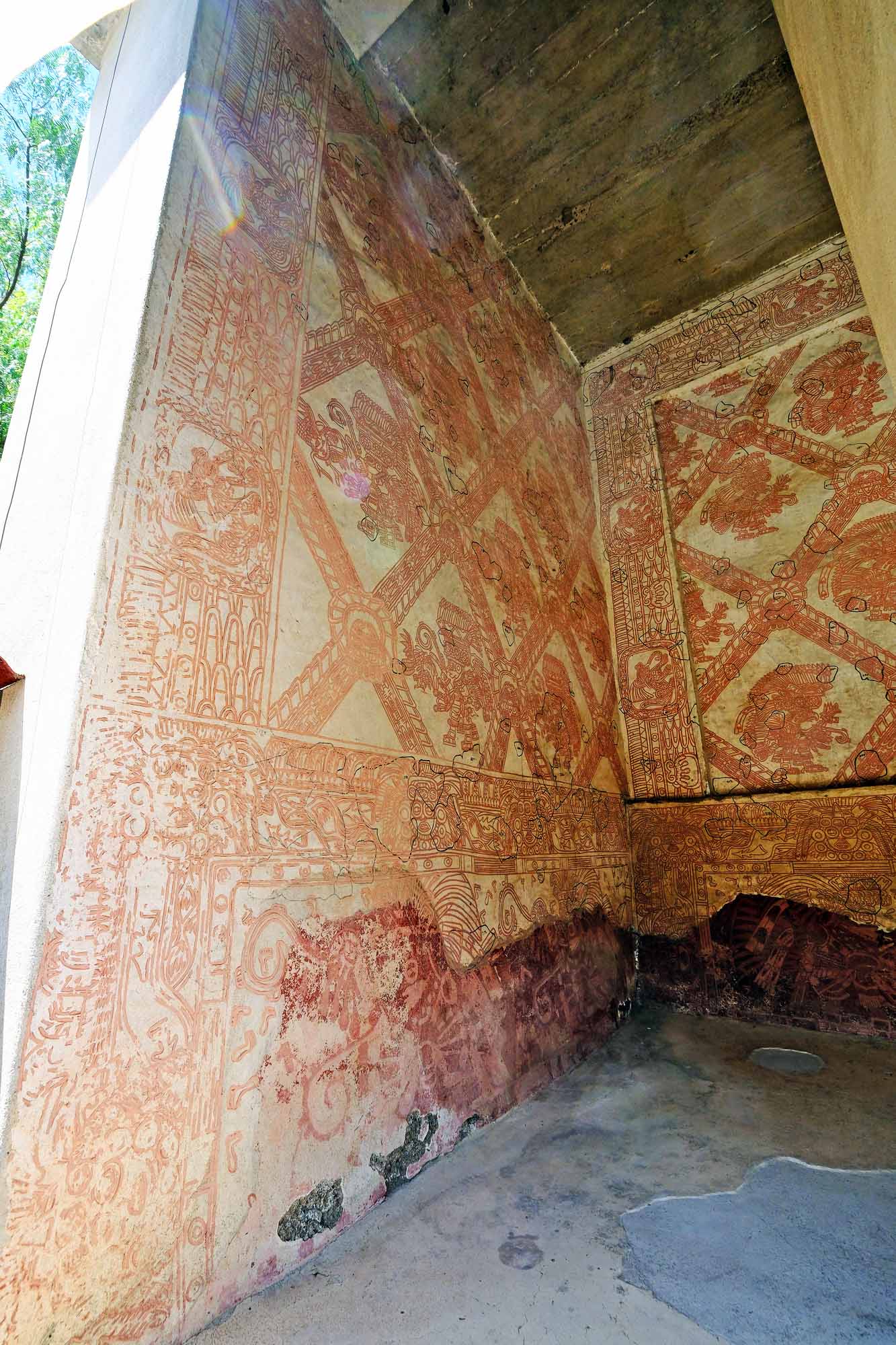
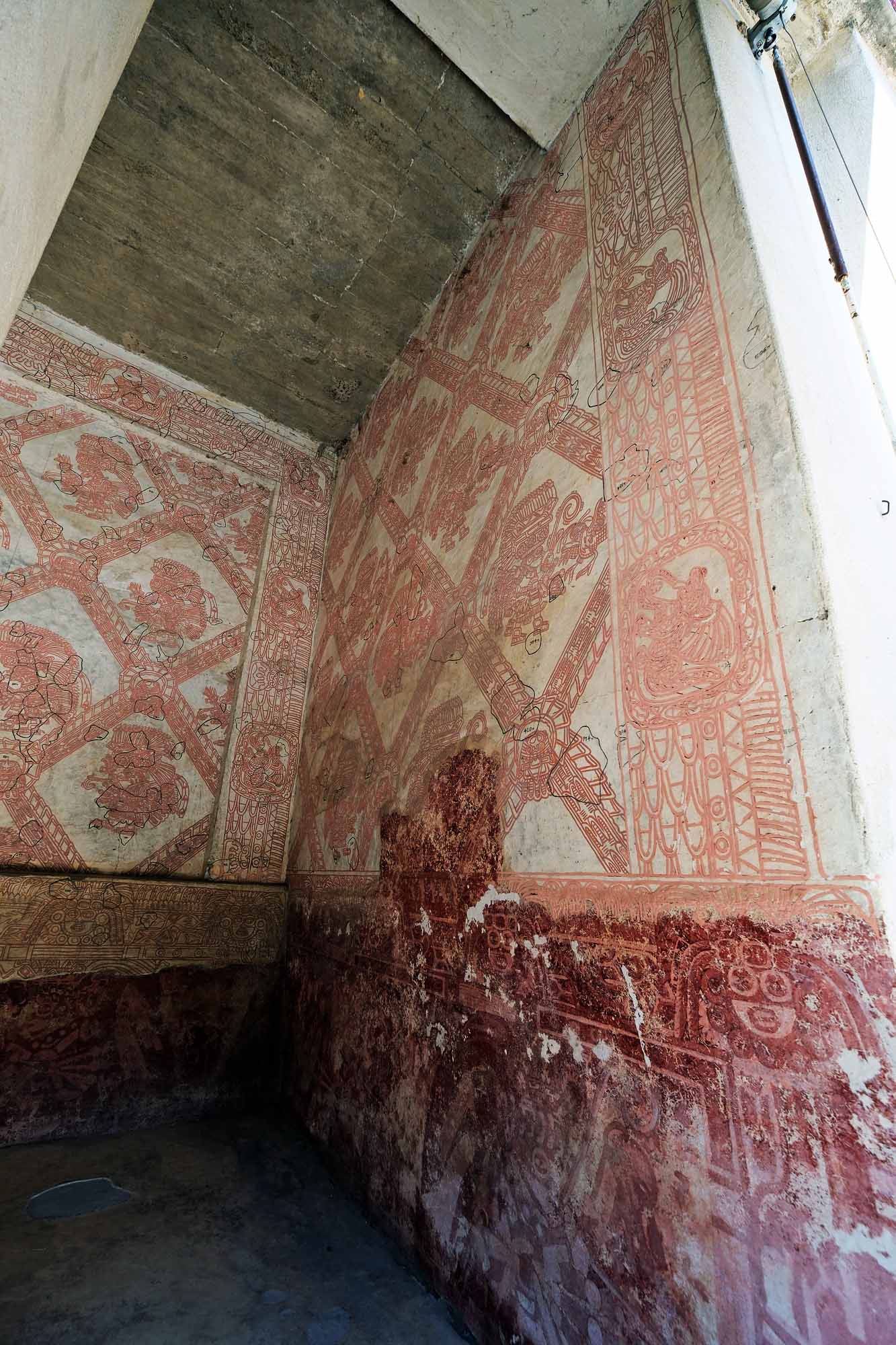
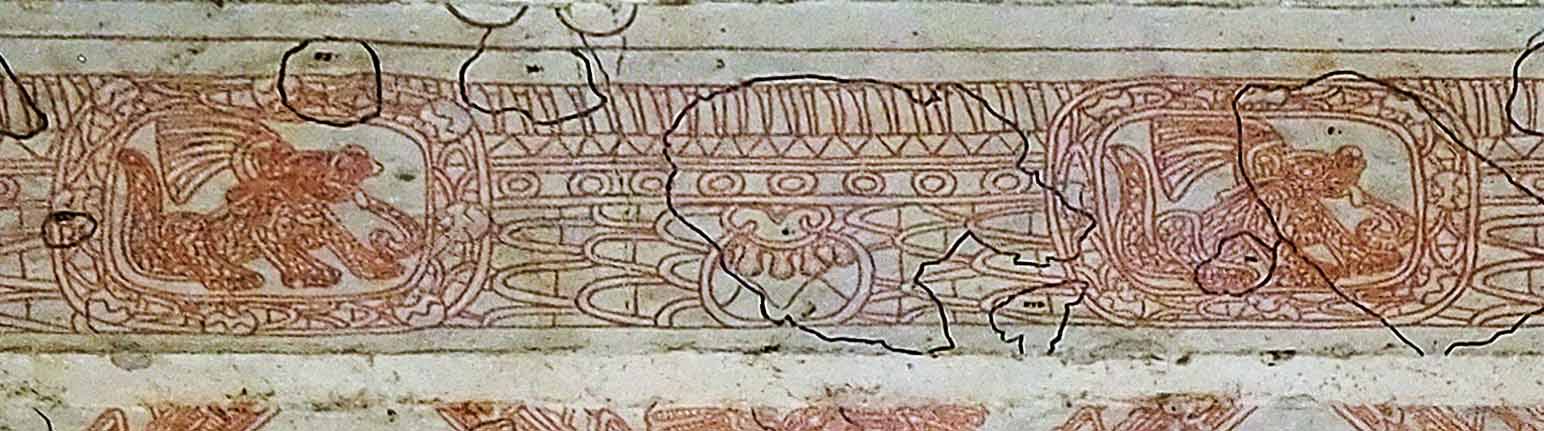
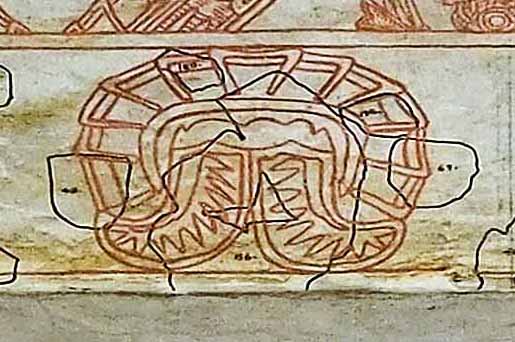
There is a coyote on the outer wall frame. The design inside the wall is, from top to bottom, feathers, a straight snake's body, a thick circle symbolizing the god Tlaloc, five dripping blood, and on both sides are obsidian knives.
。In the doorframe, two obsidian knives jut out like fangs or tongues, encircled by a spinal cord.
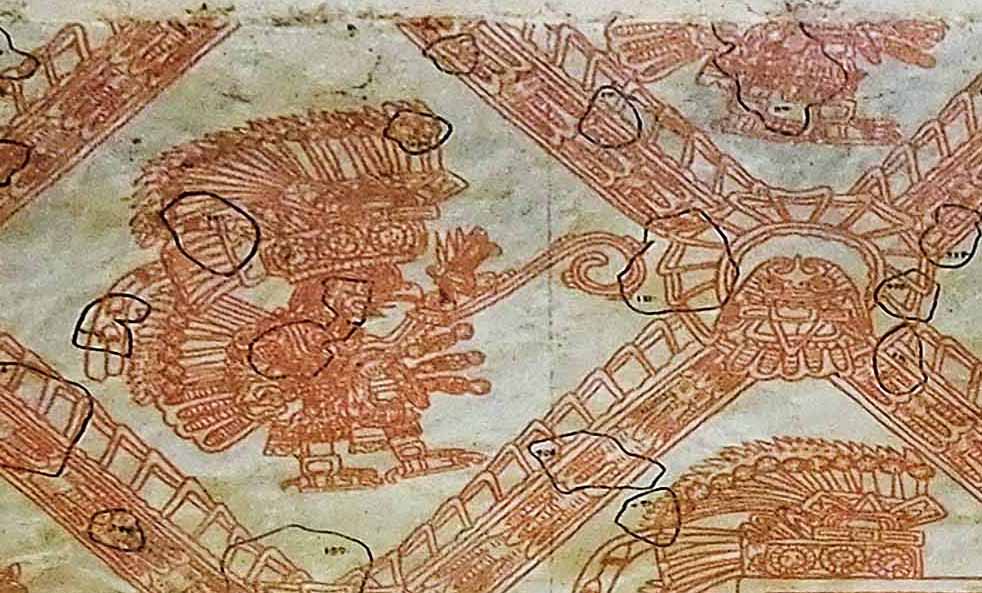
The main character of Portico 3 is a bird-man. His head is decorated with what appear to be many arrows. He holds a military baton and utters a long voice. The diamond-shaped border is made of marrow bone and numerous obsidian knives. At the center of the border is a bird facing forward.
The White Courtyard has three hypostyle porticos with unique designs, possibly depicting a priest in the center with the Coyote Warriors and Eagle Warriors on either side.