Plaza of Columns Complex
Related…The Lost World of Tikal, South Tikal
Please note... the Plaza of the Columns and South Tikal are not tourist destinations. The Plaza of the Columns has been backfilled since excavations were suspended, and South Tikal has been off-limits to the public in the past and present. I can only provide a few photos. However, valuable information that may be related to 378 AD can be gleaned from the papers. Of course, they also contain many valuable illustrations. You can see them by purchasing the book or searching online. Here are some of the main references.
1、TEOTIHUACAN, THE WORLD BEYOND THE CITY 2020 Chapter 5…The Maya at Teotihuacan? New Insights into Teotihuacan-Maya Interactions from the Plaza of the Columns Complex by Nawa Sugiyama
2、ALTERNATIVAS DEL CLASICO TEMPRANO EN' LA RE1ACION TIKAL-TEOTIHUACAN: GRUPO 6C-XVI, TIKAL, PETEN, GUATEMALA by Juan Pedro Laporte Mouna 1989
3、 A TEOTIHUACAN COMPLEX AT THE CLASSIC MAYA CITY OF TIKAL
, GUATEMALA by Cambridge University 2021
4、SPEARTHROWER OWL: A Teotihuacan Ruler in Maya History by David Stuart 2024
To the west of the stairs and Platform in the photo below lies the Pillar Plaza.
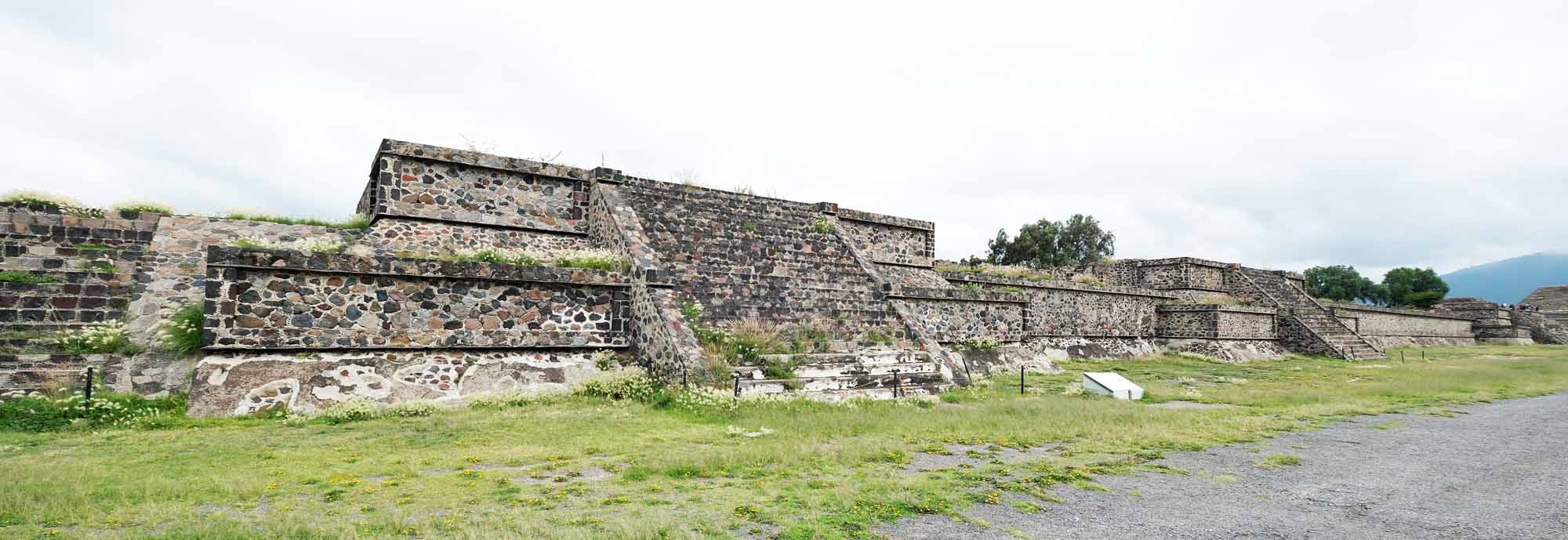
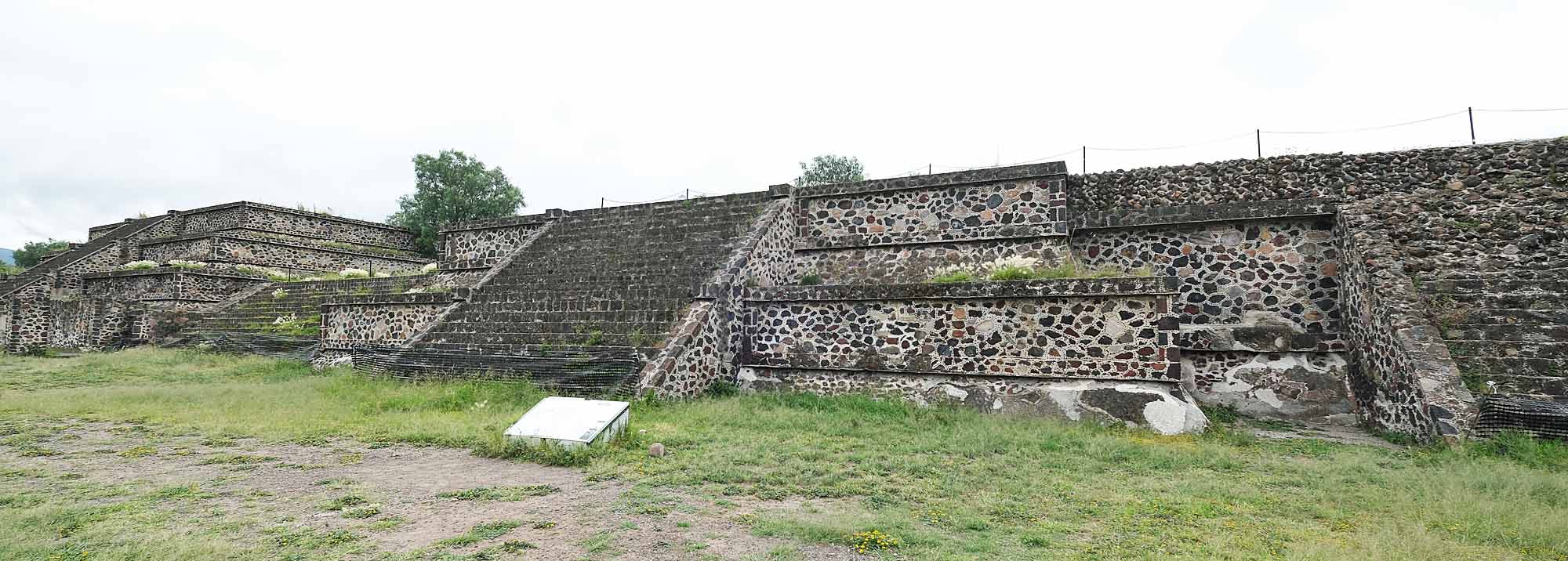
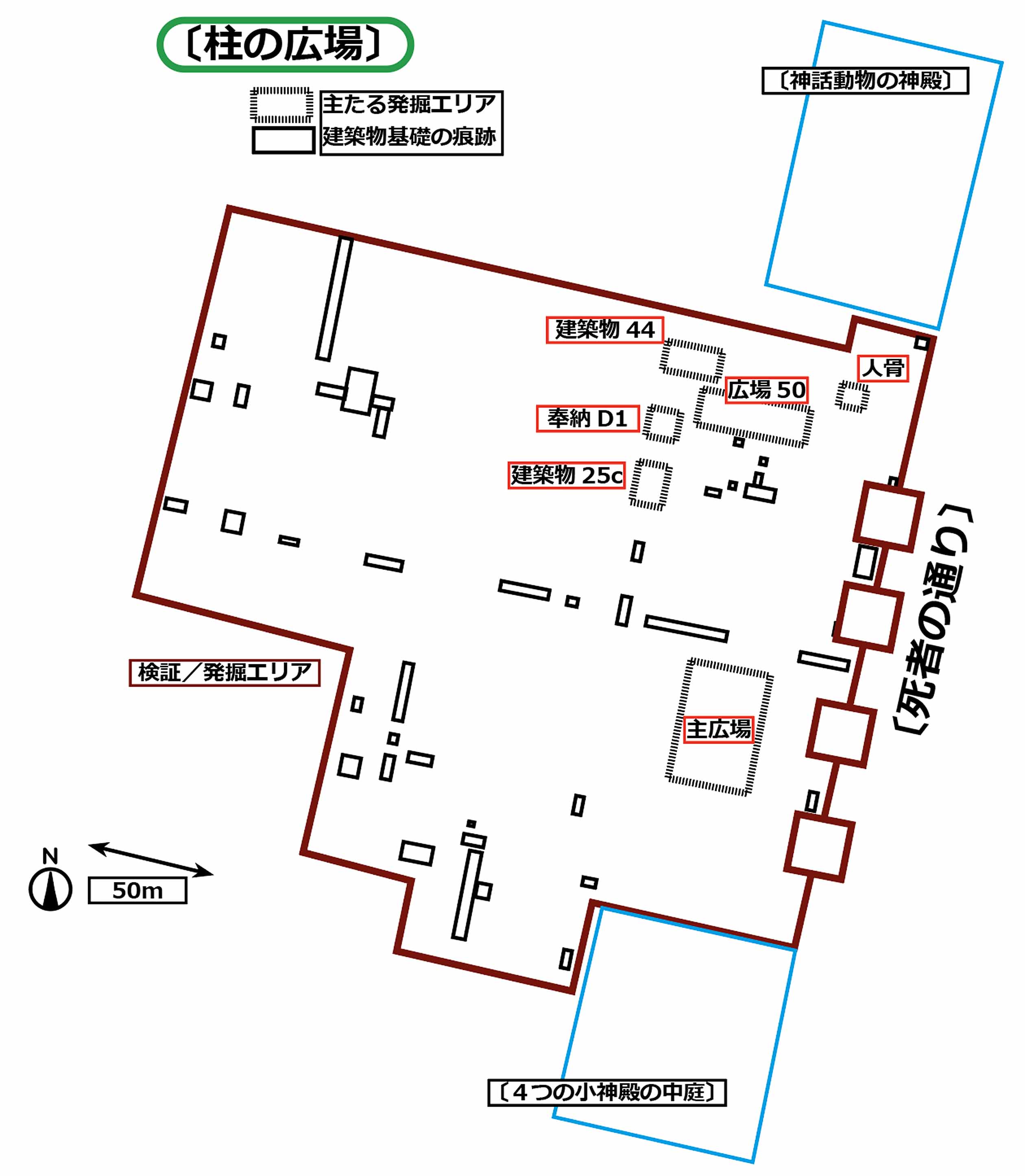
The brown area, measuring 250 x 300m, is the subject of the survey. Excavations have focused on the six locations enclosed by dashed lines. Other areas have only been observed on the surface, with traces of building foundations indicated by solid lines. Although it is vague, there appears to be an east-west architectural axis just north of the main plaza. In the center of this, almost in the middle of the Plaza of Columns, there is a high mound, and it is possible that the main temple was located there.
Building 25...It appears to be the remains of an ancient temple, and eagles, spider monkeys, green stone ornaments, and shell products have been excavated. These are the result of trade.
Deposit D1...Ritually burned pottery flakes were deposited beneath the new floor. This layer, 1 m thick, continues to the west. Of the 697 flakes, 62% are Teotihuacan style with a wine-red background and 38% are Maya style with a blue background.
Building 44...Administrative/temple residence on a long, narrow platform, possibly overseeing Plaza 50.
Plaza 50...separated by an L-shaped platform and 3.4 m higher than the main courtyard. Rebuilt five times, with plastered floors. Highly restricted access.
Human bones...A large number of sacrificial human bones were buried here.
The paper hypothesizes that the original murals in Building 44 were removed and destroyed, resulting in Dedication D1. The fact that 38% of the pieces are Mayan-style murals suggests that the murals were not simply an exotic design, but rather covered an entire wall. Mayan mural flakes have also been reported at Tetitla. They are presumed to have been painted by Mayan artisans who stayed there. The murals were displayed for extended periods, suggesting that Mayan elites had been residing there for extended periods. It is likely that special circumstances existed that allowed this to happen in Teotihuacan's buildings.
The vast Petén region is home to numerous Maya city-states. There was no unified state, so it was impossible for one to represent the entire Maya region. So which city-state was it? One paper offers a faint hint: the bulge above the ear of the Jaguar God on one of the mural flakes in the Plaza of the Columns closely resembles that on Stela 29 at Tikal (erected in 292 AD).
If we ask, "Did Teotihuacan have a special relationship with a particular Maya city-state?" the answer is "the Tikal Coup of 378 AD." This is called the "Arrival." Let's look at the archaeological and circumstantial evidence to see if this was really the case. So, what was happening in Tikal, 1,000 km away, in relation to Teotihuacan?
Today, visitors are drawn to the Great Square, which includes Temples 1 and 2 and the magnificent Northern Acropolis, the construction of which began after 300 AD.
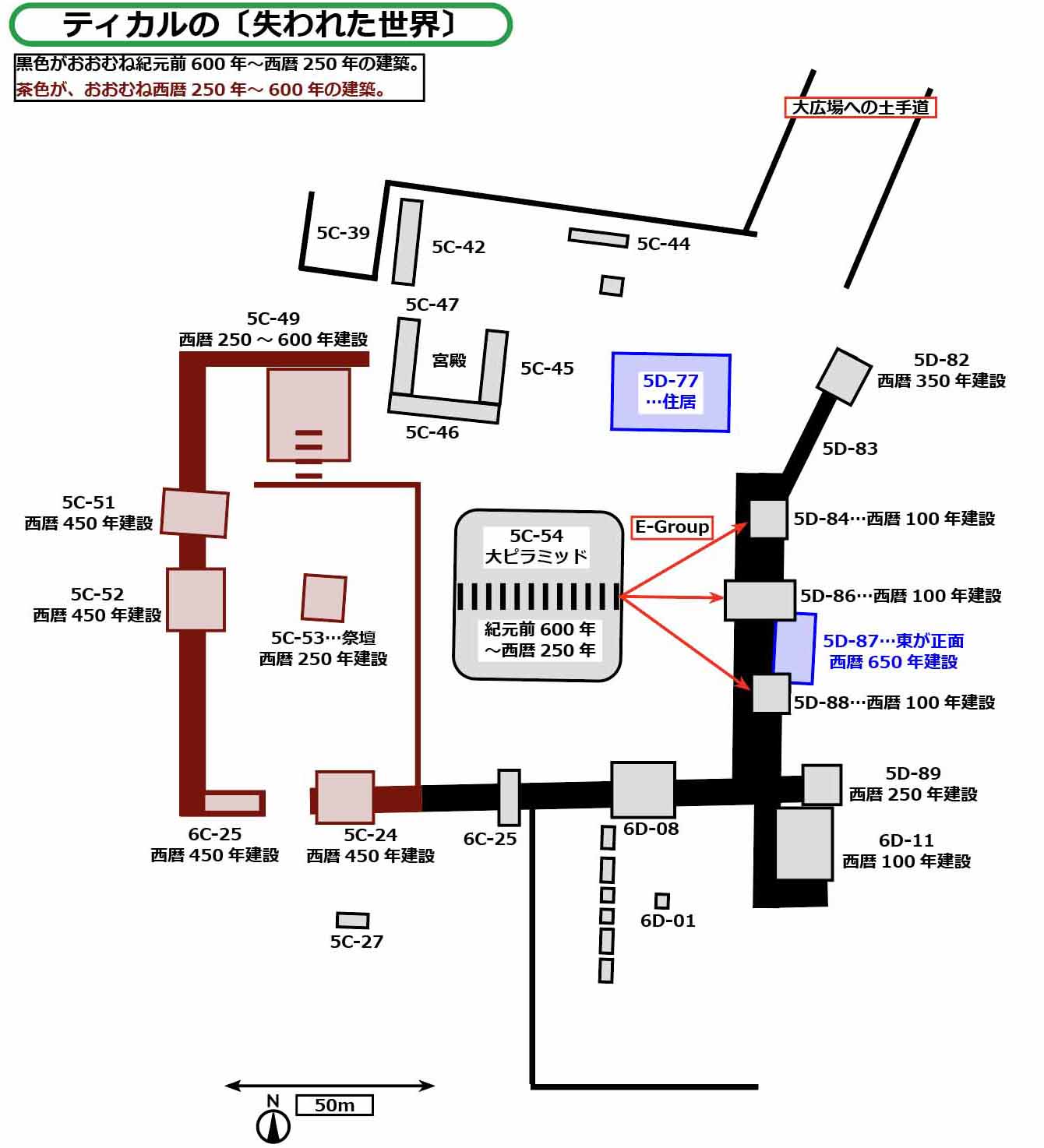
The black part in the image above...From 600 BC to 250 AD, the Lost World was the sole center of Tikal. 5C-54 was located on the western edge of the site, and was part of the "E-Group" with 5D-84, 86, and 88 on the eastern side.
The brown in the image above...5C-49 and 5C-53 were newly built in 250 AD. Even in 450 AD, 5C-51, 5C-52, 6C-25, and 5C-24 were built. All were in the Talúd-Tablero architectural style.
Until 600 AD, it stood alongside the Great Plaza, and from 600 to 700 AD it was closed to the public. The Sakube was also gradually closed.
The blue color in the image above,,,indicates that the area was used as a residence and burial ground for the elite between 700 and 950.
In 950 AD, the entire city of Tikal collapsed.
1. Before 250 AD
The Great Pyramid is probably the oldest stone structure in Tikal. It covered a temple dating back to 600 BC, measuring 3m high and 23m north to south, and was expanded four times until it was enlarged to 31m high and 72m north to south in 250 AD. Tomb chambers were created as each floor was expanded. Details are unknown due to grave robbing. There are giant jaguar masks on both sides of the top of the stairs on the west side.
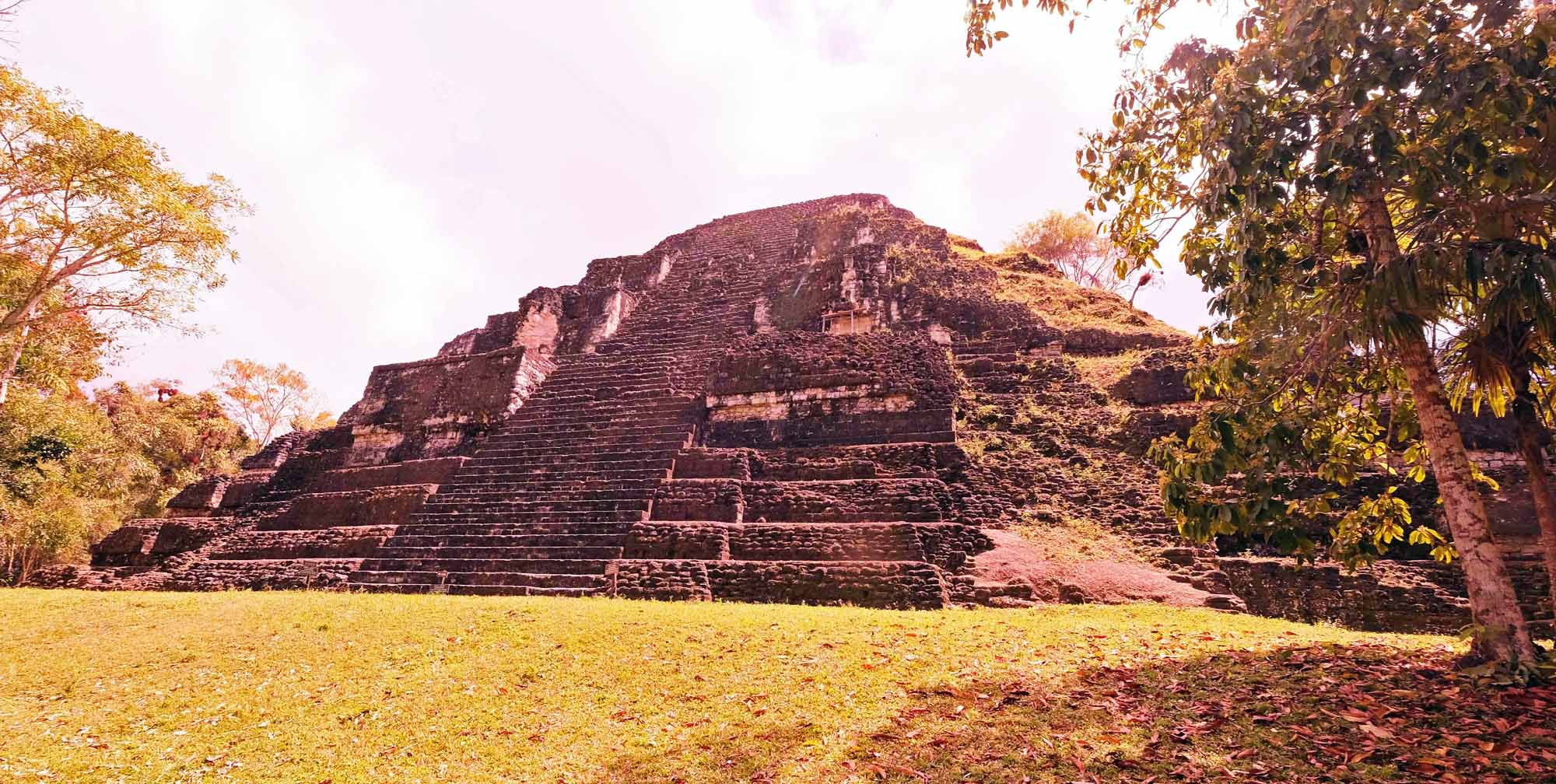
↑Great Pyramid 5C-54.
In addition, in 100 AD, small temples 5D-84, 86, and 88 were built on the east side. From the east stairs of the Great Pyramid, it became possible to observe the sunrises of the summer solstice, winter solstice, vernal equinox, and autumn equinox over the three small temples. These four structures are collectively called the E-Group in archaeology.
E-Group has been found throughout Mesoamerica, including in Uaxactún, Monte Alban, and the Teotihuacan Ciudadela. It was a ritual site for visually understanding the changes in the seasons, such as spring, summer, autumn, winter, and the rainy and dry seasons. However, if you think about it, you don't need four temples to know this. Simply placing a single stone on the ground and pointing three sticks to the east will provide the necessary information. However, there must have been a time when the need for ritualization was recognized.
The eastern half of the Lost World, which remains today, including all the architectural details, was completed, and then the western half was built in 250 AD.
2. After 250 AD
In the western half, six buildings were constructed by 600 AD, all in the Talúd-Tablero architectural style. The largest building is 5C-49, with the first storey, 7 m high and 21 m wide, built in 250 AD, and the final storey, 16 m high and 5th storey, built in 600 AD.
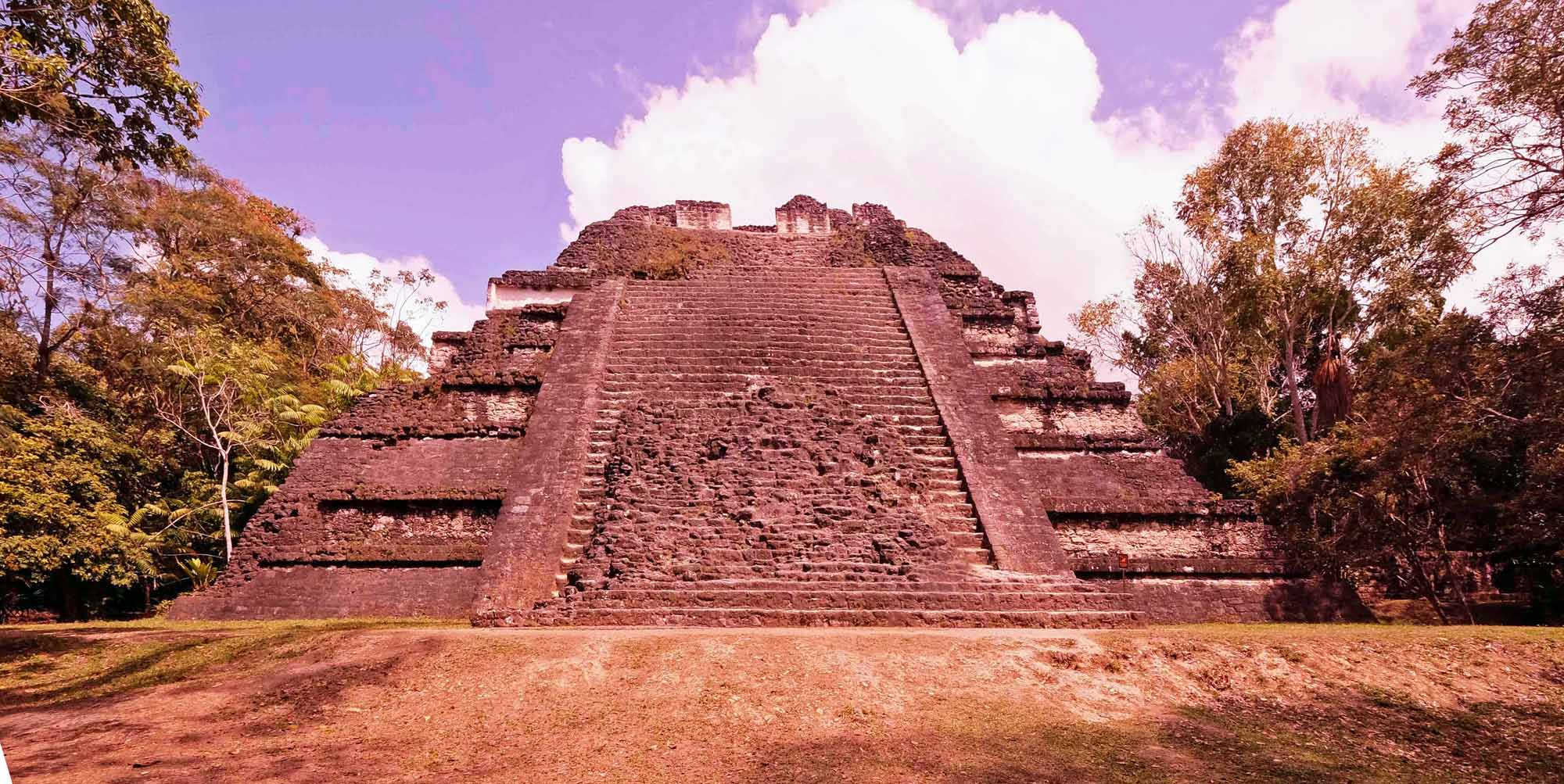
↑Temple 5C-49 in the Talud-Tablero architectural style.
Unlike E-Group, this building has no connection to the changing of the seasons. Of course, it is a building associated with some god, but the elite of Tikal after 250 AD wanted it to be wrapped in the robes of the Talúd Tablero.
At around 250 AD, it was about time when 3 pyarids were first completed. Those Tikal elites might have visited Teotihuacan.
During the 1,200 years we have just briefly mentioned, from 600 BC to 600 AD, the Lost World appears to have taken on many different forms.
1. This was the oldest working place of Tikal's elite, and unknown kings and queens lived here.
2. Some reports suggest that the bodys of King Kʼinich Muwaan Jol, Chak Tok Ichʼaak I, were likely buried around 378 AD in burial chambers established in the already-built chambers 5D-89 or 6D-11.
3. Around 378 AD, the initial construction of the Northern Acropolis progressed, and a causeway to the great plaza was built and then closed off.
4. The core of Tikal was moved around the Great Plaza, and the Lost World was used as a residential area and cemetery for the elite, with few religious services being held there.
Here you can see a bird's-eye view of South Tikal.
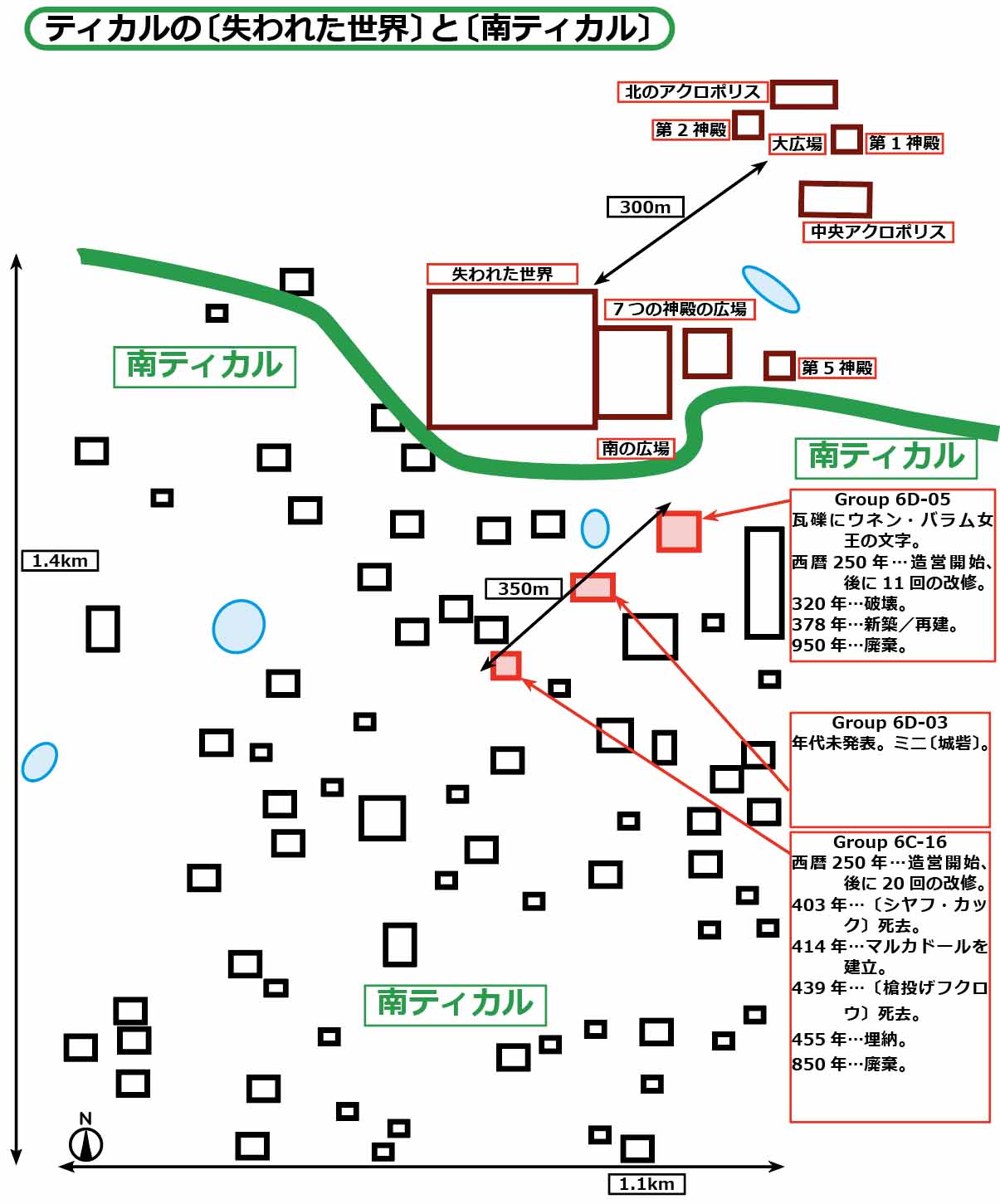
Within the narrow 1.4 x 1.1 km area of South Tikal, there are dozens of architectural complexes, large and small, all of which have a plaza surrounded on three or four sides by temples or other structures.
The terrain is made up of small hills and their foothills, which are flooded during the rainy season. This suggests that farmland was plentiful, and that agricultural production was intensive and sufficient, even if seasonally limited.
The architectural complex shown on the map above is called the Group, and 15 of these have been excavated. In about half of them, no buildings dated before 250 AD have been found, and in the other half, no buildings dated before 600 AD have been found.
At the center of the group was a stone temple/dwelling that still exists, possibly a "lord/ leader," surrounded by scattered vegetation and mud huts for commoners. Since the northern acropolis was a secondary temple/dwelling until 600 AD, it may have played an important role in supporting the Tikal government.
Group 6D-03
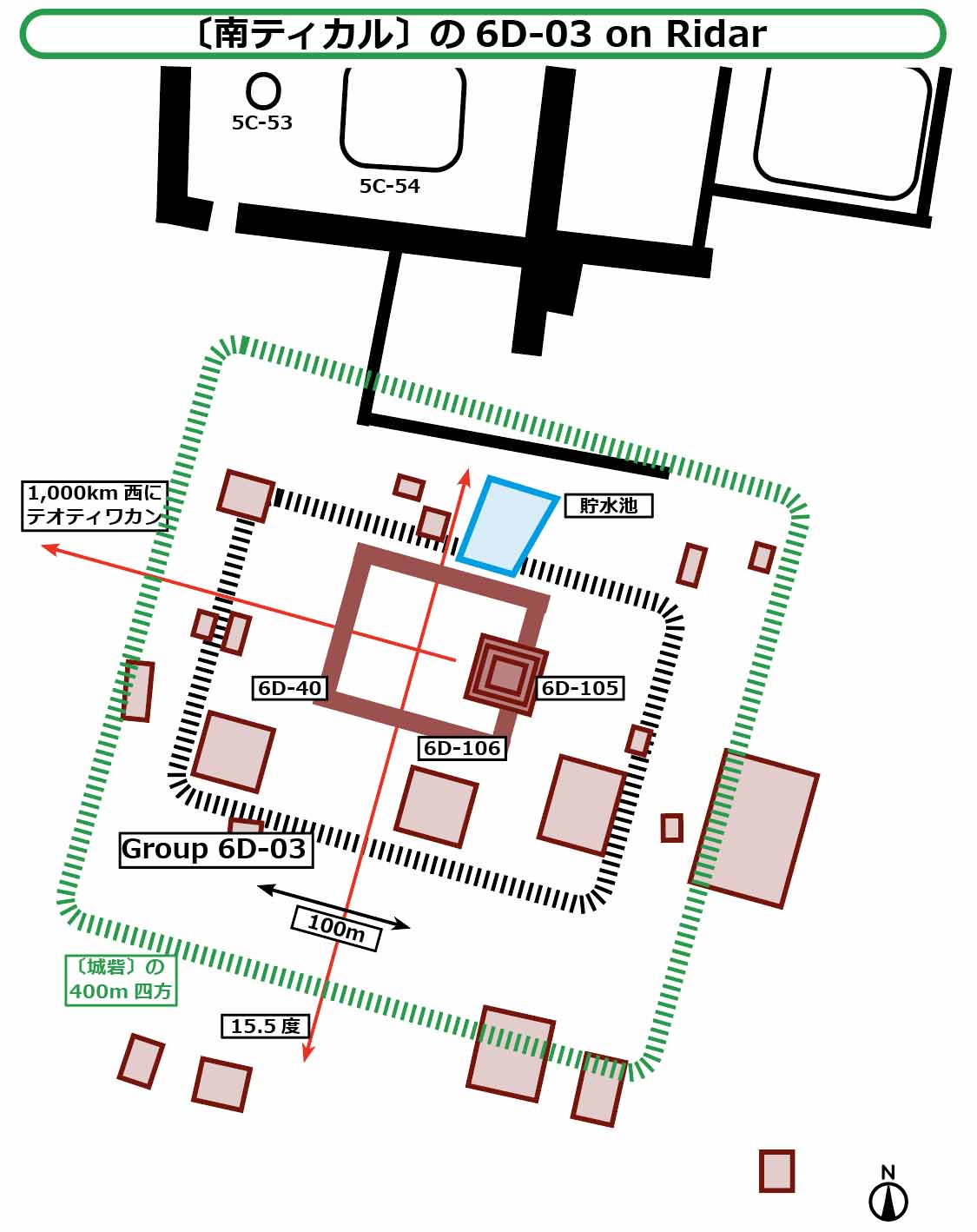
Recent LiDAR images have revealed some surprising features. The thick brown areas, 6D-40 and 106, correspond to the outer perimeter platforms of the Teotihuacan citadel, and 6D-105 is a close match for the Feathered Serpent Pyramid. They appear as approximately 20% miniature versions of the Ciudadela, shown by the green wavy line.
In addition, a slanted wall was excavated from the highest point on the eastern edge. Looking at the photograph, the angle resembles the familiar Talud section at Teotihuacan.
The other Groups have either a 0 degree north-south architectural axis or some deviation, possibly due to topography. Interestingly, Group 6D-03 has an architectural axis of exactly 15.5 degree, and by coincidence its western facade points to the location of Teotihuacan, 1,000 km west.
The excavations are not yet complete, and the construction date has not been made public. Meanwhile, no miniatures of the Pyramid of the Moon or the Pyramid of the Sun have been found.
Next, let's move on to Group 6C-16, where Marcador of Tikal was discovered.
Group 6C-16
Detailed excavations have revealed a construction history dating from 250 AD to 850 AD. Changes, evident in additions, alterations and new construction, continued until 550 AD, which archaeologists have divided into 19 phases.
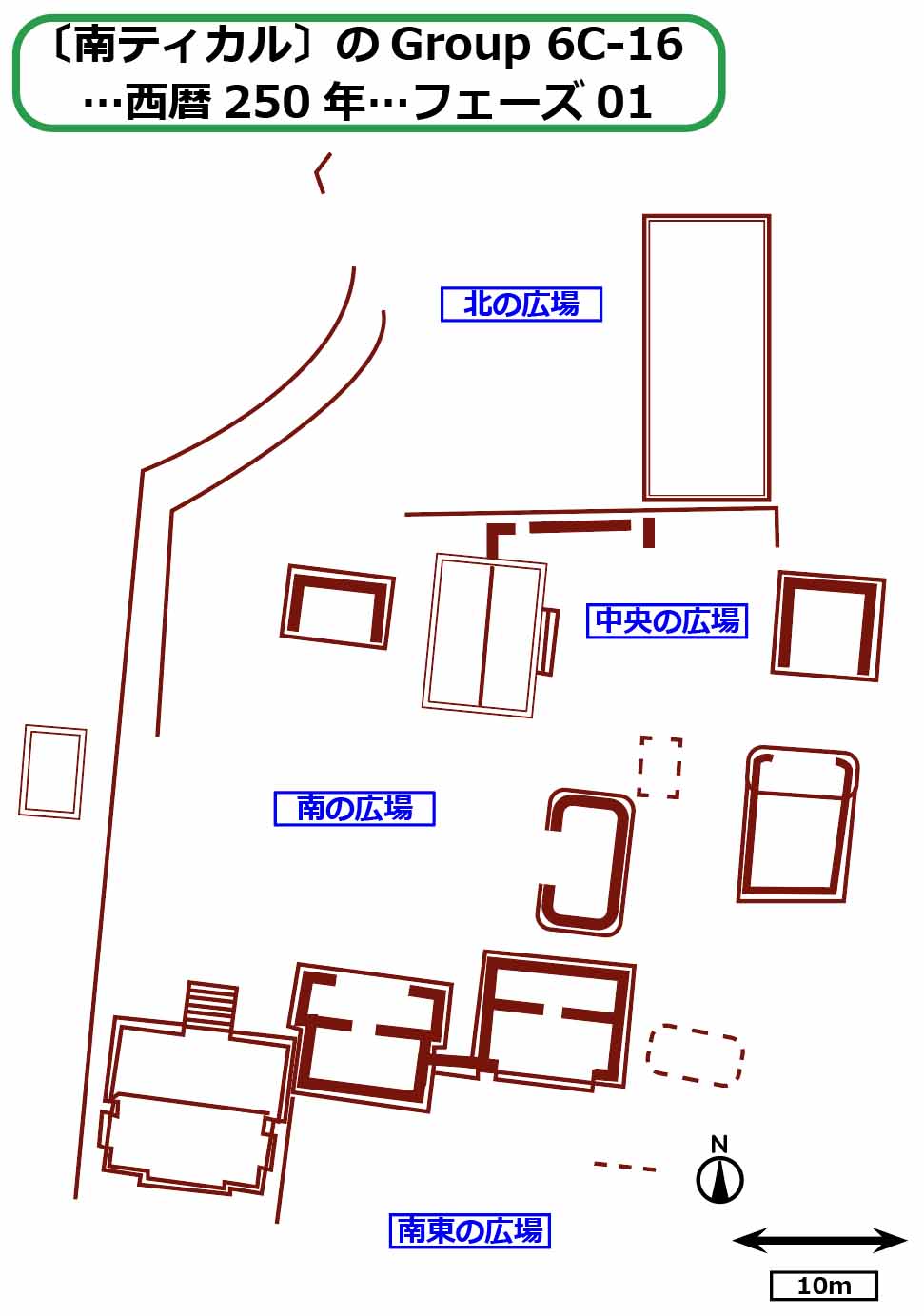
No buildings older than this have been excavated. It is unlikely that the area was uninhabited, so we can assume that there were plants and earthen houses.
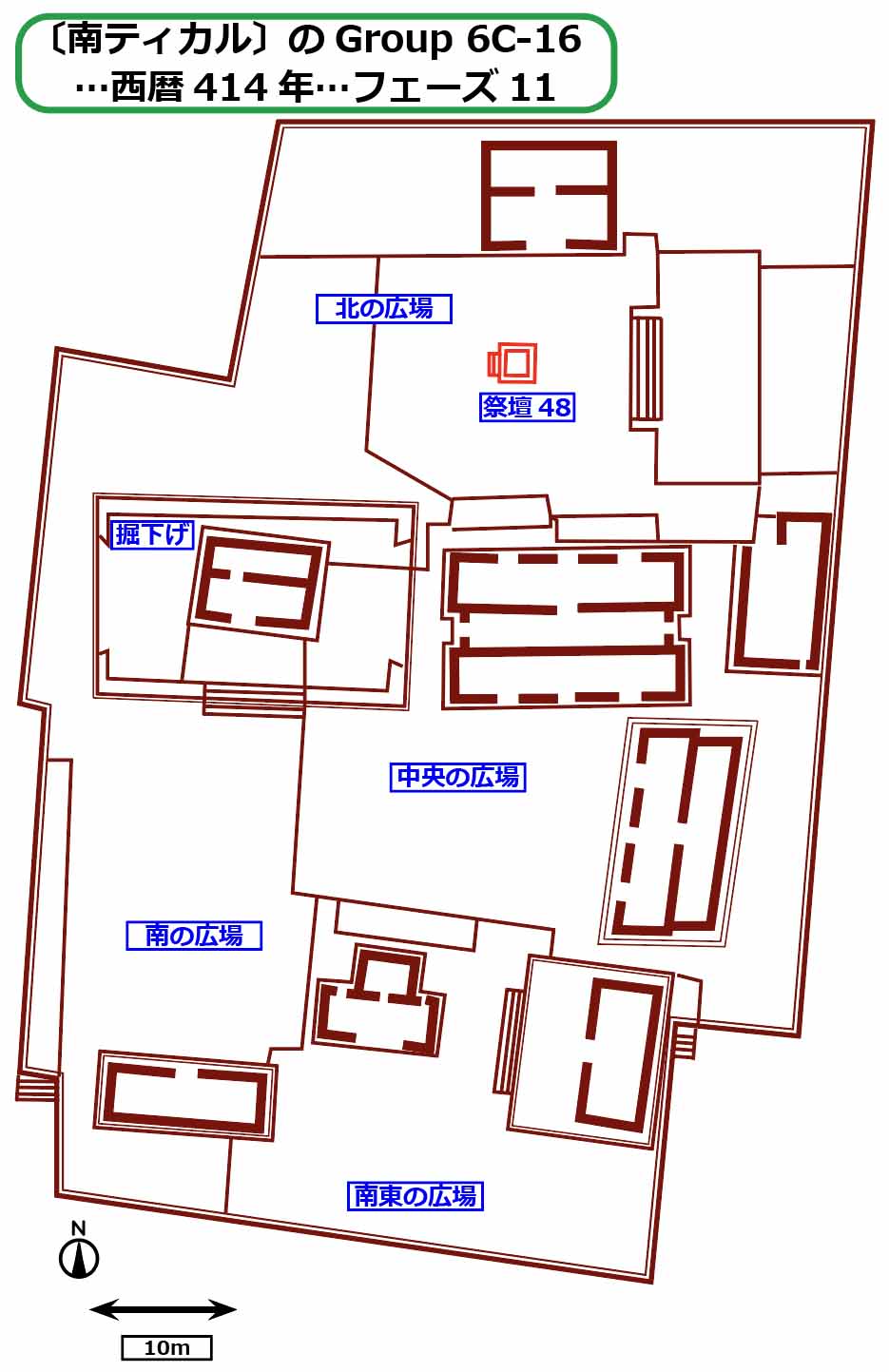
Marcador was erected on Altar 48, which was newly constructed during Phase 3 (350-378 AD).
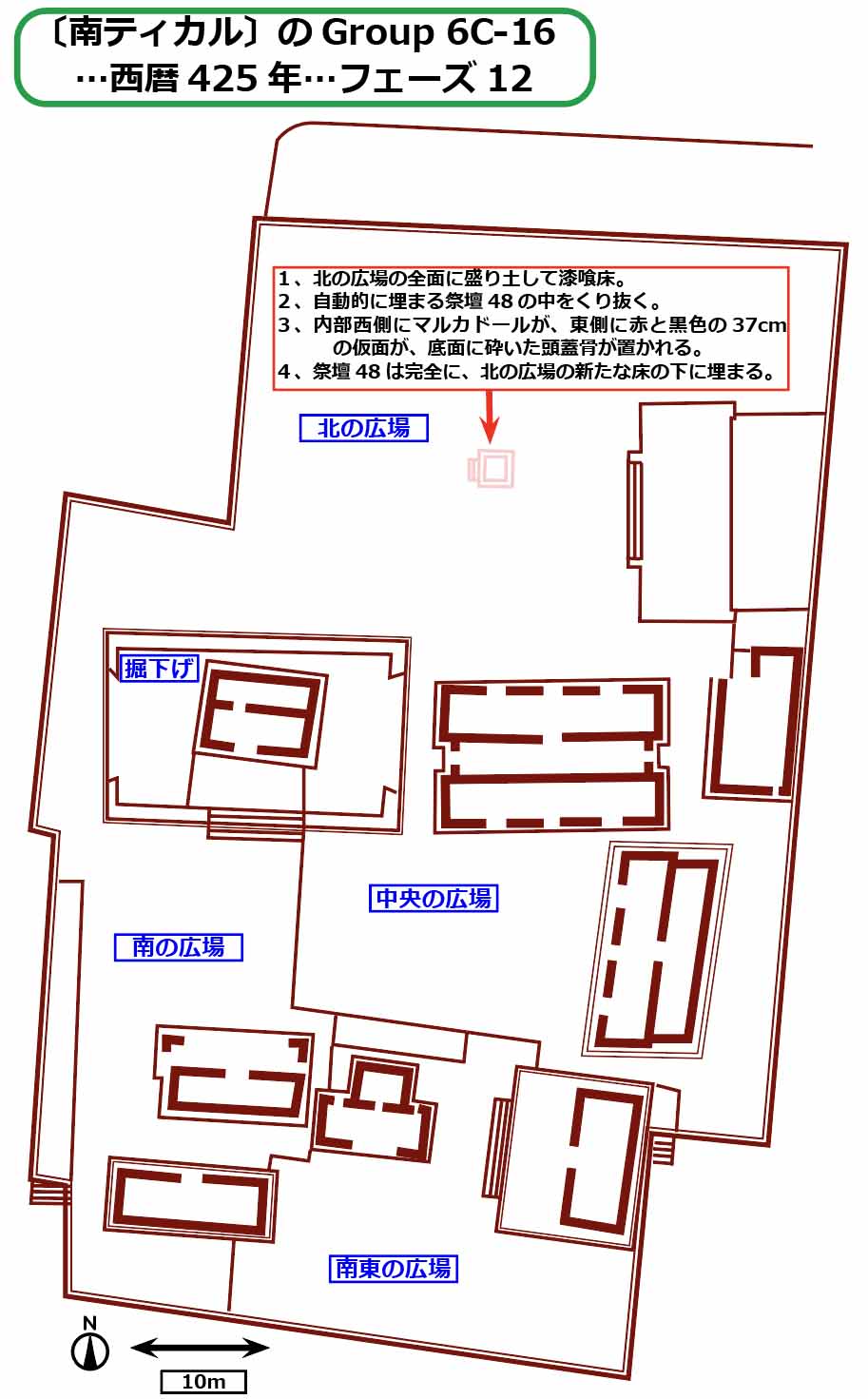
Marcador was out of the public eye for only 11 years.
Marcador(=Tikal Marker)
For many years, it was speculated that Marcador might be a target for a ball game. In recent years, more and more people have suggested that it is a stone statue depicting a battle flag shaped like an atlatl.
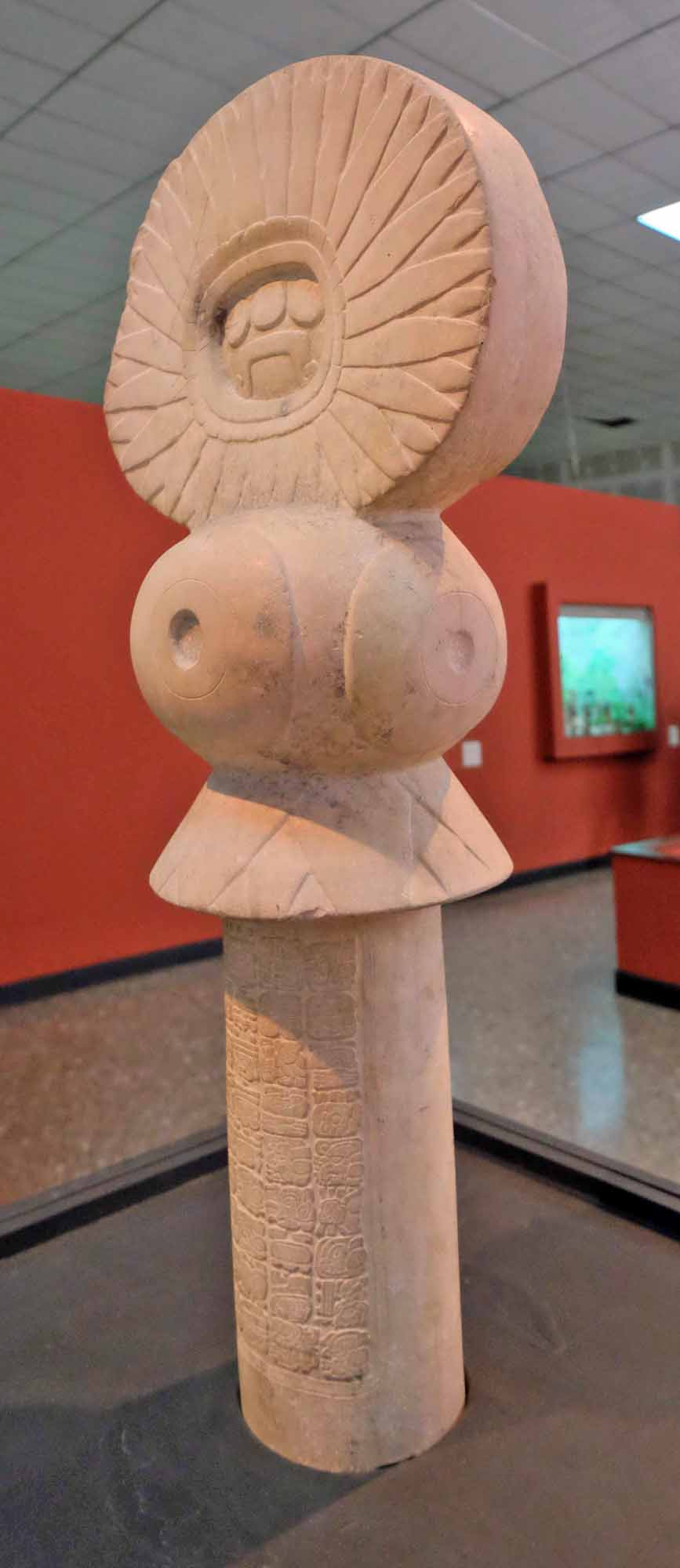
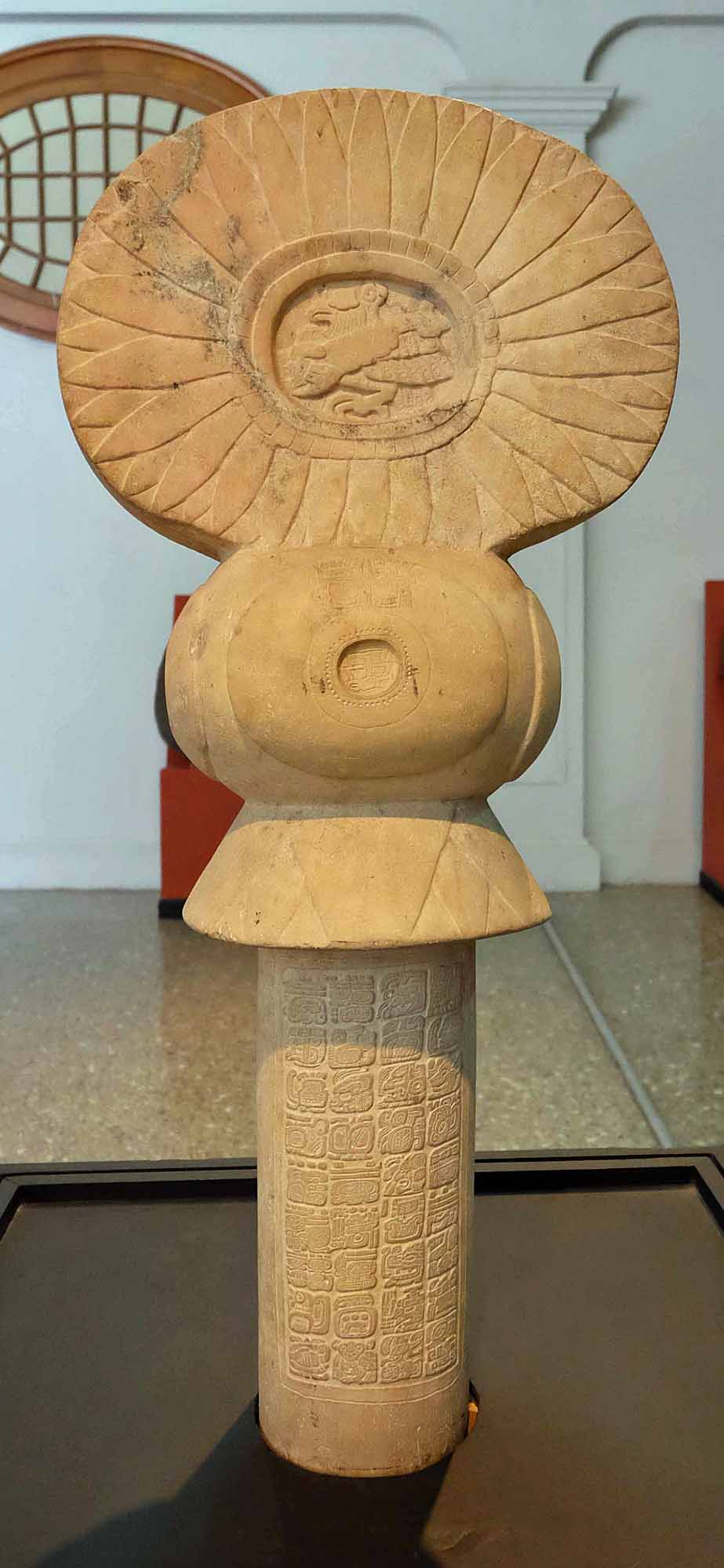
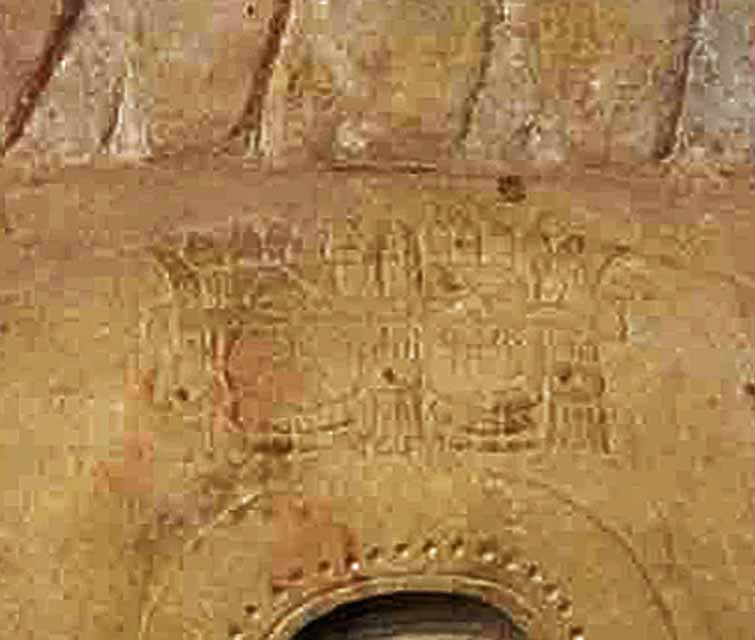
↑ (Front) ↑ (Back) ↑ (2 people) at the National Museum of Guatemala.
It is rare to find a stone monument at Tikal that is almost completely undamaged or undissolved. This is probably because it was only exposed to the elements for 11 years. There is an engraving on the surface, under the feathers, as shown in the third photo above. Based on the content of the pictograms, one of them is ”Shiyaj K'ahk'", or "Spearthrower Owl." Marcador is a sculpture depicting these two by a leader of 6C-16.
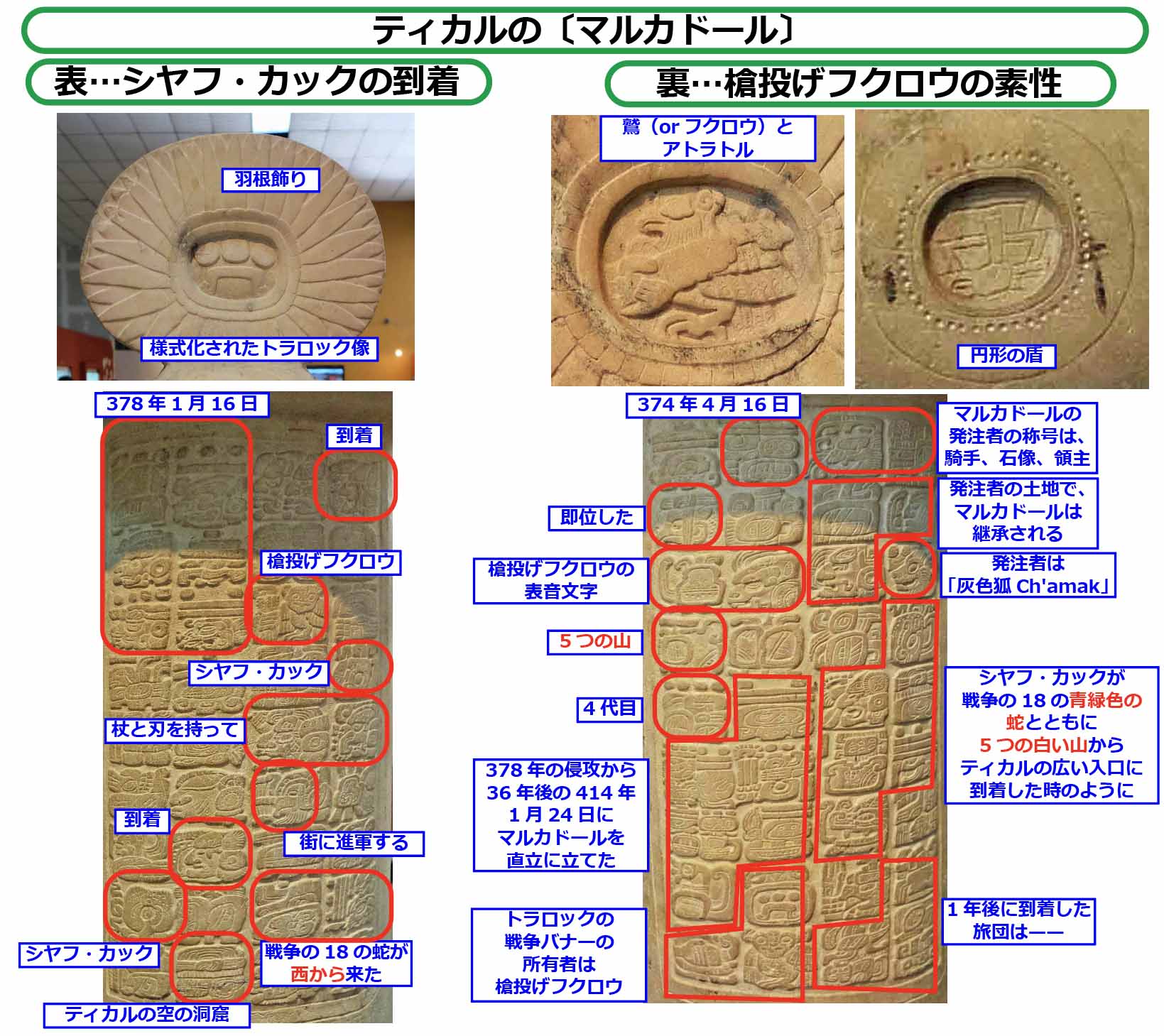
↑At the National Museum of Guatemala.
Let's summarise the hieroglyphics.
Obverse...On January 16, 378 AD, ”Shiyaj K'ahk'" arrived at Tikal from the west accompanied by 18 warriors.
Reverse...On April 16, 374 AD, "Spearthrower Owl," who was crowned as the fourth king at the "Five Mountains," arrived carrying the shield of Tlaloc and accompanied by 18 warriors from Siyahu Ka'ak. This Tikal marker was erected by Gray Fox on January 24, 414.
Group 6D-05
It is located 150 meters southeast of the Lost World, across the Madeira Reservoir. According to a simple treatise, construction began in 250 AD, and it underwent 11 subsequent modifications. Seventy years later, 6D-05 suffered major destruction, the same year Queen Unen Balam was deposed in 320. After 58 years, 6D-05 was rebuilt in 378 AD. It was finally abandoned in 950 AD.
No definitive dating has been provided, but it is reported that at some point in the last 700 years, a fragment bearing an image of Queen Unen was unearthed (although there are no photographs of it). I would imagine that it would have been very similar to 3 image inscribed on Stela 31.
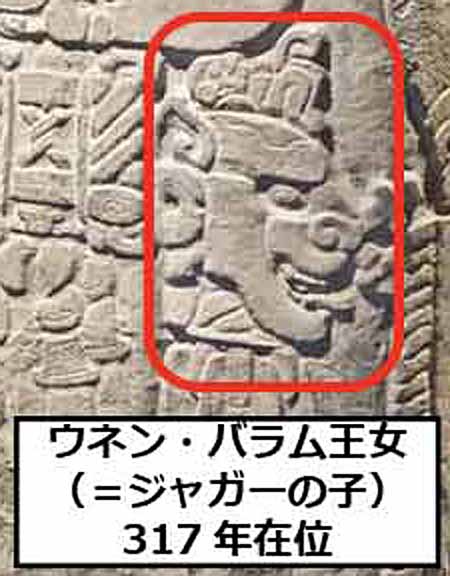
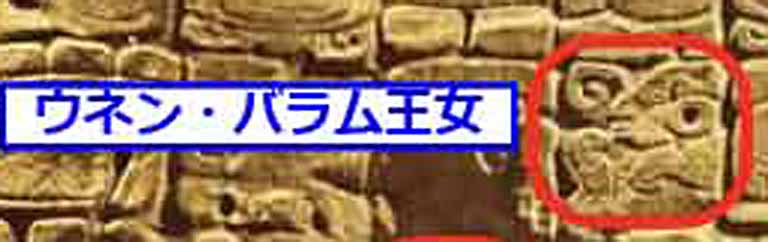
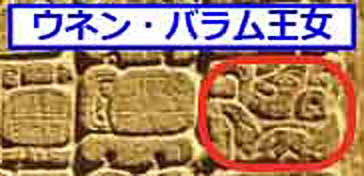
Next is Stela 31, erected 20 years after the burial of Malcador in 425.
Built in 445 AD...Tikal Stela 31
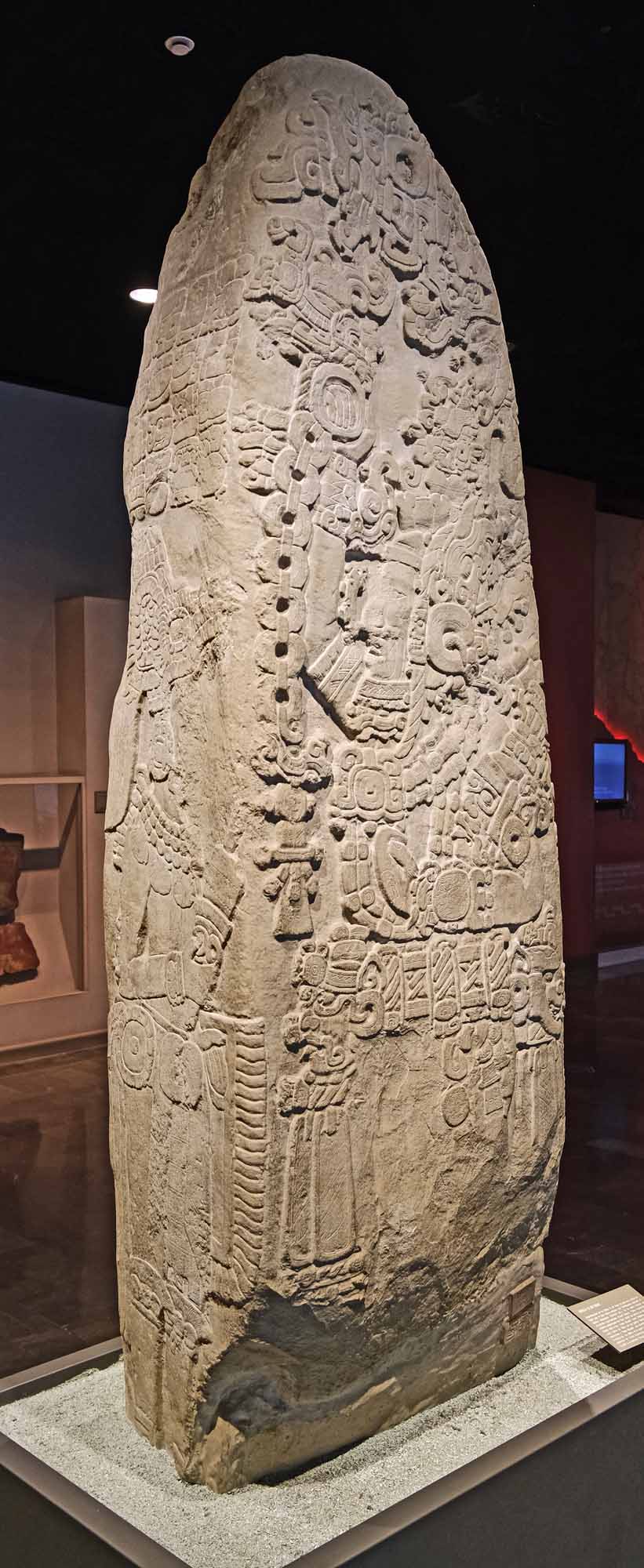
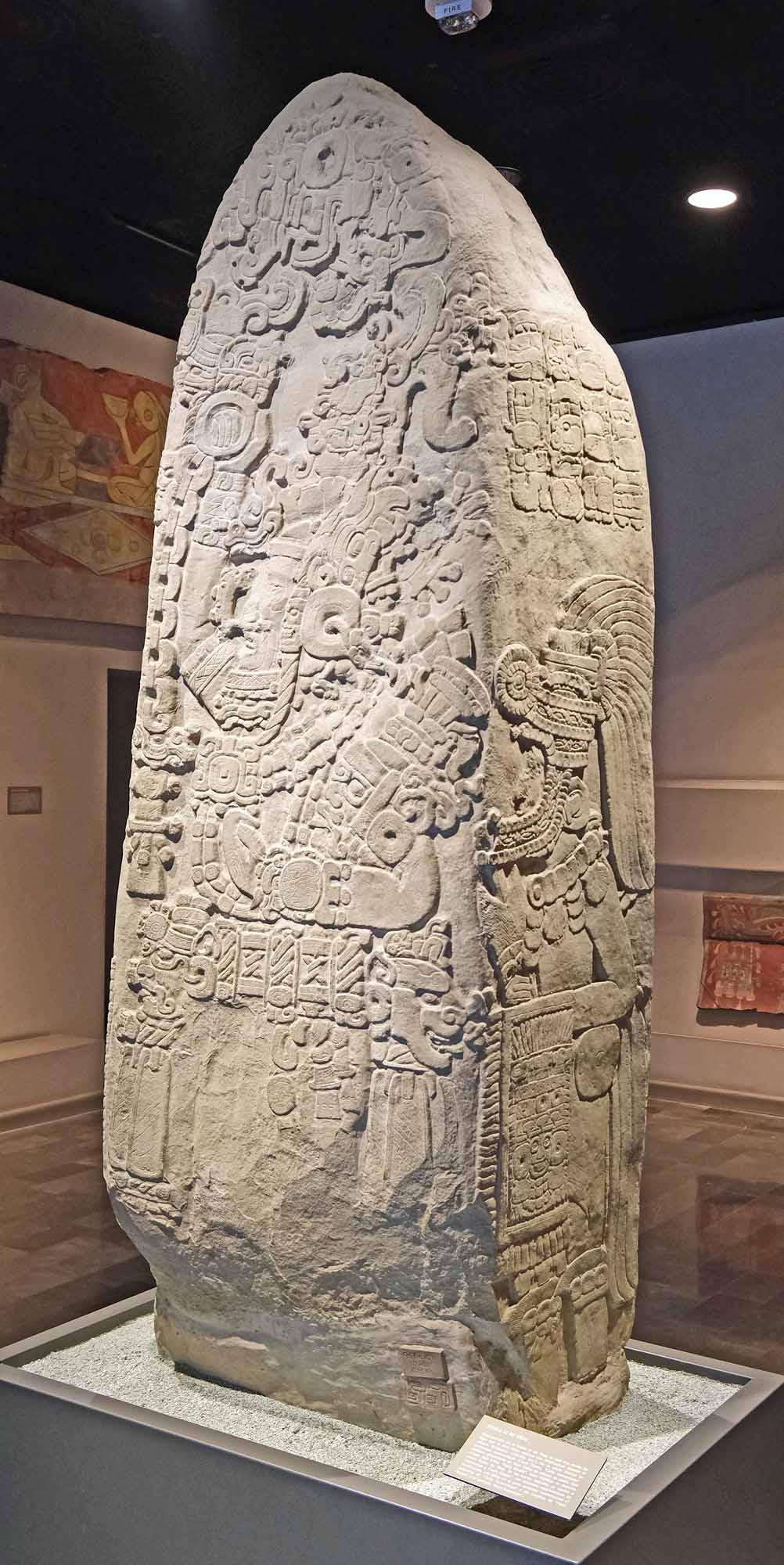
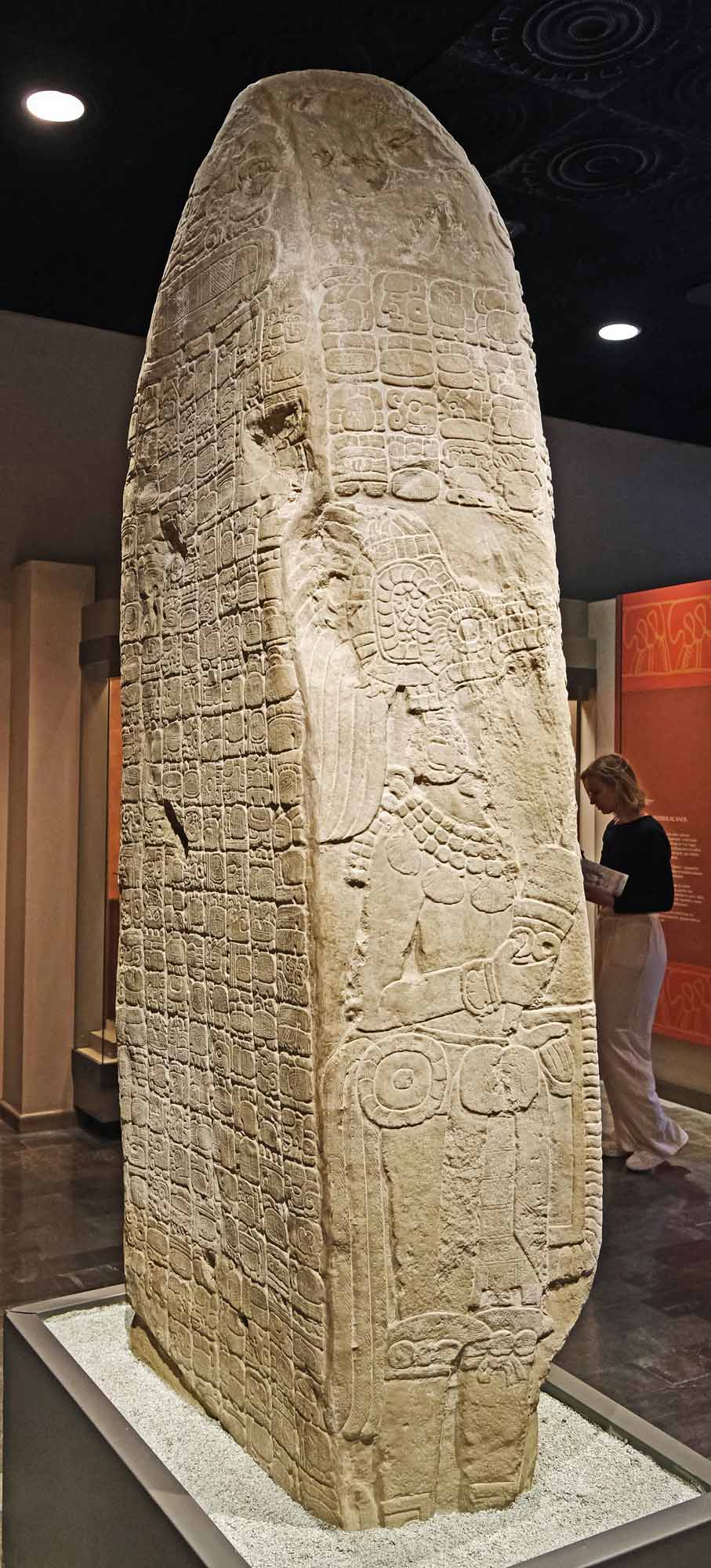
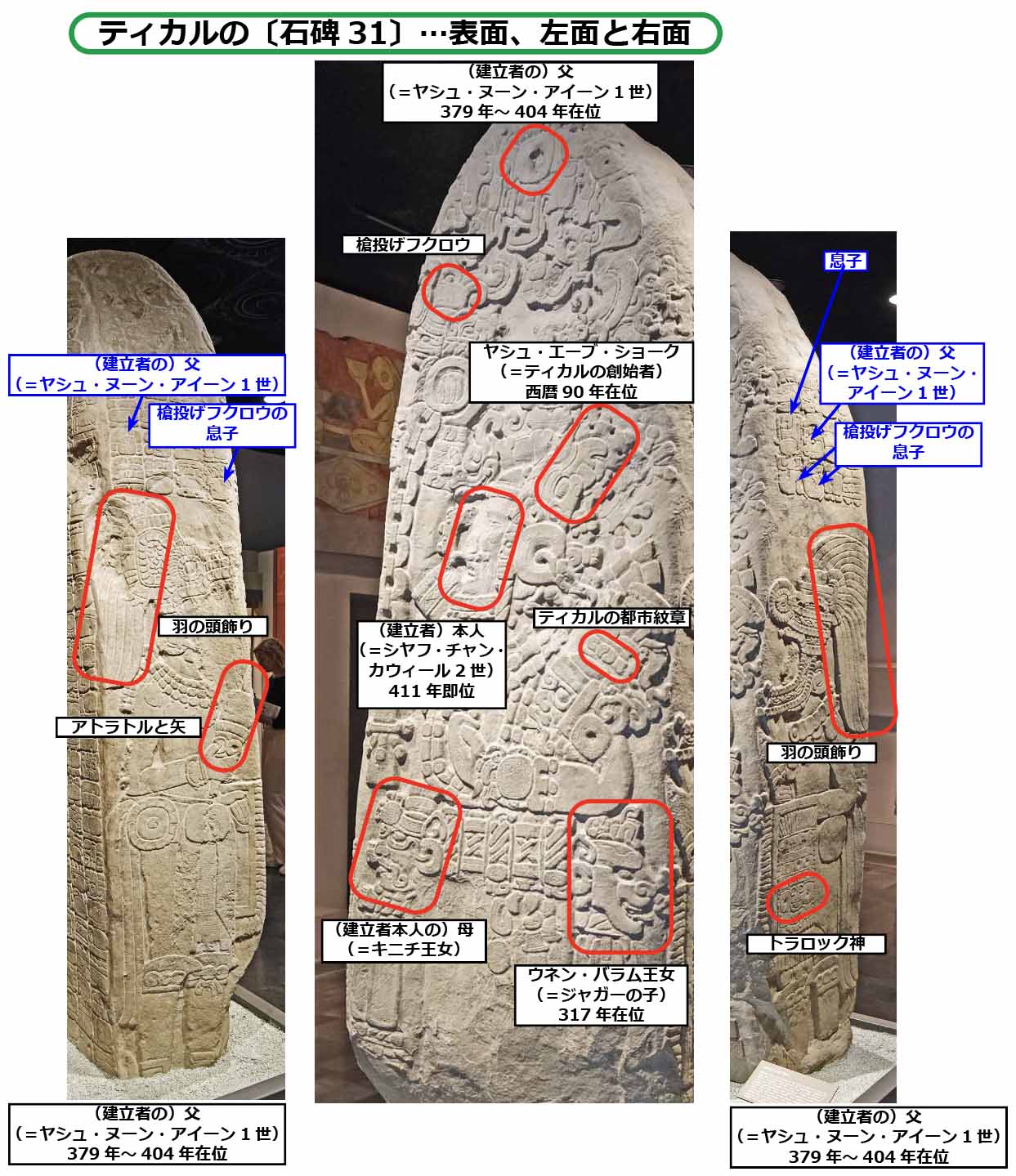
↑↑↑↑at Anthropological Museum (Teotihuacan Hall, replica).
It was built in 445 AD, when Tikal's king at the time, "Sihyaj Chan Kʼawiil II," had images of himself (in Mayan clothing) and his father, King "Yax Nuun Ahiin I" (in Teotihuacan clothing) carved into it. The Mayan characters carved on the top of the left and right sides and on the entire back describe the following chronological events:
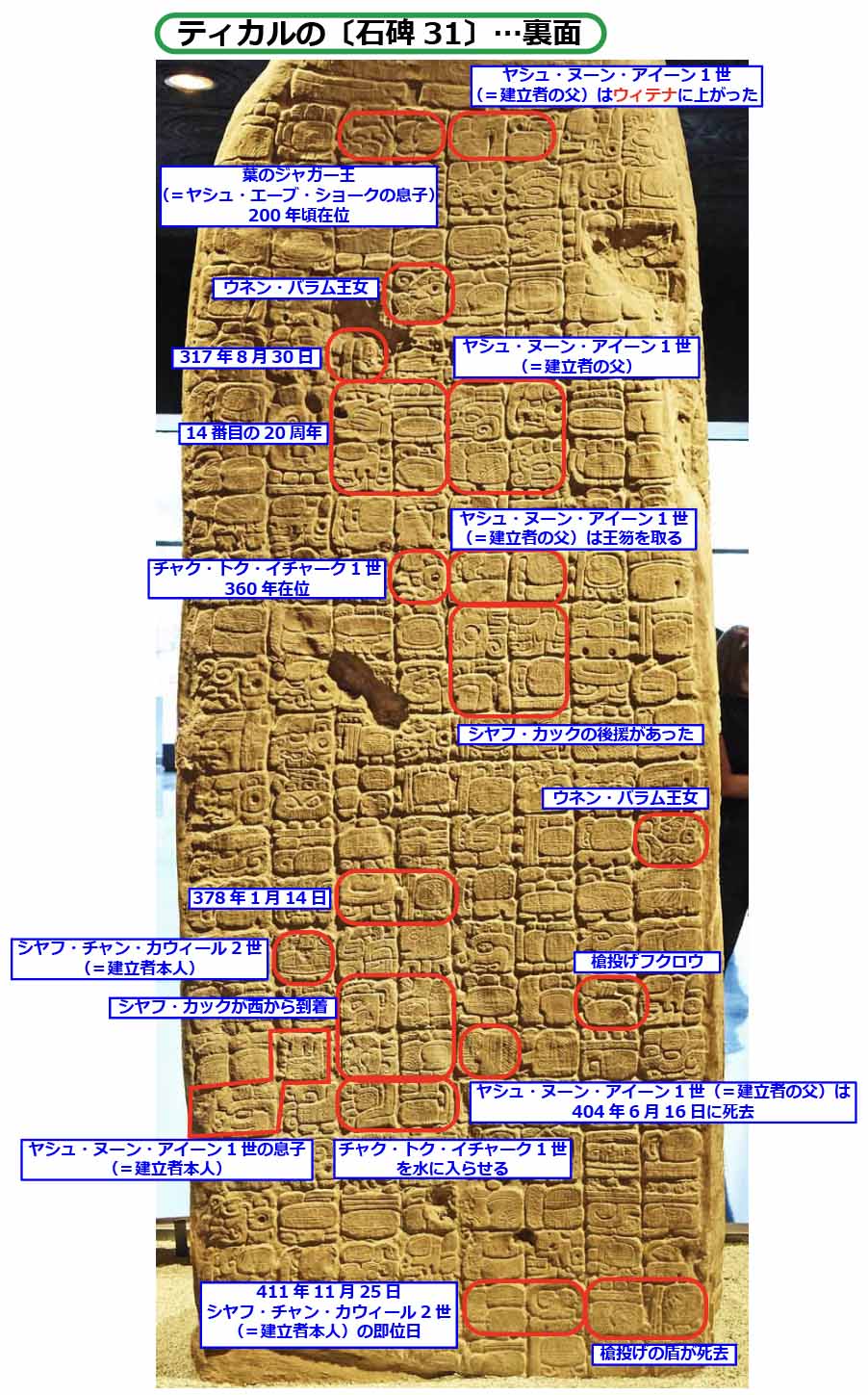
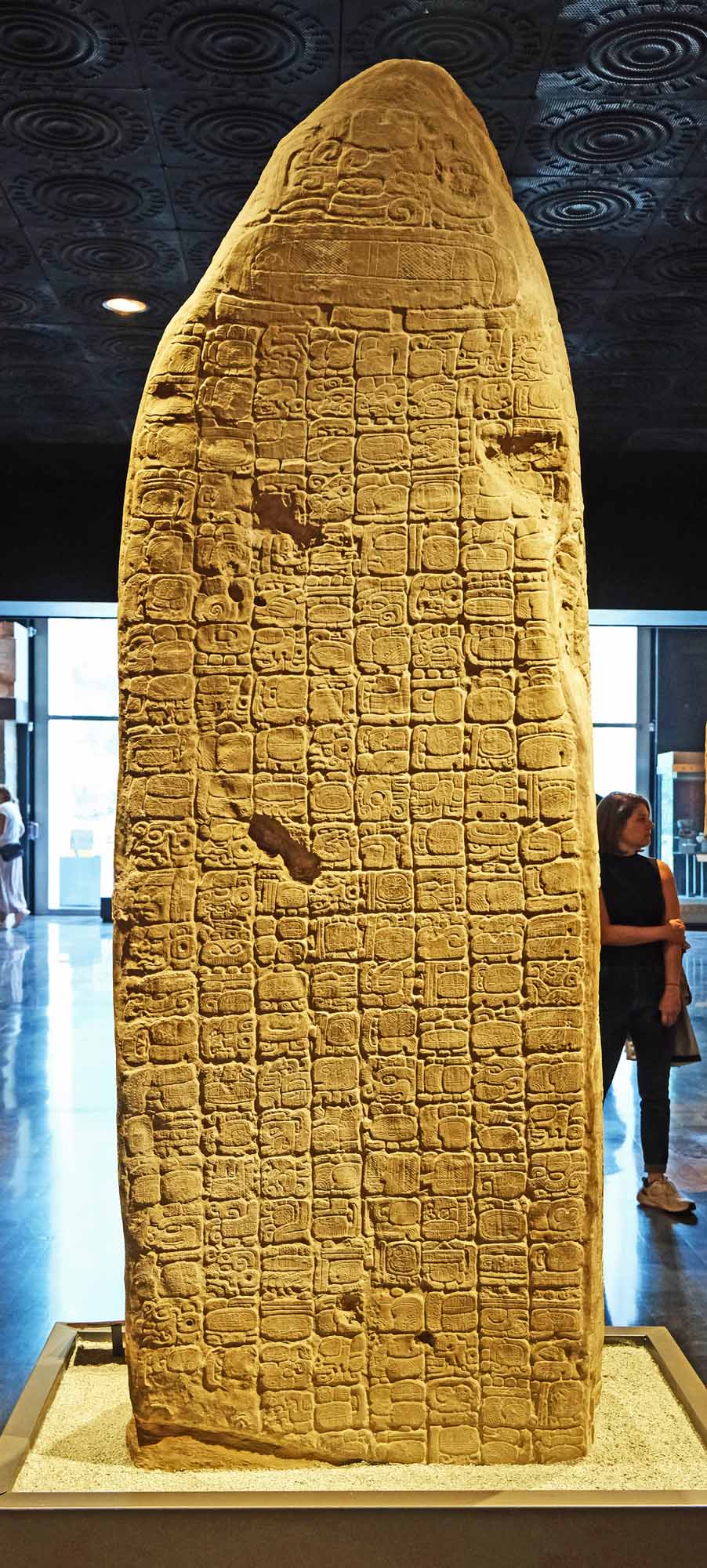
↑↑at the Museum of Anthropology (Teotihuacan Hall, replica)
Summary of the back of Stela 31
January 14, 378...”Shiyaj K'ahk'" arrives in Tikal from the "Five Cotton Mountains." The same day, Tikal's then-king, "Chak Tok Ichʼaak I", dies.
October 24, 378...His father, King "Ayiiin I", takes some position.
September 11, 379: His father ascends to the throne. ”Shiyaj K'ahk'" serves as regent.
May 17, 395: ”Shiyaj K'ahk'" dies ???
June 16, 404: His father dies.
(There was no king for six years.)
November 25, 411: Himself, "Kawil II," ascends to the throne.
Let us contrast this with the main archaeological Tikal King List. The exact years of accession and abdication/death are not known, and there are slight differences between papers. Also, judging from the architecture of the "Lost World," we cannot say with certainty that there were no kings, rulers, powerful people, or central figures from 600 BC onwards. I have seen statements that imply that ”Yax Ehb Xook” was the first king of Tikal, but more data is needed to make a definitive statement.
It also seems that it was common for a few years to pass between the death of the previous king and the accession of the new king. The relationship between the previous and new kings has not been confirmed by multiple pieces of evidence. "█" in the King List refers to the number of times the king is mentioned on Stele 31.
090 AD~110 AD...Yax Ehb Xook █
150 AD around...Siyaj Chan Kʼawil Chak Ichʼaak ("Stormy Sky I")
200 AD...Yax Ch’aktel Xok(son of Yax Ehb Xook?)█
250 AD...unknown
280 AD~300 AD...Balam Ajaw ("Decorated Jaguar")
300 AD around~Kʼinich Ehbʼ
307 AD~310 AD...Siyaj Chan Kʼawiil I
317 AD~320 AD...Unen Bahlam (Queen, daughter of
former king?)█ █ █
320 AD..."Leyden Plate Ruler"???
330 AD~359 AD...Kʼinich Muwaan Jol
360 AD~378 AD...Chak Tok Ichʼaak I (son of Jol?)█ █
379 AD~404 AD...Yax Nuun Ahiin I █ █ █ █ █ █ █ █ █ █ █
mother...K'inich(mayan name)█
father...Spearthrower Owl █ █ █ █ █ (probably died in 439))
regent...Shiyaj K'ahk' █ █ (probably died in 403)
411 AD~456 AD...Sihyaj Chan Kʼawiil II (himself who erected Stela 31) (The same name as Queen Unen Balam's father) █ █ █
458 AD~486 AD...Kʼan Chitam(former king)
The statement reads, "I, Sihyaj Chan Kʼawiil II, have close ties with the following people." Meanwhile, ”Ichʼaak I," who was murdered by "Spearthrowing Owl" and "Shiyaj K'ahk'," is also mentioned, even though he must have been a hated enemy. Perhaps by the time Stela 31 was erected, 67 years after Arrival, there would have been no power affiliated with ”Ichʼaak I." This may indicate the view that it was an honor to eliminate ”Ichʼaak I," the son of King Jor, who had unjustly expelled Queen Unen.
Let us now focus on "Shiyaj K'ahk'" and "Spearthrowing Owl" after the Arrival.
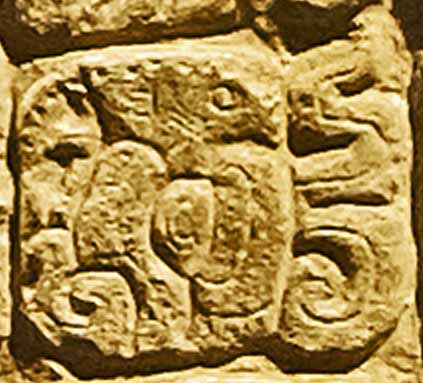
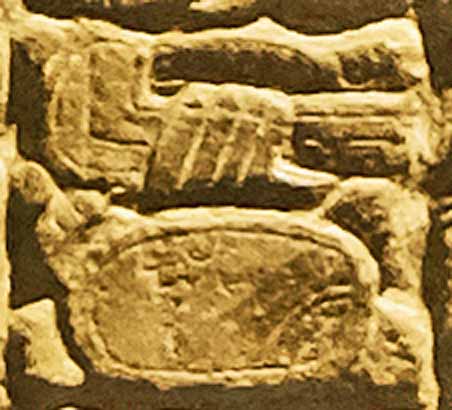
↑Shiyaj K'ahk' ↑Spearthrowing Owl on Stela 31 at the Museum of Anthropology (Teotihuacan Hall, replica).
Shiyaj K'ahk'
Year of birth unknown.
[Arrived] in 378.
Appointed regent in 379.
Year of construction unknown...Stela 15 at the El Peru Waka ruins reads, "Stopped over on January 8, 378 AD."
Year of construction unknown...Stela 1 at the El Bejucal ruins reads, "July 21, 393," "King Yune' Balam was a vassal of someone who appears to be Shiyaj K'ahk'."
Year of construction unknown...Stela 1 at the Rio Azul ruins reads, "March 25, 393," "King Zac Balam and Shiyaj K'ahk'."
Erected between 380 and 400...Stela 24 at the Naachtun ruins reads "June 13, 363," "January 13, 14, and 15, 378," and "The Holy King of Bats (titled Kufr Suit Ahau) is Yahaut (vassal and war commander) of Shiyaj K'ahk'."
Erected in unknown year...Stela 5 at the El Zapote ruins reads "Shiyaj K'ahk' died in 420."
Erected in unknown year...Stela 5 at the Uacactun ruins reads "January 13, 378, Shiyaj K'ahk' of Dhikar (arrived)." Stela 22, erected by King Uacactun on December 7, 504, reads "Commemorating January 13, 378."
Died in 395 or 403.
Spearthrowing Owl
Year of birth unknown.
[Arrived] in 378.
His son ascended to the throne in 379.
Presumed to have died in 439.
About Spearthrowing Owl, unlike Shiyaj K'ahk,' there are no traces of his activities for the 61 years between 379 and 439, except for an inscription on the Tikal marker in 414. Later, it was inscribed on Stela 31, erected in 441. During that time, there are no markers showing him traveling far into the Petén region, giving the impression that he retired from the public eye in 380.
The arrival and accession of his son would have brought Spearthrowing Owl into the limelight. However, it could also be that after 379, during the reign of Ahiin I, Ahiin I's lineage as the grandson of Queen Unen was given more importance than Ahiin I' father's arrival from the west. Perhaps Spearthrowing Owl lived quietly in 6D-05 or 6C-16.
If we assume that the rumors of his death in 439 are true, how old could he have been?
Since a regent was appointed for his son, Aiin I, who ascended to the throne in 379, it is not unreasonable to assume that he was around 10 years old. If Spearthrowing Owl became a father at the age of 20, he may have been 30 at the time of his arrival. This would mean that he was born in 349 and died at the age of 90. On the other hand, the year of death of Shiyaj K'ahk' is considered to be 395.
Exact numbers are unclear, but it feels like Spearthrowing Owl was probably significantly younger than Shiyaj K'ahk'.
This has been a long story about Tikal. Looking back at Tikal before the later development of the Northern Acropolis, it seems likely that Tikal's elites saw and heard of Teotihuacan, which was even grander than their own city-state, and admired it. Before 250 AD, they built the eastern half of the Lost World according to their own taste, and after 250 AD, they incorporated the talud tablero into the western half. It's also likely that the leaders of Southern Tikal had their eyes set on Teotihuacan. It seems that this admiration led to their arrival.