Tlajinga
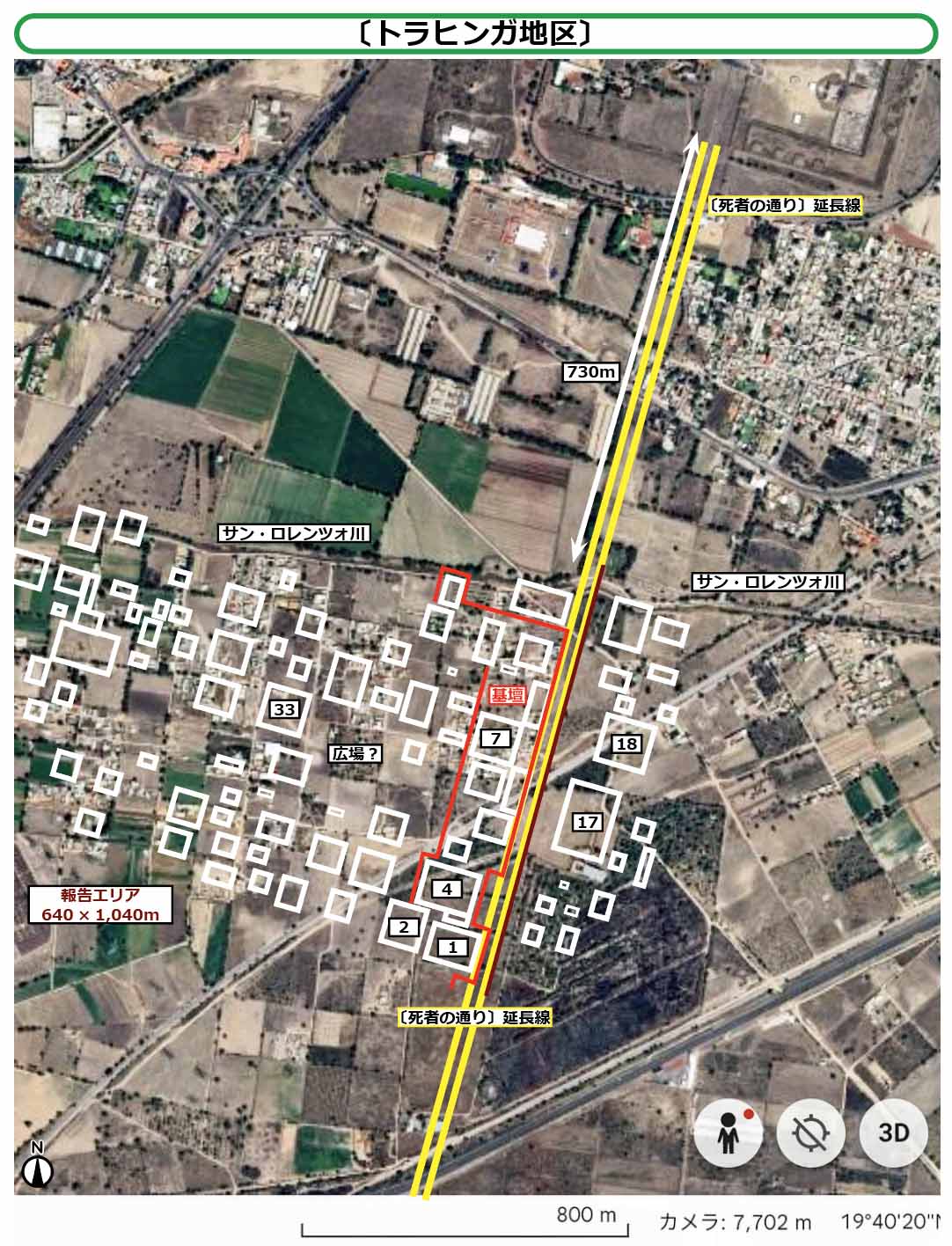
The white squares are buildings. Over 100 have been found in the Tlajinga area, and they follow a 15.5-degree building axis. There are likely a few more beyond the reported area. For convenience, I've drawn them out as neat white squares, but in reality, they are different from the neighborhood apartment complexes we've seen so far.
It appears that the modern place name, Tlajinga, was adopted as the name of the ruins. The photo below was taken from about 50m south of Tlajinga-17, looking north. It appears to have been an agricultural area since ancient times, and the land is still used in the same way today.
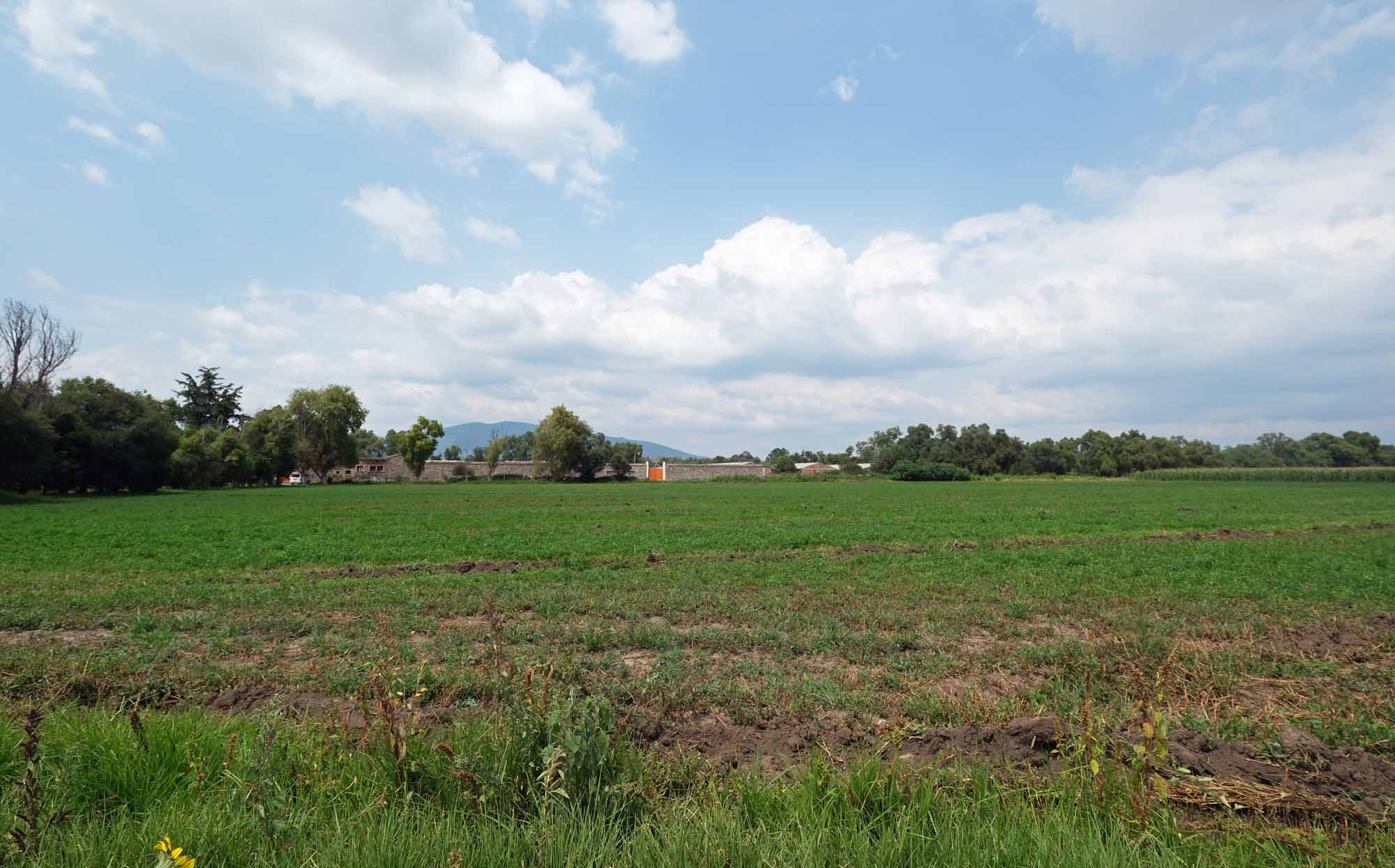
The Pyramid of the Sun is visible in the photo. Can you see it? Below is a close-up photo. You can see the gray Pyramid 2.5km away, above the white gateposts and red gate.
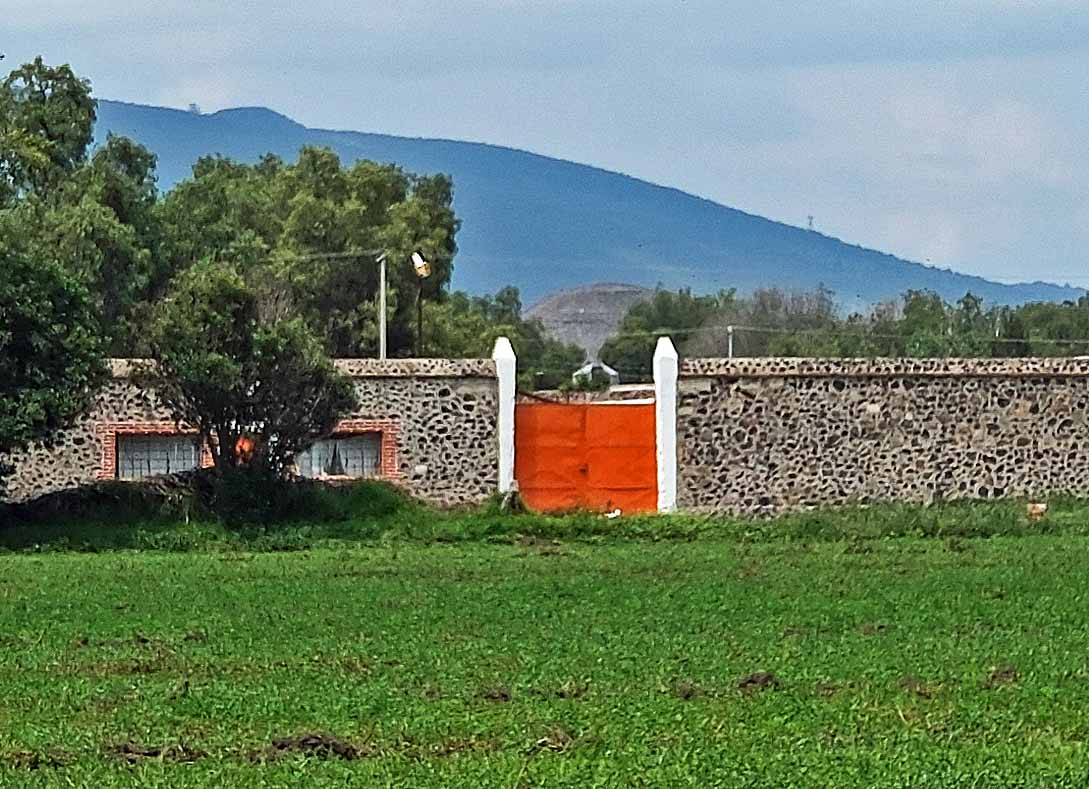
The Pyramid of the Sun is a sight to behold anywhere in the center, but here it feels a little far away. Also, the photo below is from a point about 50 meters away. The mountain on the right is Cerro Gordo, and although the Pyramid of the Moon is not visible due to the angle, the Pyramid of the Sun can be faintly seen.
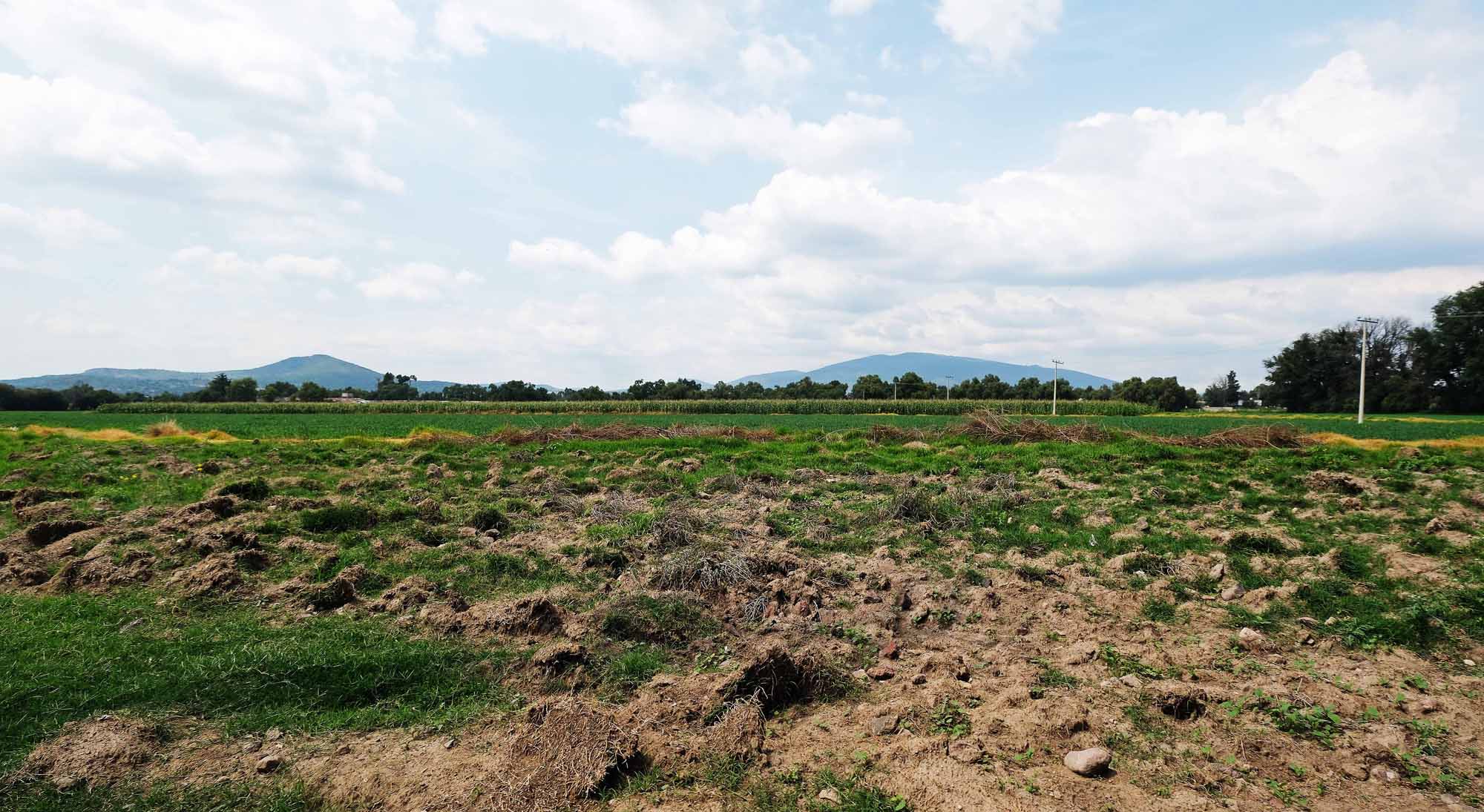
As you can see, the remains of the ruins now lie beneath farmland.
Between 1AD and 200 AD, it was an agricultural area with scattered simple buildings. As Teotihuacan became urbanized, the importance of non-urbanized farmland increased. An irrigation system measuring 400 square meters has been confirmed. While luxurious ornaments were produced in nearby apartment complexes in urban areas, the production of simple, thin, orange-colored pottery was the focus here.
The more than 100 buildings were constructed of mud brick and stone, and would have seemed shabby to the eye on both sides of the Street of the Dead. Around 200 AD, government-led urban development, including the provision of building materials, labor, and blueprints, was underway in the central area of Teotihuacan, but this may not have extended to the Tlajinga district. However, local residents appear to have made their own efforts to integrate into the Street of the Dead.
The Street of the Dead extension is reported to be 430 m long, 40 m wide, and 1 m deep. However, it seems that they were unable to build such a large structure. It has also been reported that the retaining wall between Tlajinga-17 and the Street of the Dead extension was of weak construction.
The lack of plasterwork or murals in the buildings, as well as the grave goods found in the numerous tomb chambers, suggests that there were no high-ranking elites. Since products from a specific Mesoamerican region have not been excavated in large numbers, it is unlikely that this was an area with a large number of immigrants.
Let's take a look at the layout of one of the many buildings, Tlajinga-33.
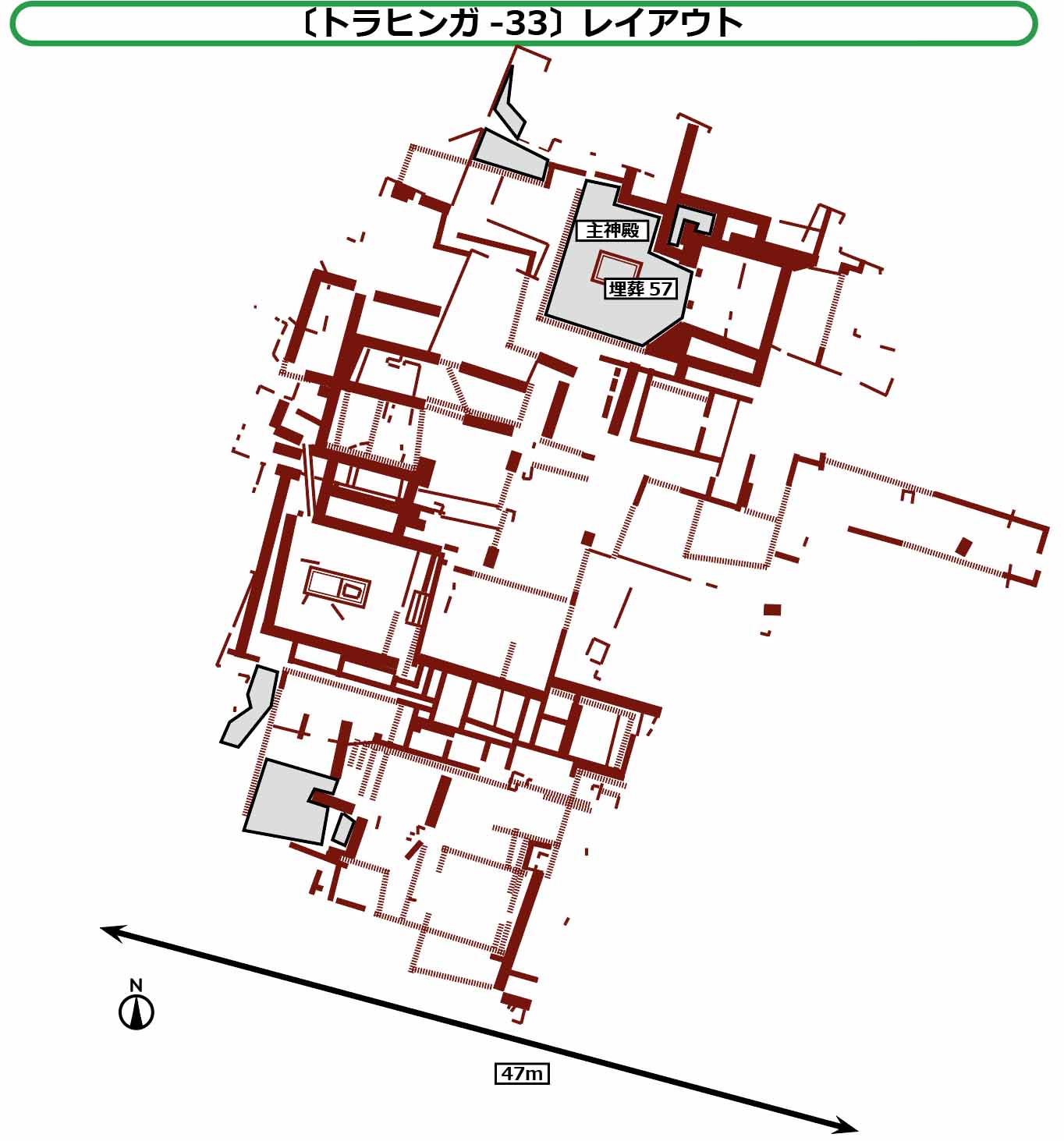
The original date for the altar and temple is between 225 AD and 300 AD. There are no outer walls. Looking at it from the outside, it would appear that it has grown larger through repeated additions. The interior partitions also have a jumble of angles, and while construction was carried out to create the necessary space, the surrounding areas were left untouched.
Burial 57, located to the north, is a striking exception. It dates to 200-250 AD and contained a man in his 50s. Grave goods included 4,000 small conch shells with threading holes, numerous ceramic objects, and ornaments intended as goggles for the god Tlaloc. It has also been suggested that this may be the founder of Tlajinga-33.
Also reported are a number of miniature dress-up clay figurines dating to around 500 AD. The following artifact is not specifically listed as having come from Tlajinga, but it bears a striking resemblance to the Tlajinga artifact described in the book, so I've included it here.
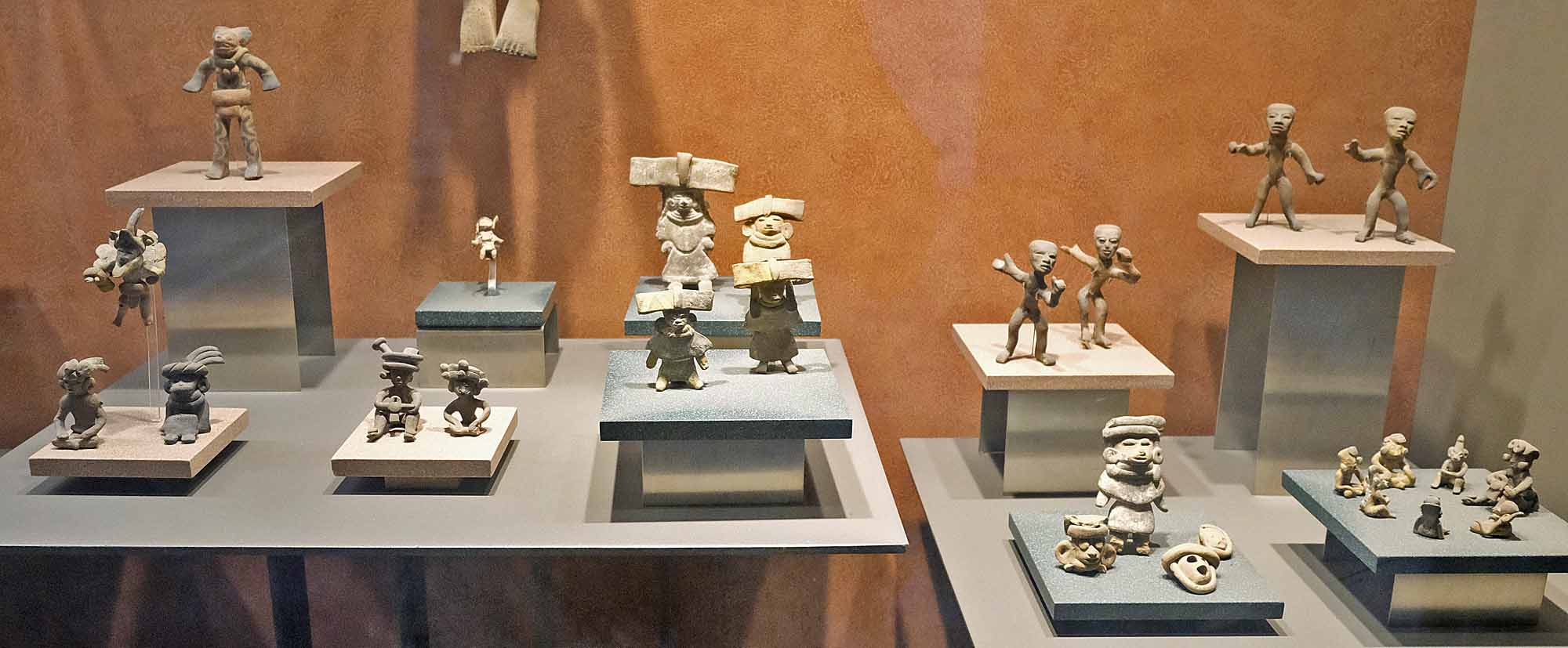
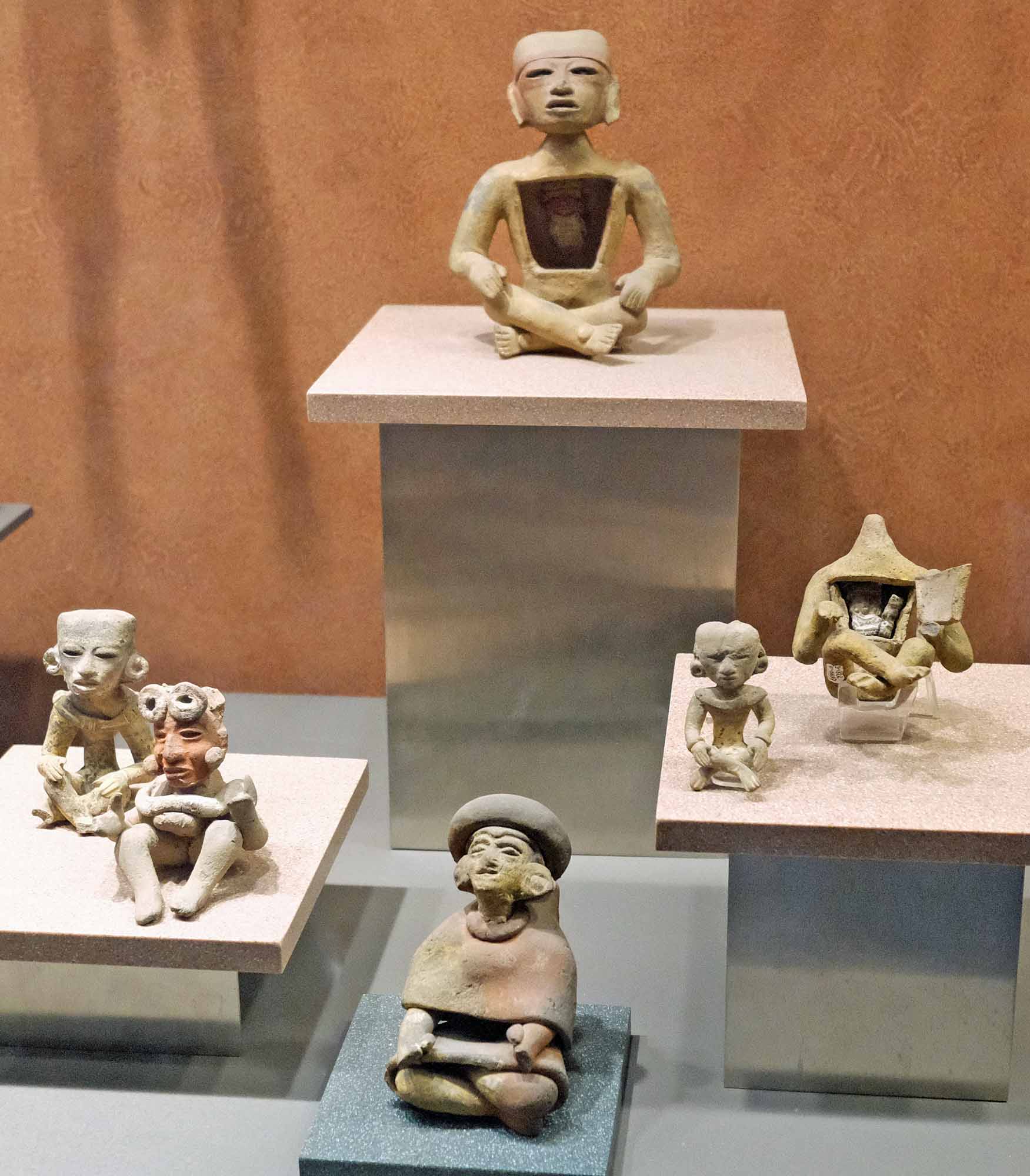
↑↑at Museum of Anthropology.
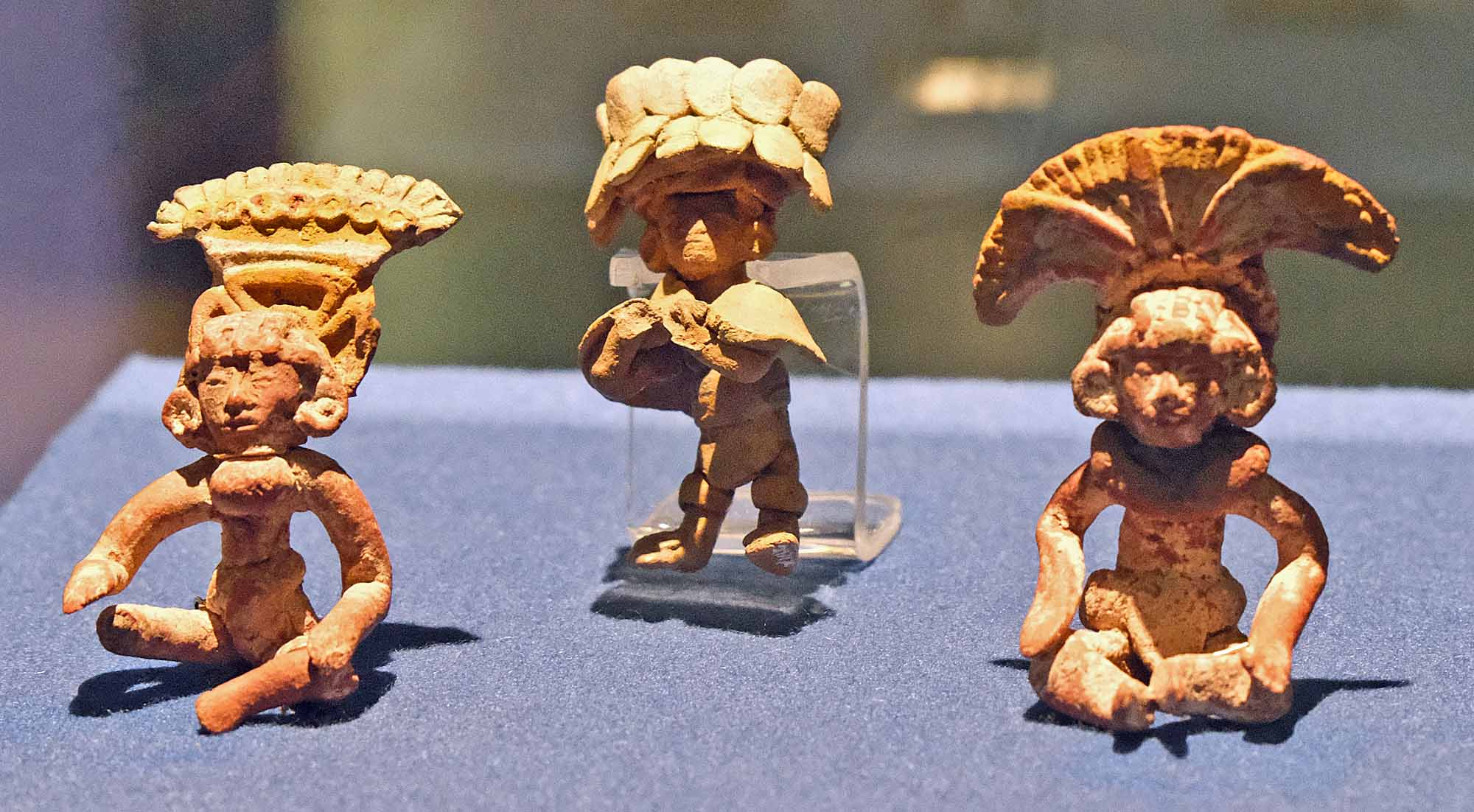
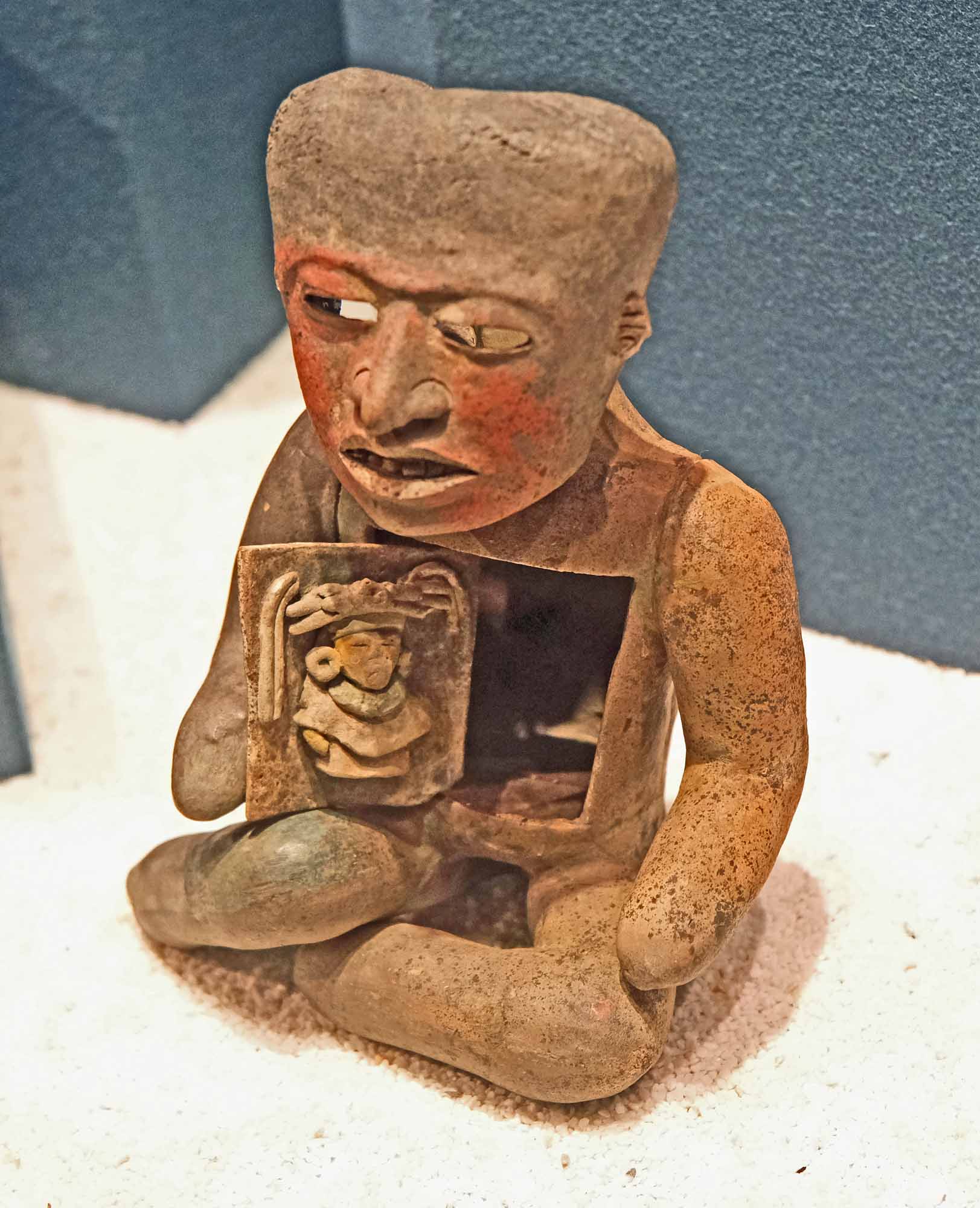
↑↑at Cultural Museum.
Other finds at Tlajinga-18 include a stone-floored floor, evidence of deliberate ritual destruction of much of the pottery, a turtle shell musical instrument, and an 18cm greenstone mask.
Tlajinga-17 contains 415 kg of obsidian, and shows evidence of continued processing and activity dating back to 700 AD. Remains from various stages of obsidian processing suggest on-the-job training.