Dictatorship or Council System?
1. Where is the royal tomb?
If you join a tour of Mayan city-states in Mesoamerica, the guide will tell you that the ruins always contain tall pyramids, which are the tombs of kings, with their bodies resting deep within. At the Palenque ruins, the tomb of King Pakal beneath the Temple of the Inscriptions is a typical example.
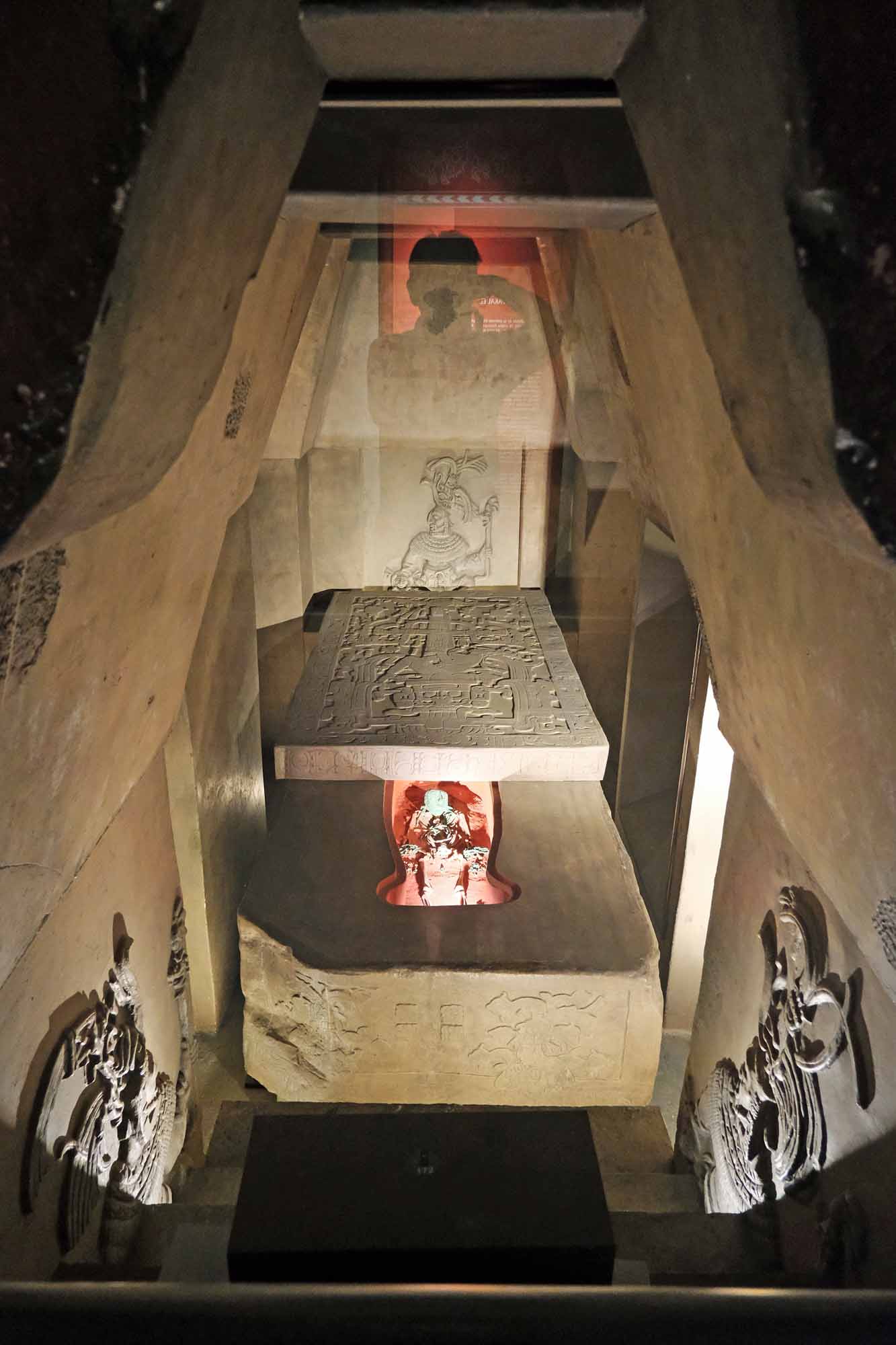
↑Reconstruction of King Pakal's tomb at the Museum of Anthropology.
The population of Teotihuacan, which was around the same time, was almost twice that of the larger Maya city-states, so one would think that there must have been royal tombs with extravagant grave goods. However, no matter how many books I read, although there are sacrificial tombs, no tombs resembling royal tombs have been reported.
A long 450 years passed between the construction of the first layer of the Pyramid of the Moon in 100 AD and its collapse in 550 AD. Assuming that a generational change occurred every 25 years, there should have been 18 kings. Since it is unlikely that kings were buried together, 18 king's tombs should have been built, so why has not a single one been found in the excavations that began in 1932?
Furthermore, I will be introducing some murals below, but there is not a single image that depicts a single central figure. Priests and warrior chiefs, all of whom look almost identical, are depicted marching in succession, as if stamped together. There is no individual who stands out.
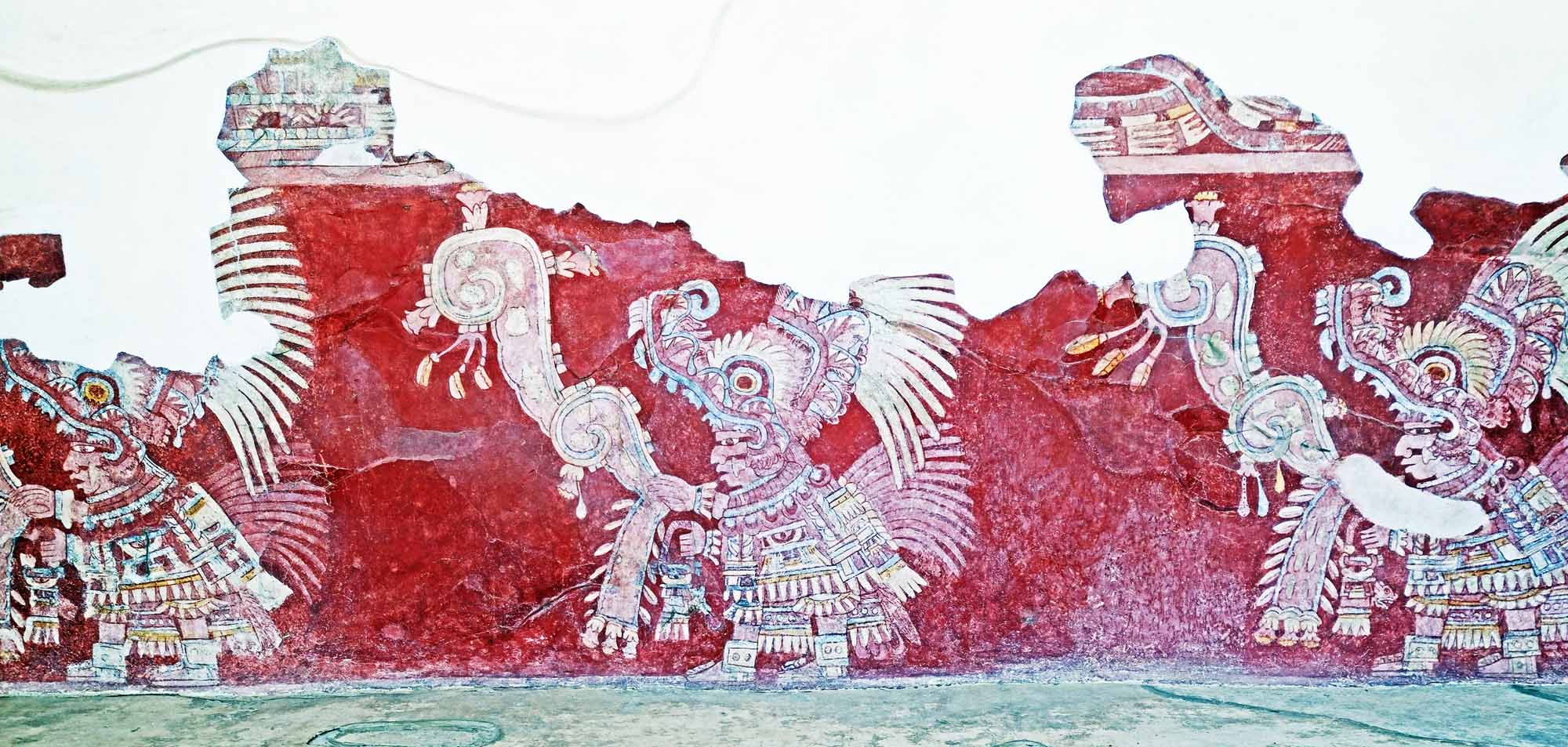
↑ "Marching Priests" at Tepantitla.
On the other hand, the Mayan cultural sphere, 1,000 km away, had hieroglyphics, mainly on stone monuments, which contained the names of kings, the years they ascended to the throne, and victory anniversaries. This was something that the people must have known about through trade, but it is not found here.
Everyone would have had a name, so they would have been able to write it in Mayan characters or their dialects. However, there are no such names to be found. This may be because the society of Teotihuacan deliberately avoided showing off personal names.
Starting around 1990, archaeologists, mainly young ones, began to suggest that perhaps Teotihuacan did not have rulers, kings, or dictators. Instead, they proposed a council system. They then went on to explain how many council members there were and where they lived within Teotihuacan.
It is said that if the three pyramids were symbols of respective areas of a certain size, then there were three people.
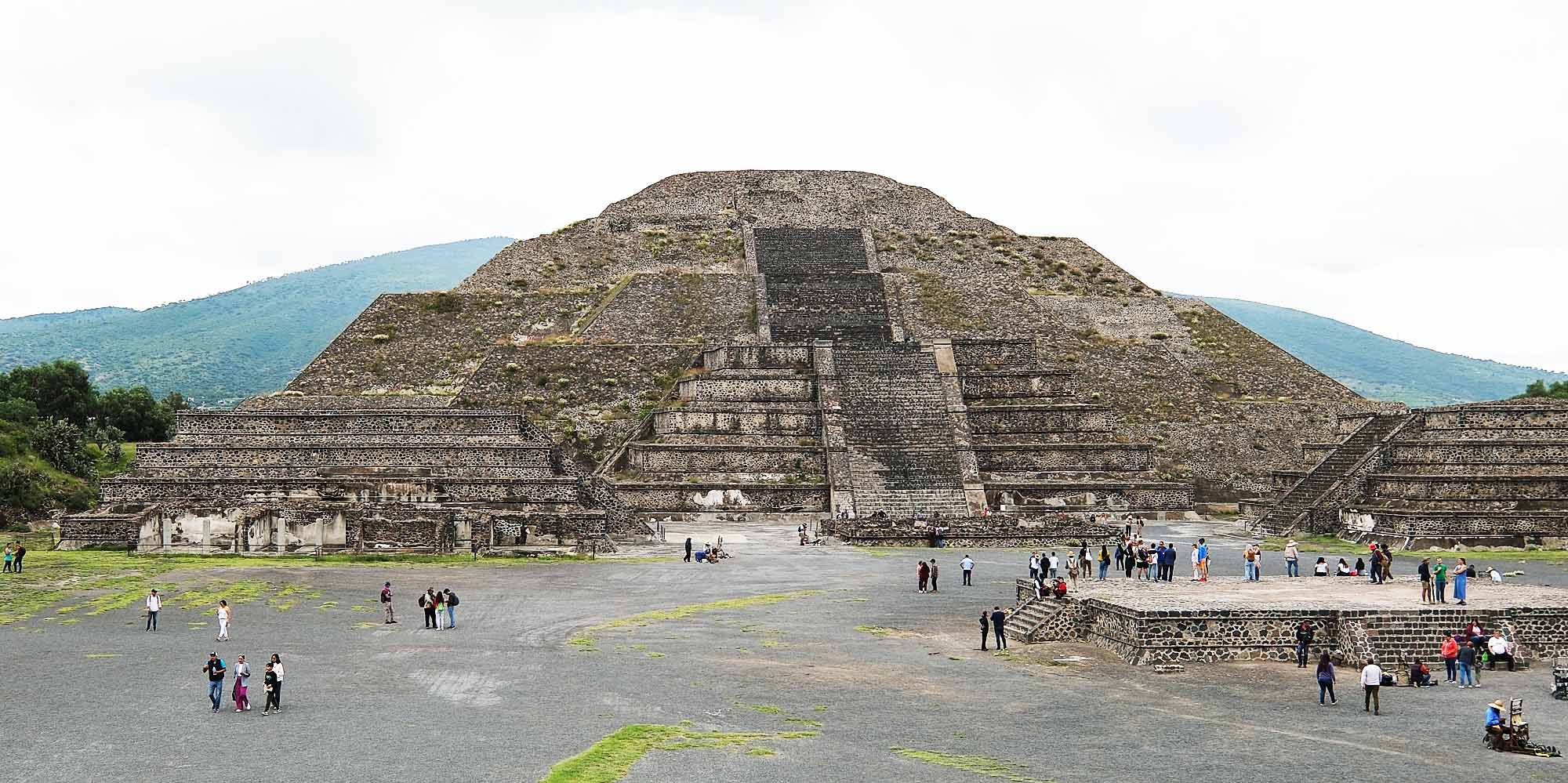
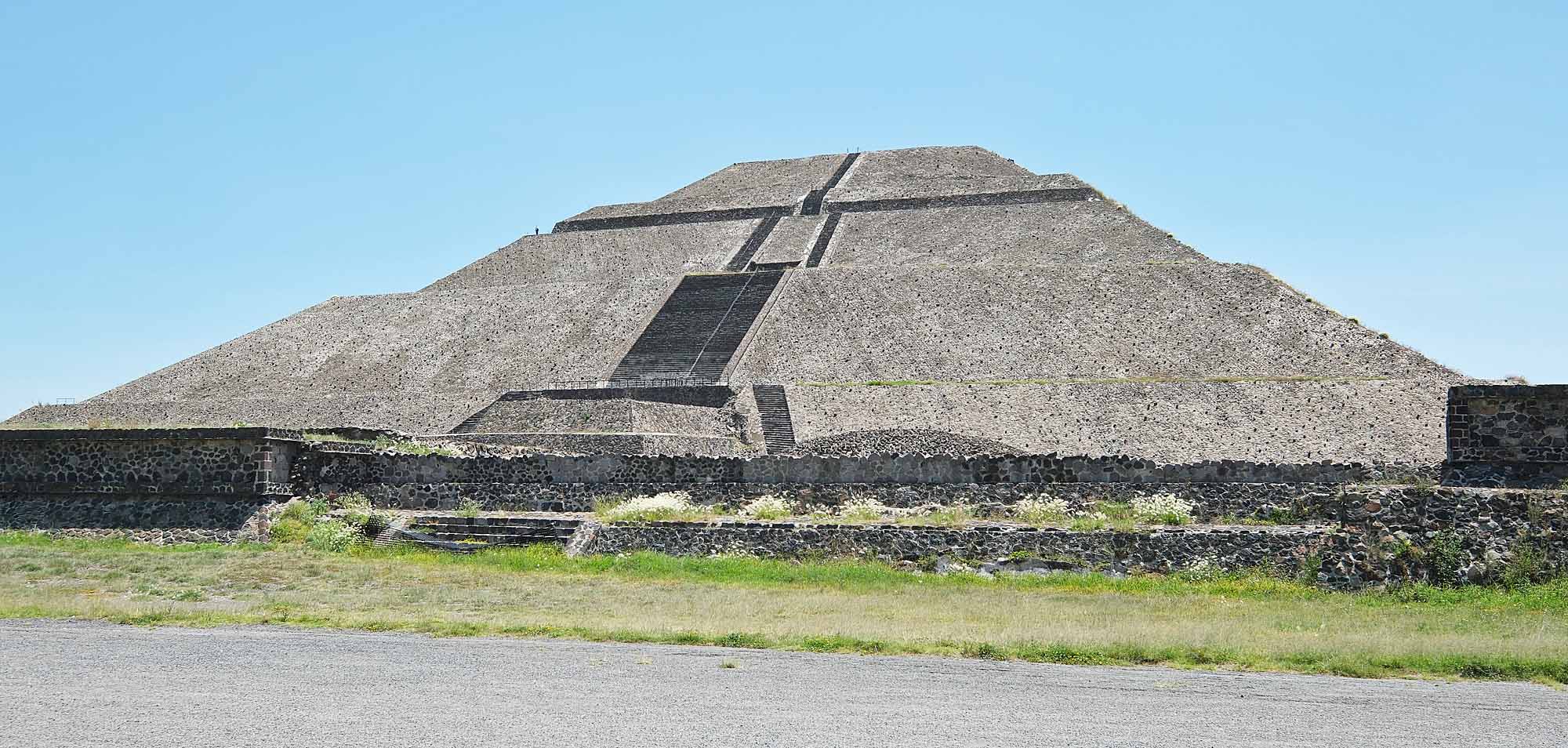

↑ the Moon Pyramid, the Sun Pyarmid, Ciudadelal.
No, the city appears to be divided into four parts by a line that runs east-west across the Street of the Dead and the Pyramid of the Sun, and as is also suggested by the four-petaled flowers scattered around Teotihuacan, there are four people.
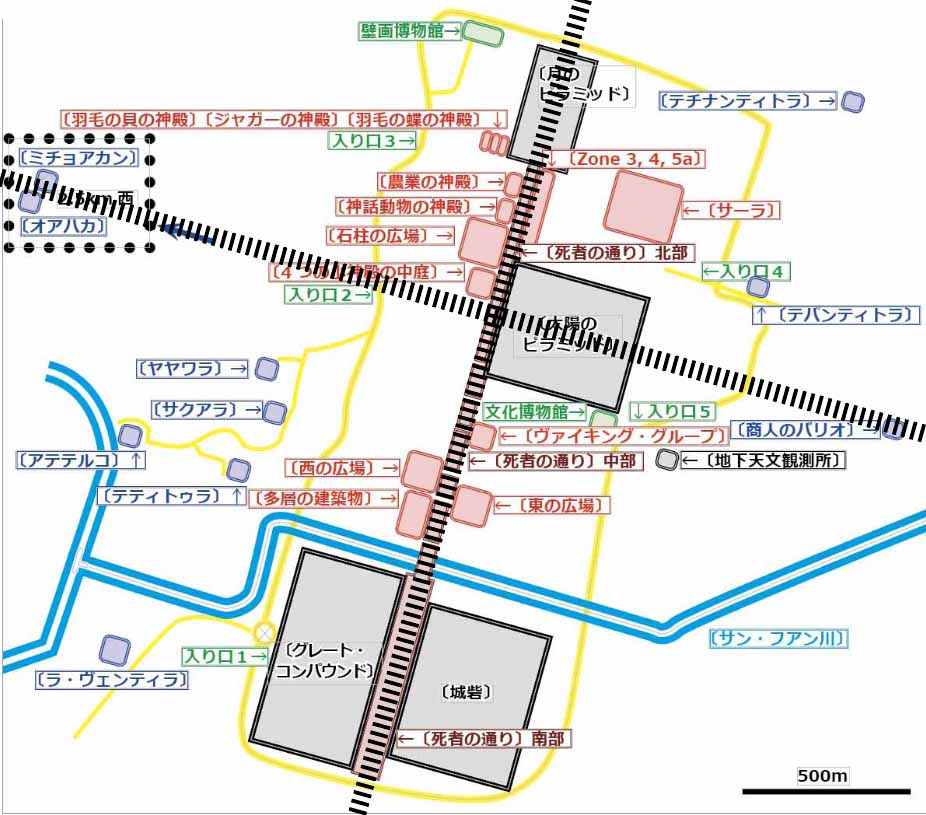
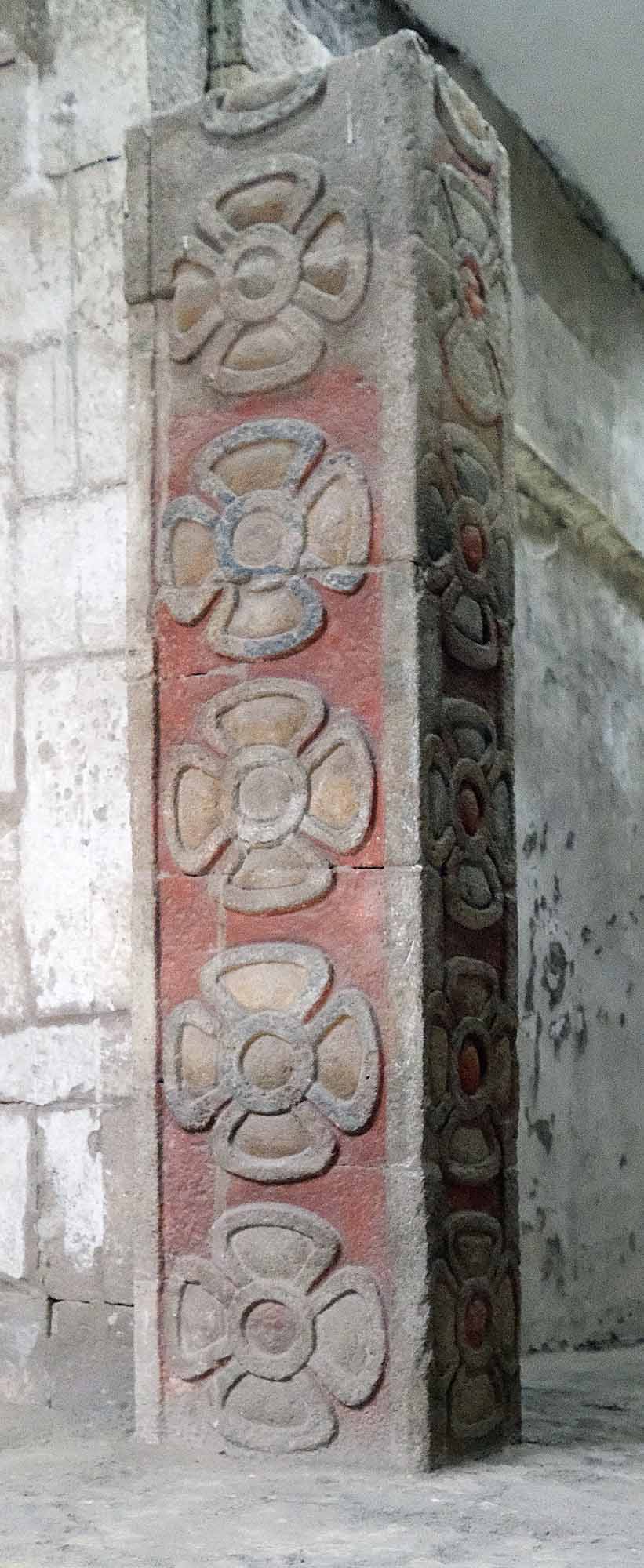
↑The map has been divided into four sections using black dashed lines. ↑On the right is the Temple of the Feathered Shell.
Some people say that three or four people for a population of 120,000 is too few. The architectural style permeates every corner of the city, so there should have been participation in the council from every corner, and understanding and agreement should have been maintained.
Unfortunately, no clay tablets containing council minutes have been excavated, nor has any coat of arms resembling that of the "Council Member's House" been confirmed. All we can see is that each hypothesis has varying degrees of persuasiveness. Furthermore, after 350 AD, no expansions were made to the three great pyramids, and instead the splendor of the buildings in the "Central City Temple/Residence" increased. Furthermore, if the people in the "Neighborhood Apartment Complex" did not have the right to attend national affairs, unity would have been lost.
Let us consider the intimidation exerted by the Teotihuacan government from distant villages. To support the city's population, which had grown to 120,000, the government imported food from agricultural settlements throughout the Valley of Mexico. No records of these imports have been excavated, but a mural depicting a priest bringing in corn in the Zacuala Neighborhood Apartment Complex provides corroborating evidence.
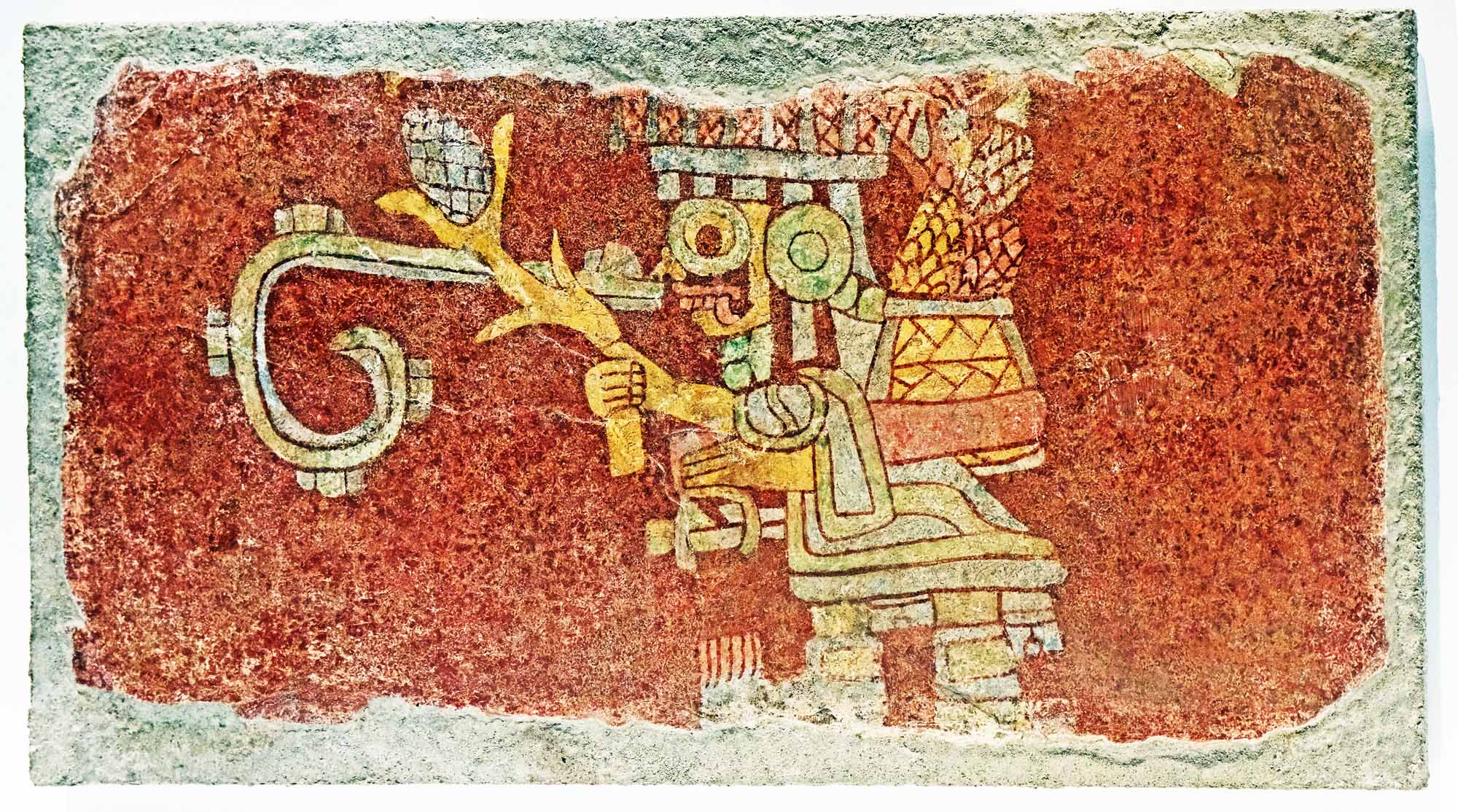
↑ "Priest carrying corn" at the Museum of Anthropology.
What methods did the Teotihuacan government use to obtain foreign corn?
Barter is possible. They probably offered obsidian, pale orange pottery, painted tripod pottery that would have pleased village leaders, and theater-style incense burners. However, almost no such artifacts have been excavated at the site. At the same time, military suppression is also a possibility. Even if a farming village 100 km away received various supplies from Teotihuacan, it is possible that there was little rain and the harvest was reduced. If they had given them 10,000 corn heads like last year, they would have starved. They would have asked if they could be satisfied with 6,000 corn heads. If they accepted such an offer, their own citizens would have starved.
Therefore, it was likely necessary to keep a close eye on the situation, often accompanied by the use of force, i.e., the deployment of government troops.