Cuicuilco Part 2
Lava flow of the Xitle volcano
Xitle Volcano did not cause a momentary large eruption, but seems to have been a continuous eruption that began around 100 BC, pouring out lava little by little. The large village suffered no catastrophic damage, and people continued to live their lives while worrying about the eruption.
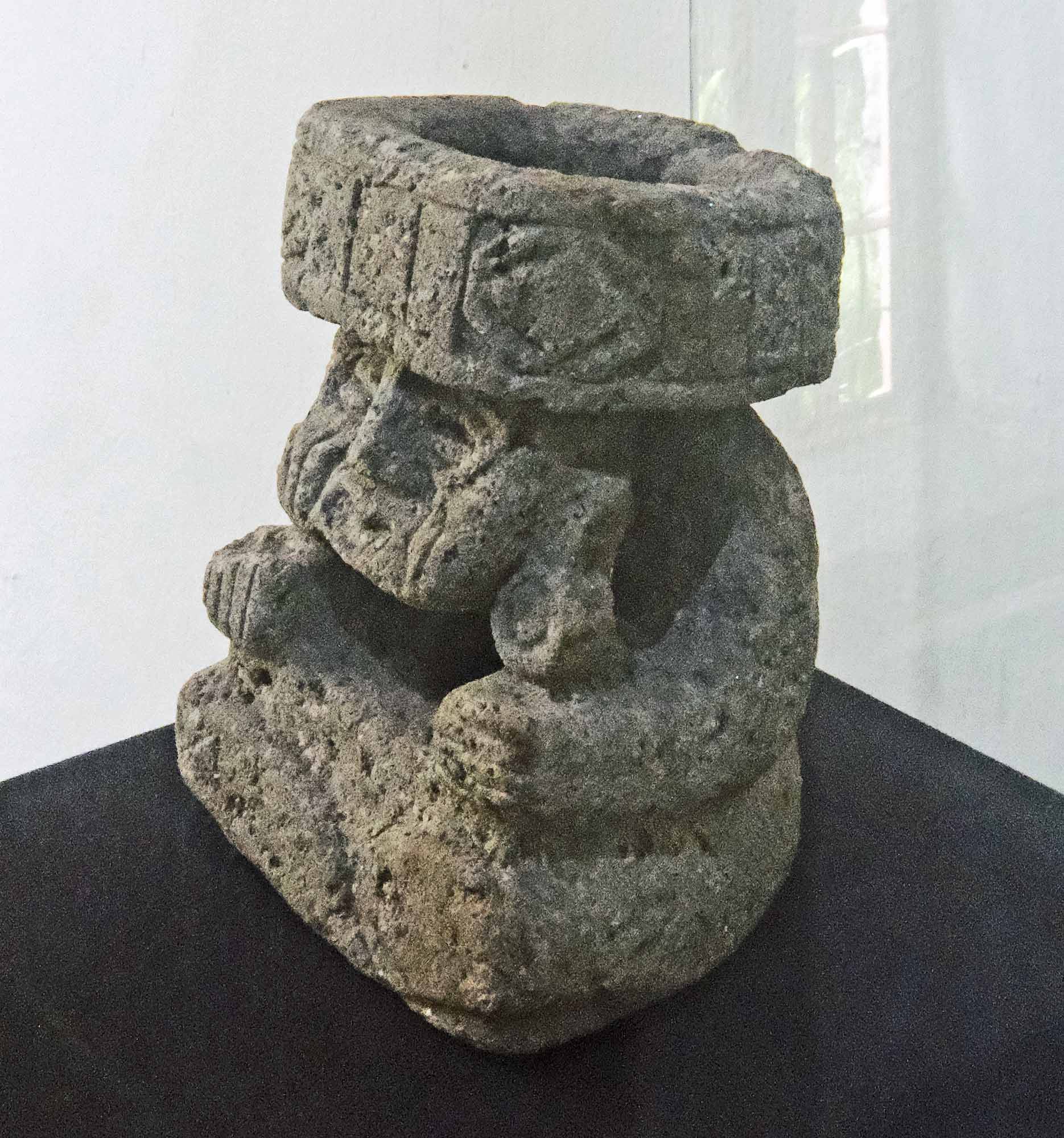
↑at Cuicuilco Museum.
This is the old god of fire from 200 AD. There is also a theory that [Quiquiluco] is the birthplace of [Old God of Fire]. This is probably an expression of a prayer for the Xitle volcano to remain calm.
However, around 275 AD, a large amount of lava flow appears to have covered almost the entire area of Cuicuilco.
Tourists can walk to the east side of the circular pyramid to a small altar called the building El. On the path to it, you can see the thickness of the lava that has been cut through by man. It seems very unlikely that it can be removed manually.
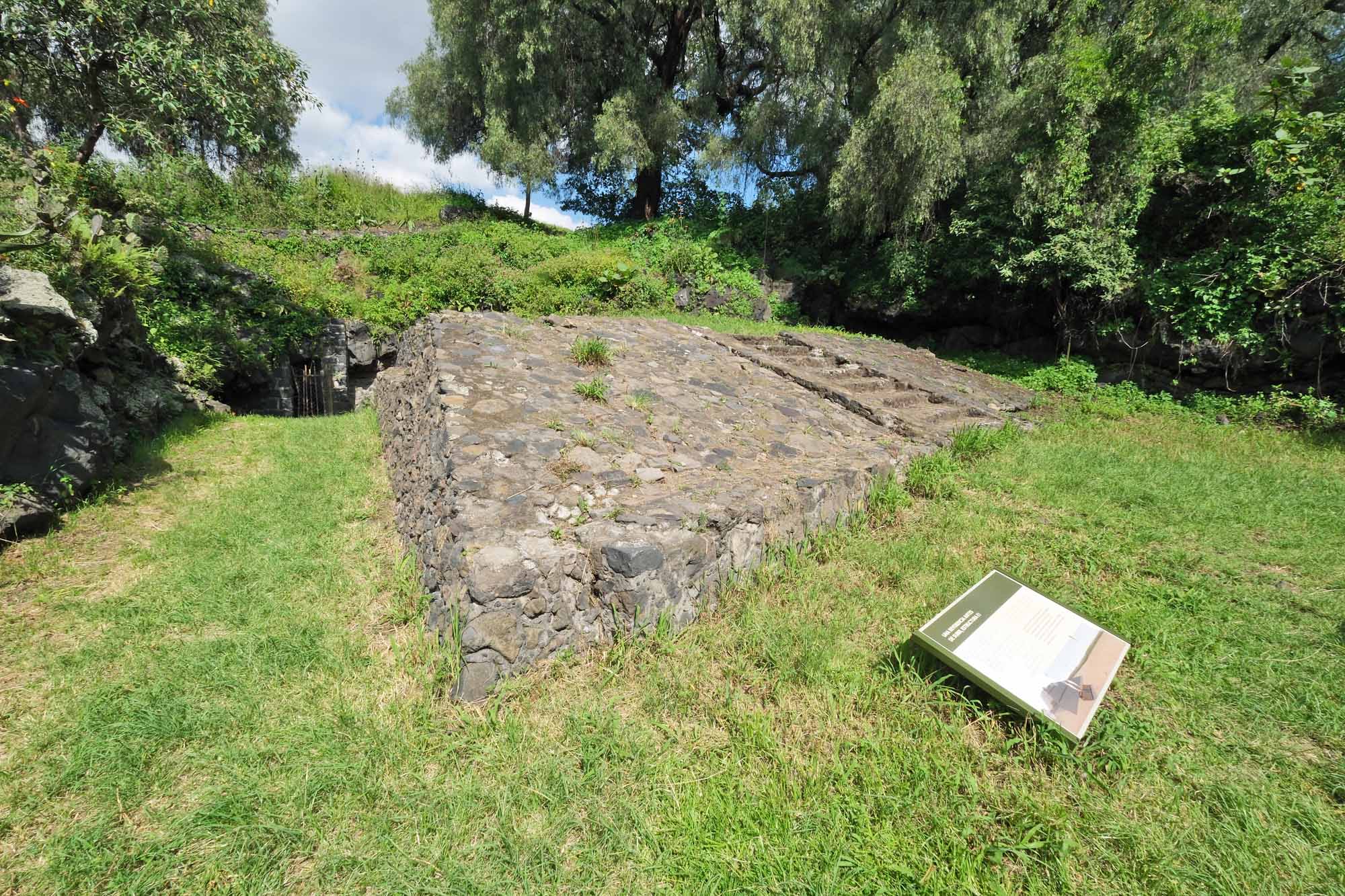
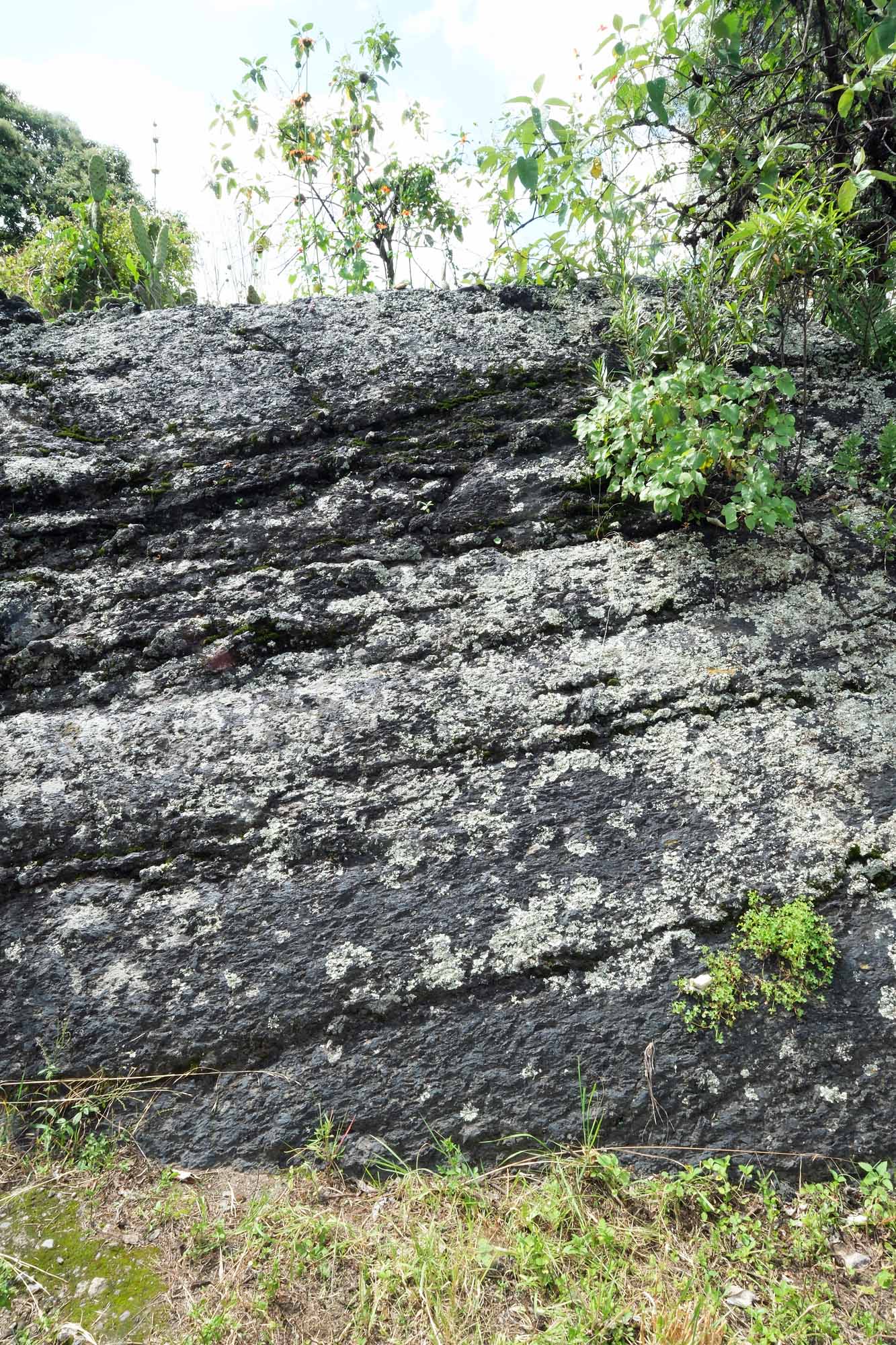
↑Architecture El. ↑Layer of lava.
Residents are forced to relocate. Although it cannot be said that all 20,000 people did so, it is said that many chose Teotihuacan.
On the other hand, there are also books that point out the influx of residents from areas in the northwestern part of the Central Plateau that were not affected by the eruption. He explains that they chose a new life in a city that had begun to have some charm over their hometown.
When I imagine the comings and goings and activities in the neighborehood apartment complexes, I get the feeling that people from almost all of Mexico were coming together and leaving and replacing each other, not by force, but because they decided it was worth spending their days in Teotihuacan.