Oztoyahualco
Looking at the map, we entered the area that the local guide had researched in advance and found a field of prickly pear. It is an ingredient in craft beer and distilled spirits, and the fruit is eaten in Mexico.
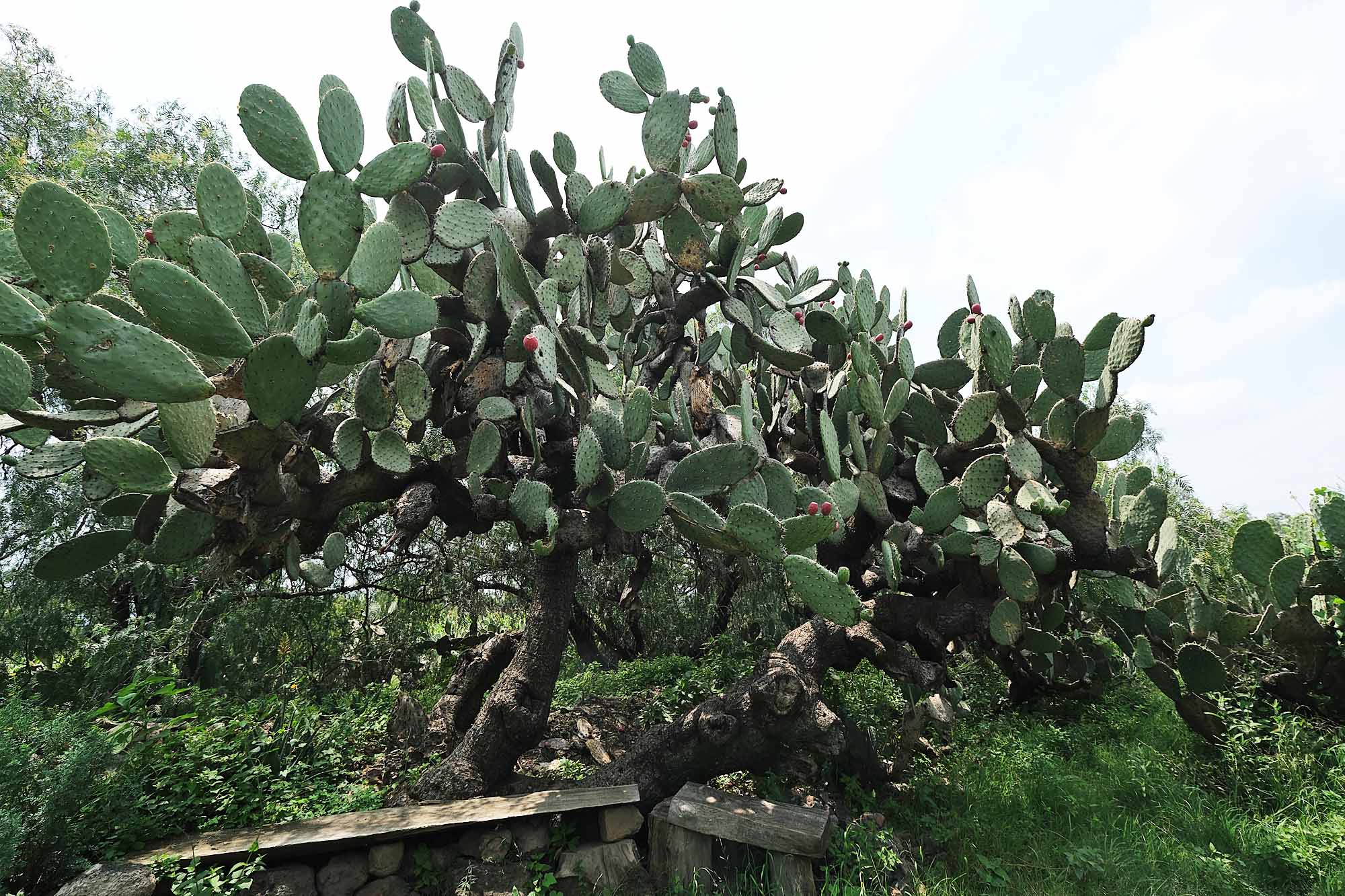
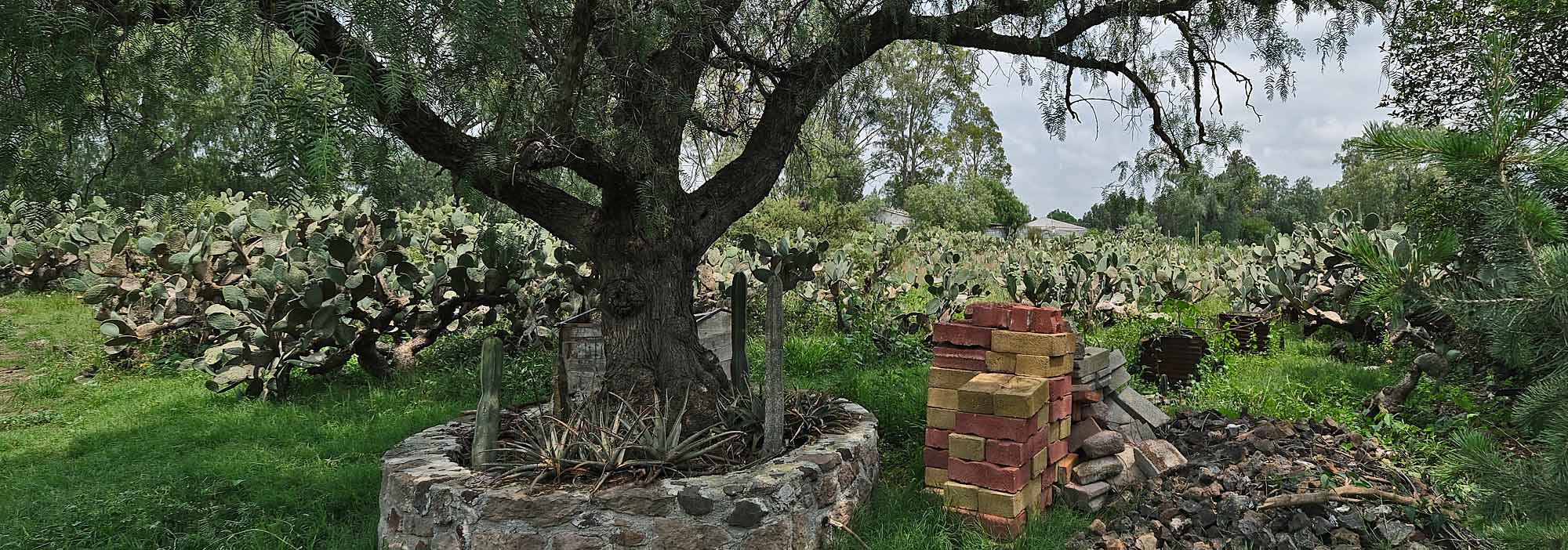
There was a farmhouse in the field and a small oven. When I asked a very elderly person, he said, "Ruins? Oh, if you ask me, it must have been there a long time ago, over there.'' He pointed to the sea of cacti. “Not now.”
In 1959, the archaeological team was able to excavate only 26 x 28 meters. It is assumed that the survey was carried out only to the extent that the landowner who was already operating the cactus field had given permission. After the excavation, it was probably buried and the site returned to a prickly pear field.
Looking at the layout diagram, you can imagine that rooms and passages were spread out on the outside.
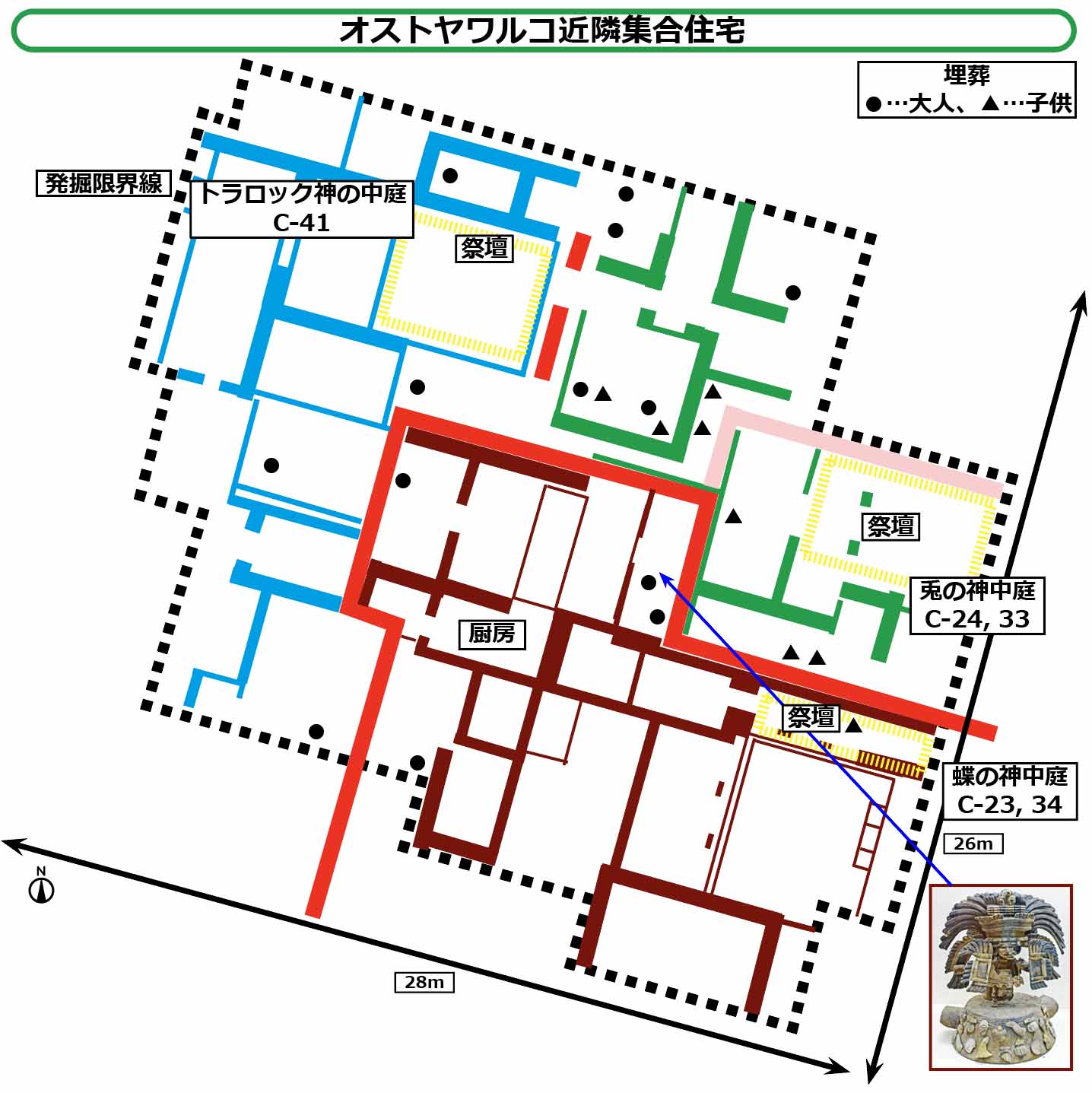
The red lines in the layout diagram are the walls that separate the range of cohesive lots. In other words, within the excavation limit line, the light blue family, the green family, and the brown family constituted an apartment complex.
Lime powder was caked all over the 26 x 28 m area. Lime powder is used as a material for plaster. All three families made a living by producing lime powder.
The three family areas each contain living quarters, kitchen, courtyard, altar and burial, and are likely to be able to live independently. Near each altar, a statue of the god Tlaloc was found in the light blue family, a rabbit statue in the green family, and a butterfly statue in the brown family. They were probably the family gods.
I would like to include the theatrical incense burner excavated from the Brown family's room C-21.
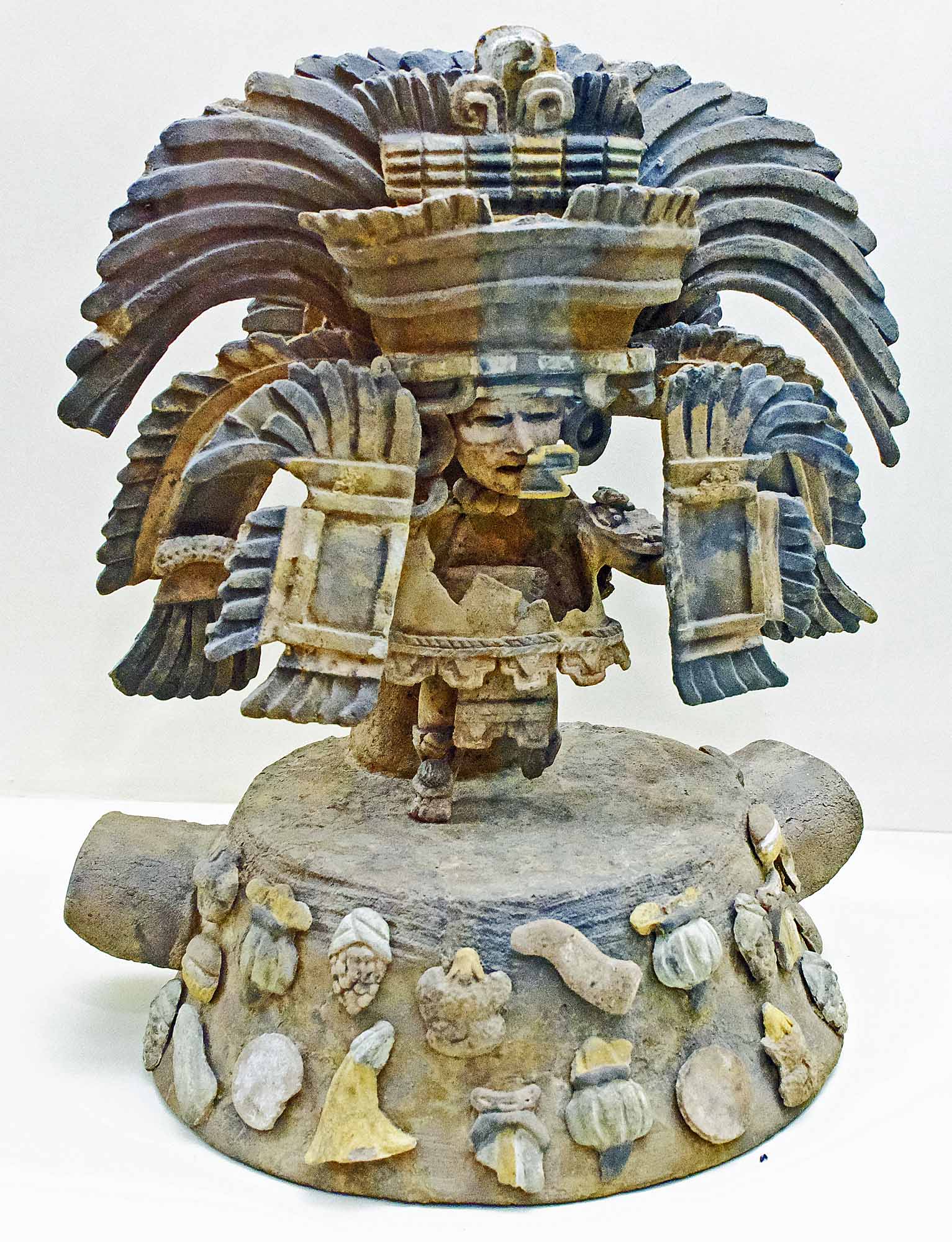
↑at Mural Museum.