Michoacan(=E19)
(Related...Guachimontones, Tingambato)
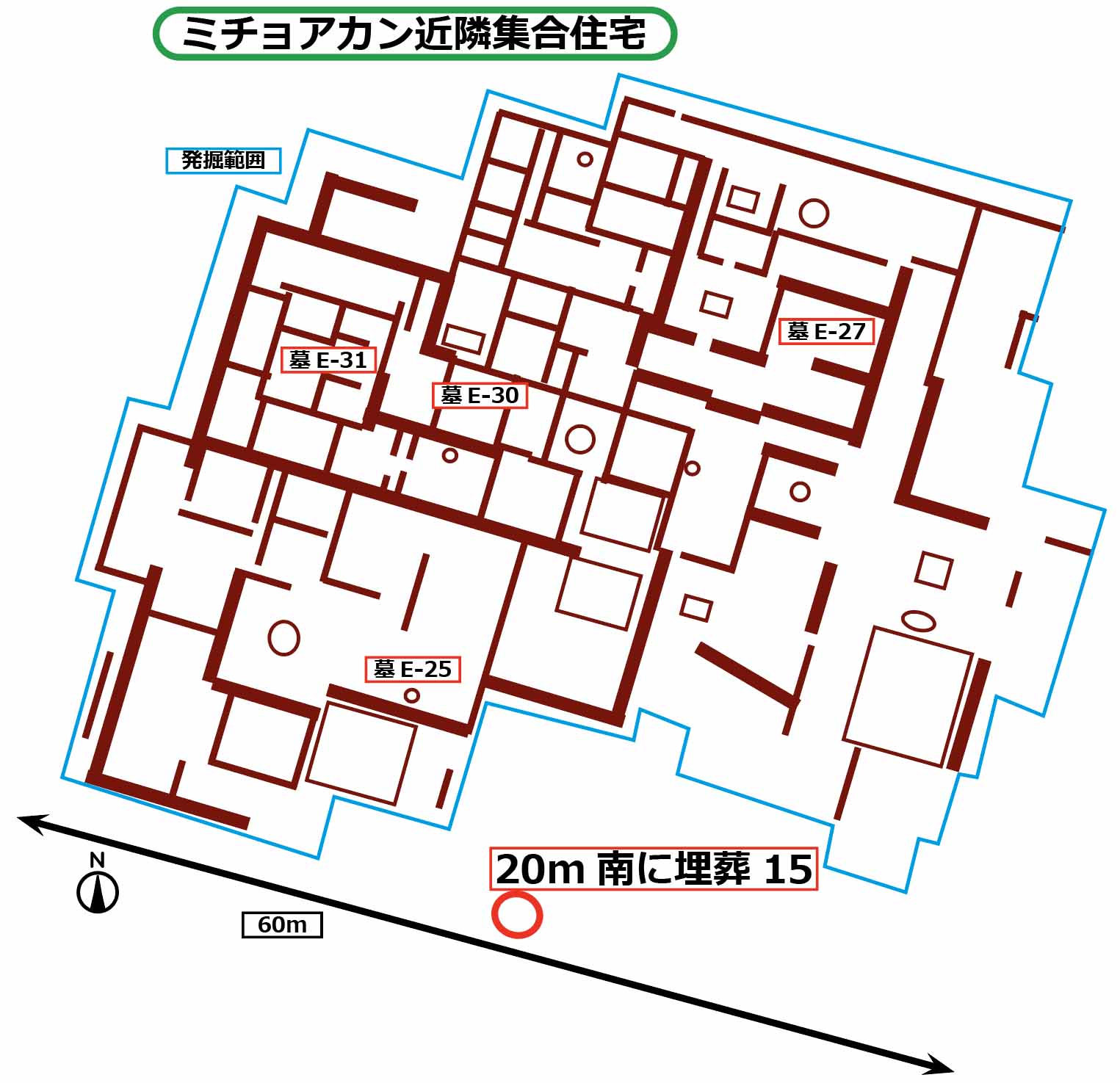
The northern half was built around 200 AD, and the southern half was added later, with the final construction in 550 AD.
The remains are found in both Michoacán and the Oaxaca Baisn, and one hypothesis is that the area was originally inhabited by Michoacán people, who traveled back and forth with the neighboring Oaxaca barrios, intermarried, and lived together.
There are reports about the cemetery.
Tumb E31...circa 300 AD. Cremated/flexed burial of an adult male. No Michoacán remains.
Tomb E30...All three were cremated with their joints dislocated. Three pale orange earthenware vessels and one ornament. First, a 60-year-old woman was buried around 300 AD and sealed with a stone slab, then between 350 AD and 550 AD the slab was destroyed and a 50-year-old man was buried, along with an 8-year-old child who had spent his entire life in Teotihuacan; one who had stayed in Zone-1 (Pacific coast, western Mexico, Oaxaca Valley) for an extended period of time, and one who had moved from Teotihuacan to Zone-1 and then returned here.
Tomb E27: 14 individuals whose bones were removed before 250 AD were buried together. The adult male spent most of his life in Zone-1. The skull of a 10-year-old lived and died in either Teotihuacan or Zone-1. The skull of a child was moved from Teotihuacan to Zone-1 before the age of three and died at the age of eight.
Tomb E25 - Oaxaca Cemetery. The older man spent his childhood in Teotihuacan and returned from the Oaxaca Valley shortly before his death. The middle-aged man spent his childhood in Zone-2 (Mexican Central Highlands, southern Morelos, Puebla region, and northern Igorda state).
Tomb E15: Converted into a burial site around 300 AD and used until 550 AD. 14 people were buried here. Two infants were born in Zone-1 according to strontium analysis. Two spent their childhood in Zone-3 (southern Maya highlands, Igorda state, northern Mexico).
Zone-1 includes western Mexico and the Oaxaca Basin, so it is difficult to judge, but the above strontium analysis suggests that people were not tied to neighborhood apartment complex.
Next, we fly to Michoacán's Lake District, the likely birthplace of the residents of the Michoacán Neighborhood Apartment Complex.
Michoacán State Lake District

↑on Google Map。
Most archaeologists agree that the first settlers in this neighborhood came from the Lake District of Michoacán in western Mexico. It was the source of the "light orange pottery" that was commonly distributed in Teotihuacan.
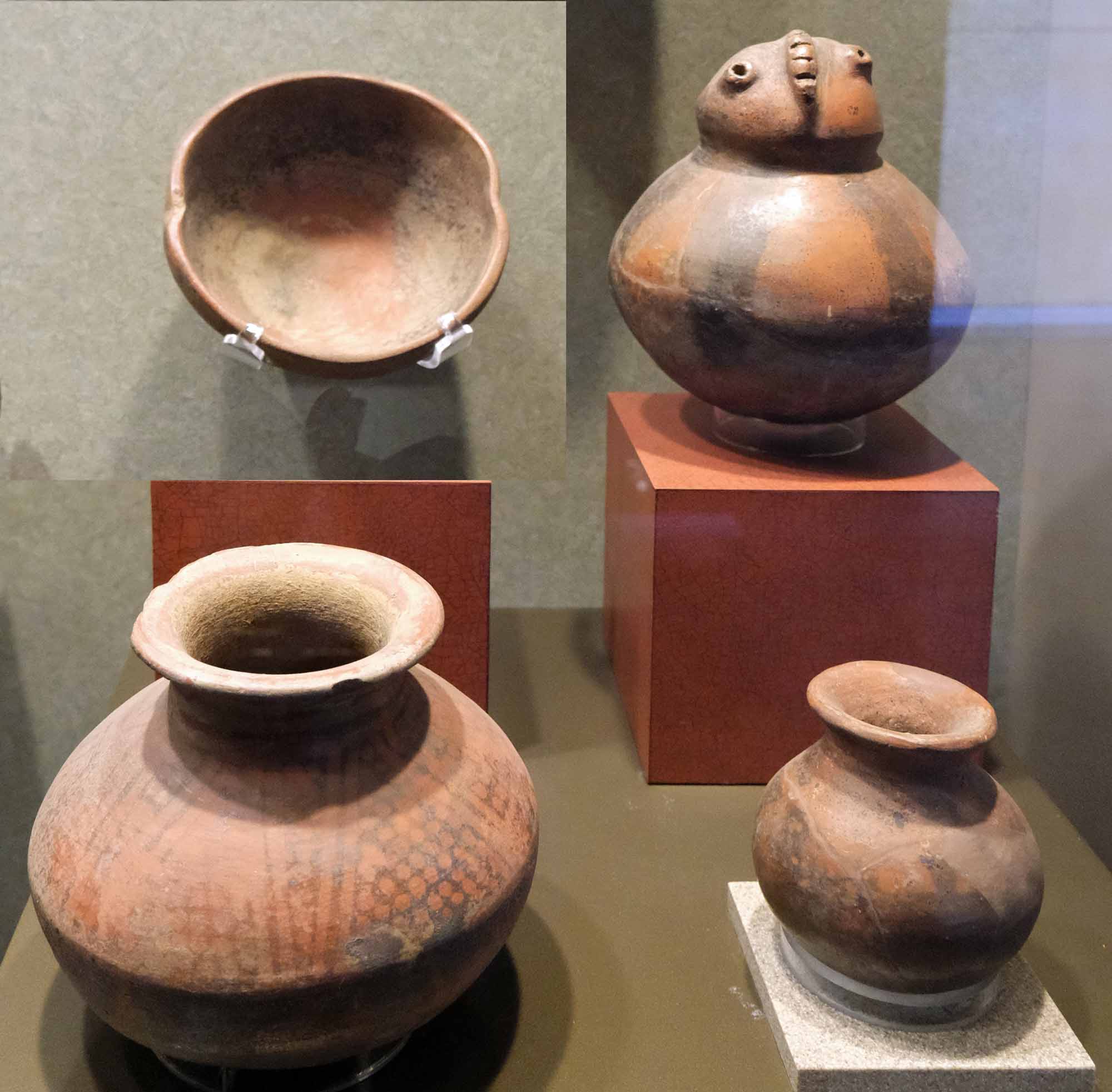
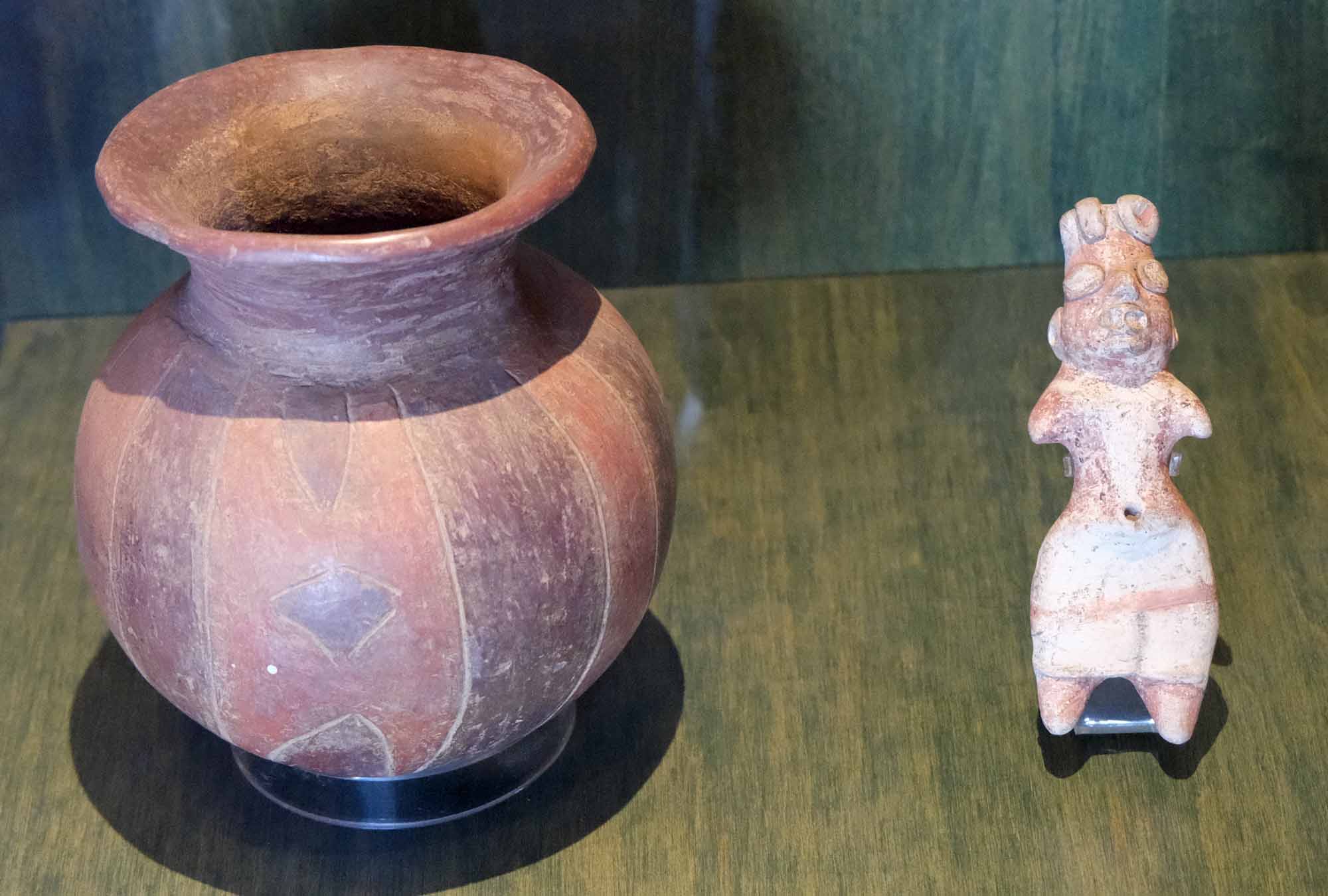
↑↑at Western Mexico Hall of the Museum of Anthropology.
And The Lake District of Michoacán is the eastern edge of the Teuchitlán cultural region, which lived from 300 BC to 550 AD.
Teuchitlan Culture
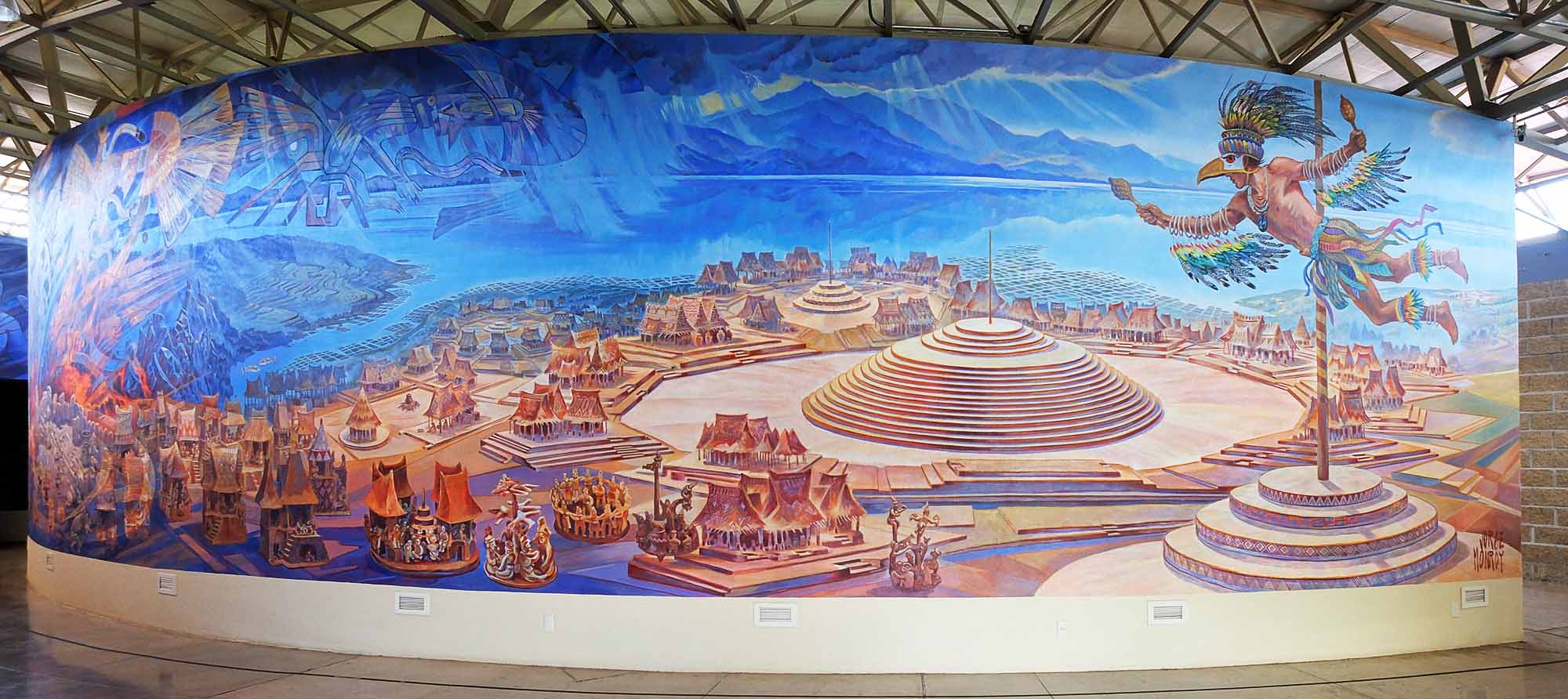
It was located in a vast area stretching from the border with the United States in the north to the Pacific coast in the west. It is characterized by a shaft tomb, an altar complex made of layered circles, a ceremony in which a bird god hangs from a tree trunk placed at the top of the altar, and soft and gentle-looking pottery. It seems that not all of the ruins had all the above elements, but they generally give a sense of the same culture.
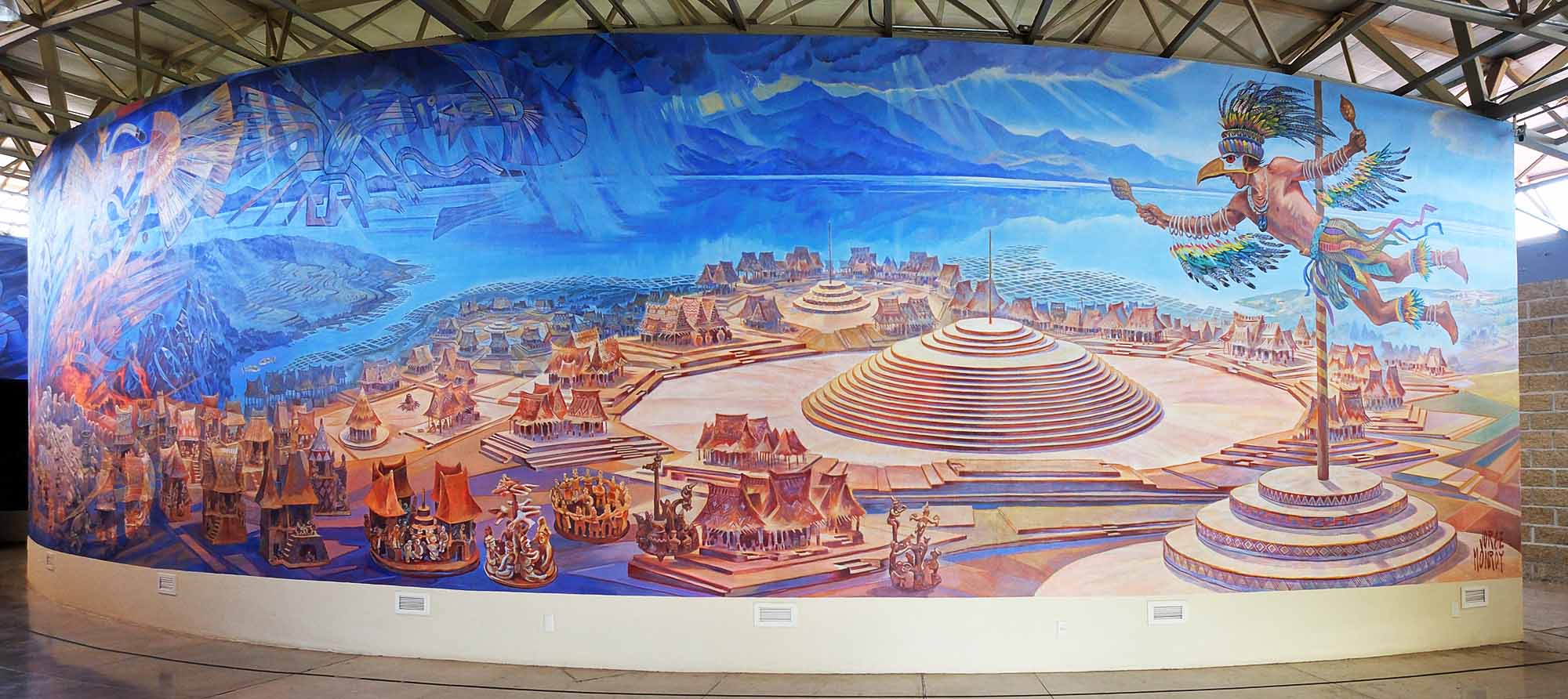
↑at Guachimontones Museum.
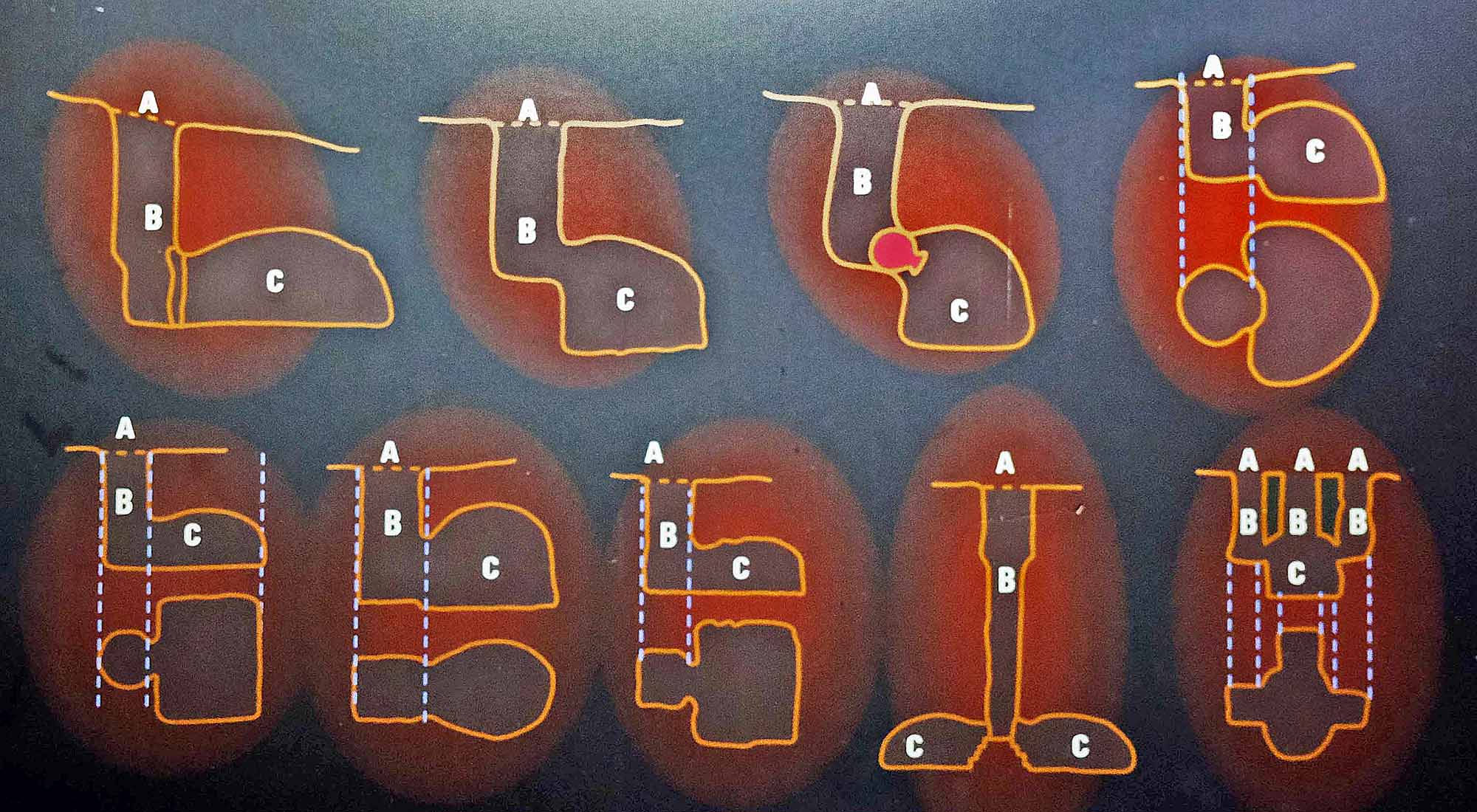
↑at Guachimontones Museum. Types of shaft tumbs. A is the hole, b is the passage, and c is the burial chamber.
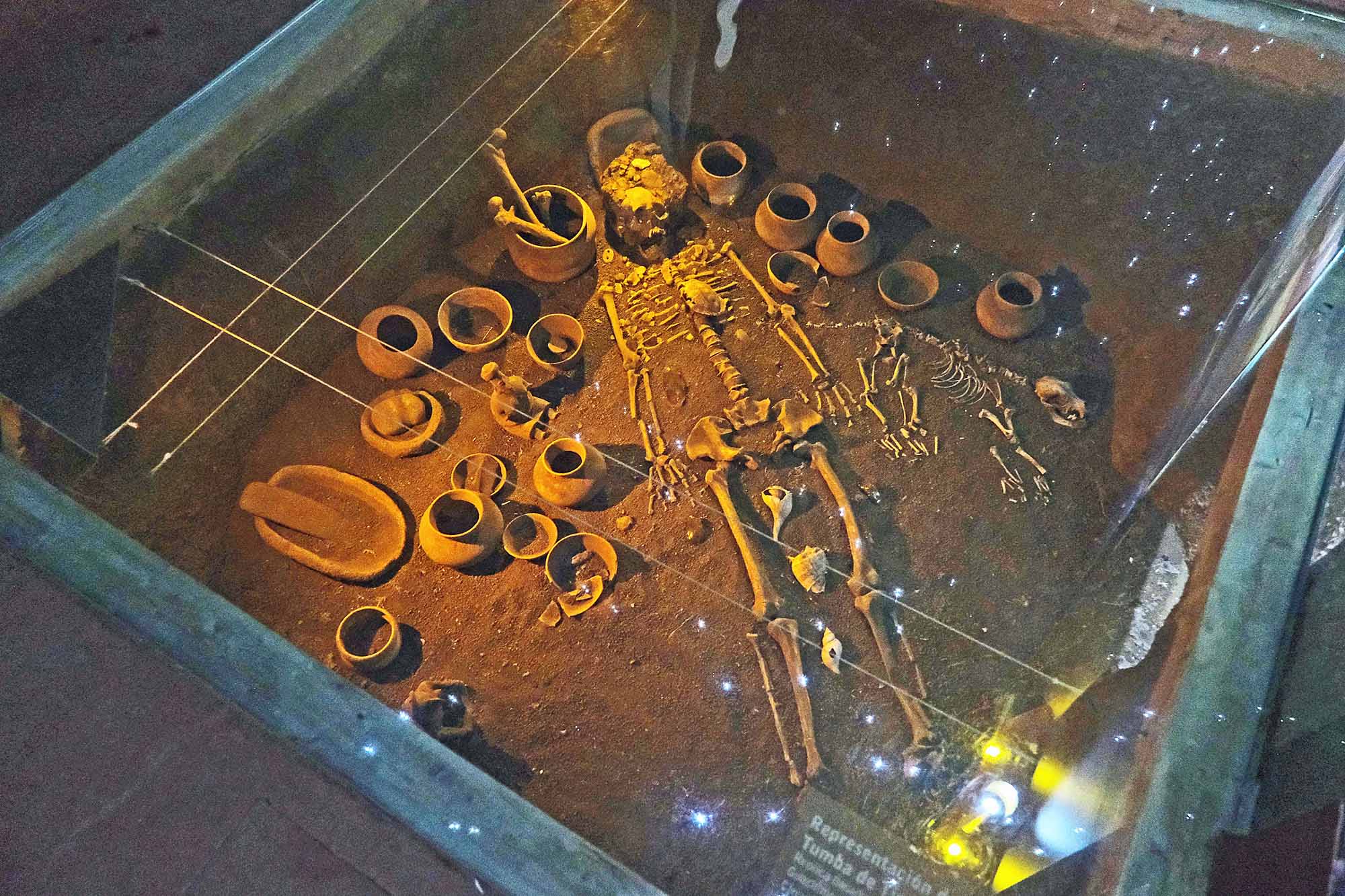
↑at Guachimontones Museum. Reconfiguration.
This is a reconstructed diorama of a generalized shaft tomb. Pottery, mano and metate, animal bones, figurines, and conch shells were buried. Although not shown here, many of the shaft tombs had clay works such as houses attached to them.
Furthermore, there are very few artifacts whose excavation locations are clearly known. The year is also unknown. In the 20th century, shaft graves became easy targets for grave robbers, and many were sold to buyers. Each museum buys them back and puts it on display. Although it is unknown where it was excavated, anyone can see that it is a product of the Teuchitlan culture.
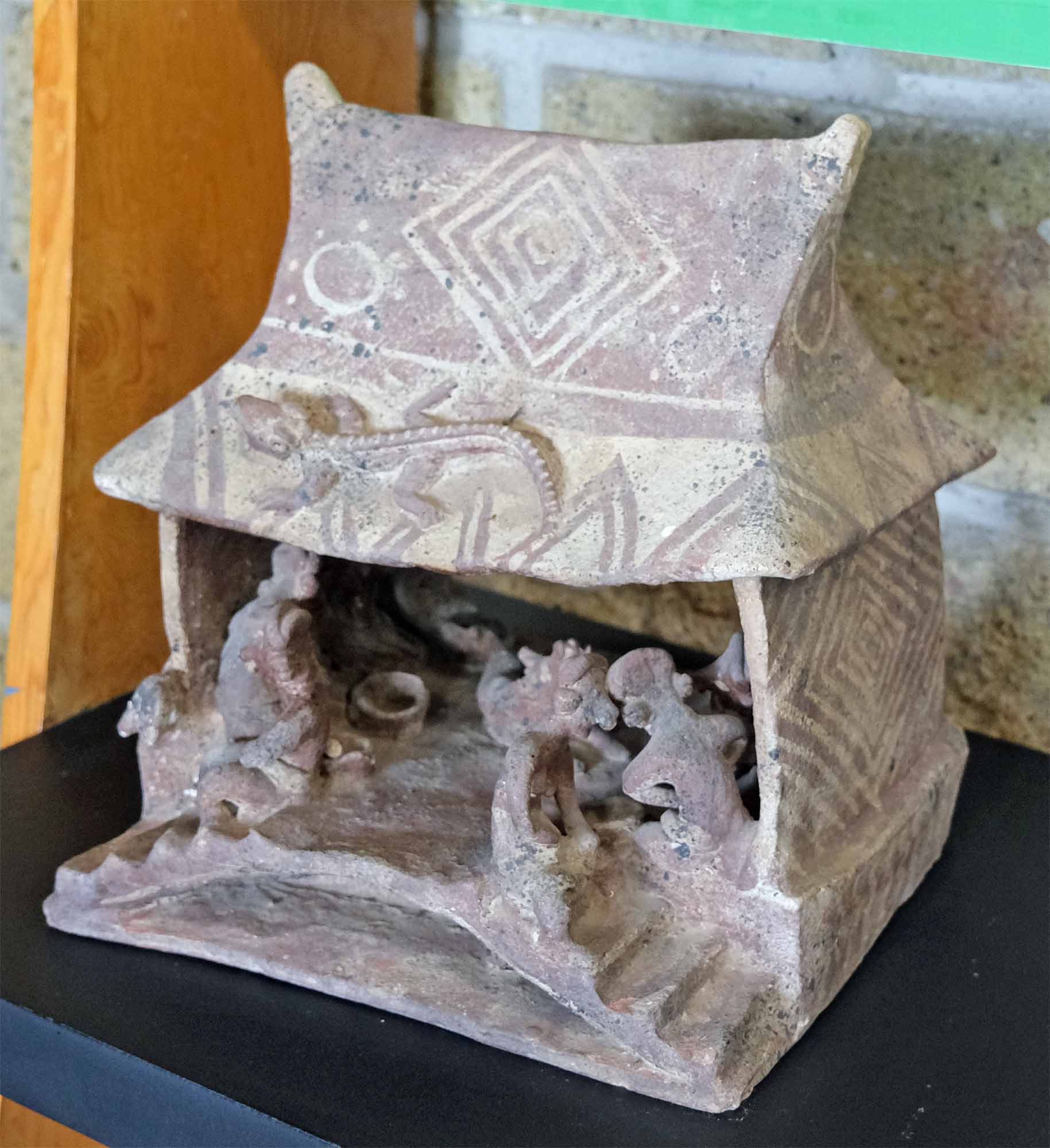
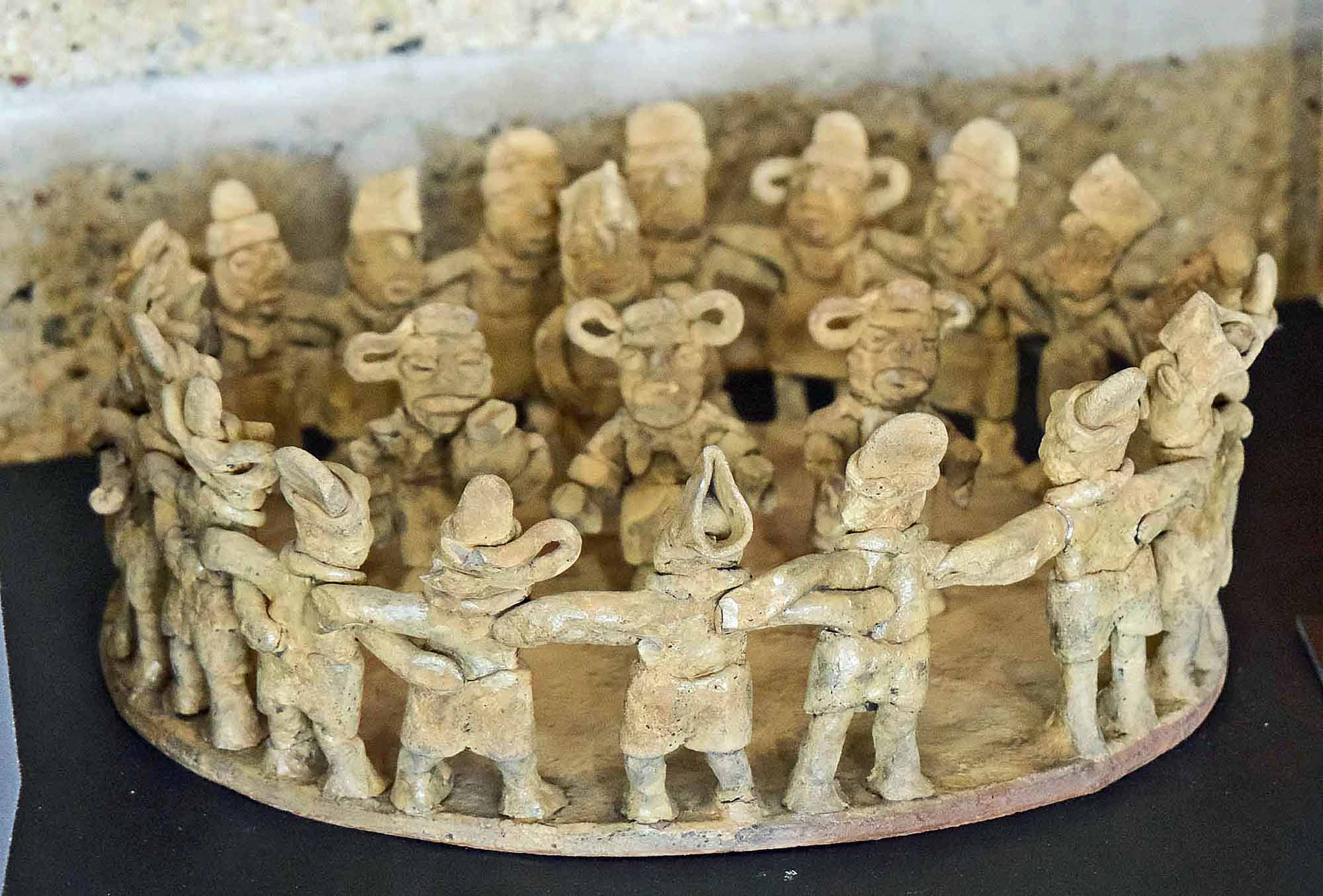
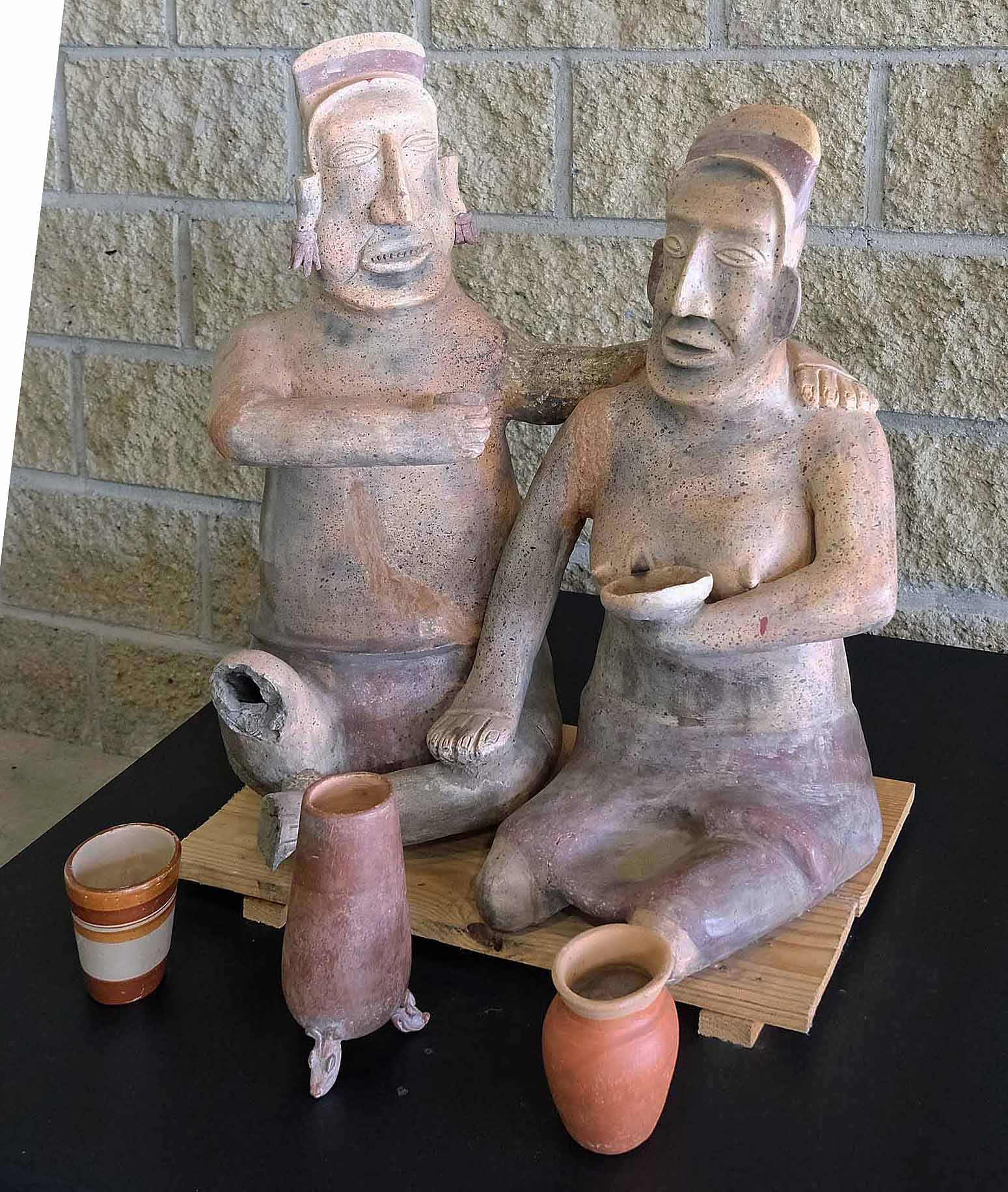
↑↑↑at Guachimontones Museum.
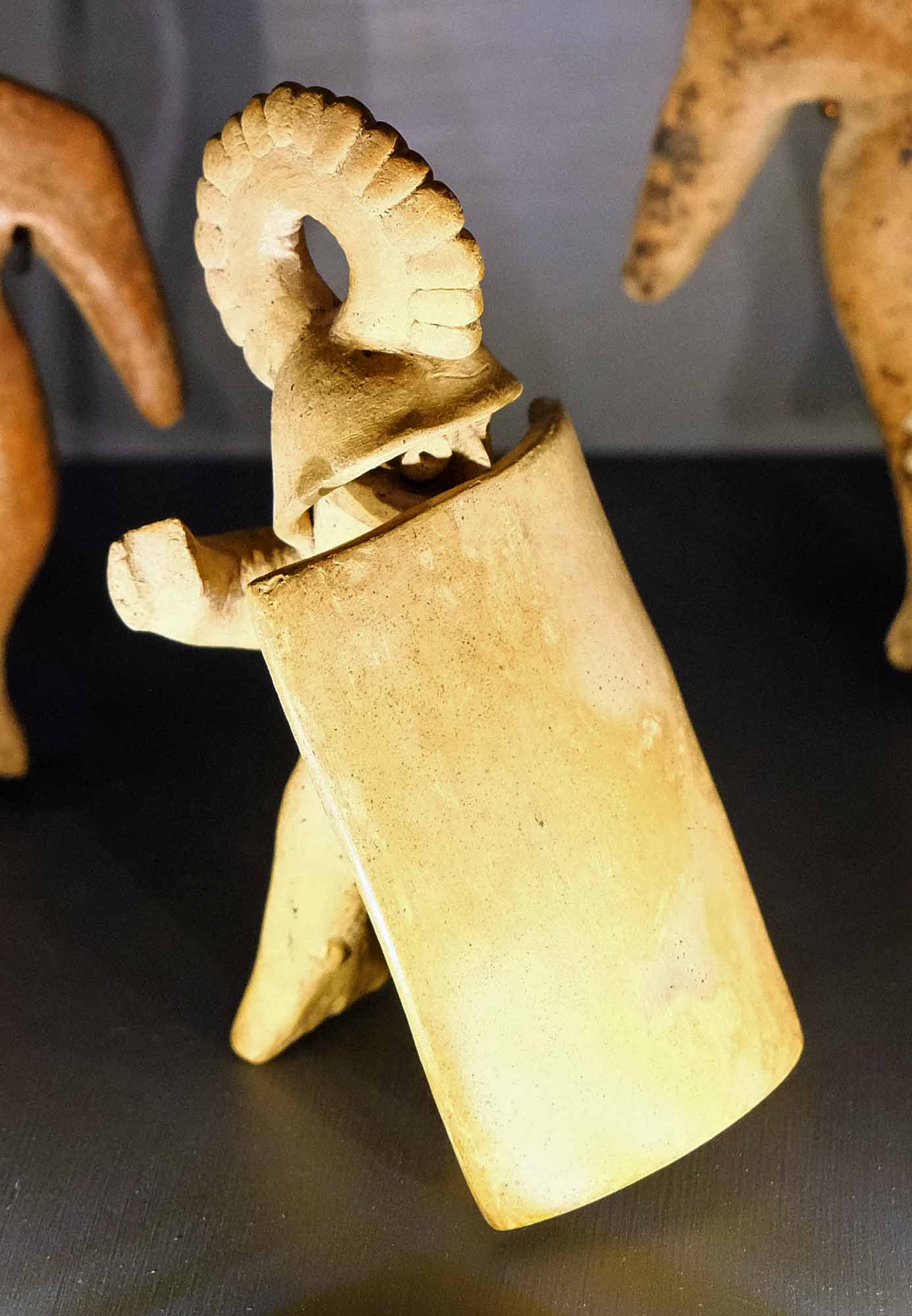
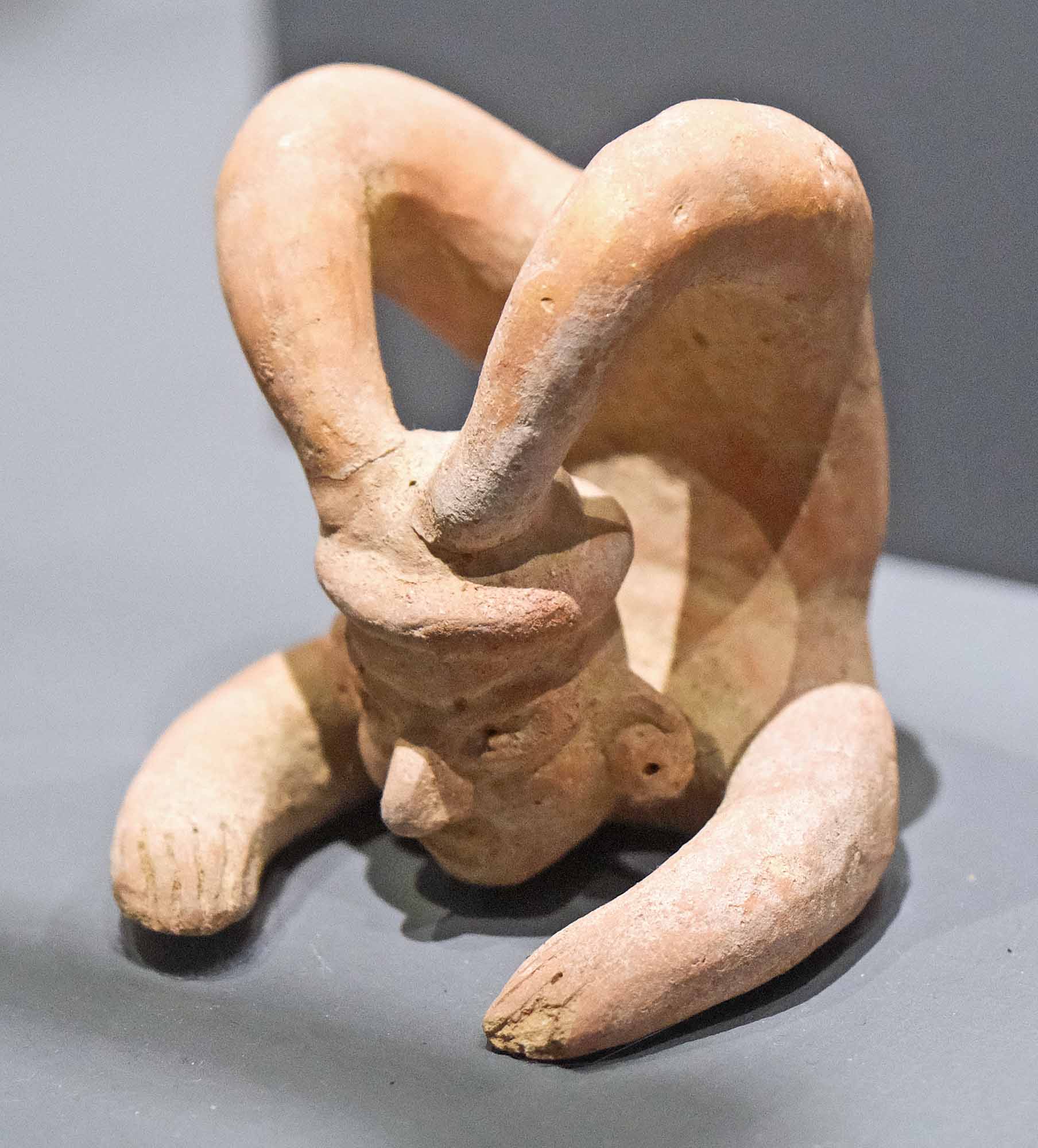
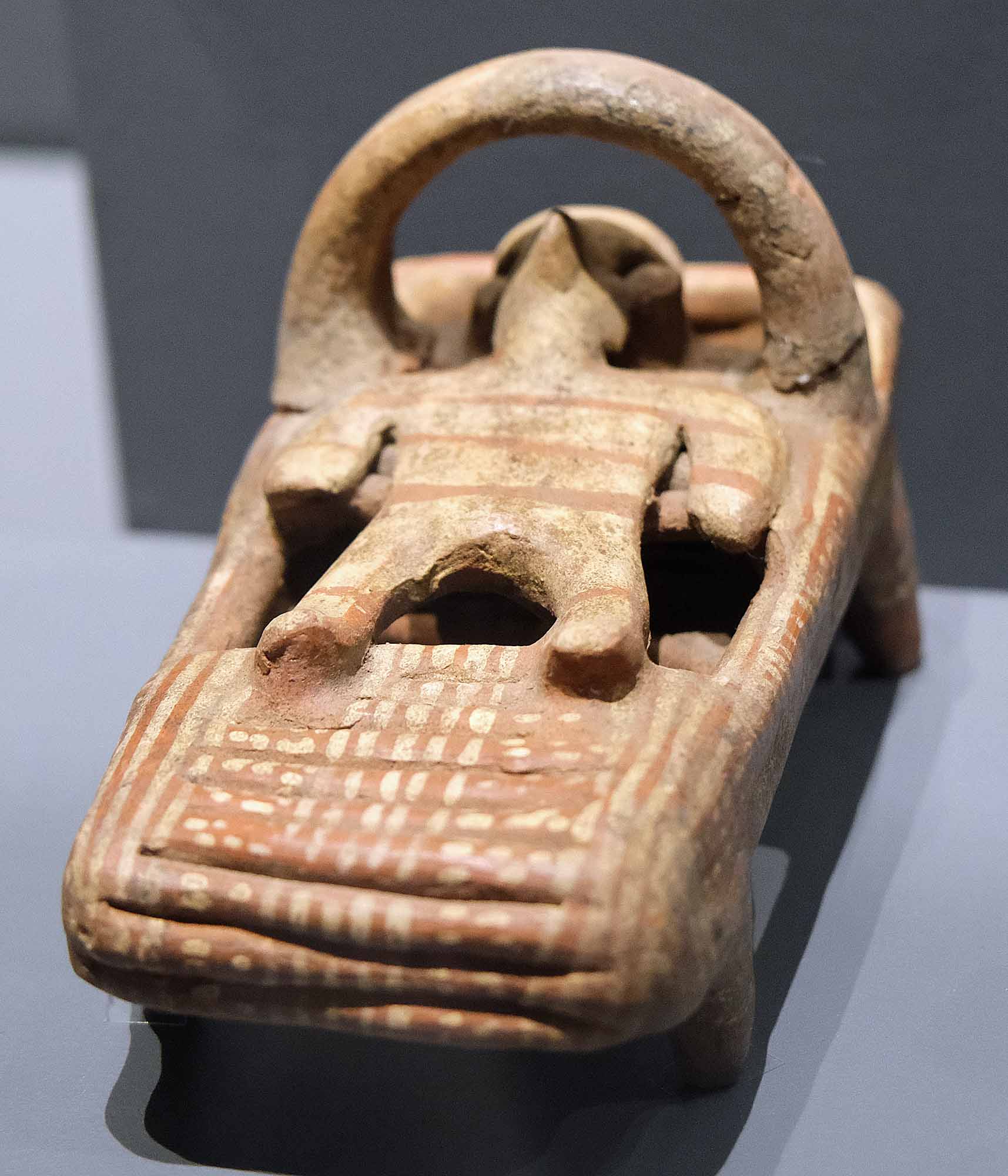
↑↑↑at Guadalajara Regional Museum.
Now let's visit one of the ruins of the Teuchitlan culture.
Guachimontones
It is located about 300 km west of the Lake District of Michoacán. The maximum population is said to have been 6,500, but this was not just due to the ruins, and is thought to have included farmers on the vast farmland.

↑on Google Map。
The red frame on the map above is the Guachimontones ruins, which we will be looking at. About 800m to the east, the similar buildings appears to be smaller. This is the Guachimontones II ruins (also known as Loma Alto). In other words, the correlation diagram is as follows:
 ←800m→
Let's stand at the "viewpoint" shown on the map above.
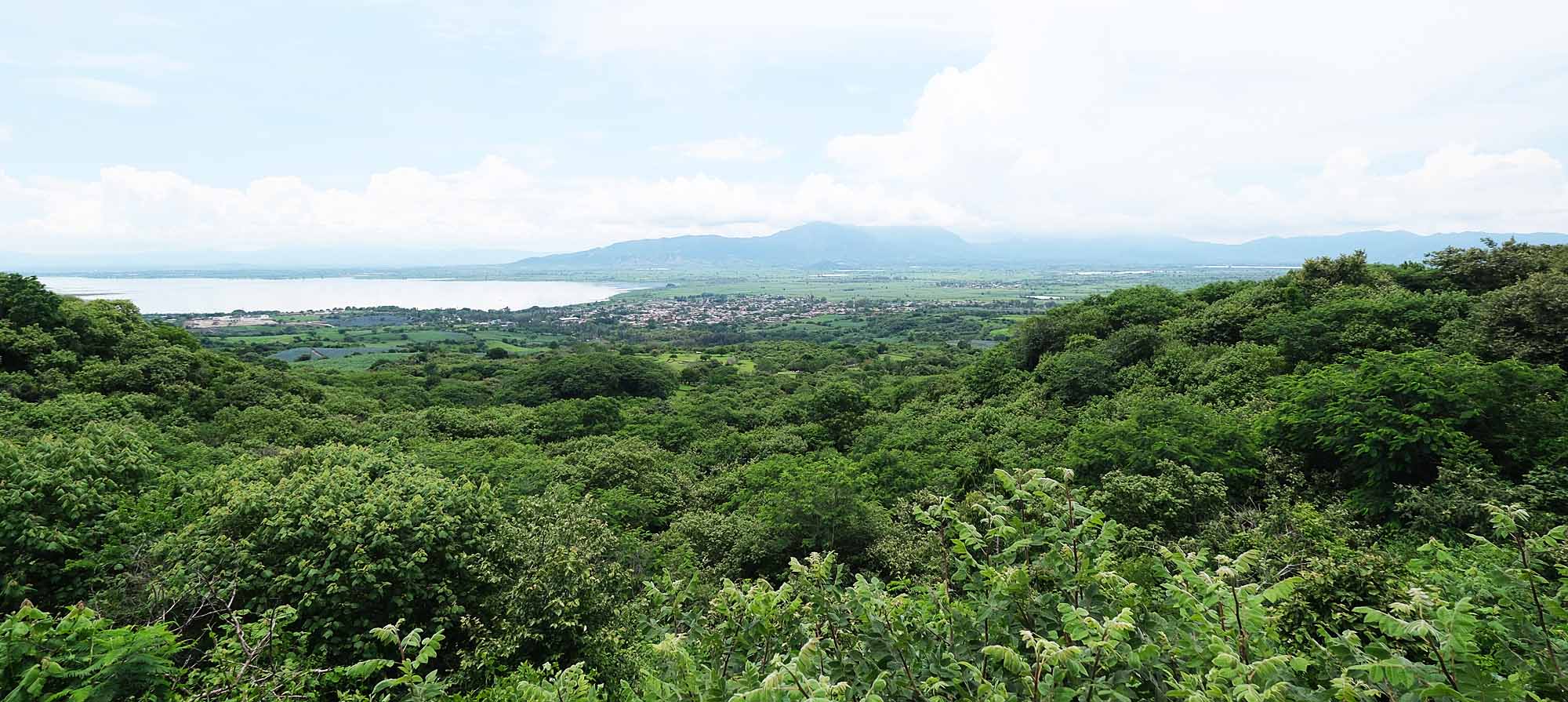
The photo looks down to the south. Part of Lake La Vega is visible on the left, with a green area stretching out to the right. The modern-day city of Teuchitlán is in the foreground. A large amount of pottery was discovered during urban development, and when researchers searched for it, they found the Guachimontones ruins on a hill to the north. The small green area is just before the city center.
Opposite the site are a series of obsidian mines, where various shades of obsidian are still being collected.
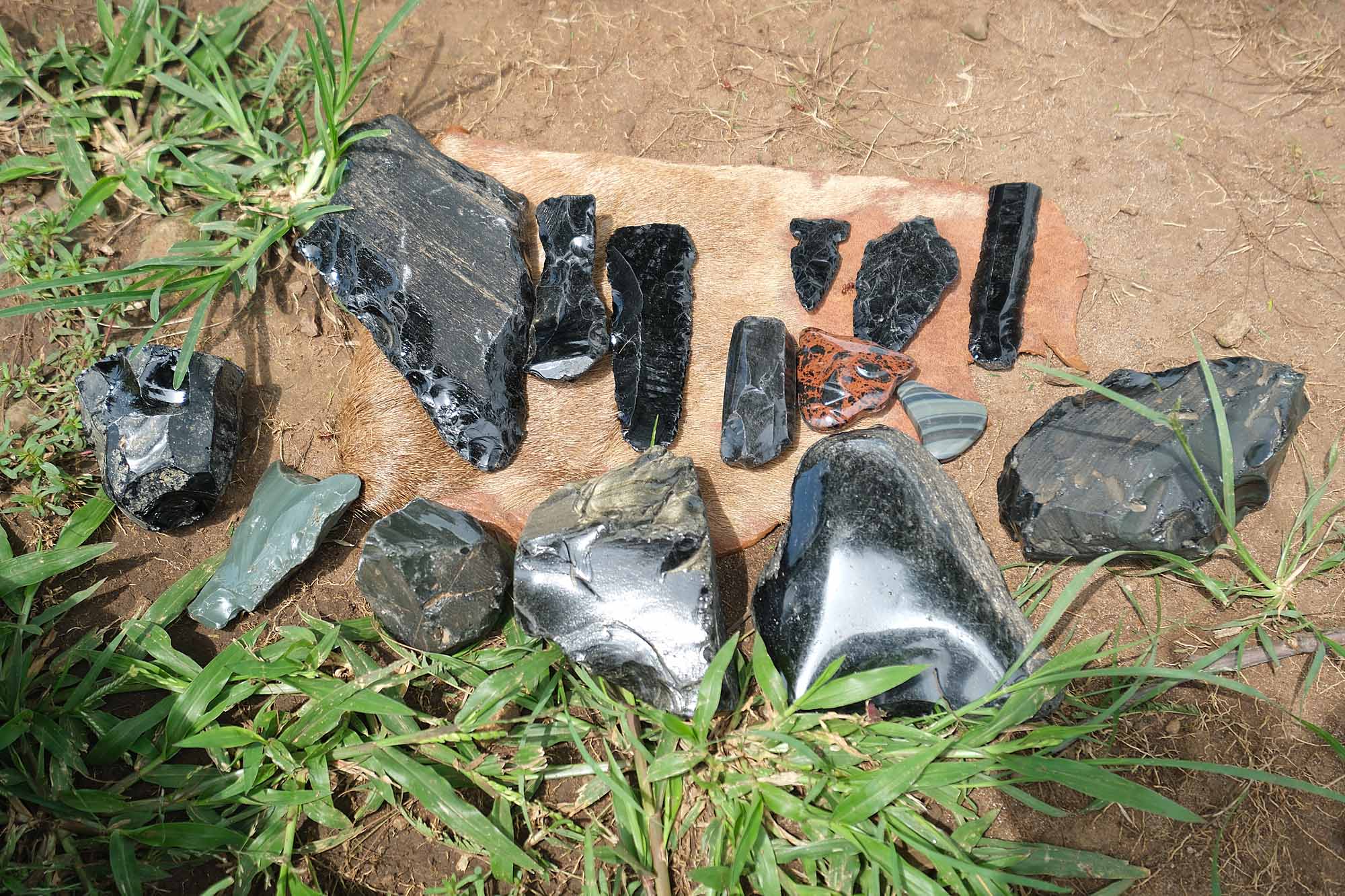
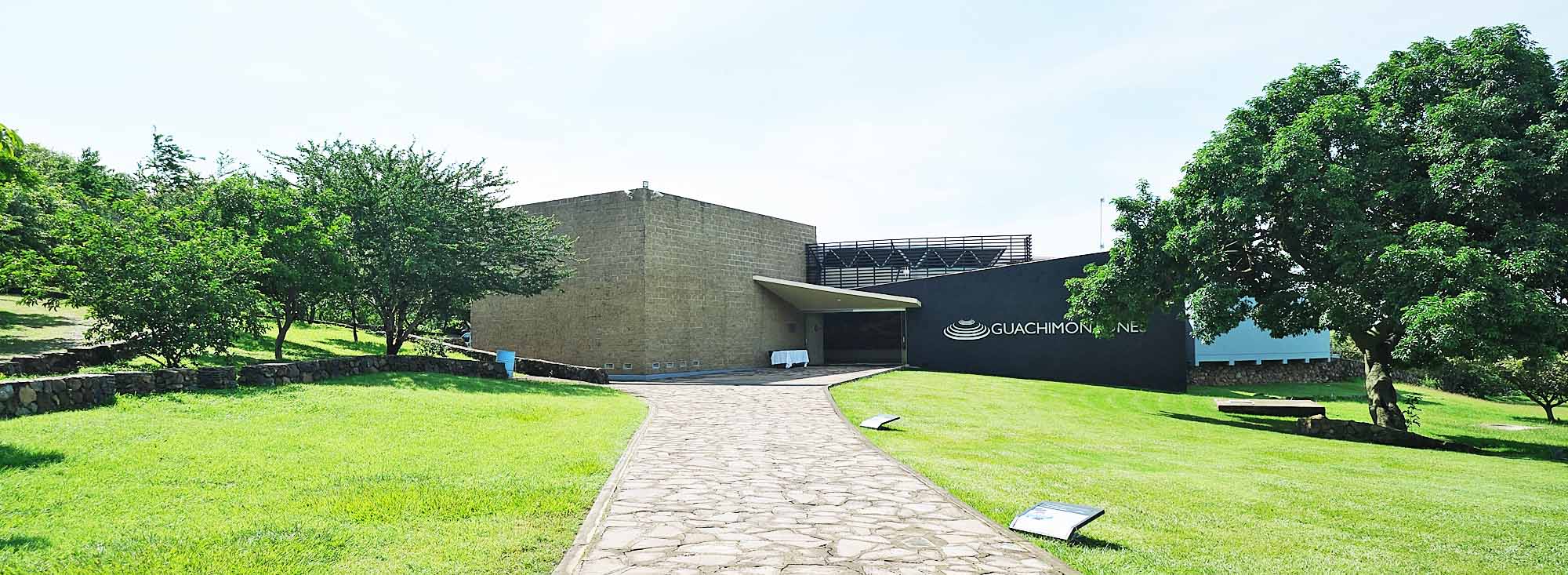
↑Guachimontes Museum.
The ruins are a group of circular complexes named Circles. I have attached exhibits from the Guadalajara Regional Museum and the Guachimontes Museum regarding Circle-2 and Ball Court 1.

This circle is called Guachimonton and the ruins are called Guachimontones.

Let's look at the floor plan. Six circles and two orb fields are shown. In fact, there are four nearby circles that have barely been excavated. There are also several circles and a ball court at Guachimontones 2, 800 meters away, so even if we limit ourselves to an area of, say, 10 square kilometers, how many are there really?
That being said, let's enter the ruins.
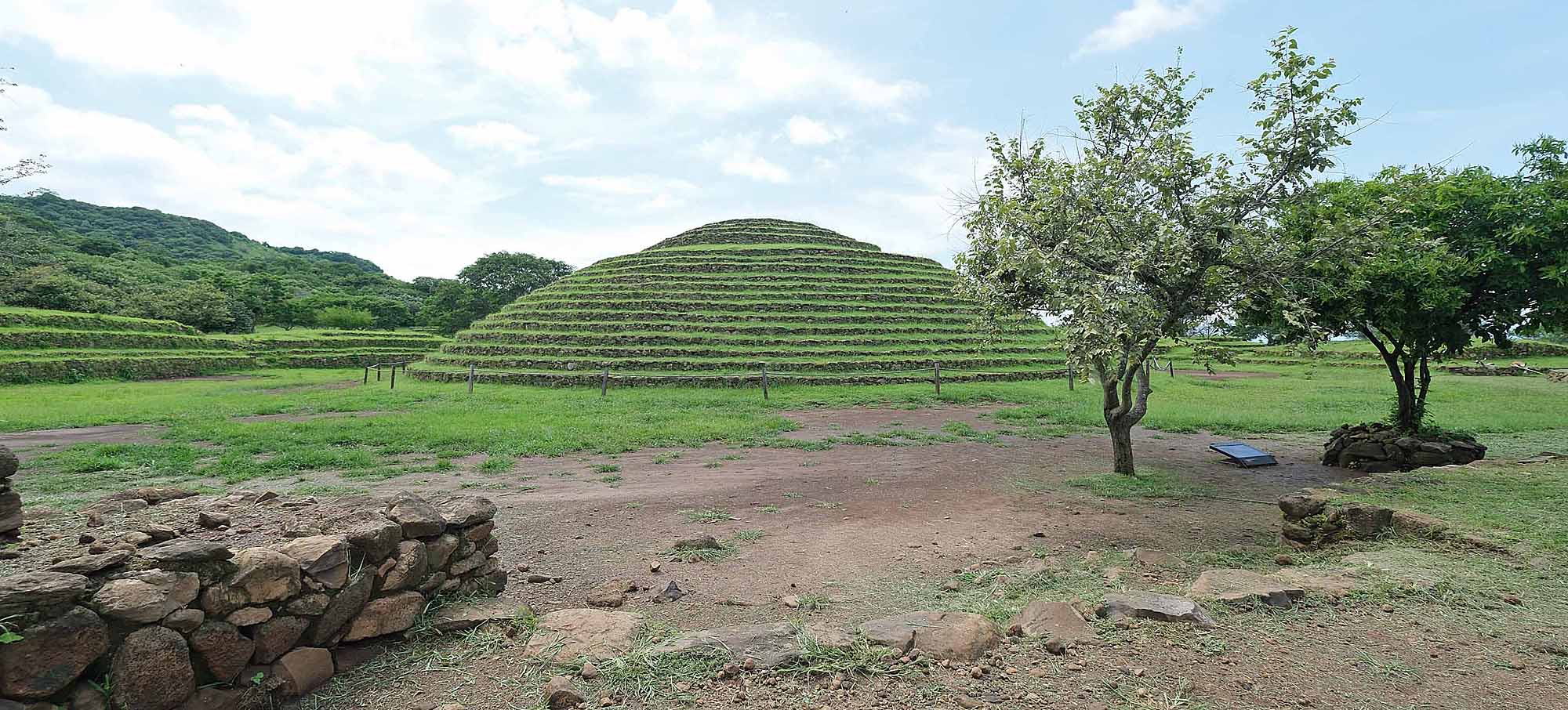
This is Circle-2. There is a circular altar in the center. It is surrounded by a circular plaza like a donut, and the whole is framed by a platform. The 10 platforms vary slightly in the number of steps, width, and height. Therefore, although they are all now decayed, it is assumed that the appearance of the buildings that stood there was also different.
The photo of the pottery below suggests that during rituals/festivals, tree trunks were placed on a circular altar, and people wearing costumes that emphasized their beaks spun around on top of the altar as if flying.
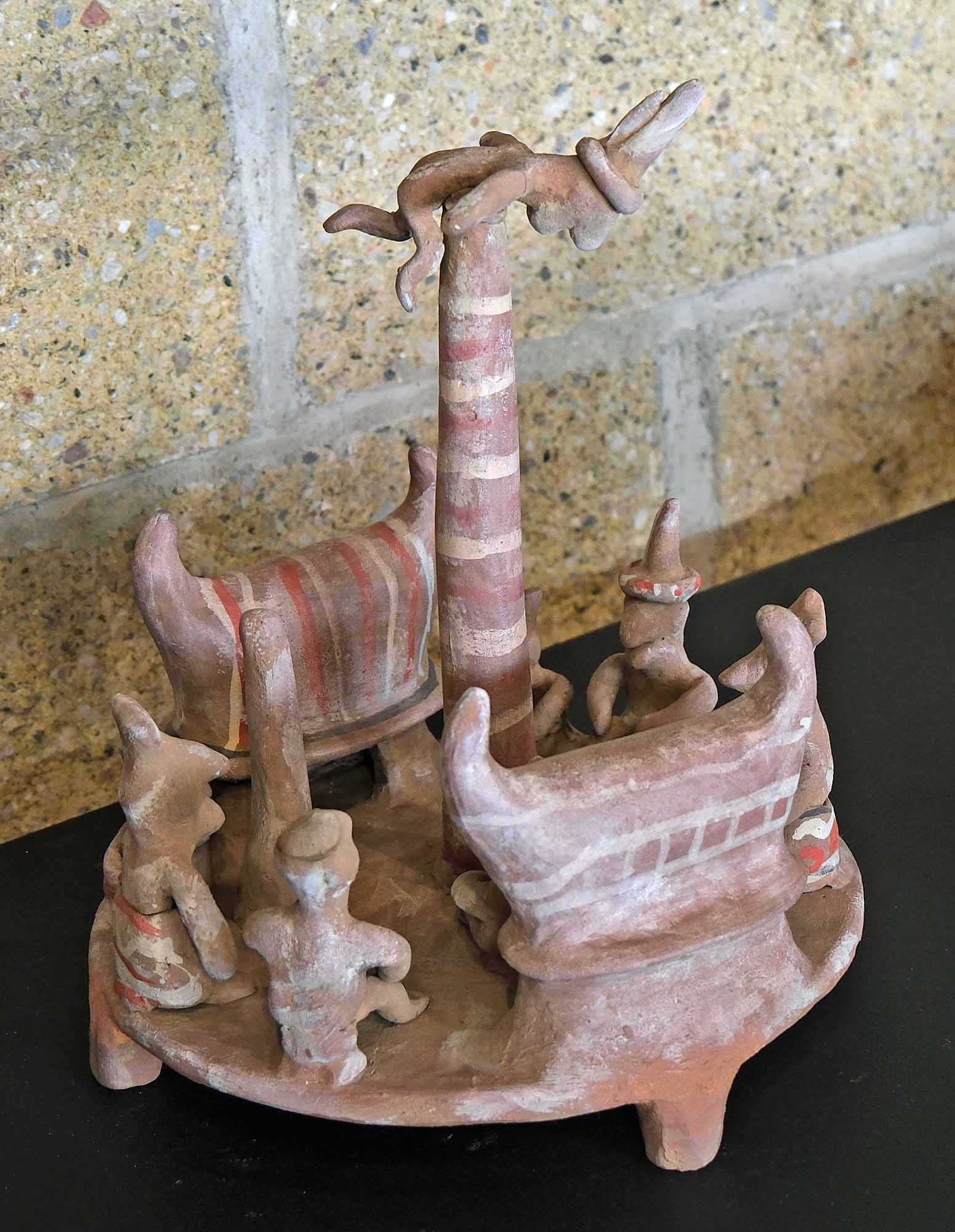
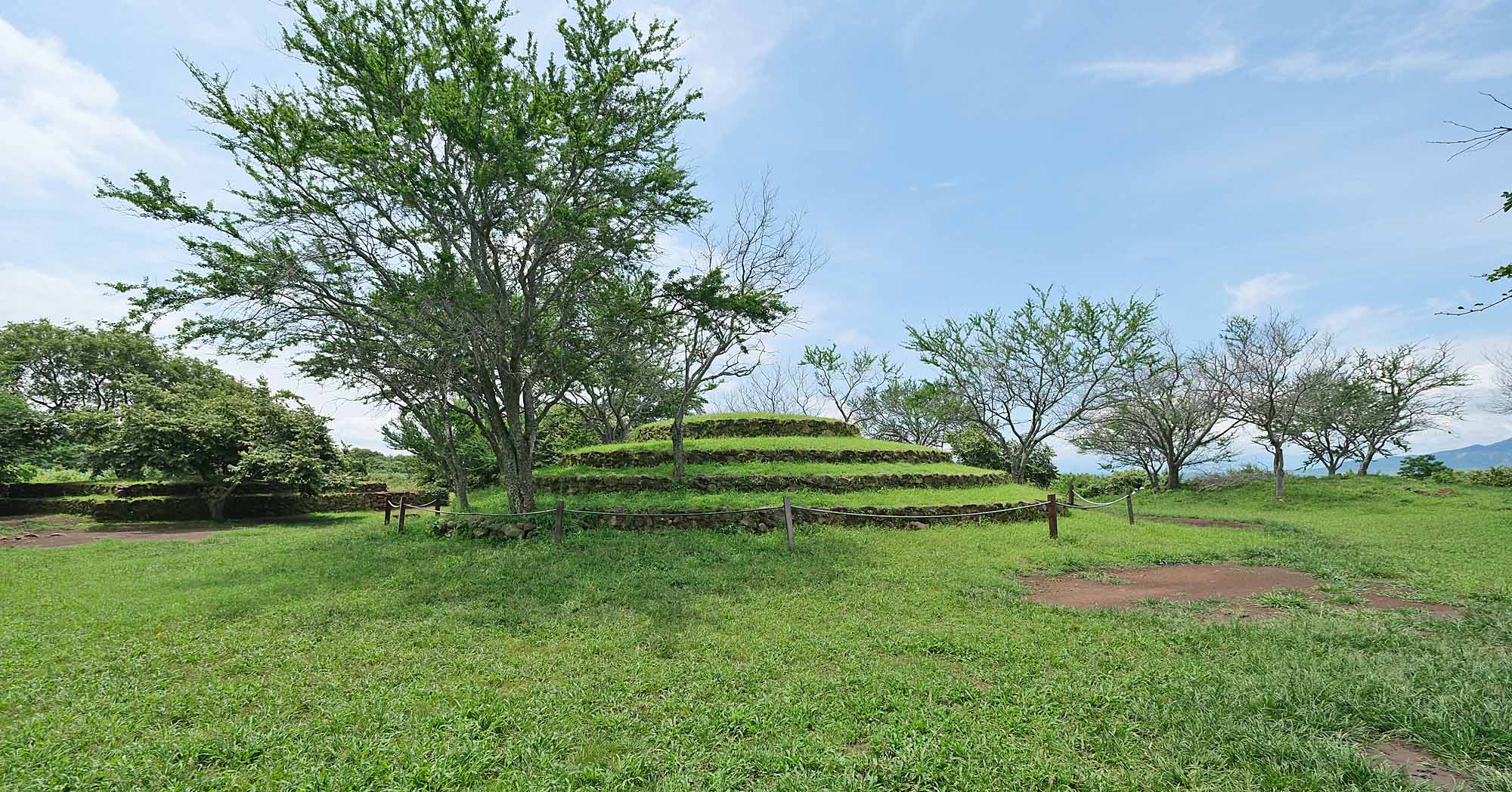
↑at Guachimontones Museum. ↑Circle-3.
Circle-1 is the largest.
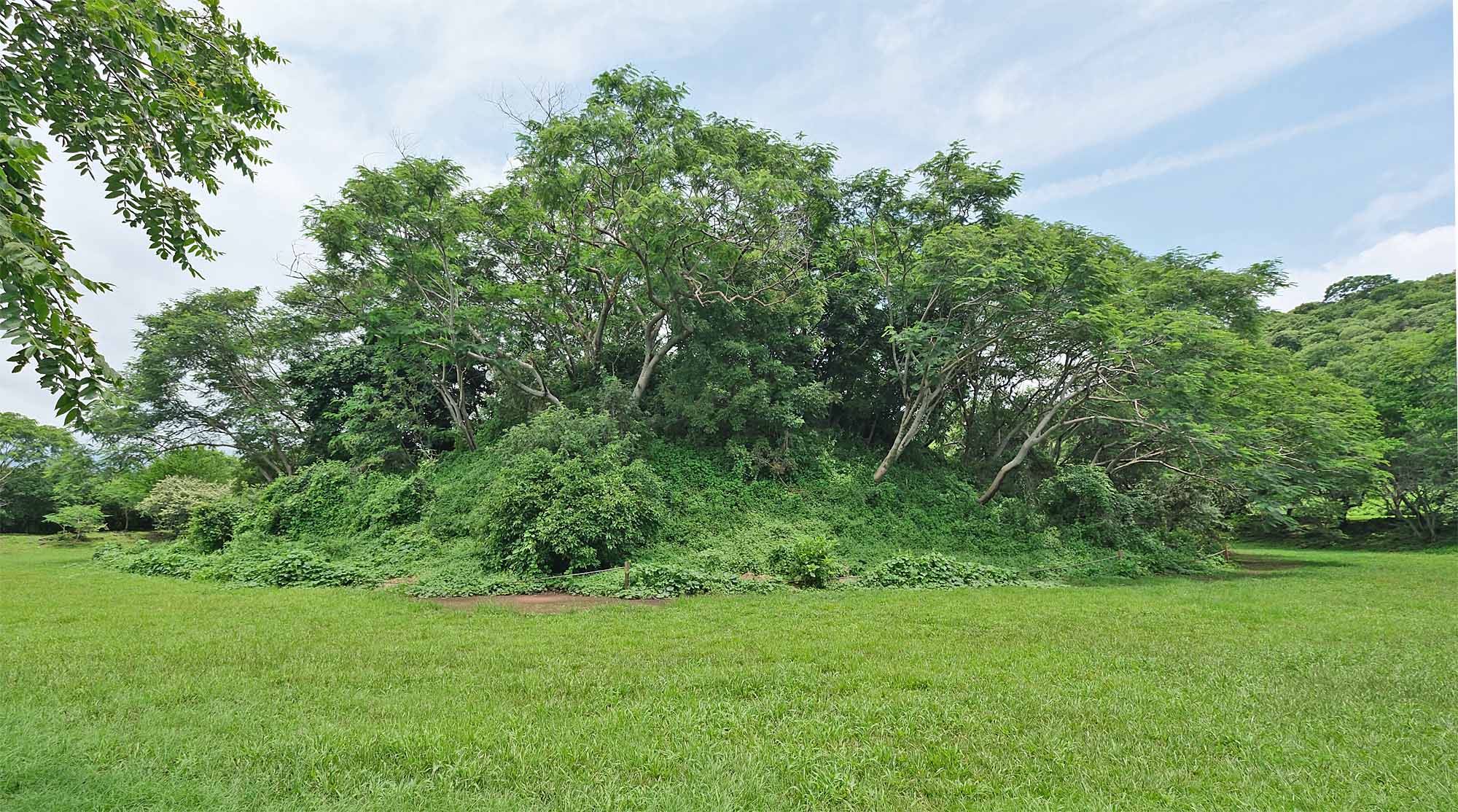
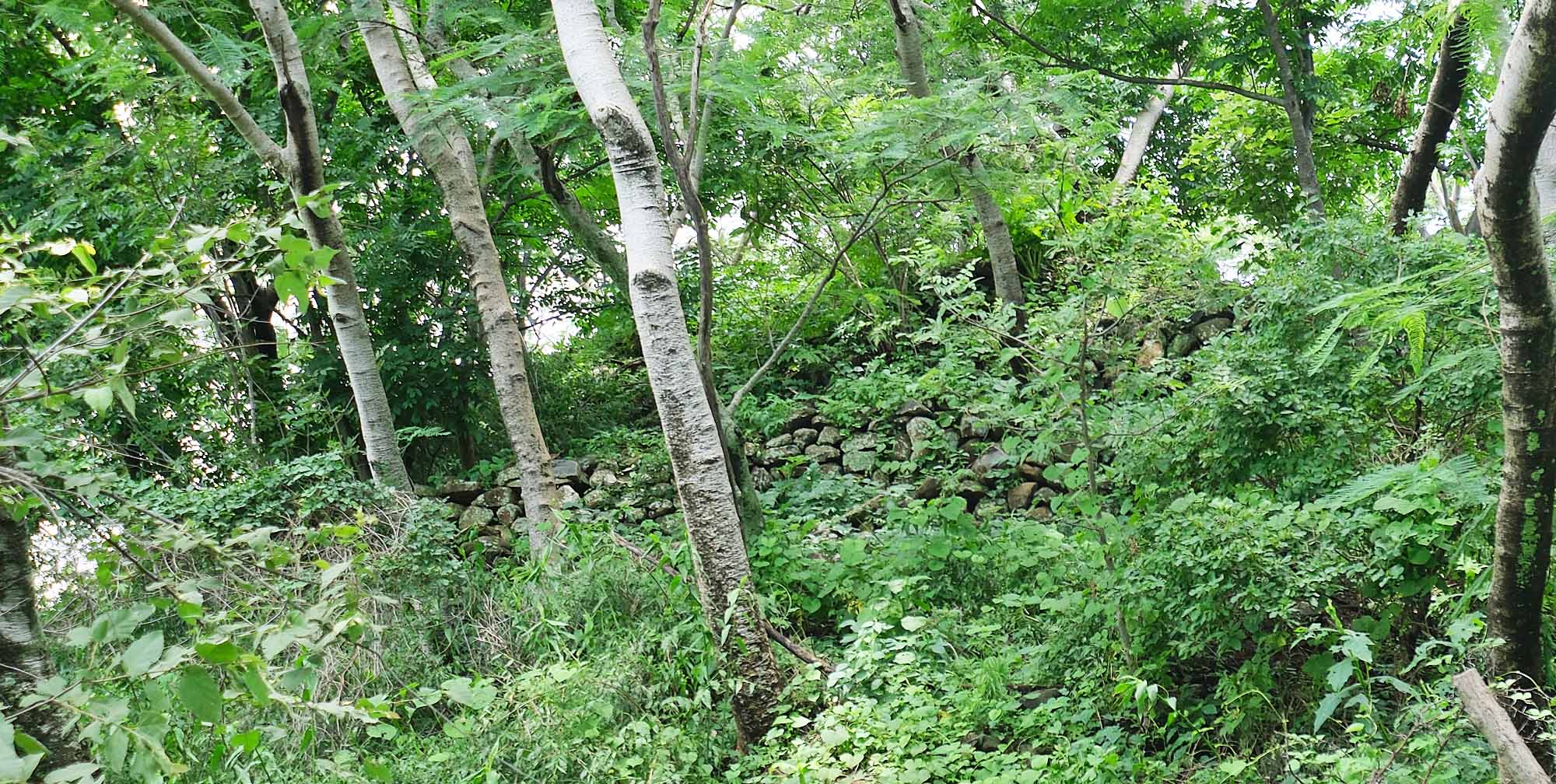
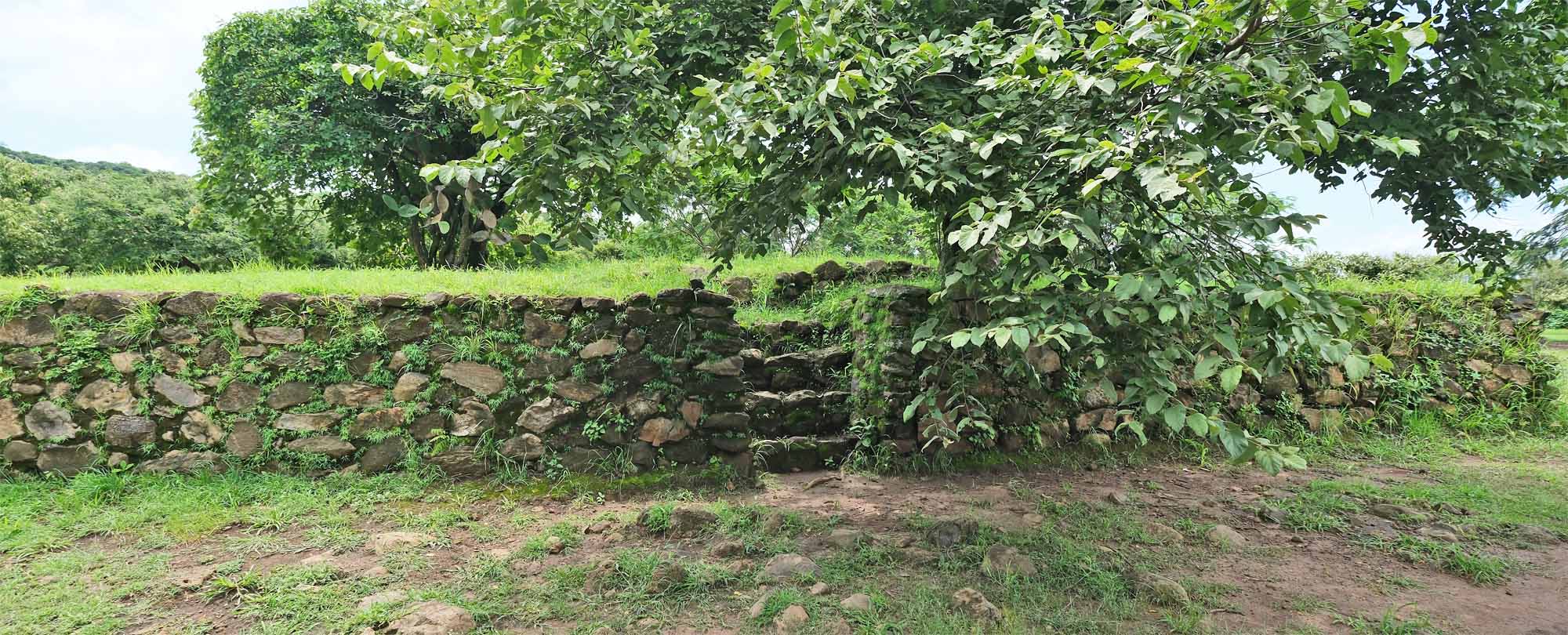
Everyone feels that this should be restored first. Inah will set a budget if more than 85% of the original remains, but this has not been met. Looking closely, the stonework has collapsed considerably, and only the tree roots seem to be barely maintaining their silhouette.
Many years ago, grave robbers were convinced there was treasure beneath the shaft tomb, so they began digging a hole 1.5 meters in diameter from the top. Strangely, however, there are no shaft tombs at the Guachimontones site. They dug 10 meters, gave up, and left without filling it in. A local guide explained that it was this hole that caused the collapse.
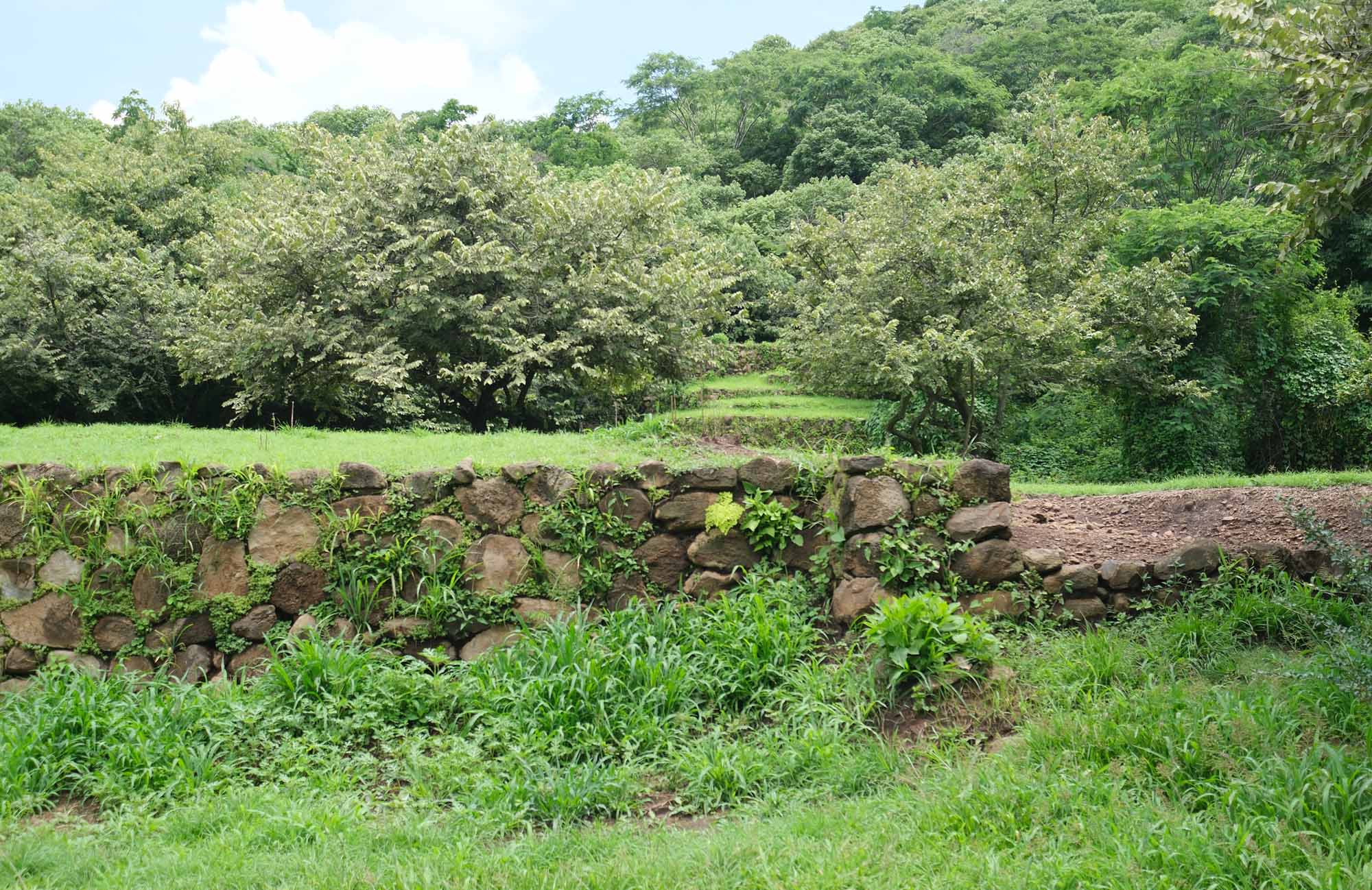
This is the north side of Circle-1. In the foreground is the circular plaza with a platform, and beyond that you can see another platform. This is likely where the priests' residences were built.
This is Ball Court-1. Looking from southeast to northwest.
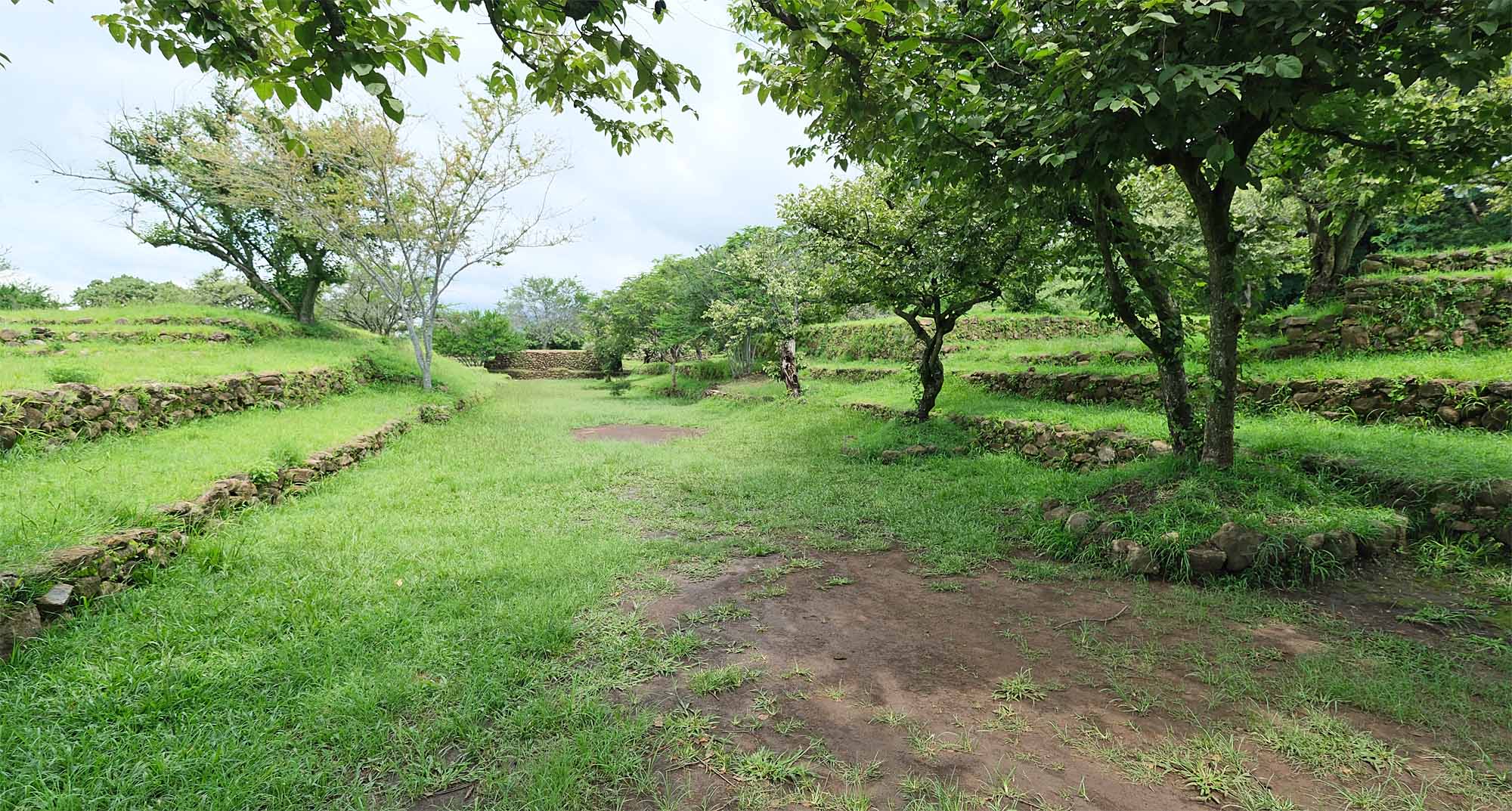
Looking back, you will see the southeast side of the ball court.
Why was the ball game held? Our local guide said something interesting. In rural areas, troubles always arise over water rights and newly cultivated land. There is some legitimacy in the claims, but also lies, and questioning them would leave a bad taste in the mouth, so the rule was to grant the rights to the village that won the ball game. Hmm, I see.
Let's take a bird's-eye view of the entire area. What is clear at a glance is that although it is a cohesive area, there is no architectural axis between the Circles. Two ball game courts are neither parallel nor perpendicular. I had imagined that this might be due to the topography, but there is no unavoidable difference in elevation. It is unknown.
There must have been a "bird festival" based on the harvest festival or religious calendar, but was it held simultaneously in all Circles, or was it held at different times, such as by a few days or seasons?
Additionally, Circles 1, 2, 3, 4, and 6, whose construction dates are known, overlap and are slightly offset from Circle 1. Furthermore, while the basic structure of the Circles is the same, their scales differ. The biggest difference is the number of bases. If this is different, the number of jouses that should have stood on them will change.d
1. The farmland seen from the observation deck was managed in different units depending on the waterways, etc., and there were multiple water-based farming communities.
2. There were economic differences between communities depending on factors such as the size of the farmland.
3. The wealthier you were, the larger the Circle you were able to build and manage.
4. The wealthier you were, the more influential farmers you had within your community, and the more platforms you were required to build for each of your villas/temples.
In Guachimontones, there is no single huge building that dominates the others. Although they vary in size, there are multiple Circles that serve as the spiritual centers of each resident, and these have allowed the entire rural community to continue to exist for 600 years. That's when I remembered: Teotihuacan also does not have a "single huge building that dominates the others."
In 300 AD, the population began to decline. Our local guide explained that this was likely due to a combination of factors: the water level of Lake La Vega dropping, the river water flowing into it, and therefore less rain, which reduced the area of land available for farming; and the obsidian mining industry in the southern mountains beginning to lose its widespread value.
Shortly after the decline of the Teuchitlán culture in 550 AD, an interesting architectural structure appeared 80 km west-southwest of the Lake District of Michoacán.
Tingambato
It could be called a miniature Teotihuacan.

↑on Google Earth。
It was built between 600 AD and 900 AD. Only a portion of the Talúd-Tablero remains, but its atmosphere is similar to the Pyramid of the Moon and the central temple/residence. It is rumored that the elite of Teotihuacan, who were burned down in 550 AD, relocated to the area and relied on the residents of the Michoacán neighborhood apartment complex they were familiar with, and built it out of nostalgia.
Let's finish our journey in western Mexico and return to Teotihuacan. From the Plaza of the Moon, we descend the Street of the Dead. Let's start by looking at the east side.