Zone-3, 4, 5a
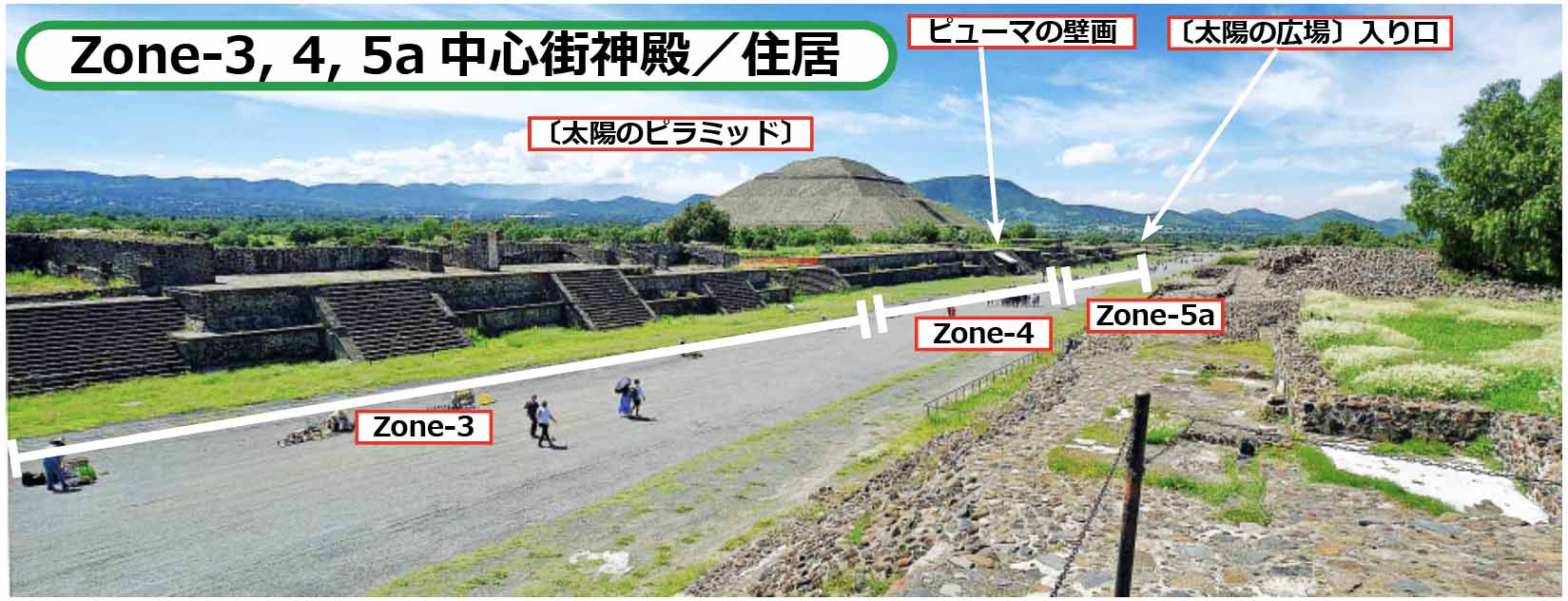
The area was divided into three sections for the purpose of excavation. After the excavation, no nicknames were given to the areas, likely because, despite the impressive architecture, there were few notable murals or artifacts. They were simply called "Zones."
Zone-3
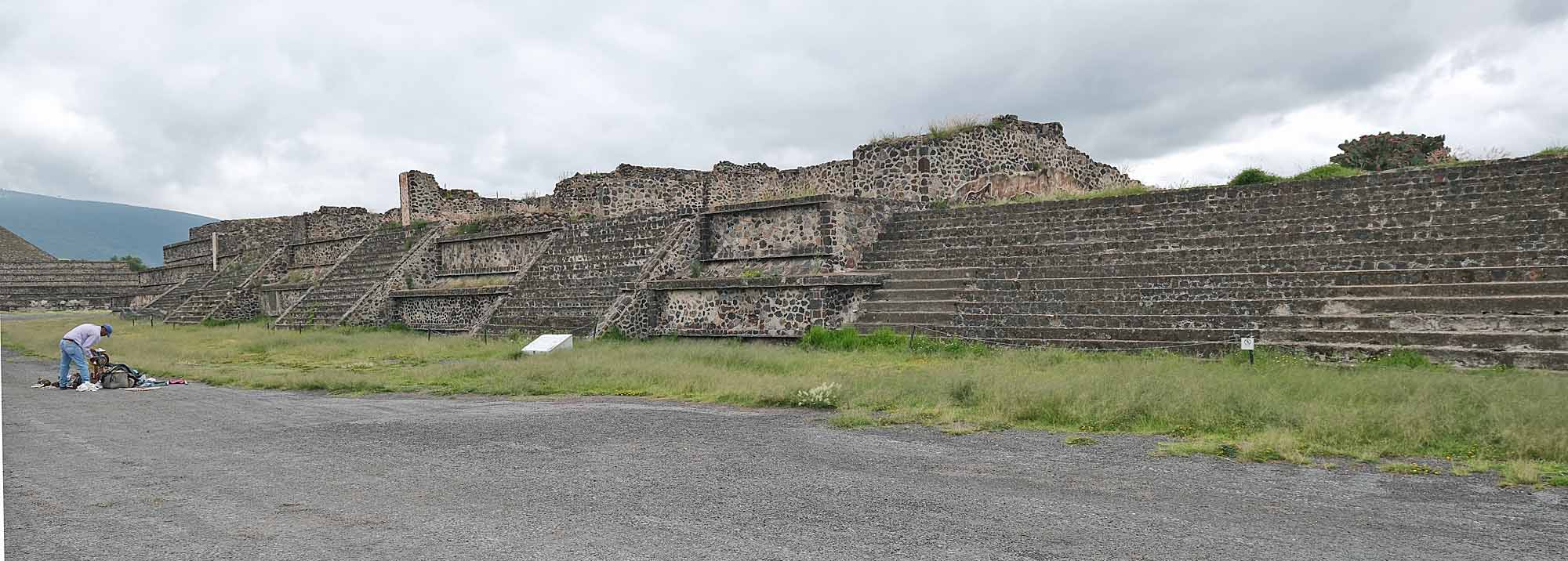
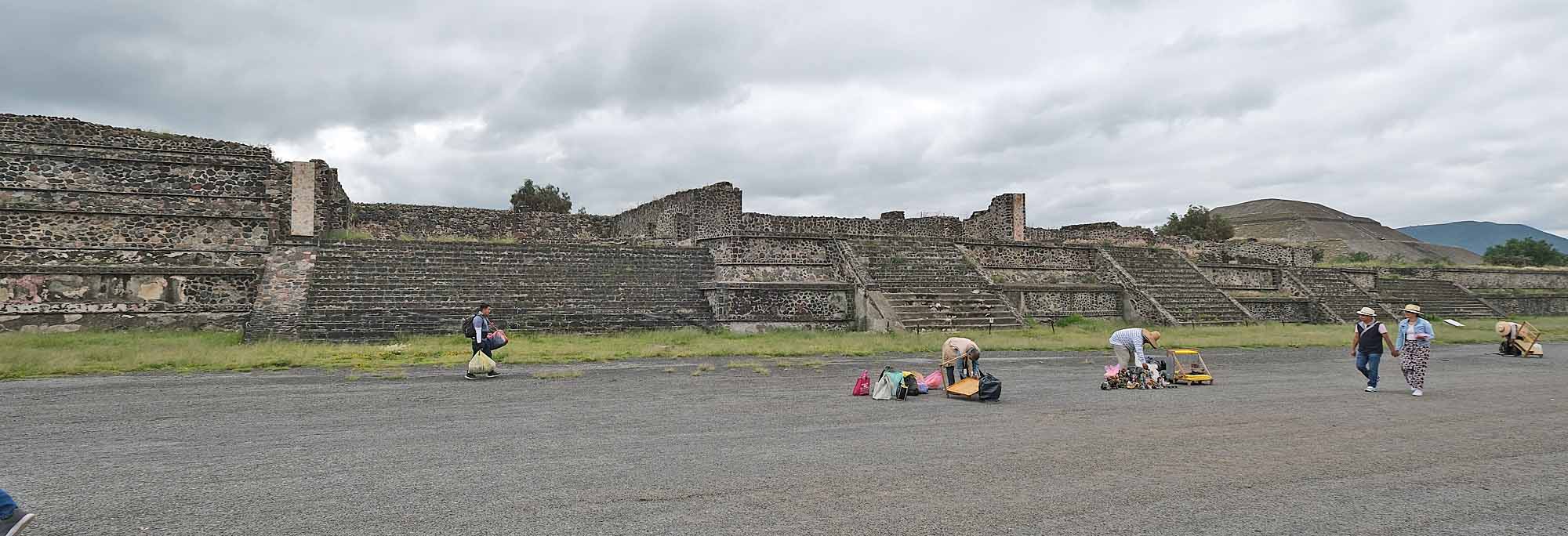
It has a wide colonnade, a thick talud tablero base, and a wide staircase. What is the back side (east side) like?
Looking at the satellite photos and dioramas, it seems that there were only a row of temples, and no buildings for priests, assistants, or residents. Perhaps detailed excavations have simply been postponed.
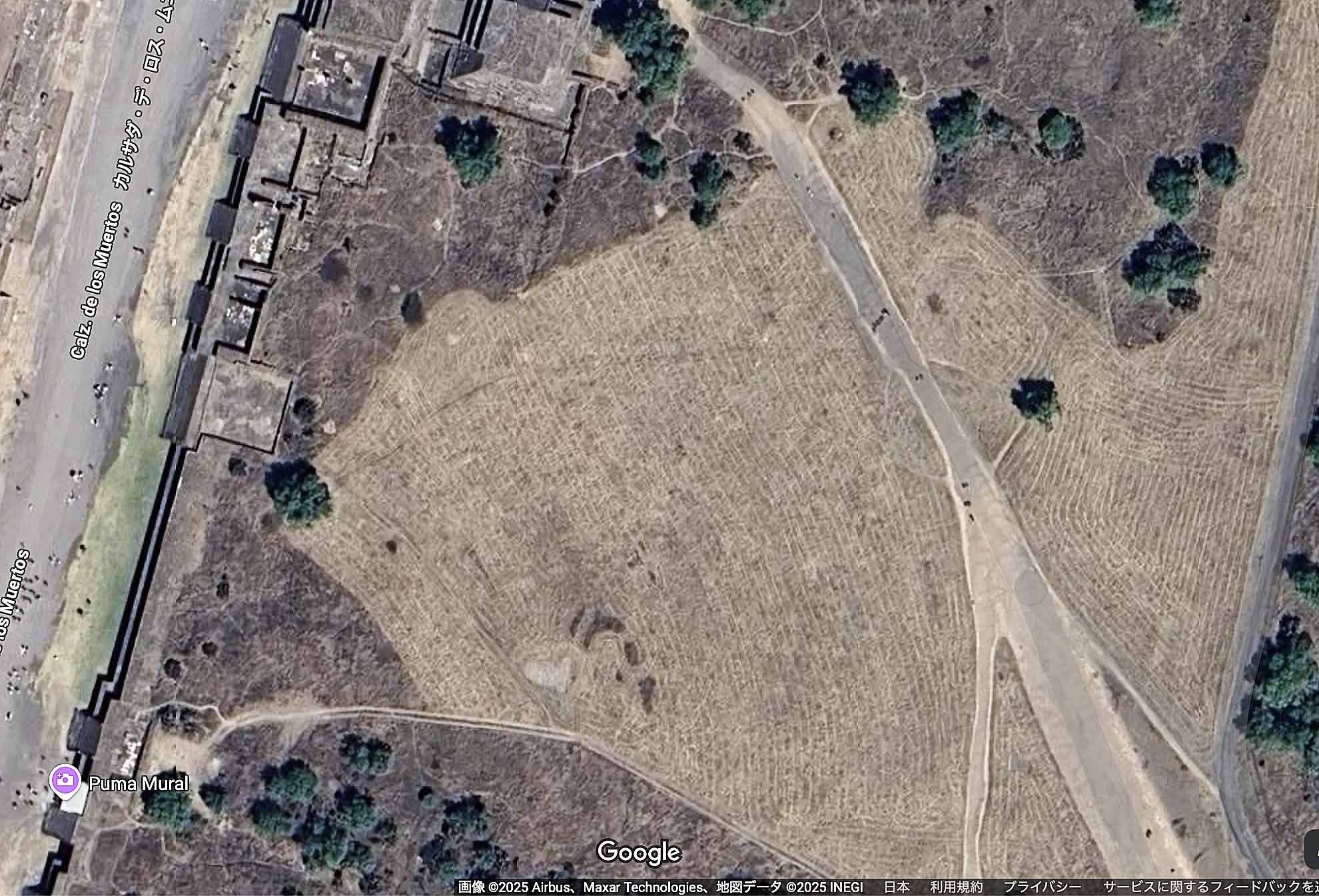
↑on Google Map。
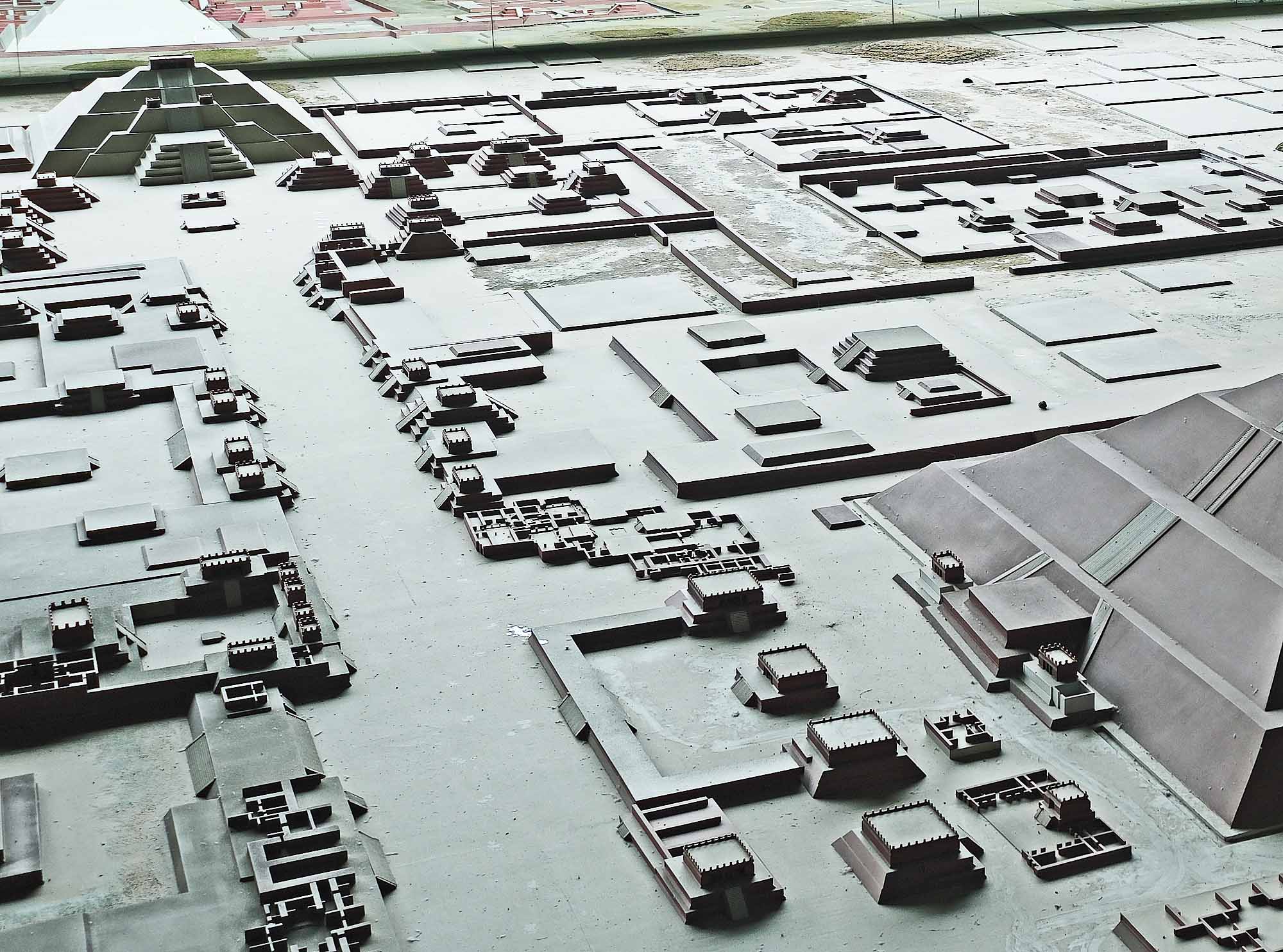
↑at Cultural Museum.
Zone-4...Puma mural
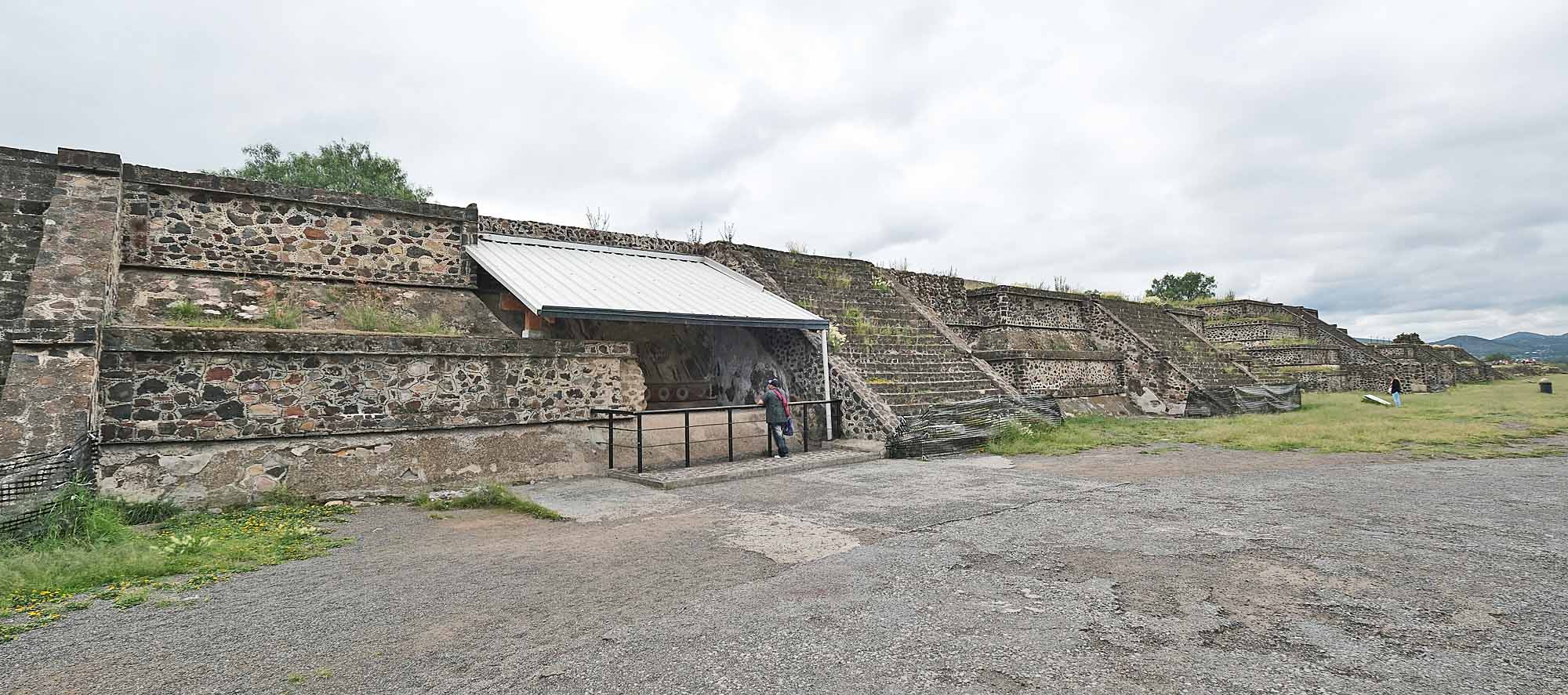
Under the modern eaves is a mural of a puma.

Tourists can view the statue from the Street of the Dead as if peeking into a shop window, but it is likely that in those days it was only possible to see it inside the building.
In Mesoamerica, it was customary to build newer, larger temples on top of one another. The positioning of the puma mural in relation to the other walls suggests it was buried during the final stage of the temple's renewal. This suggests that if the walls on either side were stripped away, multiple copies of the same mural would appear.
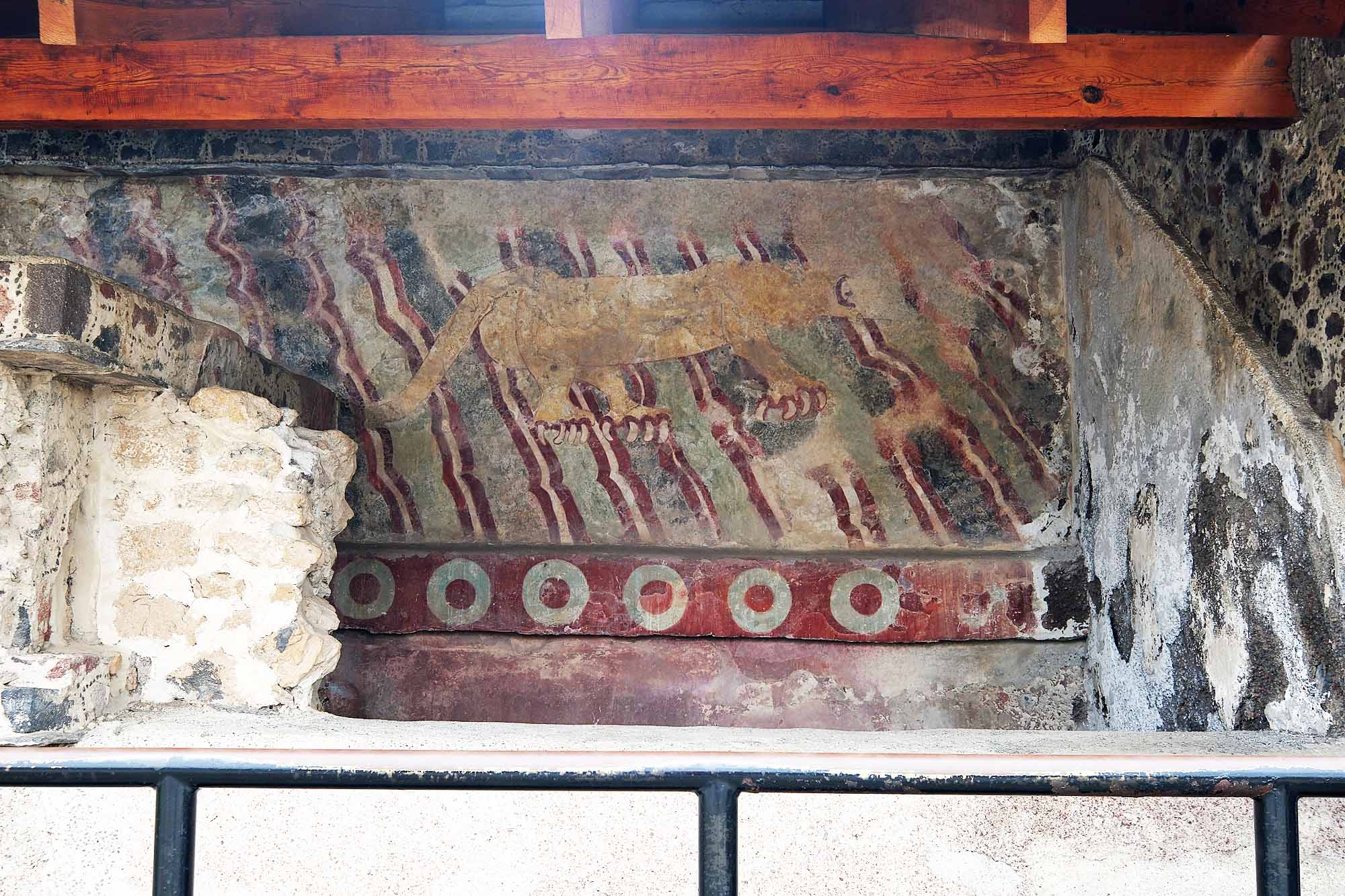
Some guidebooks refer to this as a "jaguar mural." The body shape is similar, but without the spots on ist body it would be a puma. Incidentally, neither of these animals live in Teotihuacan.
The diagonal vertical stripes in the background represent flowing water. The horizontal red band at the bottom is lined with thick circles, likely a design of the god Tlaloc.
Zone-5a
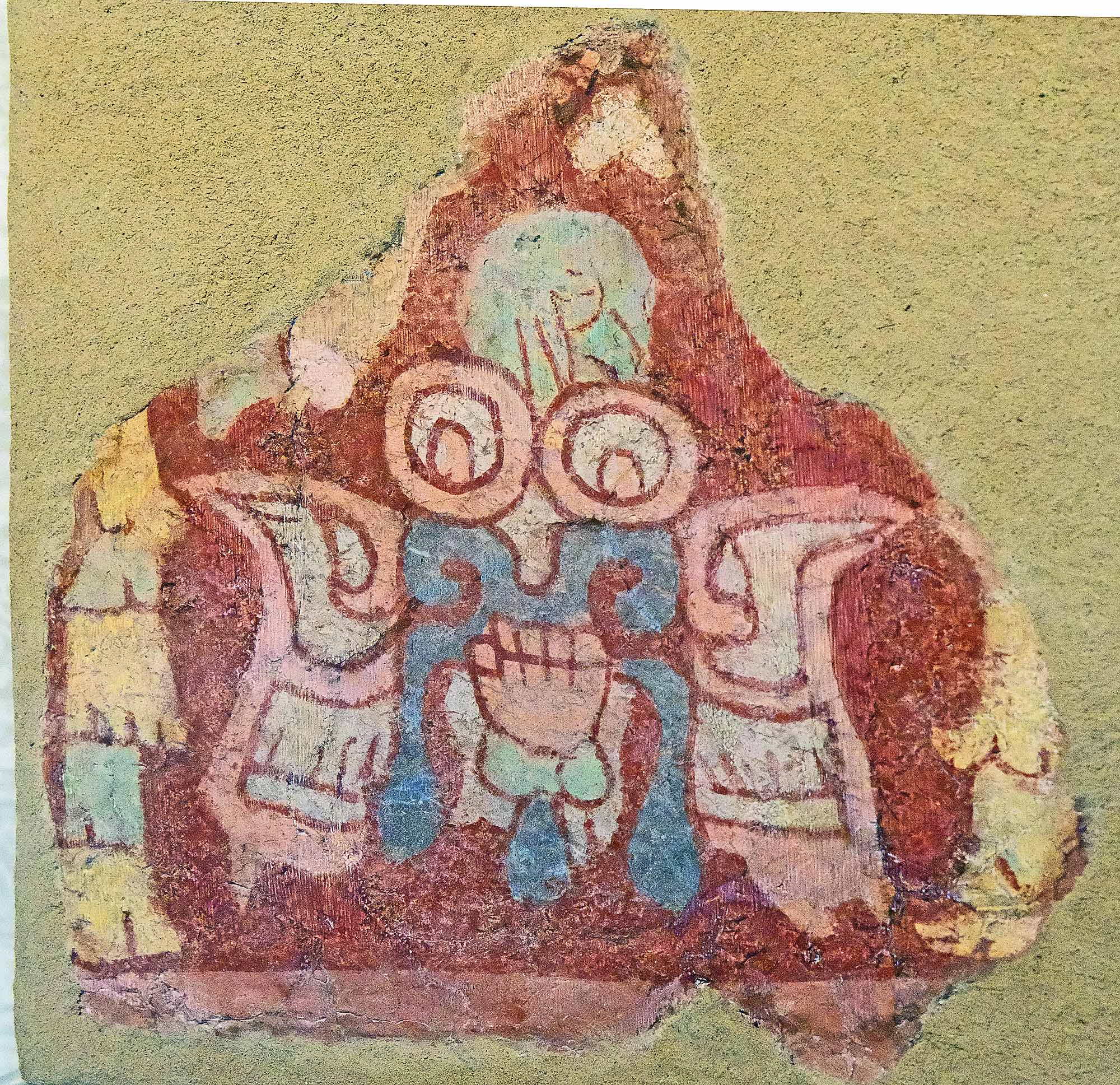
↑at the Mural Museum (Zone-5a, Room 12, wall).
This butterfly has the eyes of a Tlaloc. Five water droplets are hanging from its nose. An "upturned hand" is coming out of its mouth.
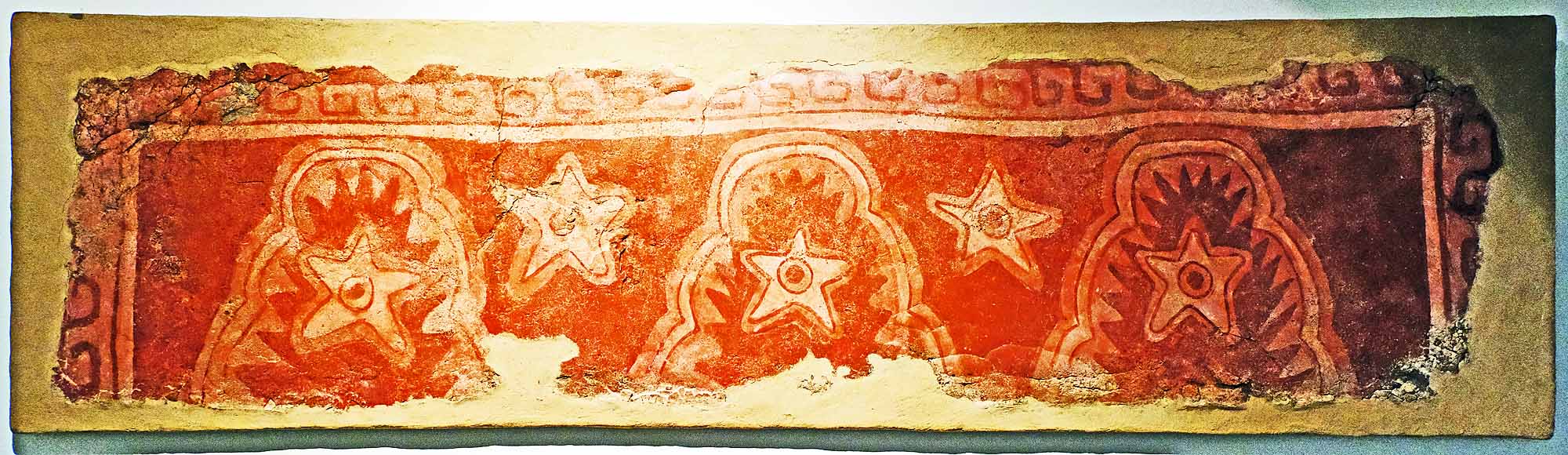
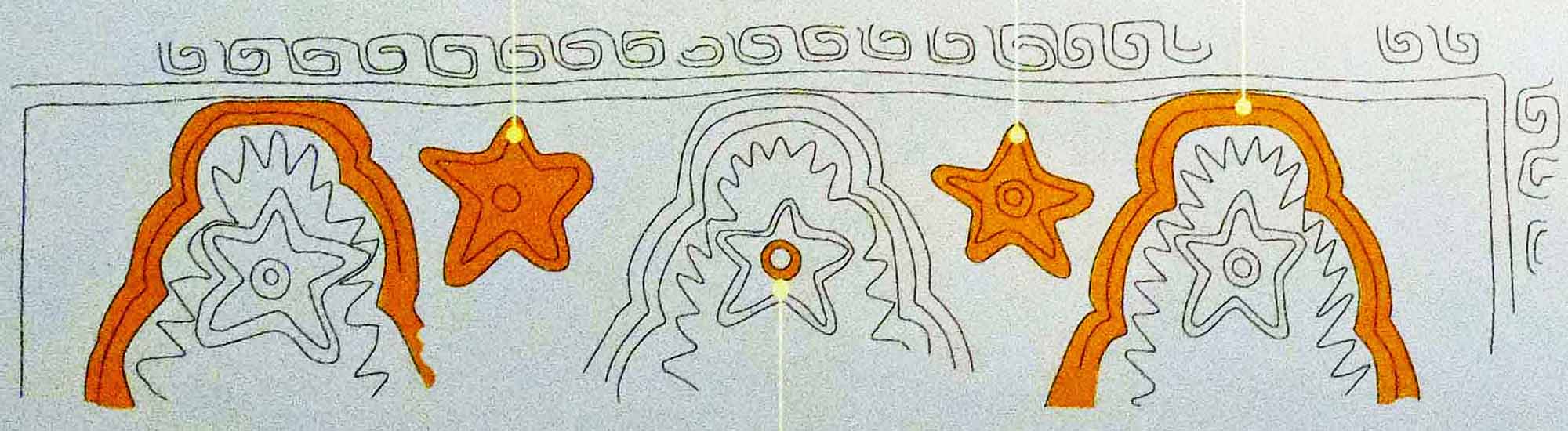
↑at the Mural Museum (Zone-5a, Room 13).
The three are mountains lined up. The interior appears to be recessed, possibly a cave, and Venus is placed there. The frame is a stream of water.
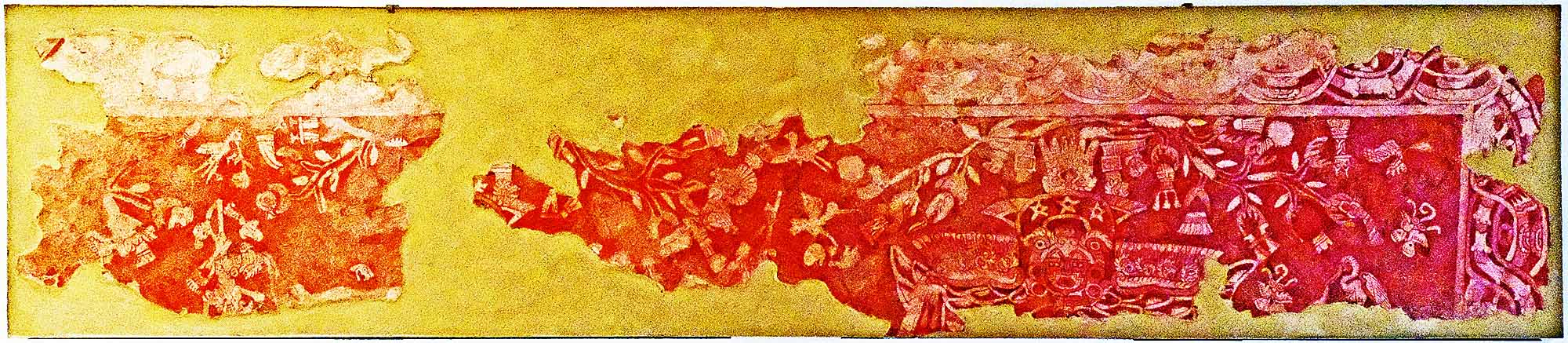
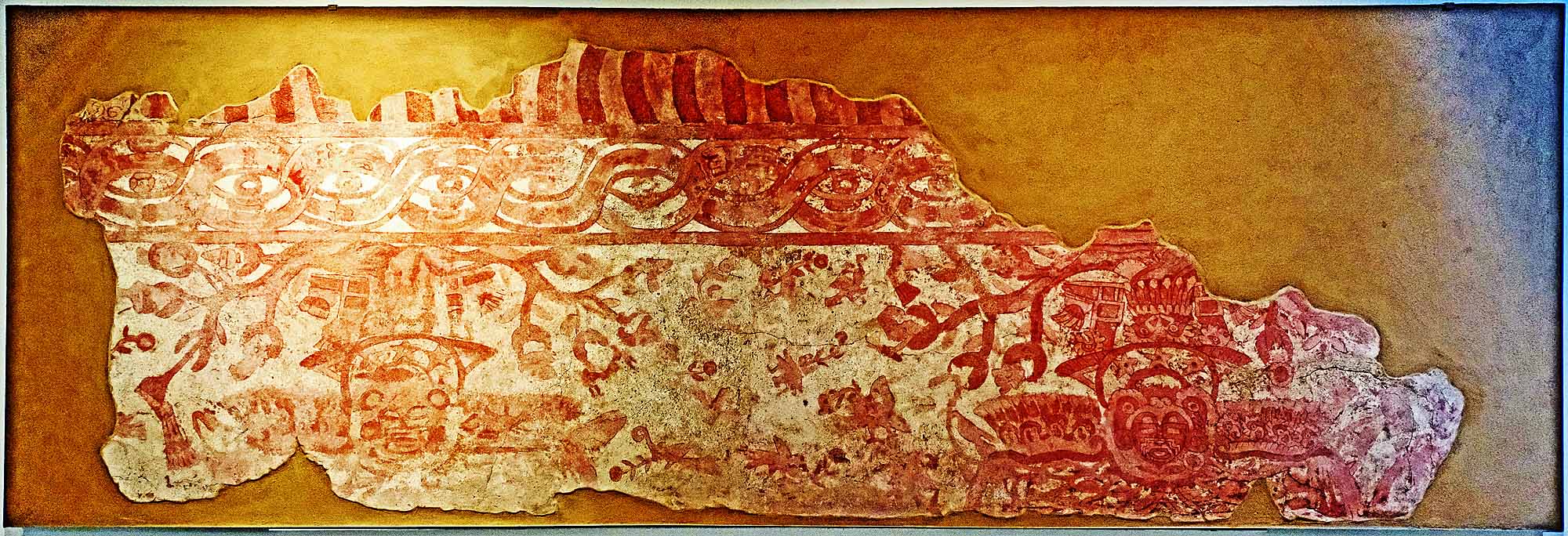
↑at the Mural Museum (Zone-5a, Room 13).
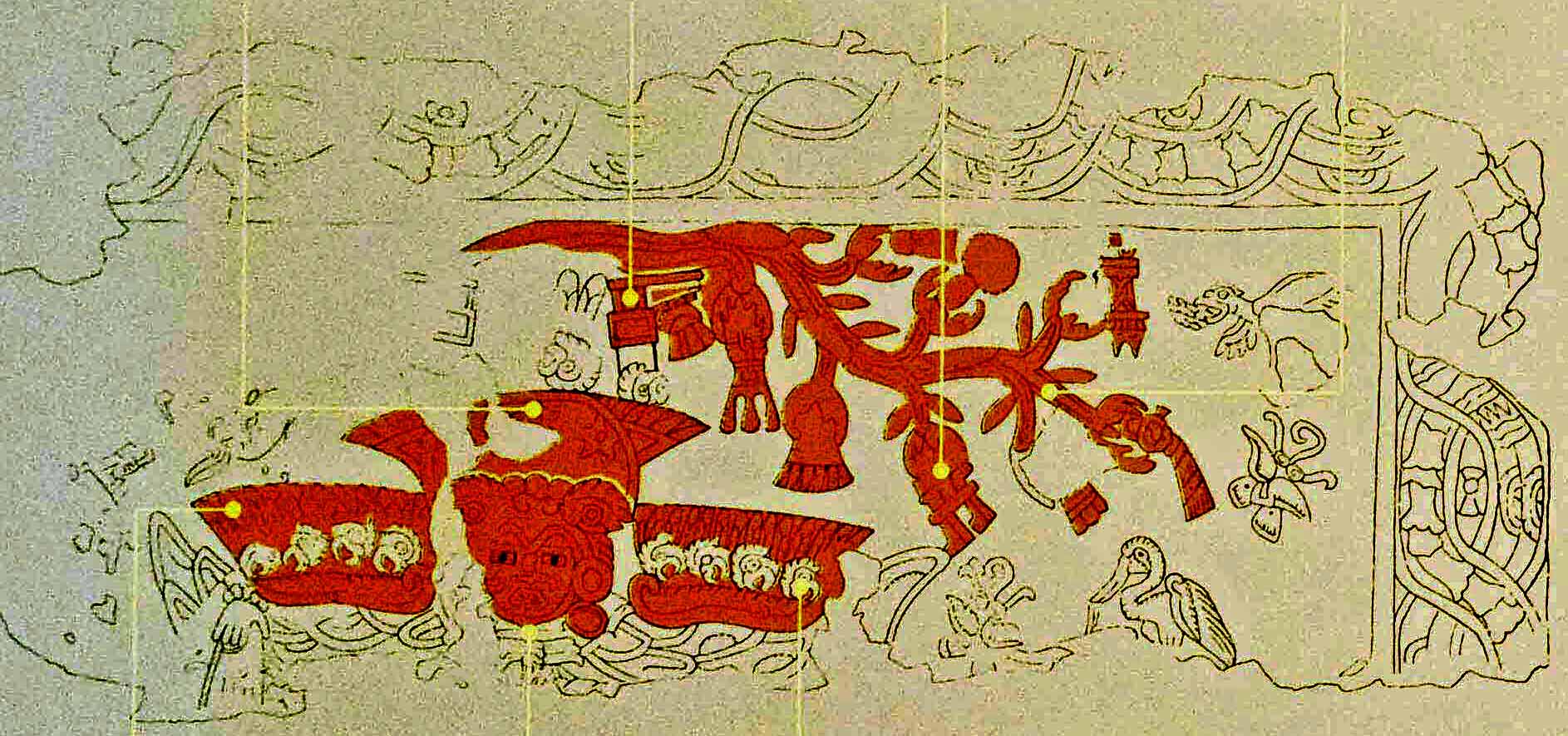
It is likely a bird god descending with its tail raised and wings spread. Eight chicken-like heads are depicted on the wings, along with other birds holding butterflies, herons, and other birds in their beaks. Above is a tree branch with drops of water dripping from a bulge that looks like a bud.
↑at the Mural Museum (Zone-5a, Room 18).
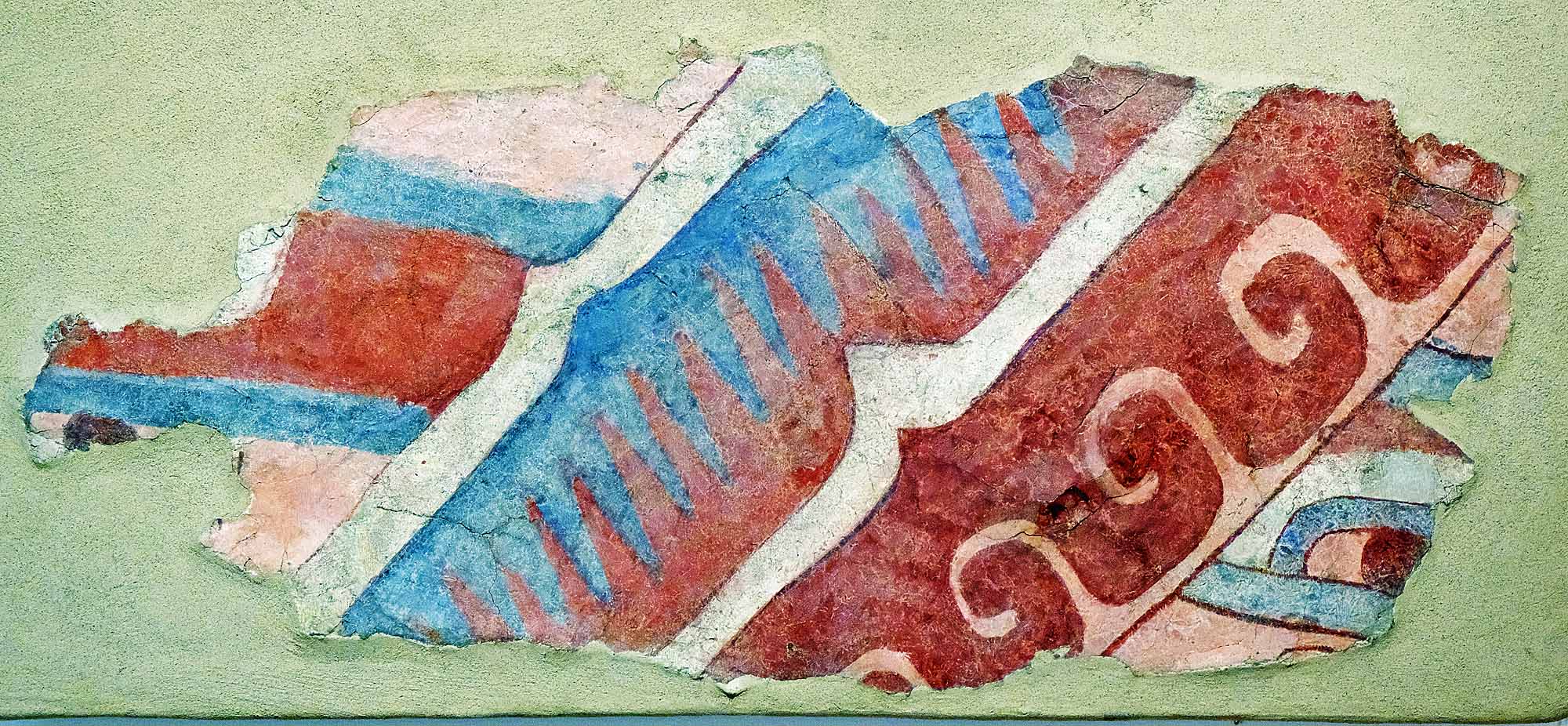
There are at least three currents of water: small, sharp waves and large, slow waves. There are also currents crossing horizontally, and an "eye" is drawn on the right edge.
↑at the Mural Museum (Zone-5a, Room 18).
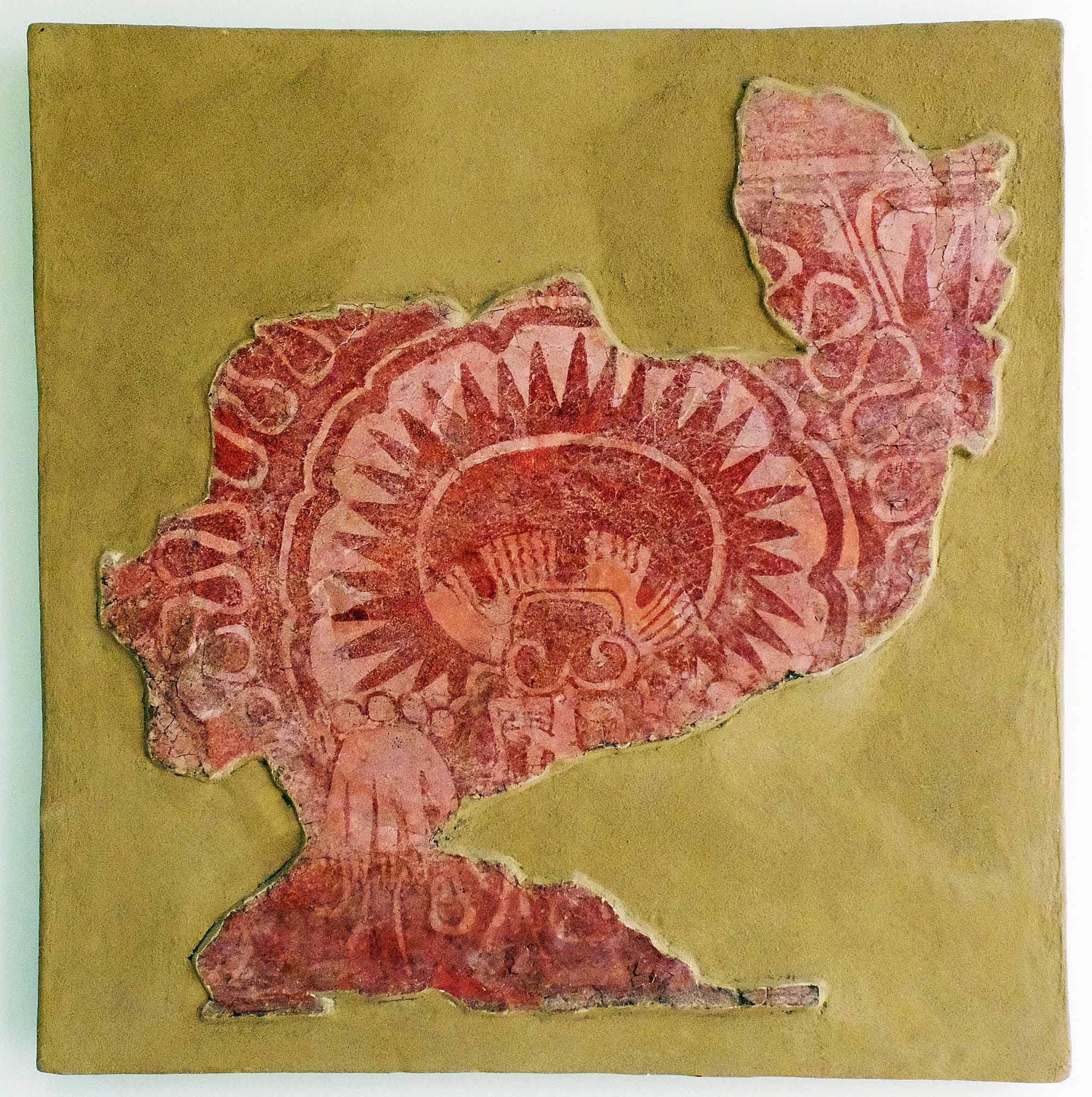
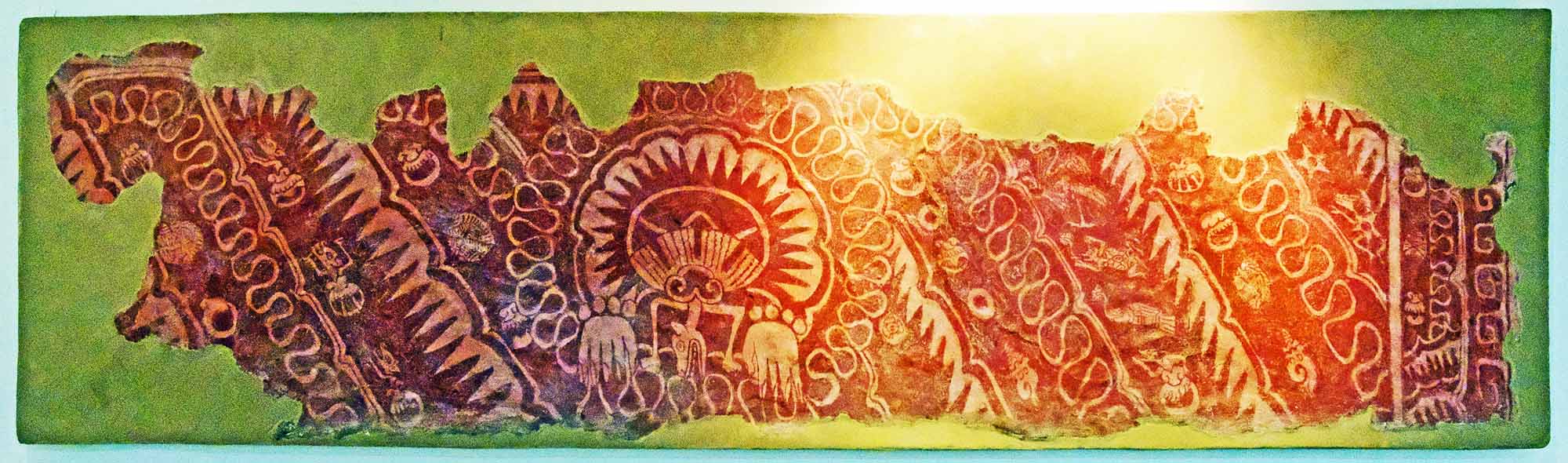
The central design is likely a bivalve shell. It is surrounded by a thin, meandering stream of water. The "back of the hand facing downwards" can also be seen. Below is another mural in the same room, with the same design as the photo above.
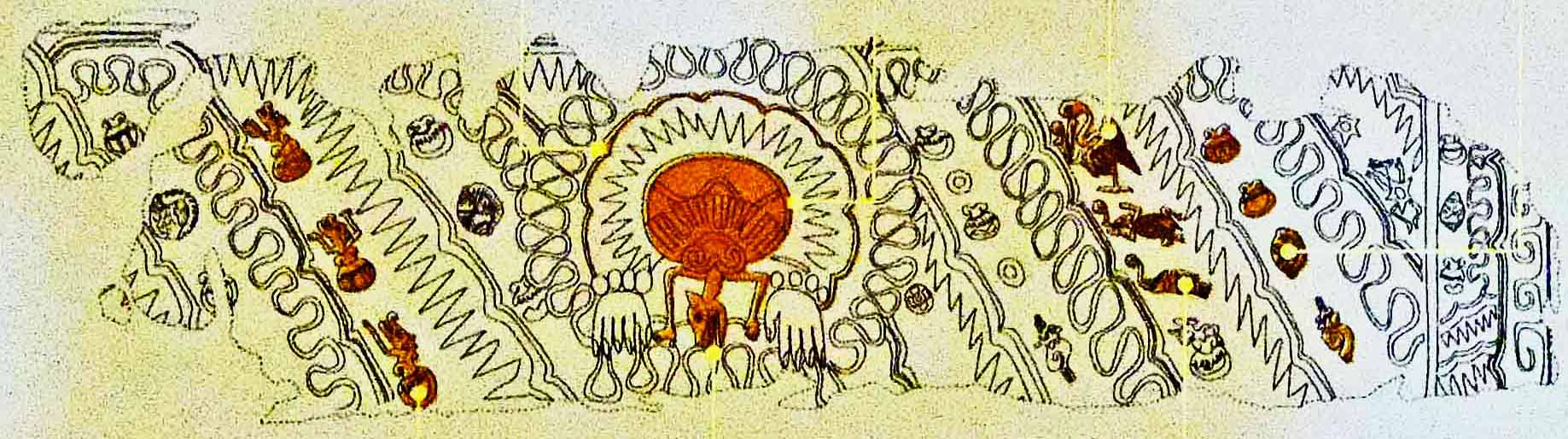
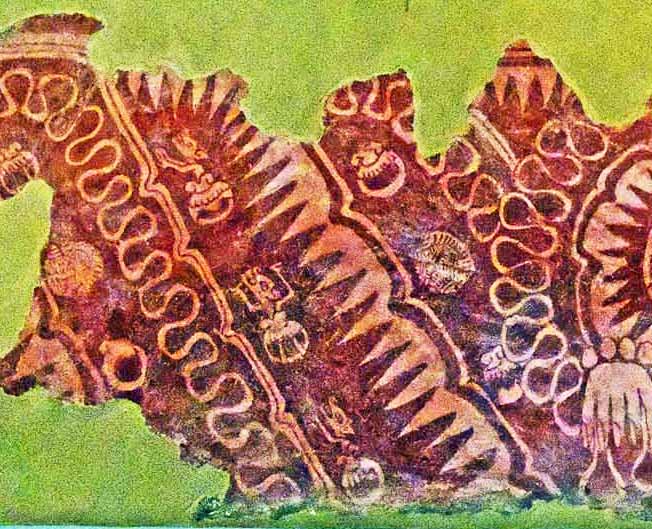
↑a tMural Museum (Zone-5a, Room 18).
This is a close-up of the water flow on the left. A mysterious creature is swimming in the water.
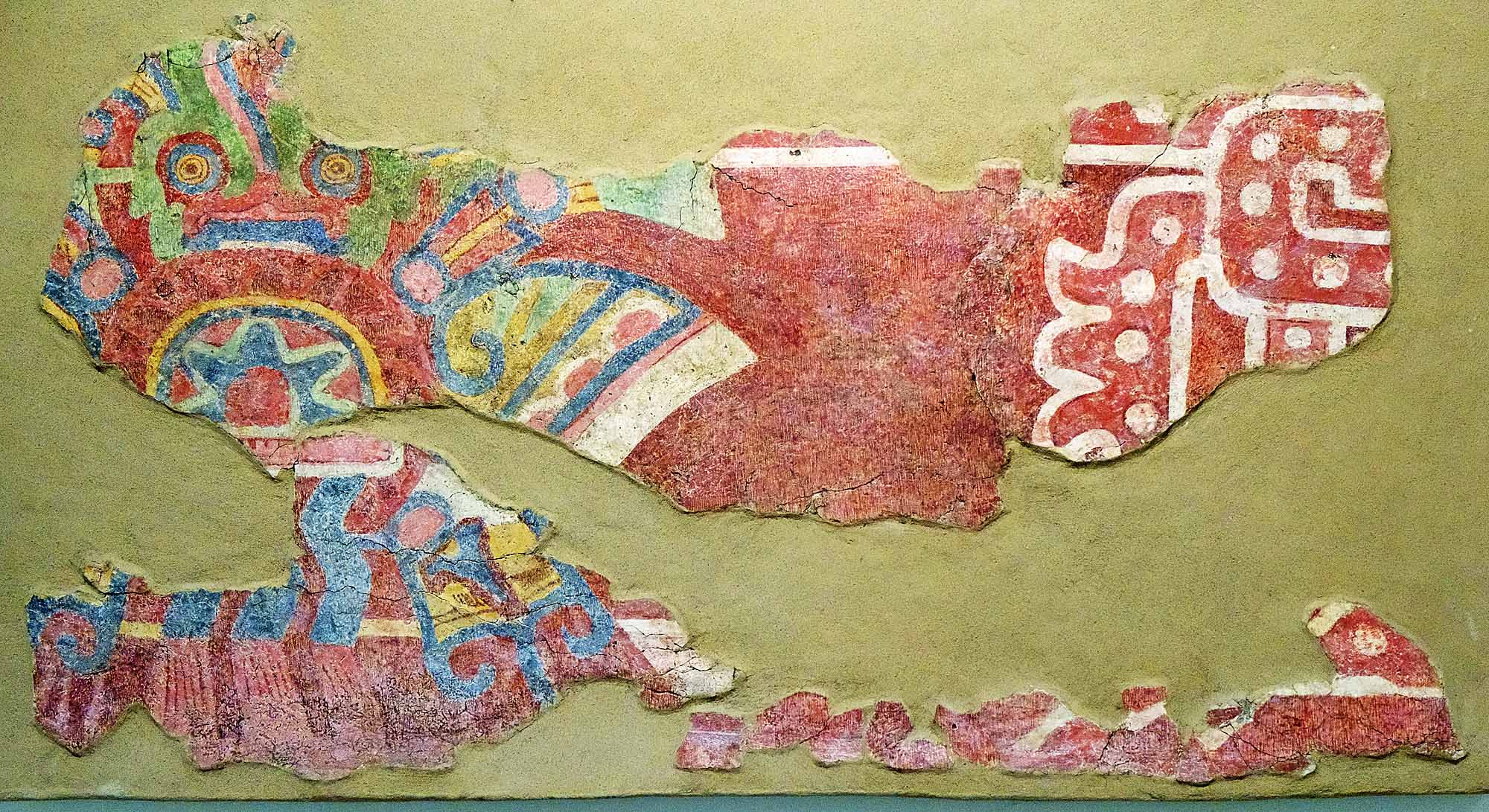
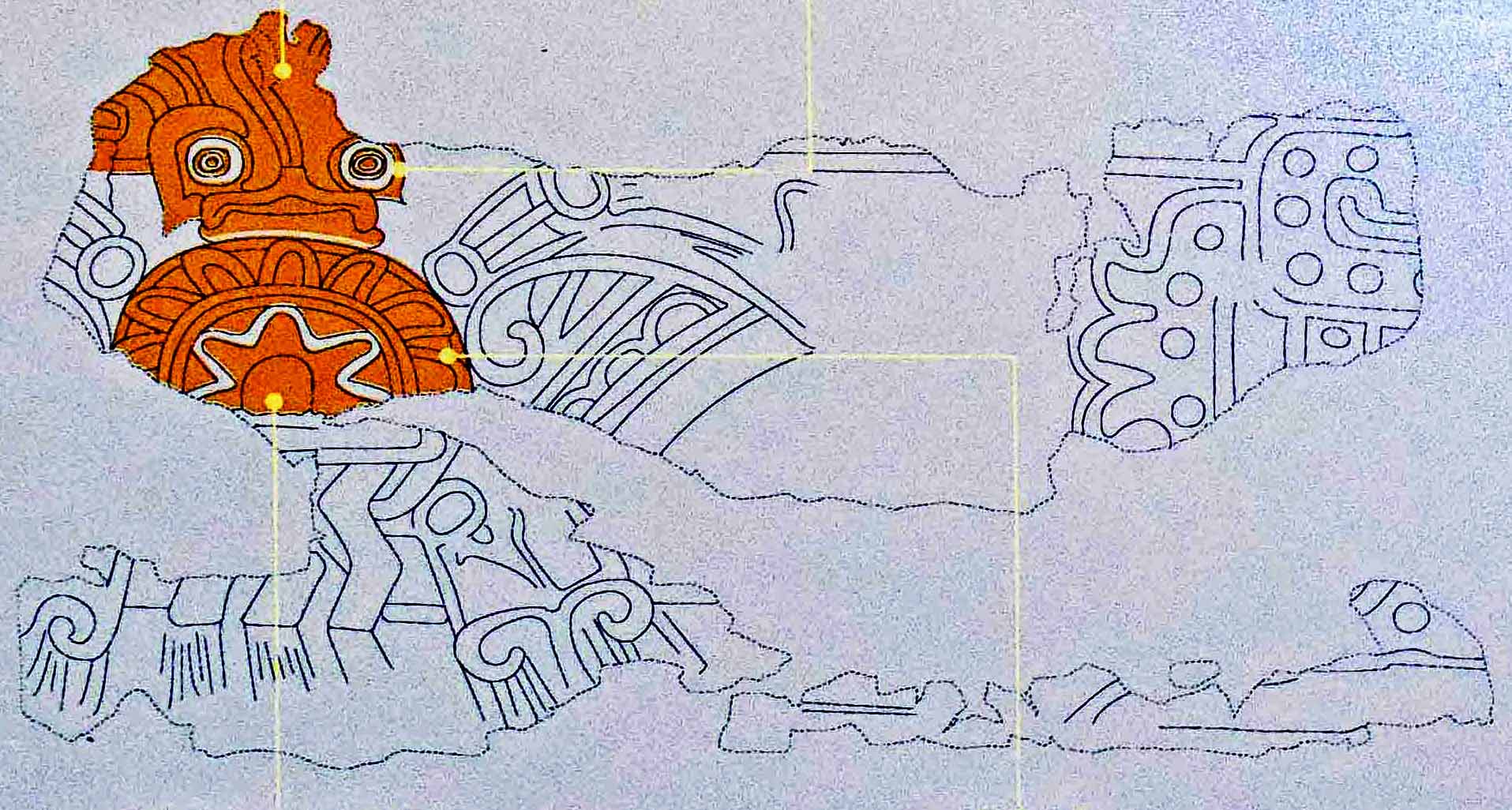
↑at Mural Museum (Zone-5a, Courtyard 17).
The bird appears to be facing forward and holding a round shield in front of its body.
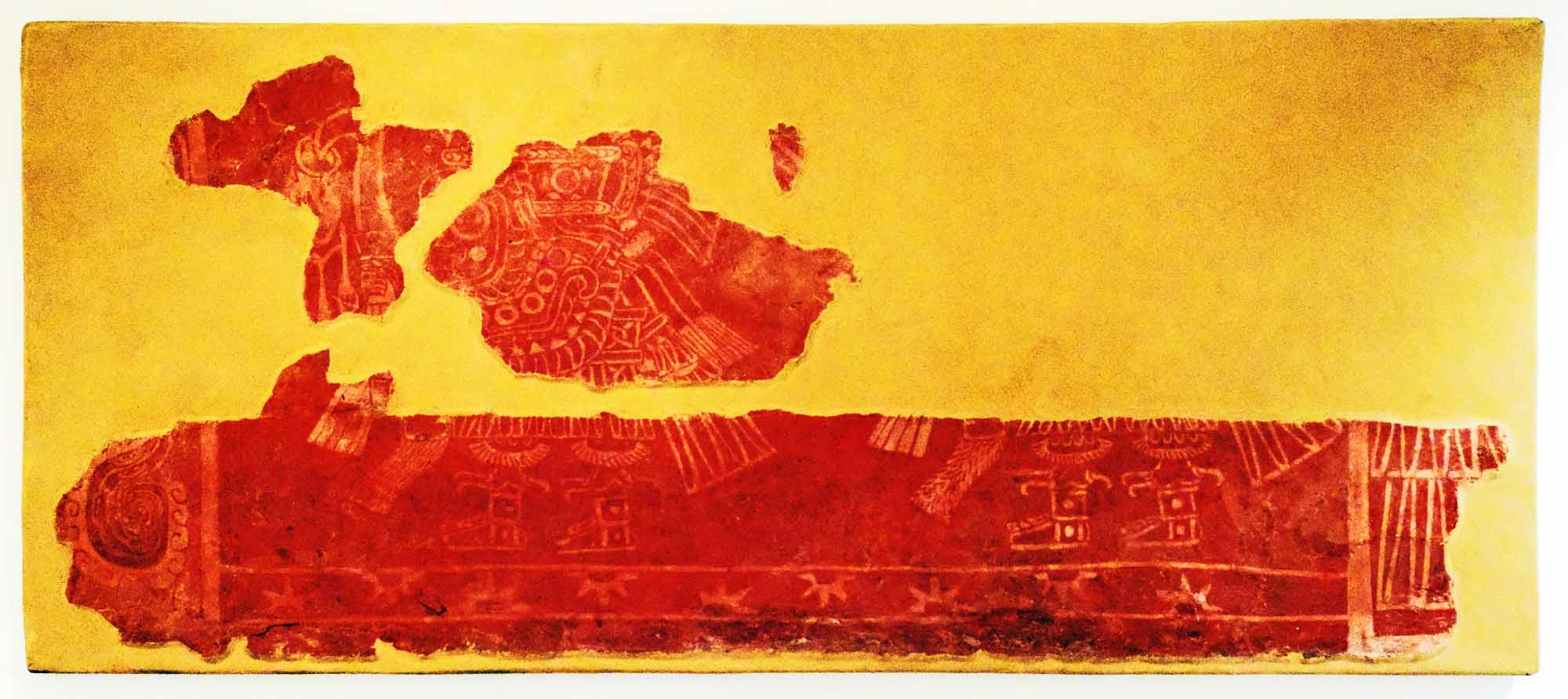
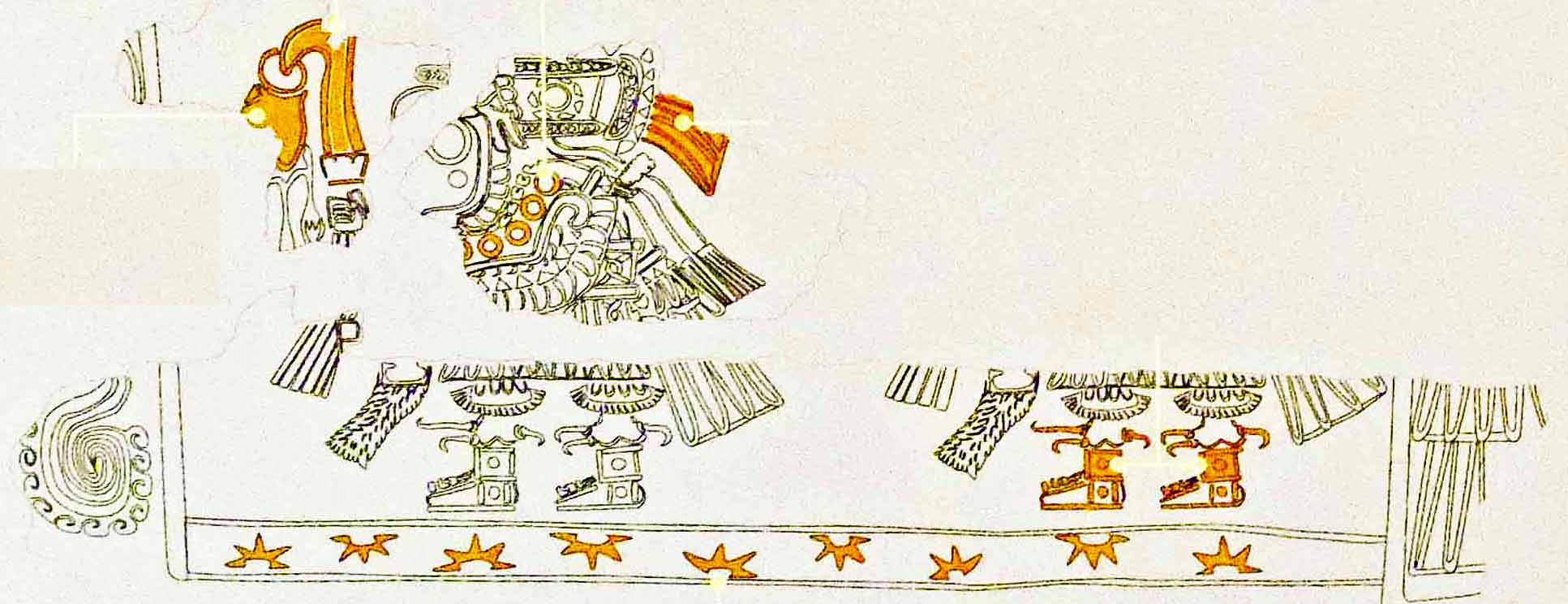
↑at Mural Museum (Zone-5a, Courtyard 19).
The profile of the figure's face is not well preserved, but the three claws on the top of the sandals suggest that it is a priest who has transformed into a bird. The obsidian knife he is holding has what appears to be a heart at the tip, dripping with blood.