Part 3 --- Mesoamerica before Teotihuacan
Let me briefly explain the time before Teotihuacan became something worthy of mention.
Sometime between 15,000 and 20,000 years ago, Mongoloid humans living in Siberia migrated northeast, following large migrating mammals on foot, and unwittingly crossed the frozen Bering Strait and entered Alaska.
The North American continent was a treasure trove of animals because there were no humans at the top of the food chain. However, humans who do not attempt to reproduce as livestock soon face a situation where nearby prey is exhausted. The rest of the group stays behind to hunt small animals such as deer and rabbits and gather plants, while others head south to where there are still unhunted animals.
By repeating this process, they eventually reached the southern tip of the South American continent, but many did not go further south and stopped in various places, living by moving between caves seasonally while chasing large mammals.
In the central highlands of Mexico, there are remains of a large amount of mammoth bones accumulated around 12,000 BC. It was also found north of Mexico City.
Here, too, they hunted down all the mammoths, caught up with smaller and more agile animals, increased their focus on collecting wild plants, and began settled agriculture in various locations, which was advantageous in increasing yields.
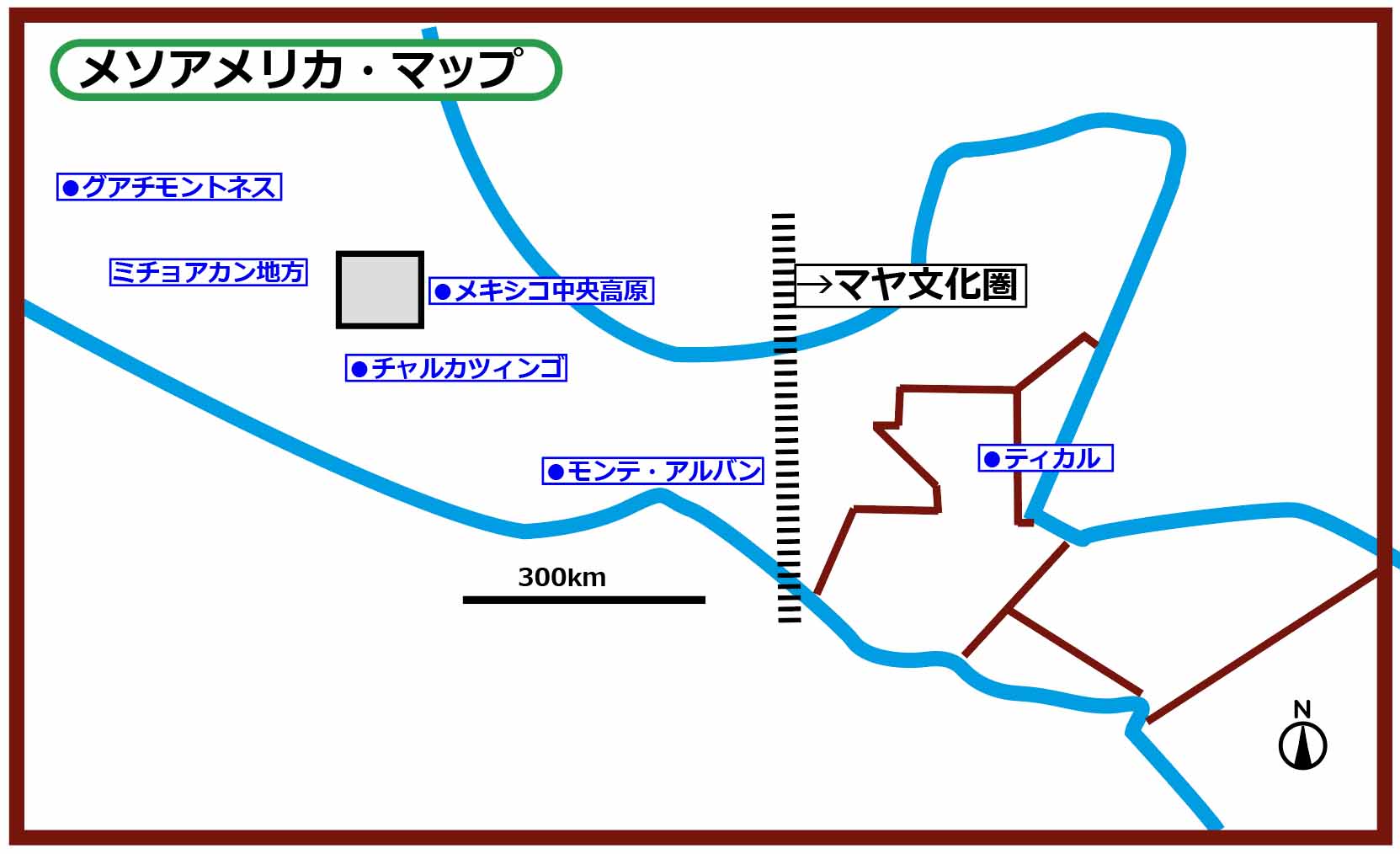
The Olmeca culture produced the first settled agricultural settlements in 1,500 BC. Around 500 B.C., when La Venta ruins, one of them, was abandoned, many large settlements with urban populations approaching 10,000 people sprung up across Mesoamerica. To the west are the Guachimontnes ruins of the Teuchitlan culture, to the south are the Chalcatzingo ruins of the Olmec culture, to the east are the Cholula ruins, and further east are the Monte Alban ruins in the Oaxaca Basin. To the east, the Maya city-states arose.
There seems to have been almost no major military intervention, except in the Mayan realm. Meanwhile, long-distance trade was established. The trading brigade is attacked by bandits. Guards are needed, and soon after these guards are called warriors, forming the city-state's army.
Around Lake Texcoco, a huge cemetery of commoners was built in Tlatilco, where luxurious trade goods were buried, and Cuicuilco grew into a large settlement of 20,000 people, and a temple was built in Tlapacoya in 400 BC.
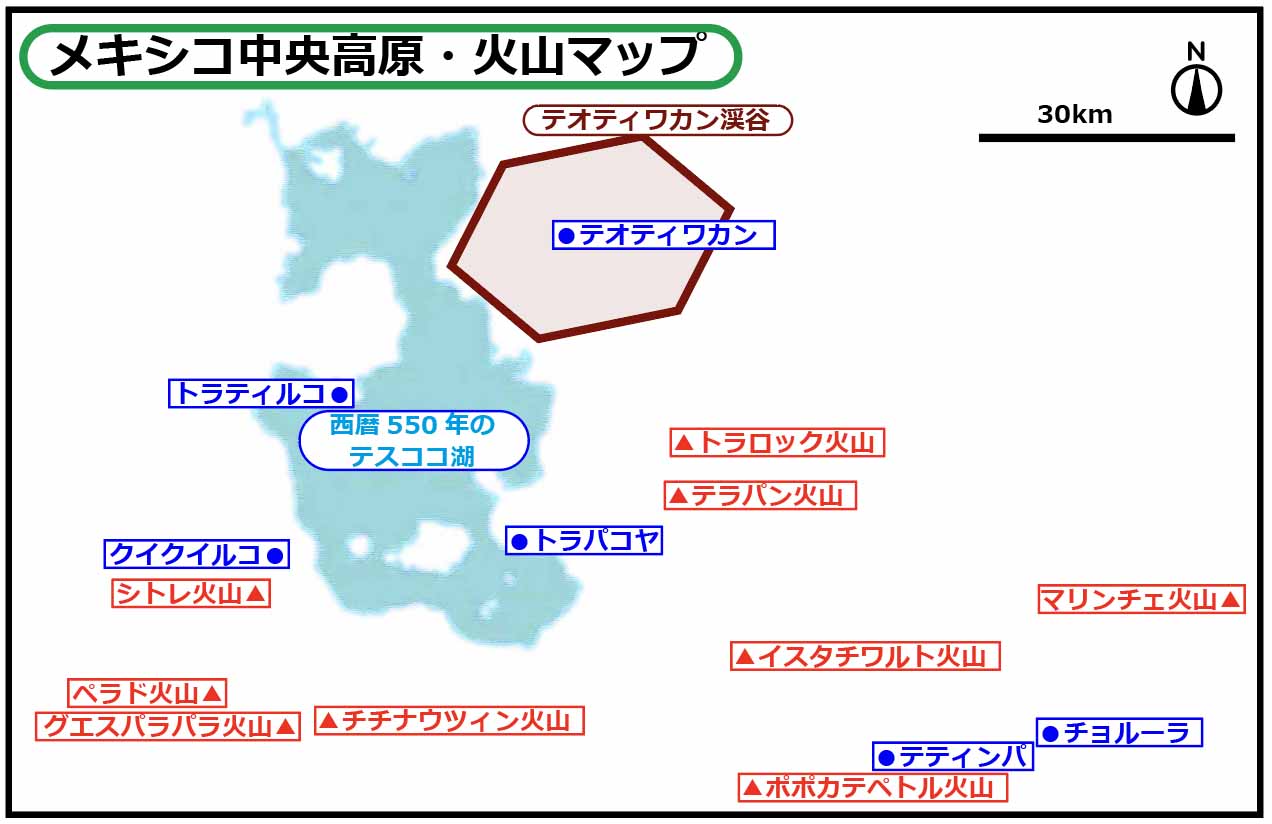
Tlatilco
This is a village that flourished from 1400 BC to 600 BC. Above-ground objects no longer exist as they have been removed to make way for modern housing and factories. However, a burial site containing over 500 bodies was discovered and exhumed in a hurry. It has been reburied, but a replica of the buried state is on display at the Museum of Anthropology.
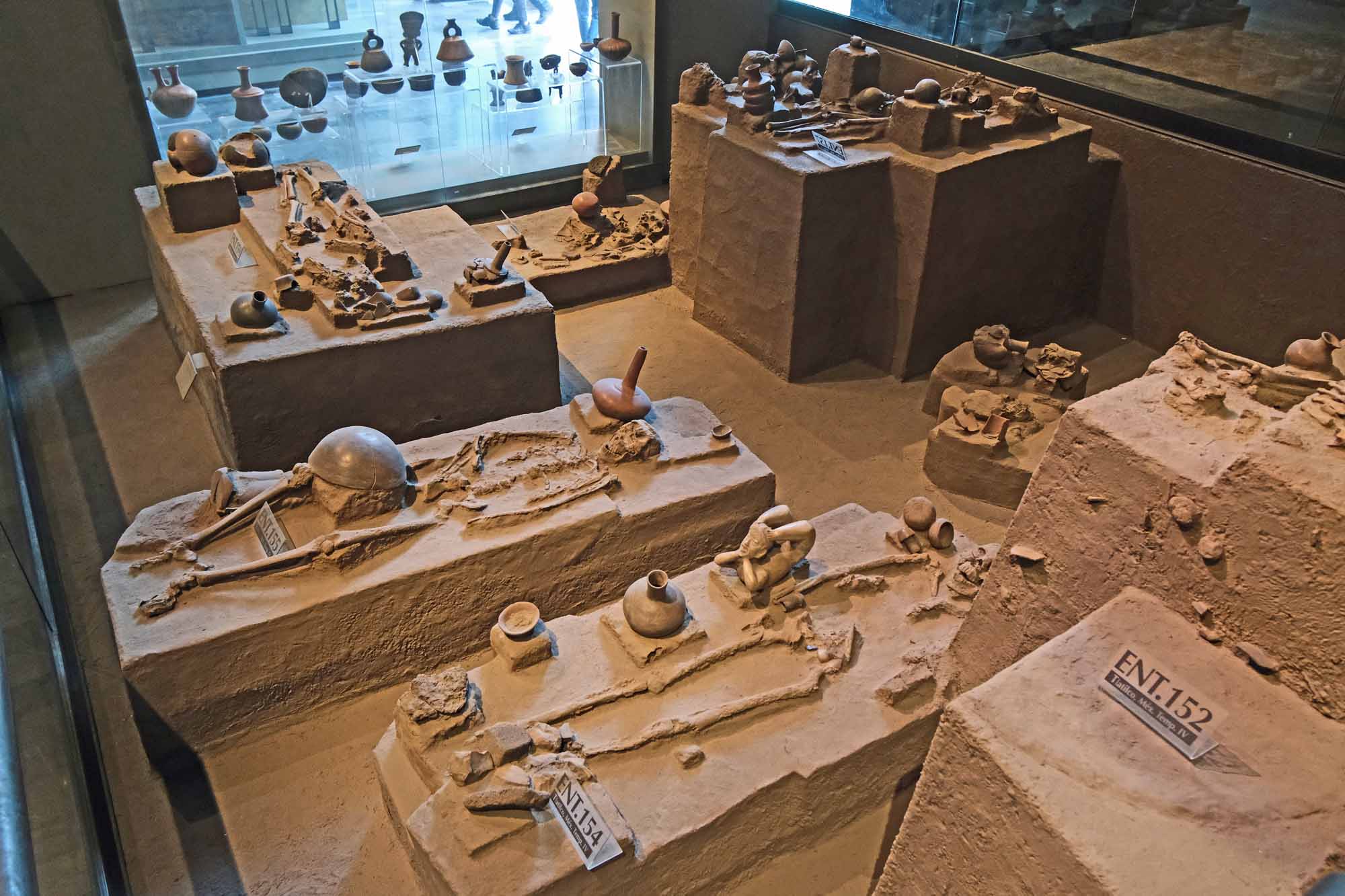
Almost all the bodies were placed on the ground, probably wrapped in cloth. The grave goods are a sight to behold, tinged with the soft beauty of the Olmec culture.
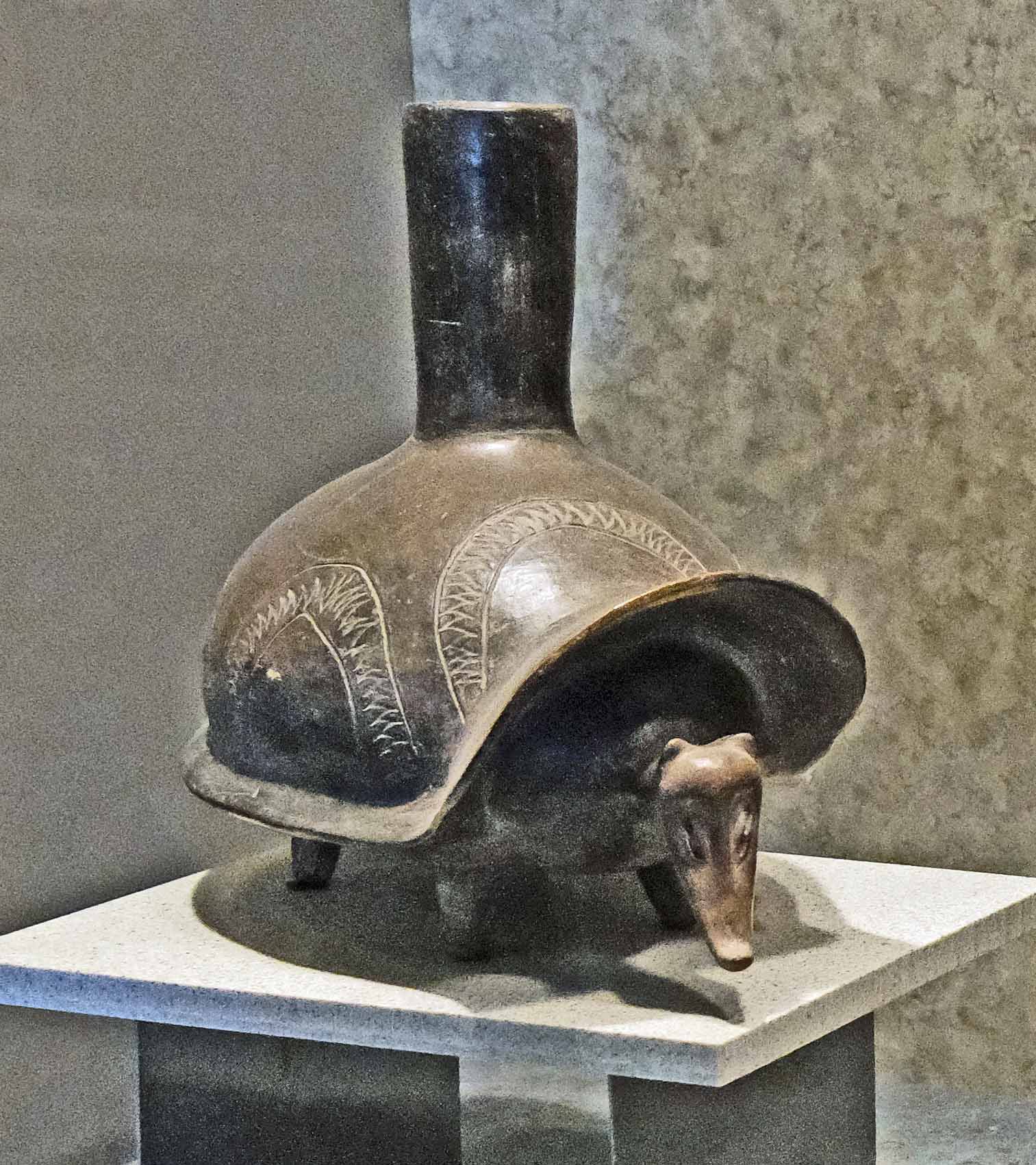
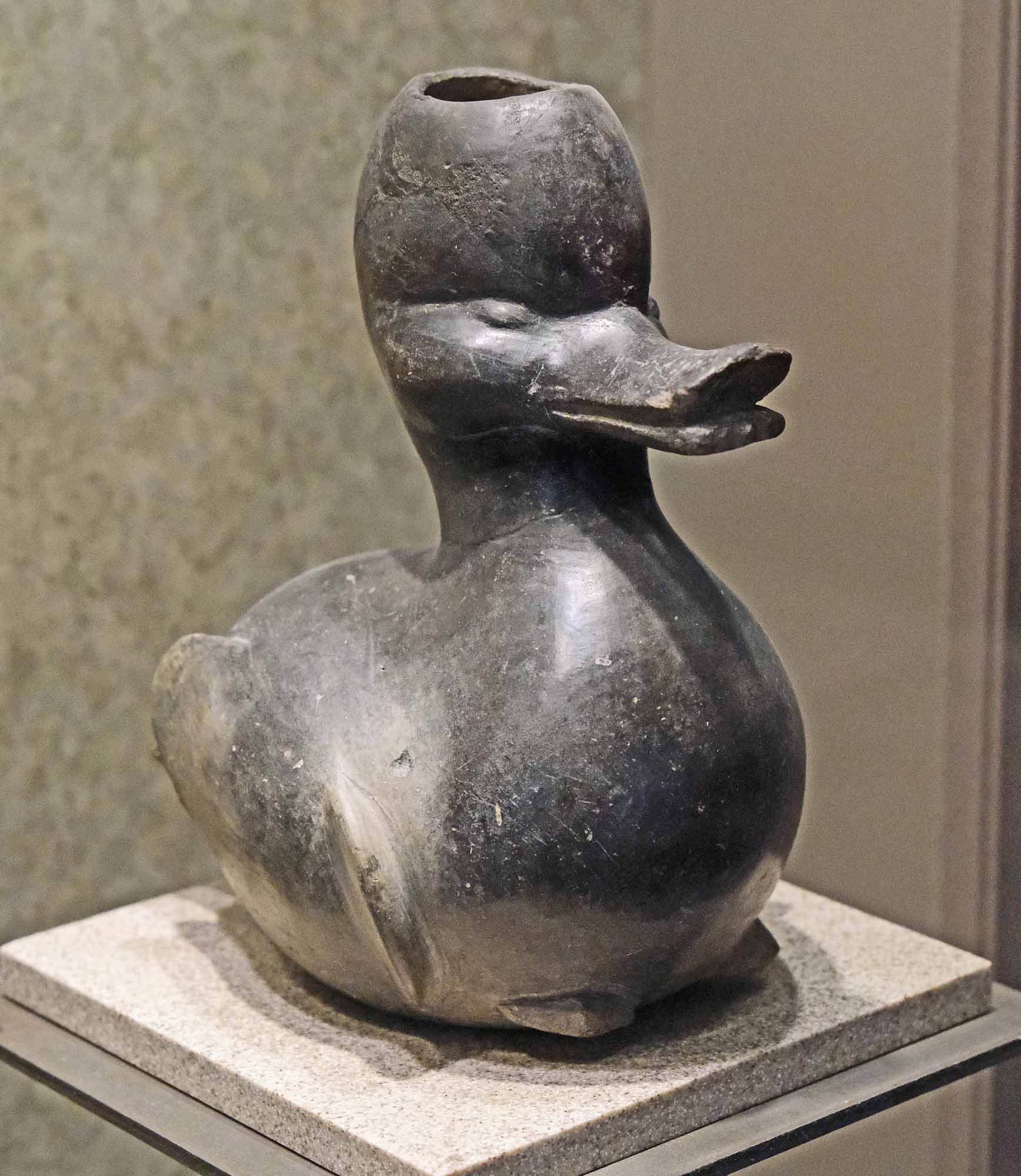
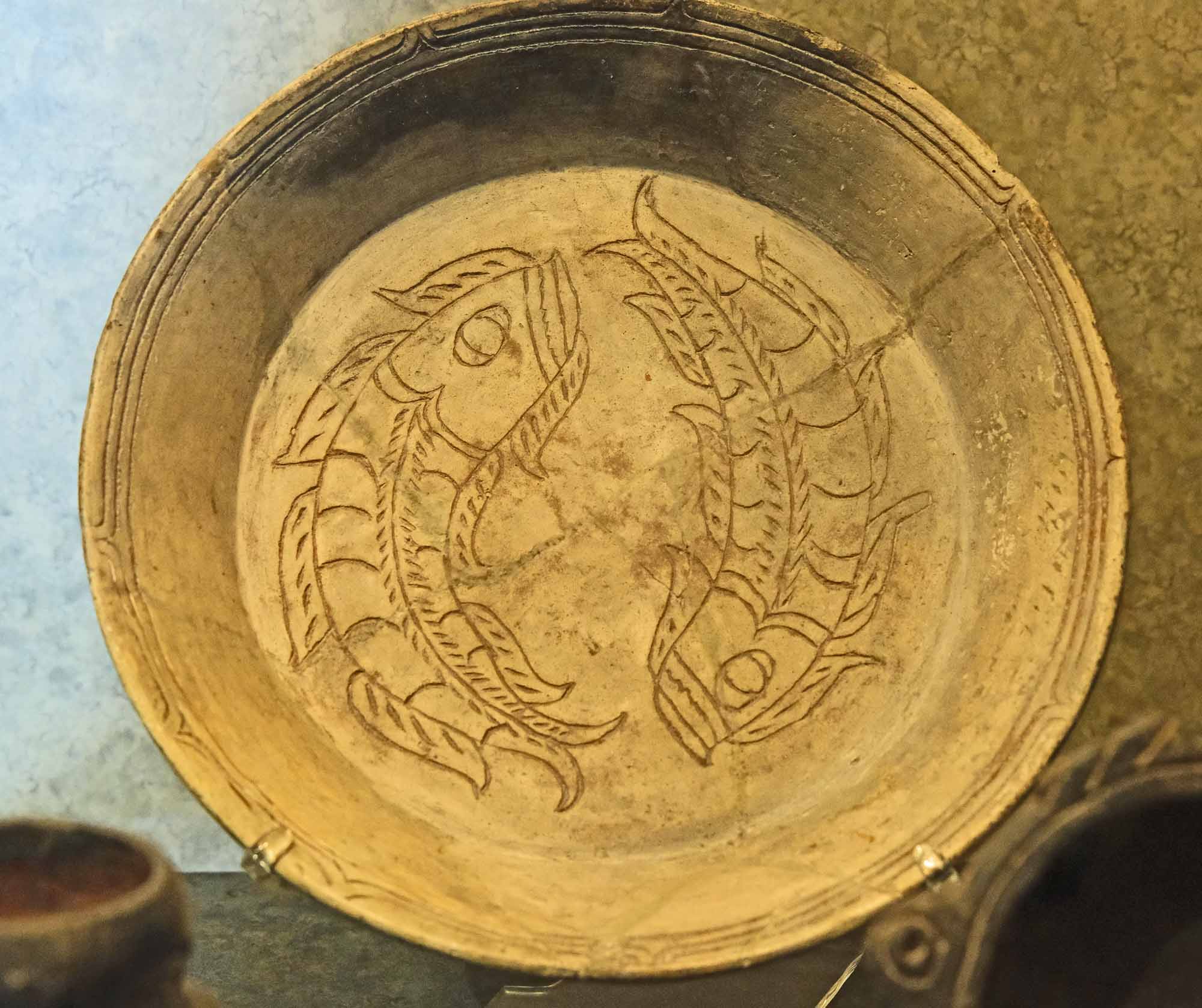
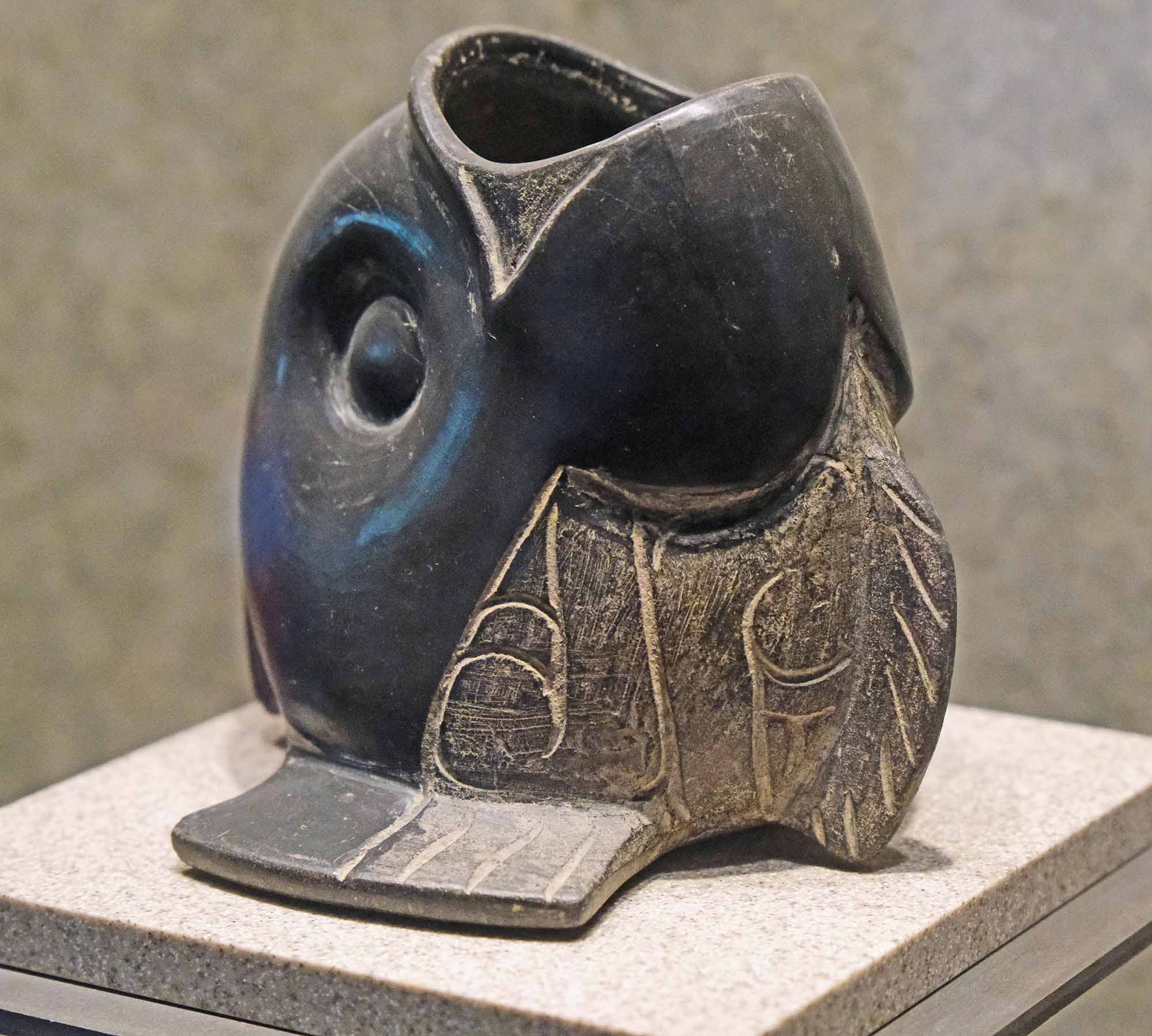
↑all at Museum of Anthropology.
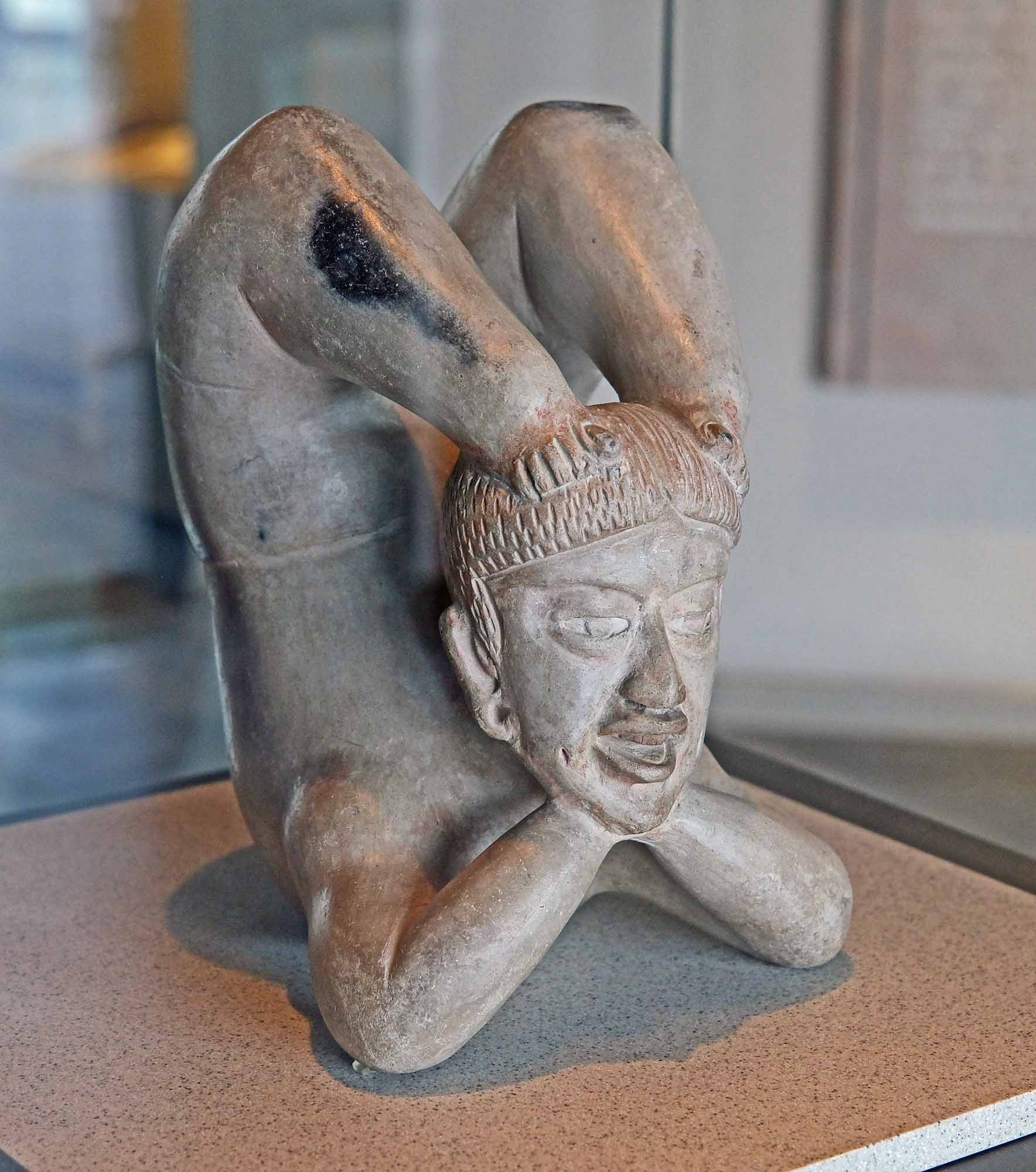
。A unique statue has also been unearthed. I will post a replica of the one in front of Tlatilca Museum.
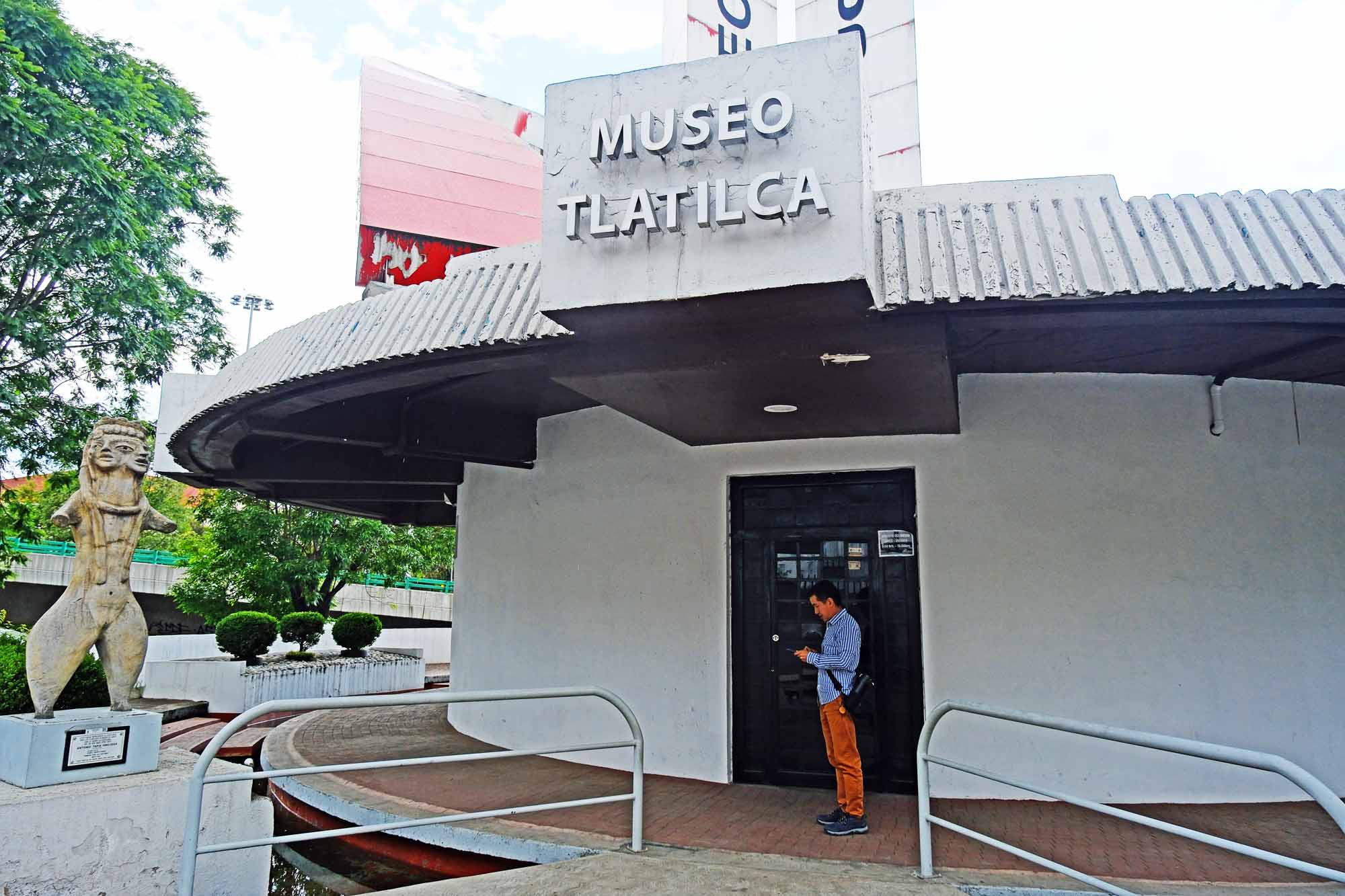
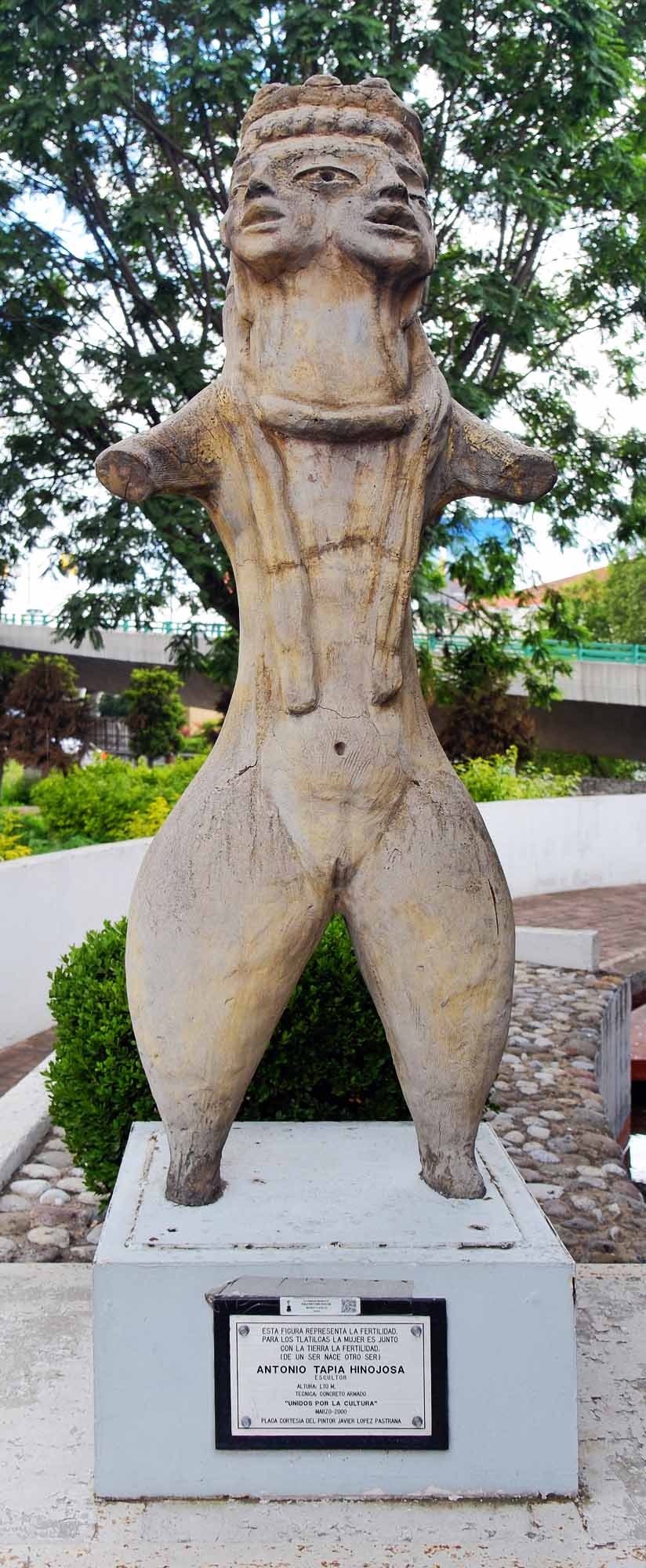
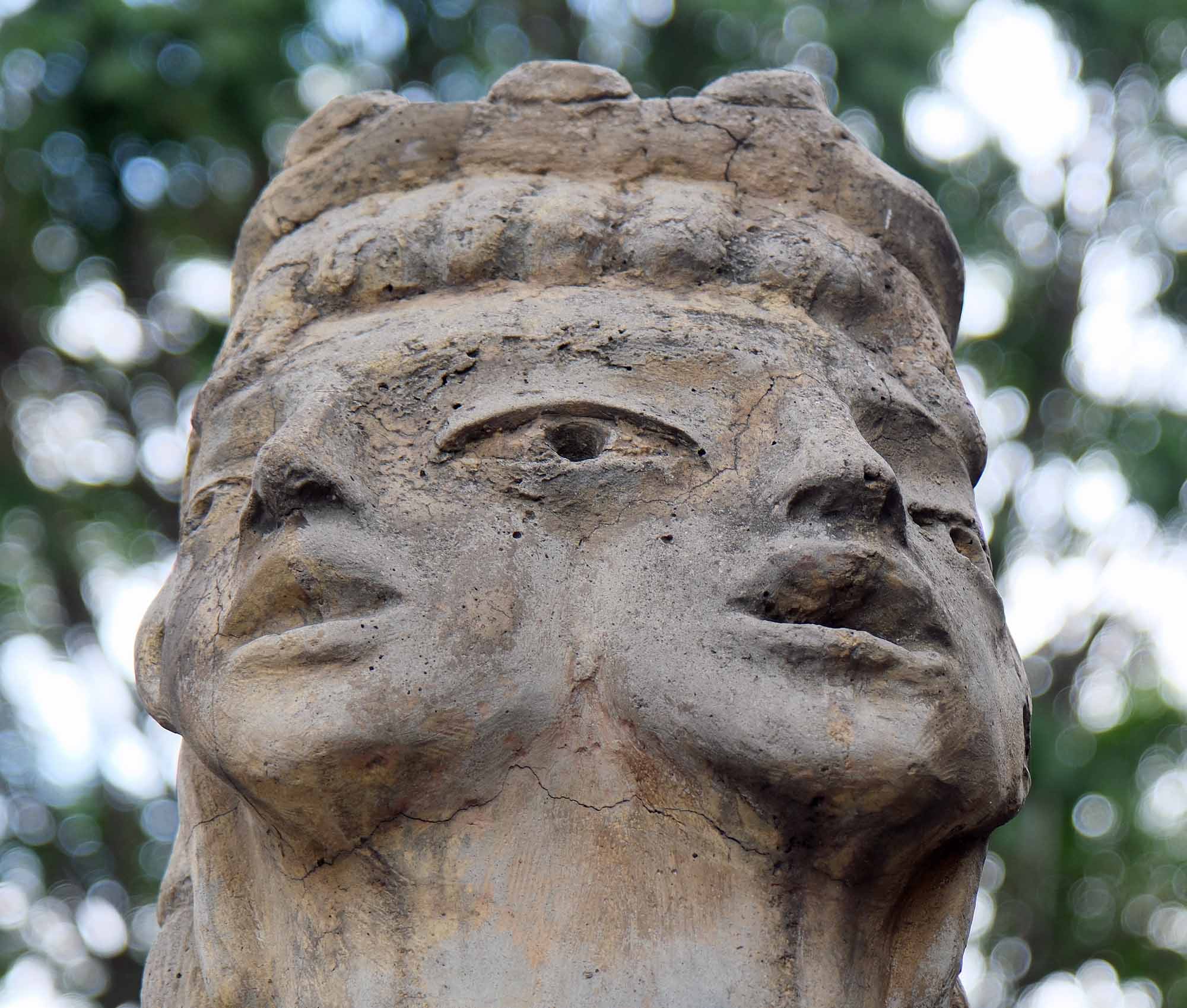
↑all at Tlatilca Museum.
The face is not realistic. Is it an image obtained through some kind of hallucination?
Apparently, there were no large temples or pyramids on earth. Was it a large village of pottery workshops? It overlaps with the Olmec city in terms of time, and is only 200 km away from that city. Since no relics of this high quality have been excavated in the Olmec region, it is possible that they were made in [Tlatilco] and exported. It has been reported that many of the bodies had signs of endemic diseases.