Techinantitla
The northern half of the region known as Amanalco is called Techinantitla and the southern half is called Tlacuilapaxco.
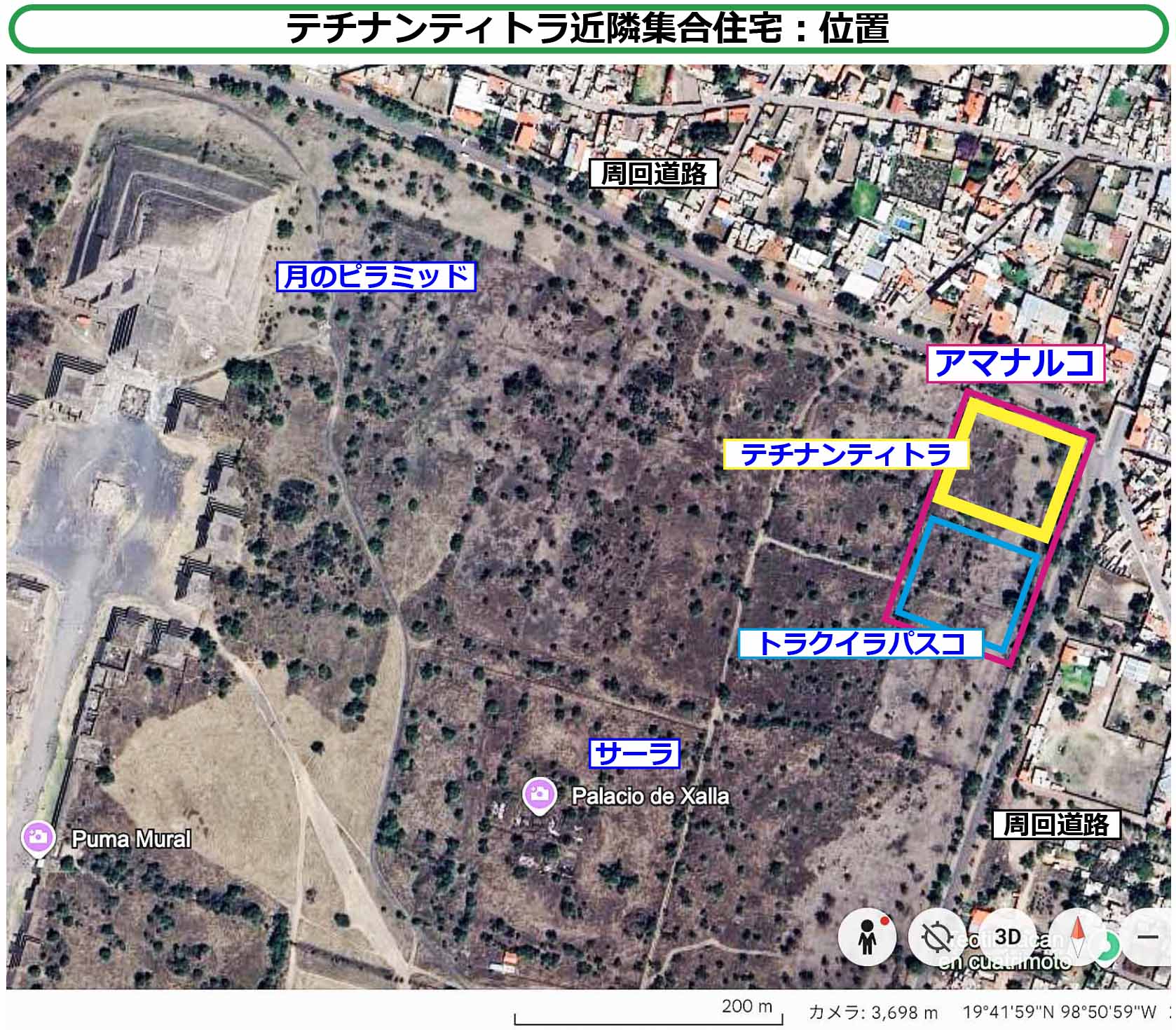
↑on Google Earth。
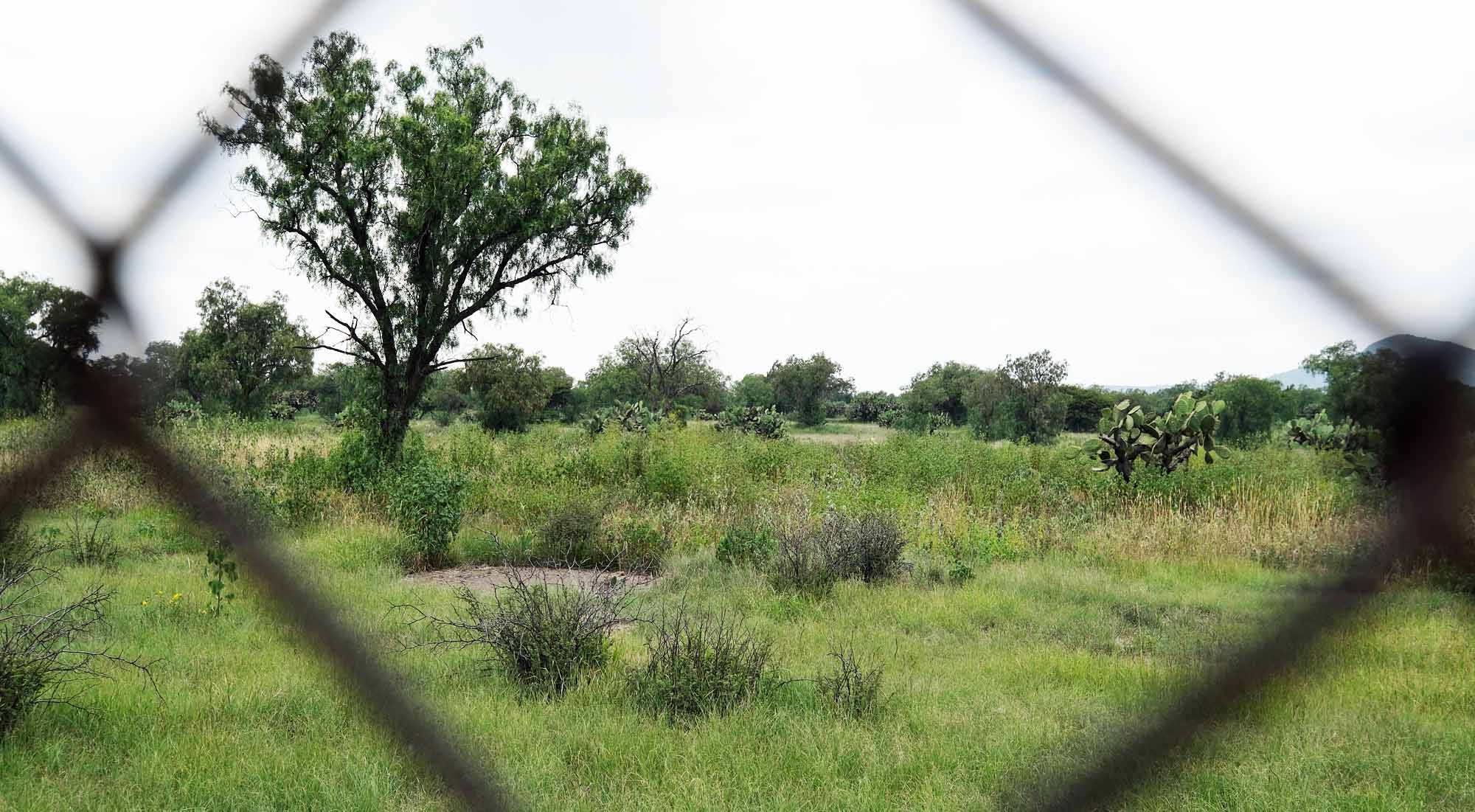
The Tetinantitla is 300 square meters in size. This is a photo of the site in 2024.
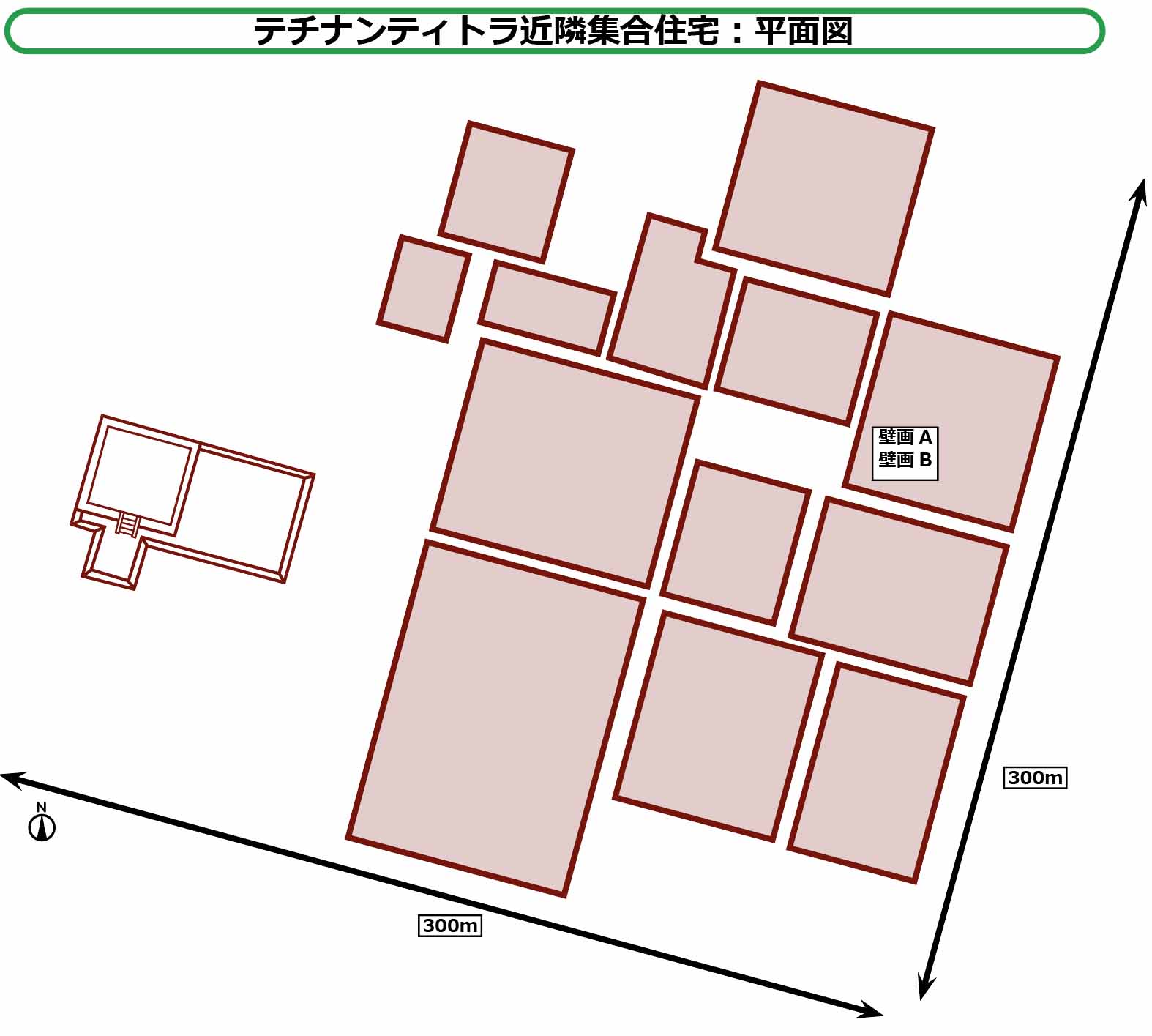
Floor plans are provided, but no internal partitions are reported.
This place was the target of the plundering of murals in the 20th century. The stone walls that served as the foundation were demolished and only the plasterwork was taken away, mainly to the United States. Eventually, murals that had been exhibited in overseas museums were compared with fragments found scattered on the ground at Teotihuacan, and it was determined that they were of Techinantitla. They are now mainly exhibited at the San Francisco Museum of Art and the Metropolitan Museum of Art. Murals B and C were donated by Australia.
Mural A
Trees are depicted in the talud section, and a feathered serpent is depicted in the tablero frame. The feathered serpent is supposed to bring water from its mouth to nourish the trees.
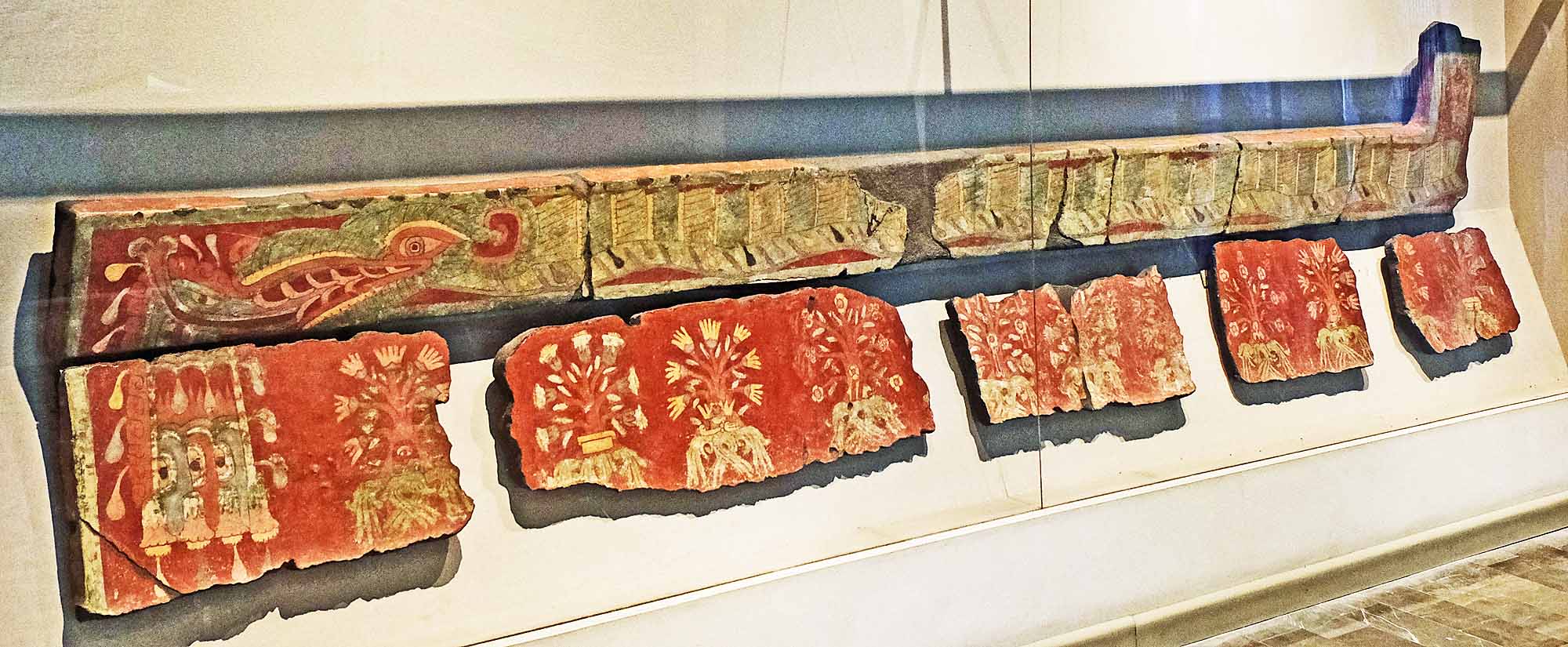
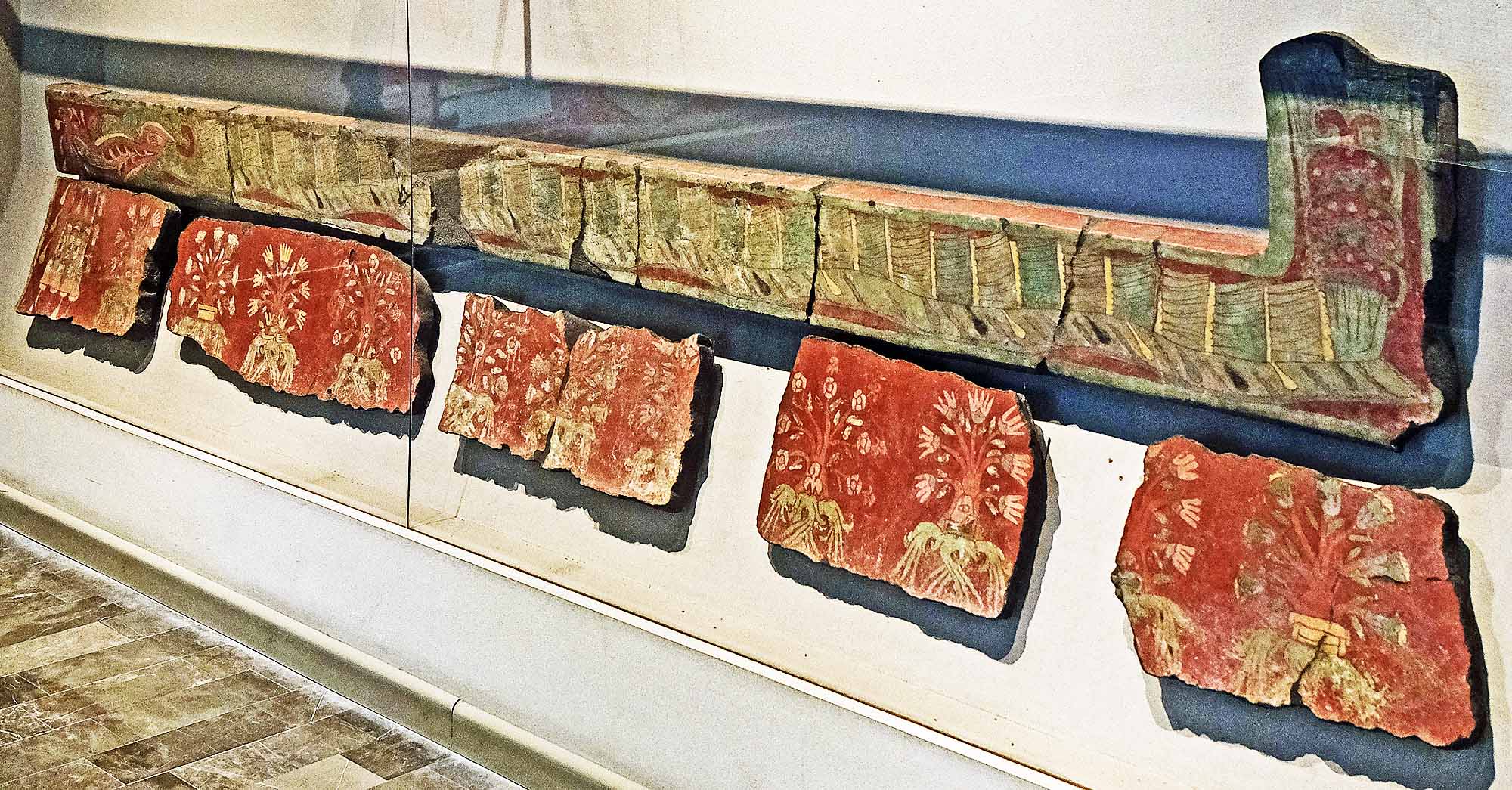
↑↑at Museum of Anthropology.
Archaeologists suggest that there must have been three other nearly identical statues. The bottom of the photo above shows the remains of eight trees. The depictions of the roots are nearly identical, but the flowers and the base of the trunks are all different.
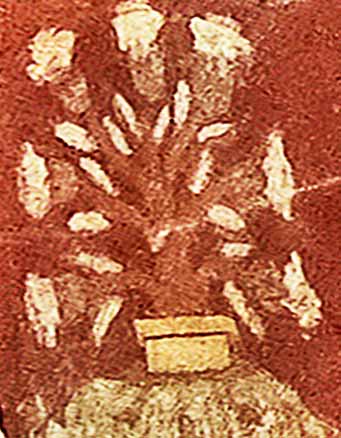
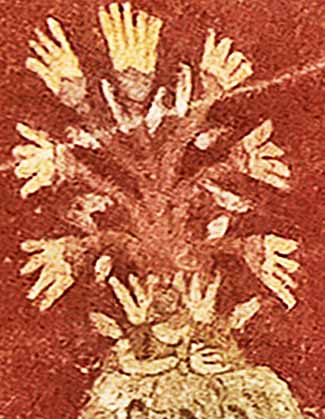
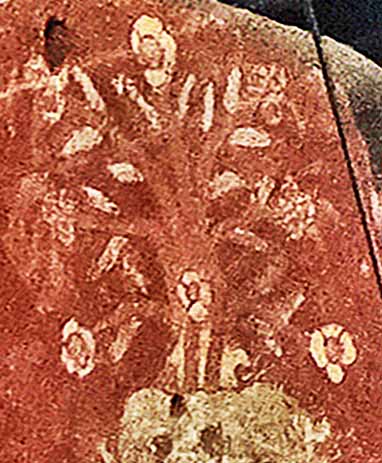
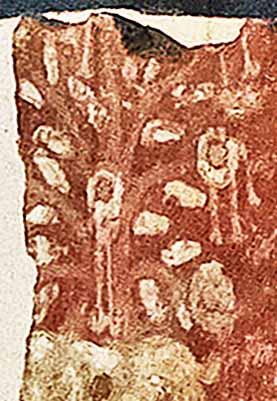


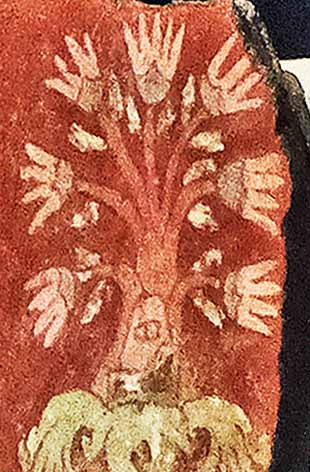

↑at Museum of Anthropology.
The meaning is unknown, but the image at the base is believed to be a letter.
Mural B

↑at Mural Museum
There is a refreshing feeling of light singing. The feet are bird-like, but the five toes that fill the screen and are of different colors represent humans. Perhaps the priests dancing are transformed into birds.
Mural C...location unknown

↑at Mural Museum
It was discovered near the Pyramid of the Sun and was determined to belong to Tetinantitla. It has a large feather headdress, water dripping from its voice, and the planet Venus on its torso. The beads on its necklace are thought to have originally been green.